Love this? Save it for later!
Share the inspiration with your friends
Introduction
“You ever get a craving so strong it feels like it’s pulling you into the kitchen at midnight?” That’s exactly what happened to me last fall. It was one of those chilly evenings when the city felt a little too quiet, and I found myself rummaging through the fridge with only a vague idea of what I wanted. I wasn’t expecting to land on Korean beef bibimbap, but honestly, that’s how some of the best meals happen. I had a jar of gochujang staring at me from the back shelf (forgot I even bought it at that tiny Asian market on 5th), a few vegetables, and—thankfully—a couple of eggs. The sizzle of the crispy egg frying up in my pan mixed with the spicy-sweet aroma of marinated beef was pure magic.
This recipe isn’t just a random late-night fix; it’s a dish that stuck with me because it’s packed with bold, comforting flavors and textures that make you want to savor every bite. Maybe you’ve been there too—needing something quick but impressive, familiar but exciting. Let me tell you, this Korean beef bibimbap with gochujang and crispy egg is exactly that kind of recipe. It’s simple, satisfying, and perfect for those evenings when you want dinner to feel special without a fuss. Plus, the crispy egg on top? Game changer every single time.
So, whether you’re new to Korean flavors or a seasoned fan, this recipe will feel like a little kitchen win. And hey, if you’re like me and sometimes forget to buy a few things, no worries—there’s room for substitutions and tweaks. Just don’t skip that crispy egg. Trust me on this one.
Why You’ll Love This Recipe
- Quick & Easy: Comes together in under 30 minutes, making it perfect for busy weeknights or last-minute cravings.
- Simple Ingredients: No need for exotic items—most are pantry staples or easy-to-find at your local grocery store or Asian market.
- Perfect for Any Occasion: Whether it’s a solo dinner, a casual date night, or a cozy weekend meal, bibimbap hits the spot every time.
- Crowd-Pleaser: Kids, adults, picky eaters—they all tend to ask for seconds because of the flavor-packed beef and that irresistible crispy egg.
- Unbelievably Delicious: The harmony of savory beef, spicy gochujang, fresh veggies, and the crunchy egg yolk creates a texture and taste combo that’s just next-level comfort food.
- Unique Flavor Profile: Unlike other bibimbap versions, this one balances the sweetness of the beef marinade with the heat of gochujang perfectly, plus that crisp on the egg adds a delightful contrast.
I’ve tested this recipe multiple times—sometimes doubling the beef, sometimes swapping veggies depending on the season—and each time it feels like a new favorite. Honestly, there’s something so satisfying about mixing it all together in one bowl, every spoonful delivering a little bit of everything. If you’re curious about Korean cooking or just want a new weeknight hero, this dish is your answer.
What Ingredients You Will Need
This Korean beef bibimbap recipe uses straightforward, wholesome ingredients that come together to deliver big flavors and a satisfying bite. Most are pantry basics, plus fresh veggies that bring color and crunch. Here’s what I usually have on hand:
- For the Beef Marinade & Meat:
- Ground beef (preferably 80/20 for juiciness, about 1 pound / 450 g)
- Garlic, minced (3 cloves – adds that punch of aroma)
- Soy sauce (3 tablespoons, low sodium if you prefer)
- Brown sugar (2 tablespoons, balances the salty and spicy)
- Sesame oil (1 tablespoon for that nutty undertone)
- Ground black pepper (a pinch, freshly cracked is best)
- Green onions, thinly sliced (2 stalks, for freshness)
- For the Vegetables:
- Carrot, julienned or thinly sliced (1 medium carrot – adds sweetness and crunch)
- Zucchini, sliced into half-moons (1 small zucchini – mild flavor and texture contrast)
- Spinach, blanched or sautéed (about 1 cup packed – earthy and tender)
- Bean sprouts (½ cup, optional but classic)
- Shiitake mushrooms or button mushrooms, sliced (½ cup, optional for umami depth)
- For the Sauce & Toppings:
- Gochujang (Korean chili paste, 2 tablespoons – the star of the show; I prefer Chung Jung One brand for balanced heat)
- Rice vinegar (1 teaspoon, optional for a bit of tang)
- Sesame seeds (1 teaspoon, toasted)
- Eggs (1 per serving; for that coveted crispy fried egg on top)
- Cooked white rice (4 cups / 800 g, freshly steamed or day-old works great)
If you want to swap out any veggies, feel free! I’ve tried this with kale instead of spinach, or even added roasted sweet potatoes for a seasonal twist. For gluten-free options, tamari works well instead of soy sauce, and you can find gluten-free gochujang at specialty stores.
Equipment Needed
- Large skillet or frying pan – for cooking the ground beef and frying the egg; a non-stick pan helps with that perfect crispy edge on the egg.
- Medium saucepan or rice cooker – to prepare the rice; I personally love using a rice cooker for consistently fluffy rice without babysitting.
- Mixing bowls – for marinating the beef and prepping the veggies.
- Spatula or wooden spoon – for stirring the beef and vegetables.
- Colander or strainer – if you’re blanching spinach or rinsing bean sprouts.
- Knife and cutting board – for prepping all those fresh veggies.
If you don’t have a rice cooker, no worries—just use a heavy-bottomed pot with a tight-fitting lid. I usually add a little extra water when cooking rice on the stove to keep it from sticking. For frying eggs, a cast iron skillet can really help get those crispy edges, but any well-seasoned pan will do.
Preparation Method
- Prepare the Rice: Rinse 4 cups (800 g) of short-grain white rice under cold water until the water runs clear. Drain well. Cook rice in a rice cooker or on the stove following package instructions (usually about 15-20 minutes). Keep warm while you prepare the rest. (Tip: Day-old rice works great here if you want less sticky texture.)
- Marinate the Beef: In a medium bowl, combine 1 pound (450 g) ground beef with 3 minced garlic cloves, 3 tablespoons soy sauce, 2 tablespoons brown sugar, 1 tablespoon sesame oil, and a pinch of freshly cracked black pepper. Stir well to coat evenly. Let it sit for 10 minutes to soak up the flavors. (If you’re short on time, you can skip the resting, but marinating adds depth.)
- Prepare the Vegetables: Julienne 1 medium carrot and slice 1 small zucchini into half-moons. Blanch or sauté 1 cup packed spinach until just wilted, then drain. Optionally, rinse ½ cup bean sprouts and slice ½ cup mushrooms. Set all veggies aside separately. (Keeping them separate helps preserve colors and textures.)
- Cook the Beef: Heat a large skillet over medium-high heat. Add the marinated beef and cook, breaking it apart with a wooden spoon, until browned and cooked through—about 5-7 minutes. The meat should be slightly caramelized and sticky. Stir in 2 sliced green onions near the end. Remove from heat.
- Sauté the Vegetables: In the same pan (wipe out excess beef fat if needed), quickly sauté carrots and zucchini separately for 2-3 minutes each until tender-crisp. Season lightly with salt. Keep spinach and bean sprouts as is or toss in a little sesame oil for flavor.
- Make the Sauce: In a small bowl, mix 2 tablespoons gochujang with 1 teaspoon rice vinegar. Adjust to taste if you prefer it spicier or milder.
- Fry the Eggs: Heat a little oil in a non-stick pan over medium heat. Crack in the eggs, cooking until the whites are crispy and edges golden but yolks remain runny—about 2-3 minutes. (You know that satisfying sizzle? That’s what you want.) Season lightly with salt.
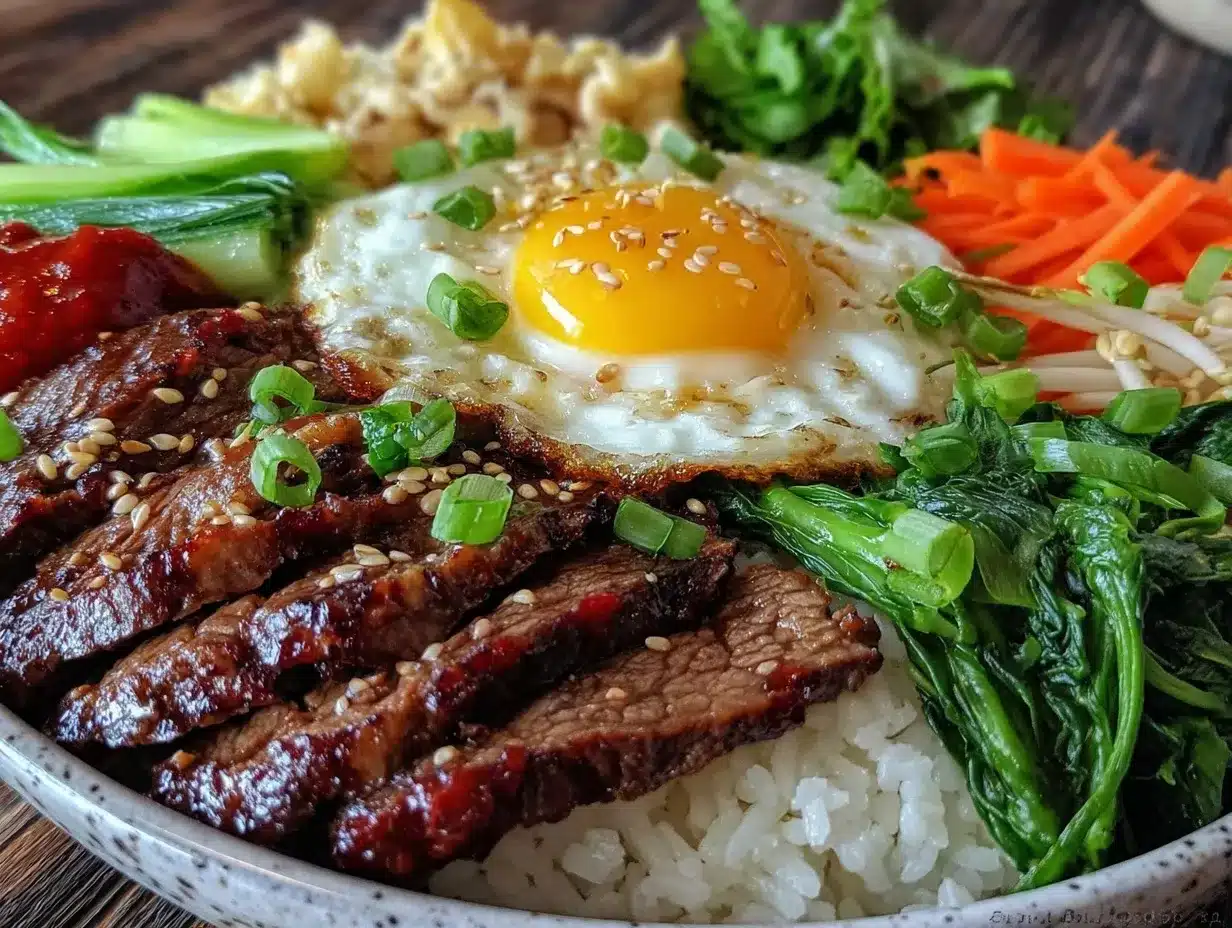
- Assemble the Bibimbap: Scoop warm rice into bowls. Arrange the cooked beef, sautéed veggies, spinach, and bean sprouts on top in sections (this makes it pretty and traditional). Place a crispy fried egg right in the center. Drizzle with the gochujang sauce and sprinkle toasted sesame seeds over everything.
- Enjoy: Mix everything together before eating so every bite is a perfect blend of spicy, savory, and crunchy. (Spoiler: it’s totally worth the messy hands.)
Cooking Tips & Techniques
One thing I learned early on making this Korean beef bibimbap is that timing is everything. Cook your beef just right—overcooking makes it dry, undercooking leaves it a little raw. Using ground beef helps speed things up and keeps it tender. Also, don’t skip marinating; even a short soak makes a big difference in flavor depth.
When frying the egg, medium heat is your friend. Too high and the edges burn before the yolk sets; too low and you miss those crispy edges that make the dish so special. A non-stick pan or a well-seasoned cast iron skillet helps keep the egg intact and crispy. I once ruined a batch by flipping too soon—lesson learned: patience pays off!
For the veggies, keeping them separate and lightly cooked preserves their individual flavors and vibrant colors, which is classic bibimbap style. If you’re juggling multiple components, prep your veggies first and keep everything warm by covering them with foil or a clean kitchen towel. That way, your beef and egg stay hot when you’re ready to serve.
Lastly, don’t be shy with the gochujang sauce. It might look small in the bowl, but it packs a punch. Taste as you go and add more if you love that spicy-sweet kick. And for an extra touch, a drizzle of toasted sesame oil right before serving adds a fragrant finish that will have you hooked.
Variations & Adaptations
One of the joys of bibimbap is its flexibility. Here are a few ways I’ve mixed things up:
- Vegetarian Version: Swap ground beef for sautéed tofu or tempeh marinated in the same sauce. Mushrooms can be the star for that umami punch.
- Seasonal Veggies: In fall, roasted butternut squash or sweet potatoes are fantastic additions. Spring calls for fresh peas or asparagus instead of zucchini.
- Low-Carb Option: Use cauliflower rice instead of white rice. It changes the texture but keeps the spirit of the dish intact.
- Egg Alternatives: For a vegan twist, omit the egg or use a fried vegan egg substitute. Or try a soft-boiled egg if you prefer a less crispy option.
- Spice Level: Adjust the gochujang quantity to suit your heat tolerance. A splash of honey can mellow out the sauce if it’s too fiery.
Personally, I once tried adding kimchi on the side for an extra zing that balanced the rich beef beautifully. It’s all about what feels right for your taste buds and fridge situation.
Serving & Storage Suggestions
This Korean beef bibimbap is best served immediately while the egg is crispy, and the beef is warm. I like to present it in a deep bowl so mixing is easy and mess-free. Pair it with a light cucumber salad or some pickled radishes to cut through the richness.
Leftovers keep surprisingly well. Store any assembled bibimbap components separately in airtight containers for up to 3 days in the fridge. The sauce can be kept in a small jar or container. Reheat the beef and veggies gently in a skillet or microwave, then assemble freshly with a newly fried egg. (Trust me, the crispy egg doesn’t reheat well, so fresh is best.)
Flavors develop nicely if you let the beef marinade sit overnight before cooking, making this dish even better the next day. Just don’t skip the fresh egg topping—it’s the real game changer.
Nutritional Information & Benefits
This bibimbap recipe offers a balanced meal rich in protein, fiber, and vitamins. The ground beef provides iron and B vitamins essential for energy, while the assortment of veggies contributes antioxidants and fiber for digestion. Gochujang, made from fermented chili paste, has probiotics that support gut health, and sesame oil adds healthy fats.
Per serving, you’re looking at roughly 450-500 calories, depending on portion sizes, with a good mix of carbs, protein, and fats. It’s naturally gluten-containing due to soy sauce, but swapping for tamari easily makes it gluten-free. This dish fits well into a balanced diet for anyone looking for flavorful, nourishing meals without complicated prep.
Conclusion
This flavorful Korean beef bibimbap with gochujang and crispy egg has become my go-to recipe when I want something hearty, quick, and totally satisfying. It’s the kind of dish that makes you pause, close your eyes, and savor every bite—comfort food with a spicy kick. I hope you give it a try and maybe even make it your own with your favorite veggies or spice level.
If you try this recipe, I’d love to hear how you tweaked it or what your favorite additions are. Sharing these kitchen wins makes cooking even more fun. So go ahead, mix, match, and enjoy some seriously good bibimbap vibes tonight!
FAQs
What is the best cut of beef for bibimbap?
Ground beef works great for quick cooking, but thinly sliced ribeye or sirloin can be used if you prefer a more traditional texture. Just marinate and cook quickly over high heat.
Can I make bibimbap vegan?
Absolutely! Swap the beef for marinated tofu or mushrooms and skip the egg or use a vegan egg substitute. The gochujang sauce keeps things flavorful.
How spicy is gochujang?
Gochujang has a mild to moderate heat with a sweet, fermented flavor. You can adjust the amount to make your bibimbap as spicy or mild as you like.
Can I prep bibimbap ingredients ahead of time?
Yes! You can marinate and cook the beef, prep veggies, and even cook rice a day ahead. Fry the eggs fresh just before serving for best texture.
What can I serve with Korean beef bibimbap?
Try a simple cucumber salad, kimchi, or steamed dumplings for a fuller Korean-inspired meal.
For a tasty twist on quick Asian meals, you might enjoy this crispy garlic chicken recipe or the fresh flavors in this spicy sesame noodles dish. Both share a love for bold, comforting flavors you’ll want to make again and again.
Pin This Recipe!

Flavorful Korean Beef Bibimbap Recipe with Gochujang and Crispy Egg

A quick and easy Korean beef bibimbap featuring marinated ground beef, fresh vegetables, spicy gochujang sauce, and a crispy fried egg on top. Perfect for a satisfying and flavorful dinner.
- Prep Time: 15 minutes
- Cook Time: 15 minutes
- Total Time: 30 minutes
- Yield: 4 servings 1x
- Category: Main Course
- Cuisine: Korean
Ingredients
- 1 pound ground beef (80/20 for juiciness)
- 3 cloves garlic, minced
- 3 tablespoons soy sauce (low sodium preferred)
- 2 tablespoons brown sugar
- 1 tablespoon sesame oil
- Pinch of freshly cracked black pepper
- 2 green onions, thinly sliced
- 1 medium carrot, julienned or thinly sliced
- 1 small zucchini, sliced into half-moons
- 1 cup packed spinach, blanched or sautéed
- ½ cup bean sprouts (optional)
- ½ cup shiitake or button mushrooms, sliced (optional)
- 2 tablespoons gochujang (Korean chili paste)
- 1 teaspoon rice vinegar (optional)
- 1 teaspoon toasted sesame seeds
- 4 eggs (1 per serving)
- 4 cups cooked white rice (short-grain, freshly steamed or day-old)
Instructions
- Rinse 4 cups (800 g) of short-grain white rice under cold water until the water runs clear. Drain well. Cook rice in a rice cooker or on the stove following package instructions (usually about 15-20 minutes). Keep warm.
- In a medium bowl, combine 1 pound ground beef with 3 minced garlic cloves, 3 tablespoons soy sauce, 2 tablespoons brown sugar, 1 tablespoon sesame oil, and a pinch of black pepper. Stir well and let sit for 10 minutes to marinate.
- Julienne 1 medium carrot and slice 1 small zucchini into half-moons. Blanch or sauté 1 cup packed spinach until wilted and drain. Optionally rinse ½ cup bean sprouts and slice ½ cup mushrooms. Set all veggies aside separately.
- Heat a large skillet over medium-high heat. Add the marinated beef and cook, breaking apart with a wooden spoon, until browned and cooked through, about 5-7 minutes. Stir in 2 sliced green onions near the end. Remove from heat.
- In the same pan, quickly sauté carrots and zucchini separately for 2-3 minutes each until tender-crisp. Season lightly with salt. Keep spinach and bean sprouts as is or toss with a little sesame oil.
- In a small bowl, mix 2 tablespoons gochujang with 1 teaspoon rice vinegar. Adjust to taste.
- Heat a little oil in a non-stick pan over medium heat. Crack in the eggs and cook until whites are crispy and edges golden but yolks remain runny, about 2-3 minutes. Season lightly with salt.
- Scoop warm rice into bowls. Arrange cooked beef, sautéed veggies, spinach, and bean sprouts on top in sections. Place a crispy fried egg in the center. Drizzle with gochujang sauce and sprinkle toasted sesame seeds over everything.
- Mix everything together before eating to enjoy a perfect blend of spicy, savory, and crunchy flavors.
Notes
Use day-old rice for less sticky texture. Marinate beef for at least 10 minutes for better flavor. Fry eggs on medium heat for crispy edges and runny yolks. Keep veggies separate to preserve colors and textures. For gluten-free, substitute soy sauce with tamari and use gluten-free gochujang. Freshly fry eggs before serving as reheating reduces crispiness.
Nutrition
- Serving Size: 1 bowl with 1 egg, b
- Calories: 475
- Sugar: 8
- Sodium: 700
- Fat: 22
- Saturated Fat: 7
- Carbohydrates: 45
- Fiber: 4
- Protein: 28
Keywords: Korean beef bibimbap, gochujang, crispy egg, easy dinner, Korean recipe, ground beef bibimbap, spicy bibimbap, weeknight meal