Love this? Save it for later!
Share the inspiration with your friends
“I wasn’t planning on making pasta that night,” I confessed to my roommate as I fumbled around the kitchen, a half-empty jar of gochujang staring back at me. It was a Wednesday, the kind where you’re tired but still want something exciting for dinner. I’d grabbed the wrong jar from the pantry—meant to get tomato paste but ended up with that fiery, fermented Korean chili paste. Honestly, I almost tossed it aside, but then I thought, why not? Let me tell you, that happy accident led to the creation of this flavorful gochujang pasta with Parmesan and crispy pancetta.
The sizzle of pancetta hitting the hot skillet was like music, and as the pasta boiled, the kitchen started filling with this mouthwatering mix of spicy, salty, and cheesy aromas. I forgot to set a timer and almost overcooked the pasta, but somehow, everything came together perfectly. Maybe you’ve been there—rummaging through your fridge, thinking, “What on earth can I whip up with this random stuff?” This recipe is exactly that kind of unplanned magic.
I keep making this dish whenever I want a quick, comforting meal that packs a punch. It’s got just the right balance of heat from the gochujang and savory richness from the Parmesan and pancetta. Plus, it’s a little different from your usual tomato-based pasta, which is why it always stands out on my table.
Why You’ll Love This Recipe
After testing this flavorful gochujang pasta recipe countless times, I can say it’s a real winner for a bunch of reasons. It’s not your everyday pasta — this one brings a spicy twist that’s balanced by the creamy Parmesan and crispy pancetta, making each bite an adventure. Plus, it’s surprisingly simple to throw together, even on those nights when you’re half-watching TV and half-washing dishes.
- Quick & Easy: Ready in under 30 minutes, perfect for busy weeknights or last-minute cravings.
- Simple Ingredients: Most are pantry staples or easy finds at your local market, no exotic shopping trips needed.
- Perfect for Cozy Dinners: Whether you’re dining solo or sharing with friends, it’s a dish that feels special without fuss.
- Crowd-Pleaser: I’ve served this at casual get-togethers, and it always disappears fast — even the picky eaters ask for seconds.
- Unbelievably Delicious: The spicy-sweet gochujang combined with nutty Parmesan and salty pancetta hits all the right flavor notes.
What makes this recipe stand out is the way the gochujang melds into a silky sauce, rather than overpowering the dish. I like to think it’s the perfect balance between Korean heat and Italian comfort food. Honestly, it’s the kind of recipe that makes you close your eyes and savor each bite — you might find yourself craving it more than once a week (not that I’m complaining!).
What Ingredients You Will Need
This flavorful gochujang pasta recipe uses straightforward ingredients that work together to create a bold, satisfying meal. Many of these you probably already have, and if not, they’re easy to find at most grocery stores.
- Spaghetti or linguine – about 8 oz (225 g); I prefer Barilla for consistent texture.
- Pancetta – 4 oz (115 g), diced; thick-cut for extra crispiness.
- Gochujang – 2 tablespoons; adjust to taste for heat.
- Parmesan cheese – ½ cup (50 g), freshly grated; the real deal makes all the difference.
- Garlic – 2 cloves, minced; adds a fragrant punch.
- Olive oil – 2 tablespoons; use extra virgin for better flavor.
- Butter – 1 tablespoon; unsalted, for creaminess.
- Heavy cream – ¼ cup (60 ml); optional but recommended for a silky sauce.
- Soy sauce – 1 teaspoon; enhances umami without overpowering.
- Black pepper – freshly ground, to taste.
- Salt – to season pasta water and adjust final seasoning.
- Green onions – 2, thinly sliced; for garnish and freshness.
For a dairy-free option, swap the Parmesan with nutritional yeast and replace heavy cream with coconut milk. If pancetta isn’t your thing, crispy bacon or even thinly sliced smoked turkey work nicely. And if you want to tone down the heat, just reduce the gochujang by half.
Equipment Needed
- Large pot for boiling pasta; a heavy-bottomed one works best to keep water at a steady boil.
- Large skillet or frying pan for crisping pancetta and tossing the sauce.
- Colander to drain pasta efficiently without losing any precious starchy water.
- Wooden spoon or silicone spatula for stirring; I find silicone easier for scraping the pan.
- Measuring spoons and cups for accuracy; especially important when balancing gochujang’s heat.
- Microplane or fine grater for fresh Parmesan; it melts better and tastes brighter than pre-grated.
- Small bowl to mix sauce ingredients before combining with pasta.
If you don’t have a microplane, a regular fine grater works just fine, though it takes a bit more elbow grease. For budget-friendly options, a non-stick skillet helps prevent sticking pancetta fat, making cleanup easier. And if you’re serious about pasta, a heavy pot with a lid that fits snugly can cut down boiling time and save energy.
Preparation Method
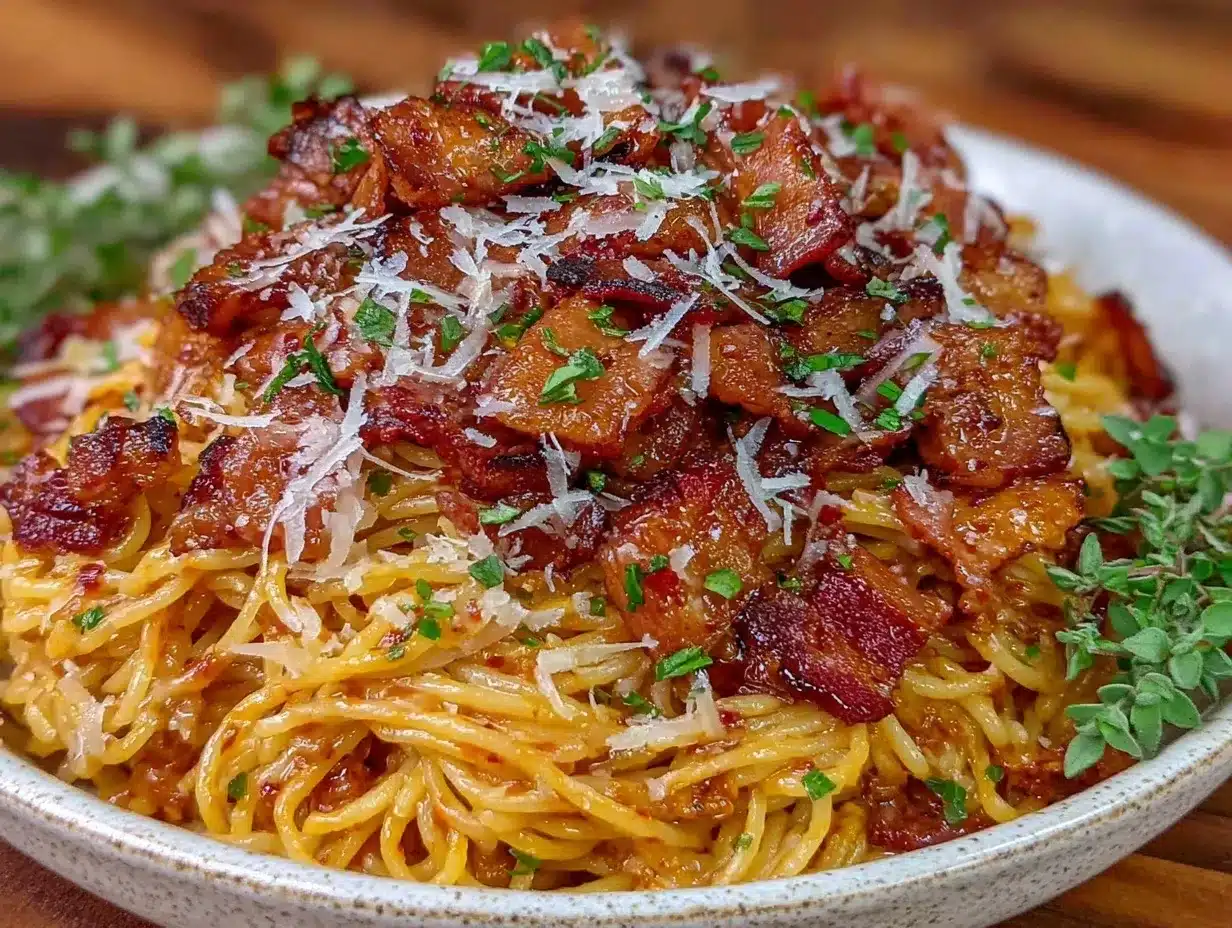
- Bring a large pot of salted water to a boil. Add about 1 tablespoon of salt for every 4 quarts (4 liters) of water. This seasons the pasta from the inside out. Cook 8 oz (225 g) spaghetti or linguine until al dente (usually 8-10 minutes). Reserve ½ cup (120 ml) pasta water before draining.
- While pasta cooks, heat a large skillet over medium heat. Add 4 oz (115 g) diced pancetta. Cook until crispy and golden, 5-7 minutes, stirring occasionally to prevent burning. If the pancetta releases a lot of fat, you can spoon some out, but keep enough to flavor the dish.
- Add 2 minced garlic cloves to the pancetta pan. Sauté for 30 seconds to 1 minute until fragrant, but don’t let it brown too much or it will taste bitter.
- Reduce heat to low and stir in 2 tablespoons gochujang, 1 teaspoon soy sauce, and 1 tablespoon butter. Mix until the butter melts and everything combines into a smooth paste. Add ¼ cup (60 ml) heavy cream if using, stirring gently to create a creamy sauce. If the sauce seems thick, add reserved pasta water a tablespoon at a time to loosen it.
- Transfer drained pasta to the skillet. Toss everything together over low heat so the pasta absorbs the sauce. Add ½ cup (50 g) freshly grated Parmesan and toss again until melted and coating every strand. Season with freshly ground black pepper and adjust salt if needed.
- Remove from heat and garnish with thinly sliced green onions. Serve immediately for best texture and flavor.
Pro tip: Don’t rinse the pasta after draining. That starch helps the sauce cling better. Also, keep an eye on the pancetta; it can go from crispy to burnt in seconds. I’ve learned that the hard way (and yes, that was one smoky kitchen moment!).
Cooking Tips & Techniques
One trick I picked up to get perfectly crispy pancetta without drying it out is to start with a cold pan. This helps the fat render slowly, giving you that golden, crunchy texture without burning. Also, stirring pancetta just once or twice while it cooks prevents breakage and ensures even crisping.
When working with gochujang, remember it’s thick and potent. Mixing it with butter and cream softens its intensity and spreads the flavor evenly. If you add it straight to the pasta, you risk clumps and uneven heat.
Another tip: reserve some pasta water before draining — that starchy water is magic for loosening sauces and helping them stick. If your sauce feels dry or heavy, add a splash at a time until it hits the perfect creamy consistency.
Lastly, timing is everything. Pancetta needs about 7 minutes to crisp, so start it just before the pasta finishes. That way, everything comes together hot and fresh. Multitasking here saves time and keeps flavors vibrant.
Variations & Adaptations
There are plenty of ways to tweak this flavorful gochujang pasta recipe to make it your own:
- Vegetarian Version: Skip pancetta and add sautéed mushrooms or roasted eggplant for a smoky, meaty texture. A sprinkle of toasted sesame seeds adds a nice crunch.
- Spicy Upgrade: Add a pinch of red pepper flakes or a dash of chili oil on top if you like it hotter. Just be cautious—gochujang already packs a good punch.
- Gluten-Free: Use your favorite gluten-free pasta (like brown rice or chickpea-based) and swap soy sauce for tamari to keep it gluten-free.
- Dairy-Free: Replace butter and Parmesan with a splash of coconut cream and nutritional yeast for that cheesy flavor.
- Seasonal Twist: In spring or summer, toss in fresh peas or asparagus for brightness and texture contrast.
I once tried this with smoked turkey instead of pancetta when I was out of pork, and honestly, it was a surprisingly tasty swap. It’s all about balancing salty, creamy, and spicy elements—you can experiment and find your favorite combo.
Serving & Storage Suggestions
This gochujang pasta is best served hot and fresh, right off the stove. The sauce clings beautifully to the noodles, and the pancetta stays crispy. Plate it with a sprinkle of extra Parmesan and a few green onion rings for color and freshness.
For drinks, a crisp white wine like Sauvignon Blanc or a cold, light beer pairs nicely to cut through the richness.
If you have leftovers (which is rare), store them in an airtight container in the fridge for up to 2 days. Reheat gently in a skillet with a splash of water or cream to revive the sauce and prevent drying out. Microwave reheating works too but watch for overheating — it can make the pancetta chewy.
Flavors develop a bit overnight, with the spicy-sweet notes mellowing and the sauce thickening. Sometimes I intentionally make extra and enjoy it cold or at room temperature for lunch—it’s a different vibe but still delicious.
Nutritional Information & Benefits
This flavorful gochujang pasta packs a decent nutritional punch. One serving (about 1/4 of the recipe) contains approximately:
| Calories | 480 kcal |
|---|---|
| Protein | 18 g |
| Fat | 22 g |
| Carbohydrates | 50 g |
| Fiber | 3 g |
Gochujang is fermented, which means it can have some gut-friendly probiotics, and its chili content may boost metabolism. Pancetta provides protein and fat, while Parmesan adds calcium and umami richness. Of course, this isn’t a low-fat dish, but it’s a satisfying balance of macronutrients for a hearty meal.
If you’re watching sodium, be mindful of the pancetta and soy sauce amounts, as both can add saltiness. Using low-sodium soy sauce and rinsing pancetta briefly can help.
Conclusion
This flavorful gochujang pasta with Parmesan and crispy pancetta has become my go-to when I want something that’s quick, tasty, and a little unexpected. I love how the spicy, creamy, and salty notes come together effortlessly, and how it’s flexible enough to fit lots of dietary preferences and ingredient swaps.
Try customizing it to suit your taste—maybe a bit more heat, or a veggie boost—and make it your own kitchen classic. Honestly, I never thought I’d be this obsessed with a pasta inspired by a kitchen mishap, but here we are. If you give it a shot, I’d love to hear how it goes, what tweaks you made, or even your own happy accidents with it!
So go ahead, grab that jar of gochujang, and get cooking. You might just find your new favorite weeknight dinner.
Frequently Asked Questions
Can I use bacon instead of pancetta?
Absolutely! Bacon works well and adds a smoky flavor. Just cook it until crispy, then follow the recipe as usual.
Is gochujang very spicy?
Gochujang has a mild to moderate heat with a sweet, fermented depth. If you’re sensitive to spice, start with less and add more to taste.
Can I make this pasta vegan?
Yes! Swap pancetta with mushrooms or tempeh, use coconut cream instead of dairy cream, and nutritional yeast in place of Parmesan.
What pasta shape works best?
Long, thin noodles like spaghetti or linguine are ideal since they hold the sauce nicely, but feel free to use what you have on hand.
How do I store leftovers to keep pancetta crispy?
Pancetta will soften in storage. Keep pasta and pancetta separate if possible, or reheat in a skillet to crisp it up again before serving.
Pin This Recipe!
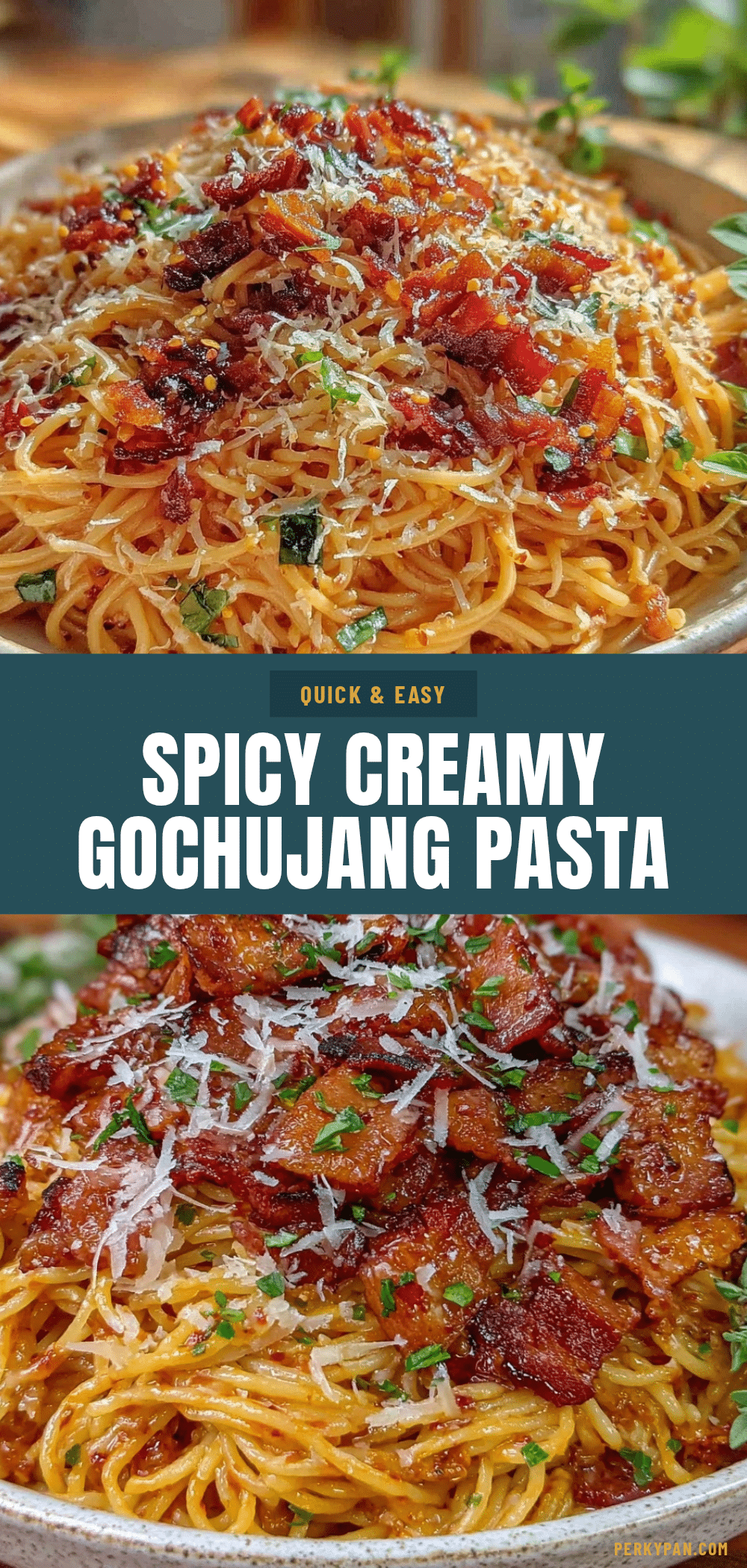
Flavorful Gochujang Pasta Recipe Easy Homemade with Parmesan and Crispy Pancetta
A quick and easy pasta dish combining spicy Korean gochujang, creamy Parmesan, and crispy pancetta for a flavorful weeknight meal.
- Prep Time: 10 minutes
- Cook Time: 15 minutes
- Total Time: 25 minutes
- Yield: 4 servings 1x
- Category: Main Course
- Cuisine: Fusion (Korean-Italian)
Ingredients
- 8 oz (225 g) spaghetti or linguine
- 4 oz (115 g) pancetta, diced
- 2 tablespoons gochujang
- ½ cup (50 g) freshly grated Parmesan cheese
- 2 cloves garlic, minced
- 2 tablespoons extra virgin olive oil
- 1 tablespoon unsalted butter
- ¼ cup (60 ml) heavy cream (optional)
- 1 teaspoon soy sauce
- Freshly ground black pepper, to taste
- Salt, to season pasta water and adjust final seasoning
- 2 green onions, thinly sliced
Instructions
- Bring a large pot of salted water to a boil. Add about 1 tablespoon of salt for every 4 quarts (4 liters) of water. Cook 8 oz (225 g) spaghetti or linguine until al dente, usually 8-10 minutes. Reserve ½ cup (120 ml) pasta water before draining.
- While pasta cooks, heat a large skillet over medium heat. Add 4 oz (115 g) diced pancetta. Cook until crispy and golden, 5-7 minutes, stirring occasionally to prevent burning. Spoon out some fat if excessive, but keep enough to flavor the dish.
- Add 2 minced garlic cloves to the pancetta pan. Sauté for 30 seconds to 1 minute until fragrant, avoiding browning.
- Reduce heat to low and stir in 2 tablespoons gochujang, 1 teaspoon soy sauce, and 1 tablespoon butter. Mix until butter melts and forms a smooth paste. Add ¼ cup (60 ml) heavy cream if using, stirring gently to create a creamy sauce. Add reserved pasta water a tablespoon at a time if sauce is too thick.
- Transfer drained pasta to the skillet. Toss everything together over low heat so pasta absorbs the sauce. Add ½ cup (50 g) freshly grated Parmesan and toss until melted and coating every strand. Season with freshly ground black pepper and adjust salt if needed.
- Remove from heat and garnish with thinly sliced green onions. Serve immediately.
Notes
Do not rinse pasta after draining to help sauce cling better. Start pancetta in a cold pan for even crispiness. Adjust gochujang amount to control heat. Reserve pasta water to loosen sauce if needed. For dairy-free, substitute Parmesan with nutritional yeast and heavy cream with coconut milk. Pancetta can be swapped with bacon or smoked turkey.
Nutrition
- Serving Size: Approximately 1/4 of
- Calories: 480
- Sugar: 3
- Sodium: 700
- Fat: 22
- Saturated Fat: 8
- Carbohydrates: 50
- Fiber: 3
- Protein: 18
Keywords: gochujang pasta, spicy pasta, pancetta pasta, Korean chili paste, Parmesan pasta, easy weeknight dinner, creamy pasta, crispy pancetta