Love this? Save it for later!
Share the inspiration with your friends
I wasn’t expecting cooking advice from the man rewiring my kitchen, but there I was, standing in a pile of drywall dust, listening to Frank the electrician explain exactly how to make salmon that doesn’t break the bank. He was on his knees, fishing a wire through a hole in the wall, and somehow between telling me about his daughter’s college tuition and his wife’s new job, he started describing this salmon recipe. Honestly, I was just trying to stay out of his way and make sure he didn’t electrocute himself. But the way he talked about it, you’d think he was describing a family heirloom. He said, “Look, my wife works late, and I gotta get dinner on the table for three kids without spending a fortune. This is our Tuesday night special.” And he was right.
I scribbled it down on the back of an envelope I found in my junk drawer—the one with the faded grocery list from three months ago. The recipe was simple, almost too simple. Salmon fillets, butter, lemon, dill, salt, pepper. That was it. No fancy marinades, no exotic spices, no trips to a specialty market. Frank said he buys the frozen bags of salmon fillets from the warehouse store, the ones that come in a big family pack. He thaws what he needs, and the rest stays in the freezer for next week. That was the genius of it. It was budget-friendly, not because it was cheap, but because it was smart. I tried it that very Tuesday, and let me tell you, I almost called Frank to thank him. Almost. I figured that might be weird.
The first time I made this Budget-Friendly Baked Salmon with Lemon Dill Butter, the smell alone made my neighbor knock on my door. She thought I was hosting a dinner party. Nope, just me, a Tuesday, and a salmon recipe I got from an electrician. Maybe you’ve been there, thinking that a good, satisfying salmon dinner has to cost a small fortune or require some serious culinary skills. It doesn’t. This recipe proves it. It uses simple, affordable ingredients and comes together in under 30 minutes. The butter melts into a silky, tangy sauce, the dill adds that fresh, herby pop, and the lemon keeps everything bright. It’s the kind of meal that feels fancy but costs next to nothing. That’s why I keep making it. It’s my go-to for a weeknight dinner that feels like a treat without the guilt of a big grocery bill. And it all started with an electrician and a dusty envelope.
Why You’ll Love This Recipe
This isn’t just another salmon recipe. It’s the one you’ll come back to again and again, especially when you’re feeding a family on a budget. I’ve tested it a dozen times, tweaking the butter ratio and the bake time, and this version is the winner. It’s consistently perfect, and it’s designed for real life.
- Budget-Friendly: The whole point! Using frozen salmon fillets from a bulk bag or affordable fresh fillets from a sale keeps the cost down. One fillet per person is plenty, and the ingredients are pantry staples.
- Quick & Easy: From prep to plate in under 25 minutes. This is a lifesaver on busy weeknights when you’re juggling homework and after-school activities. No complicated steps, just simple, honest cooking.
- Simple Ingredients: You likely have butter, lemons, and salt in your kitchen right now. Dill is easy to find and inexpensive, and you can even use dried dill in a pinch. No fancy grocery store trips required.
- Crowd-Pleaser: Even my pickiest eater, who usually turns her nose up at anything that came from the sea, asks for seconds. The lemon and dill butter is so flavorful and mild, it wins over even the most skeptical kids.
- Unbelievably Delicious: The butter creates a rich, savory sauce that bastes the salmon as it cooks. The lemon keeps it from feeling heavy, and the dill adds a layer of freshness that makes every bite sing. It’s comfort food that’s good for you.
What makes this recipe different from the rest is the technique. Instead of just placing the butter on top, you melt it with the lemon juice and dill, then pour it over the salmon. This ensures every inch of the fish is coated in that flavorful sauce. It’s not dry, it’s not bland, and it doesn’t require any fancy skills. It’s just smart, resourceful cooking that makes your whole family happy. This recipe is the kind that makes you close your eyes after the first bite—not because it’s complicated, but because it’s so perfectly simple and satisfying. It’s perfect for impressing guests without stress, or turning a simple Tuesday meal into something memorable.
What Ingredients You Will Need
This recipe uses simple, wholesome ingredients to deliver bold flavor and satisfying texture without the fuss. Most of these are probably in your kitchen right now, which is exactly the point. Let’s break down each one so you know exactly what to look for.
- Salmon Fillets (4 fillets, about 6 oz / 170g each): The star of the show. For the budget-friendly version, I recommend using frozen, skin-on salmon fillets from a bulk bag. I personally like the ones from [Store Brand] or [Kirkland Signature] at Costco—they’re consistently good and much cheaper than fresh. Thaw them overnight in the fridge, or if you’re in a hurry, place the sealed bag in a bowl of cold water for about 30 minutes. Look for fillets that are evenly thick so they cook at the same rate. If you’re using fresh salmon, look for fillets that are firm to the touch and have a mild, ocean-like smell. Avoid anything that smells overly fishy.
- Unsalted Butter (4 tablespoons, 56g): This is the base of our magical sauce. Unsalted butter lets you control the salt level, which is key. I use [Kerrygold] when I’m feeling fancy, but any good-quality unsalted butter works. If you only have salted butter, just reduce the added salt in the recipe by half. The butter melts and combines with the lemon and dill to create a rich, emulsified sauce that keeps the salmon incredibly moist.
- Fresh Lemon Juice (2 tablespoons, about 1 large lemon): Fresh is non-negotiable here. That bottled stuff has a flat, bitter taste that just won’t do. The bright acidity of fresh lemon juice cuts through the richness of the butter and salmon, making the whole dish feel light and fresh. I always roll my lemon on the counter before juicing to get the most juice out of it. You’ll also want some lemon slices for garnish—they look beautiful and add a pop of color.
- Fresh Dill (2 tablespoons, chopped): Dill and salmon are a classic pairing for a reason. Its delicate, slightly sweet, and anise-like flavor complements the fish perfectly without overpowering it. Fresh dill is best, but if you can’t find it, you can use 2 teaspoons of dried dill. Just know the flavor will be a bit more concentrated and less bright. I love the way the dill looks scattered over the salmon—it makes the dish look so elegant.
- Garlic (2 cloves, minced): A little goes a long way. Garlic adds a savory depth that rounds out the lemon and dill. Make sure to mince it finely so it distributes evenly in the butter sauce. I use a microplane for this, but a sharp knife works just fine. Avoid using pre-minced garlic from a jar; it has a different, more pungent flavor that can be overwhelming.
- Salt and Black Pepper (to taste): Simple seasonings that make everything pop. I use kosher salt for its clean flavor and coarse texture. Freshly ground black pepper is always better than pre-ground—it has a much more aromatic, punchy flavor. Season the salmon generously before baking.
- Optional Garnish: Lemon Slices and Extra Dill Sprigs: These are for presentation, but they also add a little extra flavor. Thinly sliced lemon rounds placed on top of the salmon before baking infuse the fish with even more citrus flavor as it cooks.
Substitution Guidance: If you don’t have dill, fresh parsley or chives are great alternatives. For a dairy-free version, you can use a high-quality vegan butter or ghee. Ghee works especially well because it has a high smoke point and a nutty flavor. If you’re feeding a crowd, you can easily double this recipe—just use a larger baking dish and make sure the fillets aren’t overcrowded.
Equipment Needed
You don’t need a professional kitchen to make this recipe. Here’s what you’ll need, and some smart alternatives if you’re working with what you’ve got.
- Baking Dish (9×13 inch or similar): A standard glass or ceramic baking dish works perfectly. I use my grandmother’s old Pyrex dish, and it’s never let me down. If you don’t have one, a rimmed baking sheet lined with parchment paper works just as well.
- Small Microwave-Safe Bowl or Small Saucepan: For melting the butter and mixing the sauce. A small bowl in the microwave takes about 30 seconds. A saucepan on the stove works too, just keep the heat low so the butter doesn’t burn.
- Chef’s Knife and Cutting Board: For mincing the garlic and chopping the dill. A sharp knife makes this job so much easier and safer. I use my trusty 8-inch chef’s knife.
- Measuring Spoons and a Liquid Measuring Cup: For accurate measurements. I know “a splash” is tempting, but for consistent results, measure the lemon juice and dill.
- Citrus Juicer or Fork: To get the most juice out of your lemon. A simple handheld juicer is cheap and effective. A fork works in a pinch—just stab the lemon half and twist.
- Instant-Read Thermometer (Optional but Recommended): The best way to ensure perfectly cooked salmon. It takes the guesswork out of it. A simple digital one costs about $10 and is worth every penny. If you don’t have one, you can check for doneness by flaking the fish with a fork.
Preparation Method
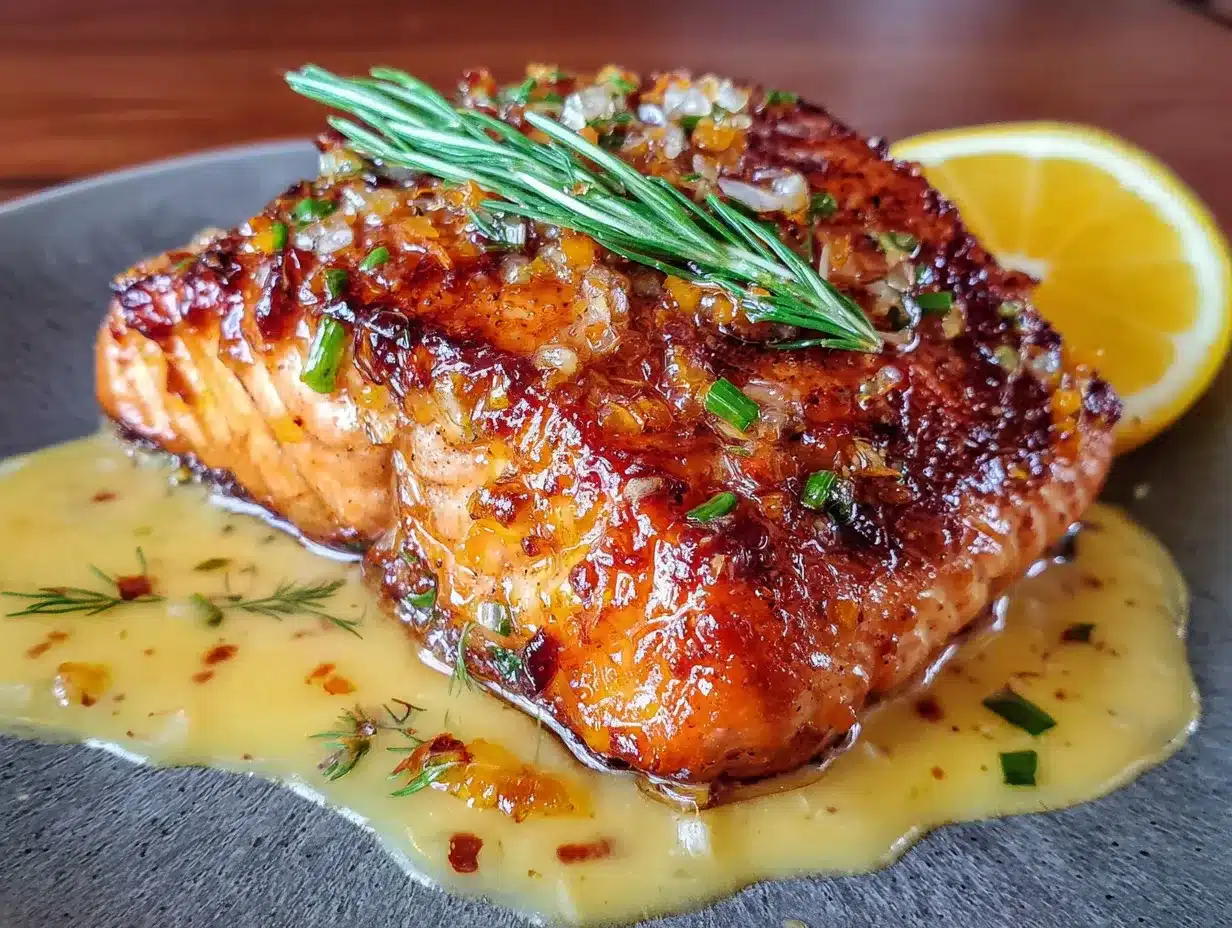
Let’s get cooking. This comes together so fast, you’ll have dinner on the table before you know it. Follow these steps, and you’ll have perfect, flaky salmon every single time.
- Preheat Your Oven and Prep the Dish: First things first, preheat your oven to 400°F (200°C). While it’s heating up, lightly grease your 9×13-inch baking dish with a little butter or a spray of cooking oil. This prevents the salmon from sticking and makes cleanup a breeze. I use a paper towel to spread the butter around.
- Prepare the Salmon Fillets: If you’re using frozen salmon, make sure it’s fully thawed. Pat the fillets dry with paper towels. This is a crucial step—removing excess moisture helps the butter sauce cling to the fish and promotes better browning. Place the fillets skin-side down in the prepared baking dish, leaving a little space between each one so they cook evenly. Season both sides generously with salt and freshly ground black pepper. Don’t be shy here; the seasoning is your first layer of flavor.
- Make the Lemon Dill Butter: In your small microwave-safe bowl or saucepan, combine the 4 tablespoons of unsalted butter, 2 tablespoons of fresh lemon juice, 2 tablespoons of chopped fresh dill, and 2 minced garlic cloves. Microwave in 15-second bursts until the butter is completely melted, stirring in between. If using a saucepan, melt over low heat, stirring constantly. The goal is to melt the butter, not boil it. You want a smooth, fragrant, golden mixture.
- Pour the Sauce Over the Salmon: Once your butter mixture is ready, pour it evenly over the salmon fillets. Make sure each fillet gets a good coating. The sauce will pool a little in the bottom of the dish, and that’s perfect—it will create a little steam bath and keep the fish incredibly moist. For an extra touch, place a thin lemon slice on top of each fillet. It looks beautiful and infuses even more lemon flavor.
- Bake to Perfection: Place the baking dish in the preheated oven on the middle rack. Bake for 12-15 minutes, depending on the thickness of your fillets. The salmon is done when it flakes easily with a fork and the internal temperature reaches 145°F (63°C) at the thickest part. I always start checking at the 12-minute mark. The flesh should be opaque and just starting to separate into flakes. Be careful not to overcook it, or it will become dry.
- Rest and Serve: Once the salmon is cooked, remove the dish from the oven. Let it rest for 2-3 minutes in the dish. This allows the juices to redistribute throughout the fish, making it even more tender. During this time, the residual heat will finish cooking the salmon gently. Spoon some of the pan juices over the top of each fillet before serving. Garnish with a few extra sprigs of fresh dill and maybe a lemon wedge on the side.
Troubleshooting Tip: If your salmon is thicker on one end, you can fold the thinner end under itself so it cooks at the same rate as the thicker part. This is a great trick for getting even results.
Cooking Tips & Techniques
Over the years, I’ve learned a few things the hard way. Let me share them so you don’t have to make the same mistakes I did.
Don’t Overcrowd the Pan: This is a common mistake. If your fillets are touching or overlapping, they’ll steam instead of bake, and you won’t get that nice, tender texture. Give them a little breathing room. If you’re cooking for a crowd, use two baking dishes or cook in batches.
The Skin Situation: I always leave the skin on for baking. It helps keep the fish moist and adds a little extra flavor. Plus, it’s easy to remove after cooking. Just slide a spatula between the skin and the flesh, and it comes right off. If you’re serving kids who don’t like the skin, this is a lifesaver. I once forgot to remove the skin before serving to my mother-in-law, and she politely picked at it for ten minutes. Lesson learned!
Timing is Everything: Salmon cooks quickly, so don’t walk away. Set a timer for 10 minutes, then start checking. Every oven is a little different, and the thickness of your fillets will affect the cooking time. I’ve definitely overcooked a few batches while I was busy chopping vegetables for a side dish. Now, I prep everything else first, then pop the salmon in the oven last.
Use an Instant-Read Thermometer: This is the single best investment you can make for perfectly cooked fish. It takes all the guesswork out. Insert the probe into the thickest part of the fillet, and when it reads 145°F (63°C), it’s done. No more dry, overcooked salmon. I keep mine in the drawer right next to the stove so I never have to search for it.
Make Extra Sauce: If you like a lot of sauce (and who doesn’t?), you can easily double the butter, lemon, and dill mixture. Just be sure to use a larger baking dish so the salmon isn’t swimming in it. The extra sauce is amazing spooned over rice or roasted vegetables.
Variations & Adaptations
This recipe is a fantastic base, and it’s easy to customize based on what you have on hand or what your family likes. Here are a few of my favorite variations.
- Herb Swap: Not a fan of dill? No problem. Try fresh parsley, chives, or even a teaspoon of dried oregano or thyme. Each herb brings its own unique flavor. I’ve made it with a mix of parsley and chives, and it was fantastic—a little more mild and oniony.
- Spicy Kick: Add 1/4 teaspoon of red pepper flakes or a pinch of cayenne pepper to the butter mixture. This gives the salmon a lovely warmth without being overwhelming. My husband loves this version. It’s perfect for when you want a little heat.
- Garlic Lover’s Version: If you’re a garlic fanatic (like me), add an extra clove or two. You can also roast a whole head of garlic and squeeze the soft, sweet cloves into the butter for a mellow, caramelized garlic flavor. It’s incredible.
- Dairy-Free Adaptation: Use a good-quality vegan butter or ghee. I’ve tested this with [Miyoko’s] vegan butter, and it worked beautifully. The texture was slightly different, but the flavor was still bright and delicious. Ghee adds a lovely nutty flavor.
- Different Citrus: Swap the lemon for lime or orange juice. Lime gives it a more tropical, zesty flavor, while orange adds a touch of sweetness. Both are wonderful with the dill. I made a lime-dill version last summer, and it was perfect with a side of grilled corn.
Serving & Storage Suggestions
This salmon is incredibly versatile. Here’s how to serve it and store any leftovers (if you have any!).
Serving: Serve the salmon hot, straight from the oven. Spoon some of the pan juices over the top. It’s beautiful on a bed of fluffy rice, quinoa, or alongside roasted vegetables like asparagus, broccoli, or green beans. I love it with a simple side salad and some crusty bread to soak up the extra butter sauce. For a complete meal, try it with our creamy mashed potatoes—the lemon dill butter is amazing drizzled over them.
Storage: Store leftover salmon in an airtight container in the refrigerator for up to 3 days. The flavors actually meld together and get even better overnight. The dill and lemon infuse the fish even more.
Reheating: The best way to reheat salmon is gently to avoid drying it out. Place the fillets in a baking dish with a tablespoon of water or chicken broth, cover with foil, and warm in a 300°F (150°C) oven for about 10 minutes. You can also reheat it in a skillet over low heat with a little butter or oil, flipping once. Avoid the microwave if you can—it tends to make the fish rubbery.
Freezing: You can freeze cooked salmon for up to 2 months. Let it cool completely, then wrap each fillet tightly in plastic wrap and place in a freezer-safe bag. To thaw, place it in the refrigerator overnight. Reheat using the oven method above. The texture will be slightly softer after freezing, but the flavor is still great. This is a fantastic way to meal prep for busy weeks.
Nutritional Information & Benefits
This recipe isn’t just delicious; it’s good for you, too. Here’s a look at what you’re getting in each serving.
Estimated Nutritional Values (per serving, 1 fillet with sauce):
- Calories: 350-400
- Protein: 35-40g
- Fat: 22-26g (mostly healthy fats from salmon and butter)
- Carbohydrates: 2-3g
- Fiber: 0g
- Sugar: 1g
Health Benefits: Salmon is packed with omega-3 fatty acids, which are fantastic for heart and brain health. It’s also an excellent source of high-quality protein, vitamin D, and B vitamins. The lemon adds a boost of vitamin C, and the dill is known for its antioxidant properties. This is a meal that nourishes your body while satisfying your taste buds. It’s a win-win for a busy family.
Dietary Considerations: This recipe is naturally gluten-free and low-carb, making it perfect for those following a keto or paleo diet. It’s also dairy-free if you use a vegan butter or ghee. The only potential allergen is the fish itself, so be mindful if serving to anyone with a seafood allergy.
Conclusion
So there you have it—a budget-friendly, incredibly delicious, and remarkably easy salmon recipe that came from the most unexpected source. It’s proof that you don’t need a fancy kitchen or a culinary degree to make a meal that feels special. It’s all about using simple, smart ingredients and a little bit of know-how. This recipe has become a staple in my house, and I hope it becomes one in yours, too.
I love this recipe because it’s a reminder that good food doesn’t have to be complicated or expensive. It’s about resourcefulness and making the most of what you have. It’s a Tuesday night hero that makes everyone at the table happy without breaking the bank. So go ahead, give it a try. Customize it with your favorite herbs or a little spice. Make it your own. And when you do, I’d love to hear about it. Leave a comment below and tell me how it turned out, or share your own twist on it. Did you use a different herb? Add a little heat? I’m always looking for new ideas. Happy cooking, friends!
Frequently Asked Questions
Can I use frozen salmon without thawing it first?
It’s best to thaw the salmon first for even cooking. If you bake it from frozen, the outside will cook much faster than the inside, leading to a dry exterior and a raw center. Thawing in the fridge overnight is the safest method. In a pinch, you can thaw the sealed bag in a bowl of cold water for about 30 minutes.
How do I know when the salmon is fully cooked?
The most reliable way is to use an instant-read thermometer. The internal temperature should reach 145°F (63°C) at the thickest part. You can also check by gently flaking the fish with a fork. If it flakes easily and is opaque all the way through, it’s done. The flesh should look moist, not dry or stringy.
Can I use dried dill instead of fresh?
Absolutely. If you don’t have fresh dill, you can use 2 teaspoons of dried dill in place of the 2 tablespoons of fresh. Dried herbs are more concentrated, so you need less. The flavor won’t be quite as bright, but it will still be delicious. Just add it to the butter mixture as directed.
What can I serve with this salmon to make it a complete meal?
This salmon pairs beautifully with so many sides. For a low-carb option, serve it with roasted asparagus or a simple green salad. For a heartier meal, try it with rice, quinoa, or our creamy mashed potatoes to soak up all that delicious lemon dill butter. Roasted potatoes or a simple couscous are also great choices.
Can I make this recipe in an air fryer?
Yes, you can! Preheat your air fryer to 375°F (190°C). Place the seasoned salmon fillets in the air fryer basket (you may need to work in batches). Pour the lemon dill butter over the top. Cook for 8-12 minutes, depending on the thickness of the fillets, until the salmon flakes easily. The air fryer will give you a slightly crisper exterior on the salmon.
Pin This Recipe!
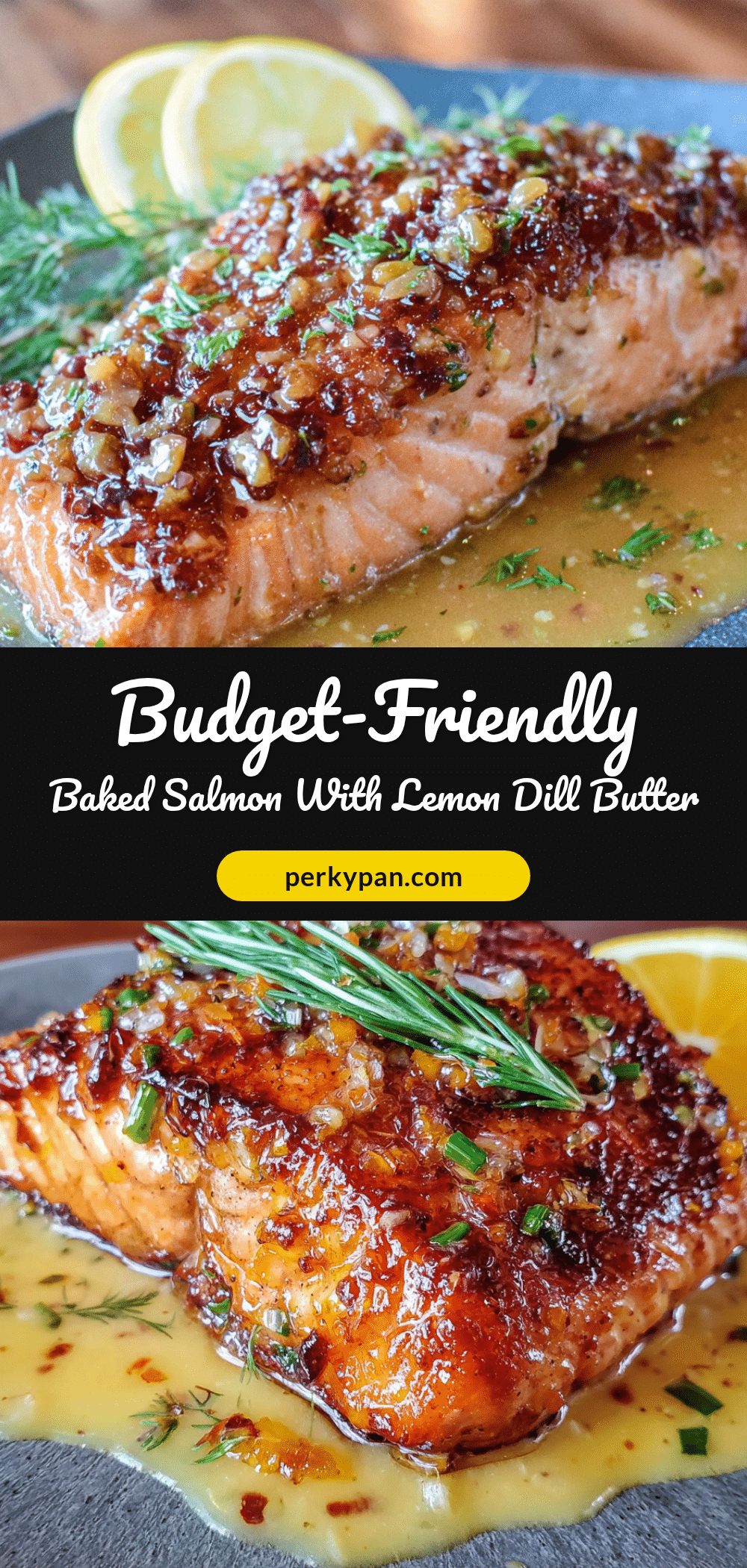
Easy Budget Baked Salmon with Lemon Dill Butter
This budget-friendly baked salmon with lemon dill butter is a quick and easy weeknight dinner that feels fancy without breaking the bank. Made with simple ingredients, it’s ready in under 30 minutes and perfect for feeding a family.
- Prep Time: 10 minutes
- Cook Time: 15 minutes
- Total Time: 25 minutes
- Yield: 4 servings 1x
- Category: Main Course
- Cuisine: American
Ingredients
- 4 salmon fillets (about 6 oz / 170g each)
- 4 tablespoons unsalted butter (56g)
- 2 tablespoons fresh lemon juice (about 1 large lemon)
- 2 tablespoons fresh dill, chopped
- 2 cloves garlic, minced
- Salt and black pepper to taste
- Optional: lemon slices and extra dill sprigs for garnish
Instructions
- Preheat your oven to 400°F (200°C). Lightly grease a 9×13-inch baking dish with butter or cooking spray.
- If using frozen salmon, thaw completely. Pat the fillets dry with paper towels. Place them skin-side down in the prepared dish, leaving space between each. Season both sides generously with salt and black pepper.
- In a small microwave-safe bowl or saucepan, combine the butter, lemon juice, dill, and garlic. Microwave in 15-second bursts or melt over low heat until just melted, stirring occasionally.
- Pour the butter mixture evenly over the salmon fillets. Optionally, place a thin lemon slice on top of each fillet.
- Bake on the middle rack for 12-15 minutes, until the salmon flakes easily with a fork and the internal temperature reaches 145°F (63°C) at the thickest part.
- Remove from the oven and let rest for 2-3 minutes. Spoon pan juices over the fillets before serving. Garnish with extra dill sprigs and lemon wedges if desired.
Notes
For best results, use fresh lemon juice and fresh dill. If using dried dill, substitute 2 teaspoons for the fresh. To avoid overcooking, start checking at the 12-minute mark. Leftovers can be stored in an airtight container in the refrigerator for up to 3 days. Reheat gently in a 300°F oven with a splash of water or broth.
Nutrition
- Serving Size: 1 fillet with sauce
- Calories: 375
- Sugar: 1
- Sodium: 350
- Fat: 24
- Saturated Fat: 10
- Carbohydrates: 2
- Protein: 37
Keywords: baked salmon, lemon dill butter, budget-friendly salmon, easy salmon recipe, weeknight dinner