Love this? Save it for later!
Share the inspiration with your friends
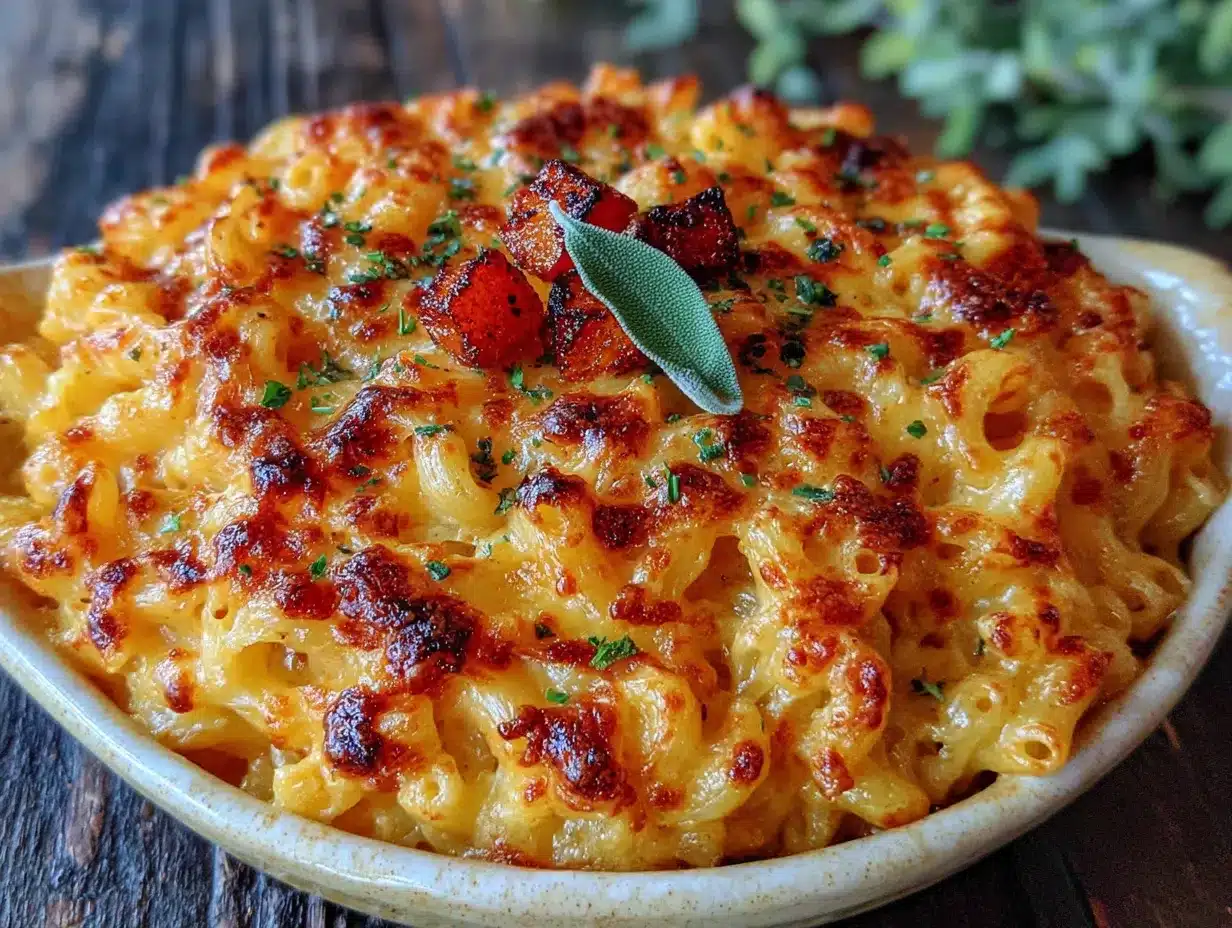
I had a long-standing position on mac and cheese. For years, I swore it had to be the classic version—sharp cheddar, maybe a little Gruyère, and a breadcrumb topping that crackled under the broiler. The kind that leaves a glossy film on the spoon and, let’s be honest, sits a little heavy in your stomach. So when my friend Jenna started raving about a “healthy” version made with butternut squash, I smiled and nodded while mentally filing it under “recipes that sound good but won’t actually satisfy.” I mean, vegetables don’t belong in mac and cheese, right? That’s what I thought. Then last November, I was over at her place on a rainy Tuesday—she had a crack in her favorite blue mixing bowl that she refused to throw away—and she pulled a baking dish out of the oven. The color was this deep, golden orange, and it smelled like comfort. I asked for a small spoonful, just to be polite. I ended up eating two helpings and asking for the recipe before I left. Honestly, catching myself in the act of proving myself wrong has never tasted so good.
This isn’t just another mac and cheese recipe. It is the one that changed my mind. The roasted butternut squash blends into the cheese sauce so smoothly that you don’t even know it’s there—it just makes everything creamier and adds a subtle sweetness that balances the sharp cheddar. No one at your table will guess it’s packed with vegetables. Maybe you’ve been burned by “healthy” versions of comfort food before. I get it. But this one is different. It’s the recipe I keep coming back to because it delivers that same soul-soothing satisfaction without the heavy feeling afterward. Let’s make it together.
Why You’ll Love This Recipe
After testing this recipe about seven times over two weeks—yes, my family staged a small intervention—I can confidently say this is the version worth making. It hits every note you want from mac and cheese while sneaking in a full serving of vegetables. Here’s why it works so well:
- Quick & Easy: Comes together in under 45 minutes, and most of that is hands-off roasting time. Perfect for a busy weeknight when you need something comforting fast.
- Simple Ingredients: No fancy grocery trips needed. You likely have most of these pantry staples already—pasta, cheese, milk, and a butternut squash from the produce aisle.
- Perfect for Cozy Dinners: Great for fall evenings, holiday side dishes, or just a Tuesday night when you need a hug in a bowl.
- Crowd-Pleaser: My kids didn’t even blink at the orange sauce. They just asked for seconds. That’s a win in my book.
- Unbelievably Delicious: The texture is velvety and rich, and the flavor is pure comfort with a subtle nutty sweetness from the squash.
What makes this recipe different from the rest? It’s the balance. The roasted squash puree blends seamlessly into the cheese sauce, so you get all the creaminess without the heavy cream. I tested it with different cheese ratios—too much cheddar and it gets greasy, too little and it’s bland. This version uses sharp cheddar for flavor and a touch of Parmesan for depth. The result? A mac and cheese that tastes indulgent but leaves you feeling good. It’s comfort food reimagined—healthier, faster, but with the same soul-soothing satisfaction.
What Ingredients You Will Need
This recipe uses simple, wholesome ingredients to deliver bold flavor and satisfying texture without the fuss. Most of these are pantry staples or easy to find at any grocery store. Here’s what you’ll need:
For the Roasted Butternut Squash
- 1 medium butternut squash (about 2-3 pounds), peeled, seeded, and cubed into 1-inch pieces
- 1 tablespoon olive oil (adds richness and helps caramelization)
- 1/2 teaspoon salt
- 1/4 teaspoon black pepper
For the Cheese Sauce
- 2 tablespoons unsalted butter (I prefer Kerrygold for its rich flavor)
- 2 tablespoons all-purpose flour (or gluten-free all-purpose blend if needed)
- 1 1/2 cups milk (whole milk gives the creamiest result, but 2% works too)
- 1 cup roasted butternut squash puree (the star of the show)
- 1 1/2 cups sharp cheddar cheese, shredded (freshly shredded melts better than pre-shredded)
- 1/4 cup grated Parmesan cheese (adds a salty, nutty depth)
- 1/2 teaspoon Dijon mustard (trust me—it brightens the whole sauce)
- 1/4 teaspoon garlic powder
- Salt and pepper to taste
For the Pasta
- 8 ounces elbow macaroni or any short pasta (cavatappi, shells, or rotini work great)
- Salt for the pasta water (season the pasta from the inside out)
For the Topping (Optional but Recommended)
- 1/4 cup panko breadcrumbs
- 1 tablespoon melted butter
- 2 tablespoons grated Parmesan cheese
When choosing your butternut squash, look for one that feels heavy for its size with a firm, unblemished skin. If you’re short on time, you can buy pre-cubed butternut squash from the produce section—just make sure the pieces are evenly sized so they roast evenly. For the cheese, I recommend shredding your own from a block. Pre-shredded cheese often contains anti-caking agents that prevent it from melting smoothly into the sauce.
Equipment Needed
You don’t need a fancy kitchen to pull this off. Here’s what you’ll need:
- Baking sheet (for roasting the squash—a rimmed sheet works best to catch any juices)
- Large pot (for boiling pasta and making the sauce)
- Blender or food processor (to puree the roasted squash until silky smooth)
- Sharp knife and cutting board (for prepping the squash—be careful, that skin is tough)
- Measuring cups and spoons
- Whisk (for a lump-free sauce)
- Wooden spoon or spatula
- 9×13-inch baking dish (or similar size for baking)
- Box grater (for shredding cheese—faster than a food processor and easier to clean)
If you don’t have a blender, you can mash the roasted squash with a potato masher or fork. The texture won’t be as silky, but it will still work. I’ve done it that way when my blender was in the dishwasher, and honestly, the rustic texture adds a little charm. For the baking dish, an 8×8-inch square pan works if you want a thicker, more indulgent portion.
Preparation Method
Let’s get cooking. This recipe moves quickly once the squash is roasted, so I like to prep everything before I start the sauce.
- Preheat and prep the squash. Preheat your oven to 400°F (200°C). Line a baking sheet with parchment paper for easy cleanup. Toss the cubed butternut squash with olive oil, salt, and pepper. Spread it in a single layer on the baking sheet—crowding the pan will steam the squash instead of roasting it. Roast for 25-30 minutes, flipping halfway through, until the squash is tender and lightly caramelized at the edges. You’ll know it’s done when a fork slides in easily.
- Cook the pasta. While the squash roasts, bring a large pot of salted water to a boil. Add the pasta and cook according to package directions until al dente—usually about 8-10 minutes. Drain the pasta, reserving about 1/2 cup of the pasta water. Don’t rinse the pasta; the starch on the surface helps the sauce cling to it.
- Make the squash puree. Transfer the roasted squash to a blender or food processor. Add about 1/4 cup of milk and blend until completely smooth. You’re looking for a consistency similar to baby food—silky and lump-free. Scrape down the sides as needed. Set aside.
- Start the cheese sauce. In the same large pot you used for the pasta, melt the butter over medium heat. Once it’s bubbling, whisk in the flour and cook for 1-2 minutes, stirring constantly. This is your roux, and it should smell slightly nutty. Slowly pour in the remaining milk while whisking vigorously to prevent lumps. Cook for 2-3 minutes until the mixture thickens enough to coat the back of a spoon.
- Add the squash and cheese. Reduce the heat to low. Stir in the squash puree, Dijon mustard, garlic powder, and a pinch of salt and pepper. Mix until fully combined. Gradually add the shredded cheddar and Parmesan, a handful at a time, stirring until each addition is melted before adding the next. The sauce should be smooth, creamy, and a gorgeous golden-orange color. If it seems too thick, add a splash of the reserved pasta water to loosen it up.
- Combine and bake. Add the cooked pasta to the sauce and stir until every piece is coated. Pour the mixture into a greased 9×13-inch baking dish. If you’re using the topping, mix the panko, melted butter, and Parmesan in a small bowl, then sprinkle it evenly over the top.
- Bake until bubbly. Bake at 375°F (190°C) for 15-20 minutes, or until the sauce is bubbling around the edges and the topping is golden brown. If you want a crispier topping, switch the oven to broil for the last 2 minutes—but keep an eye on it, because breadcrumbs burn fast.
- Rest and serve. Let the mac and cheese sit for 5 minutes before serving. This allows the sauce to set slightly so it doesn’t turn into a soupy mess on the plate. Serve warm and watch it disappear.
Cooking Tips & Techniques
After making this recipe more times than I care to admit, I’ve picked up a few tricks that make a real difference. Here’s what I’ve learned:
Don’t skip roasting the squash. I tried boiling it once to save time, and the sauce came out watery and bland. Roasting concentrates the natural sugars and adds a depth of flavor that boiling just can’t replicate. It’s worth the extra 10 minutes.
Shred your own cheese. I know, it’s tempting to grab the bag of pre-shredded cheese. But those anti-caking agents really do affect the melt. Freshly shredded cheese melts into a silky, cohesive sauce. Pre-shredded cheese can turn grainy. Trust me on this one—I learned the hard way when my sauce looked like cottage cheese.
Watch your heat when making the sauce. Medium heat is your friend. If the heat is too high, the milk can scorch or the cheese can separate. Keep it gentle and stir constantly. The sauce should flow like warm honey—smooth and glossy.
Season as you go. Don’t wait until the end to add salt. Season the pasta water, season the squash, and season the sauce. Each layer builds flavor. But go easy on the salt in the sauce because the cheese already brings plenty.
If the sauce seems too thick, don’t panic. Add a splash of the reserved pasta water or extra milk. The starch in the pasta water helps keep the sauce smooth and clinging to the pasta. I’ve saved many a sauce this way.
Variations & Adaptations
This recipe is incredibly flexible. Here are some ways to make it your own:
Make it gluten-free. Swap the all-purpose flour for a gluten-free all-purpose blend, and use gluten-free pasta. The sauce will still be creamy and delicious. I’ve tested it with a 1:1 gluten-free flour blend, and it worked beautifully.
Add some protein. Stir in cooked, shredded chicken, crispy bacon bits, or even leftover pulled pork. The smoky flavor pairs wonderfully with the sweet squash. I added crumbled bacon once, and my husband declared it “the best mac and cheese ever.”
Go dairy-free. Use plant-based butter, unsweetened almond or oat milk, and dairy-free shredded cheese. The sauce won’t be as creamy, but it will still be satisfying. I recommend a dairy-free cheddar-style shred for the best flavor.
Spice it up. Add a pinch of cayenne pepper or red pepper flakes to the sauce for a little heat. A teaspoon of smoked paprika also adds a lovely smoky depth.
Swap the squash. No butternut squash? Use roasted sweet potato, pumpkin, or even carrot puree. Each will give a slightly different flavor, but all work beautifully. I’ve made it with roasted sweet potato, and the sweetness is slightly more pronounced but still delicious.
Serving & Storage Suggestions
This mac and cheese is best served warm, straight from the oven. The topping is crisp, the sauce is bubbly, and the pasta is perfectly tender. I like to serve it as a main dish with a simple green salad dressed with lemon vinaigrette—the acidity cuts through the richness. It also makes a fantastic side dish for roasted chicken, grilled steak, or even a holiday turkey.
For leftovers, let the mac and cheese cool completely, then transfer it to an airtight container. It will keep in the refrigerator for up to 4 days. The flavors actually meld together overnight, so leftovers taste even better the next day.
To reheat, add a splash of milk or water to the portion, cover it, and microwave in 30-second bursts, stirring in between. For a larger batch, reheat in a 350°F (175°C) oven for 15-20 minutes, covered with foil. The sauce will tighten up in the fridge, so the extra liquid helps bring back that creamy texture.
You can freeze this mac and cheese for up to 3 months. Assemble it in a freezer-safe dish, but don’t add the topping. Cover tightly with foil and freeze. When you’re ready to bake, thaw it in the refrigerator overnight, add the topping, and bake as directed. The texture won’t be quite as creamy as fresh, but it’s still a lifesaver on busy nights.
Nutritional Information & Benefits
Here’s the estimated nutritional breakdown per serving (based on 6 servings):
- Calories: 420
- Protein: 18g
- Fat: 18g
- Carbohydrates: 48g
- Fiber: 5g
- Sugar: 8g
- Sodium: 520mg
This mac and cheese is a great source of vitamin A from the butternut squash—one serving provides over 100% of your daily needs. Vitamin A is essential for eye health and immune function. The squash also adds fiber, which helps keep you full and supports digestion. The cheese provides calcium and protein, making this a balanced meal that doesn’t feel like a compromise.
If you’re watching your sodium, you can reduce the added salt and use low-sodium cheese. For a lower-carb option, swap the pasta for cauliflower florets or zucchini noodles—though I’ll admit, it’s not quite the same comfort food experience.
Conclusion
This healthy roasted butternut squash mac and cheese is proof that comfort food can be both delicious and nourishing. It’s creamy, cheesy, and packed with hidden veggies that make you feel good about seconds. I love that I can serve it to my family without anyone asking, “What’s in this?”—they just dig in and enjoy. That’s the kind of recipe worth keeping in your rotation.
I’d love to hear how it turns out for you. Did you add bacon? Swap the cheese? Forget the topping and eat it straight from the pot? (No judgment here.) Leave a comment below and let me know your twist. And if you loved it, share it with a friend who needs a little comfort food in their life. Happy cooking!
Frequently Asked Questions
Can I use frozen butternut squash instead of fresh?
Yes, you can use frozen cubed butternut squash. Thaw it first, pat it dry to remove excess moisture, and roast it as directed. The texture might be slightly softer, but it works well in a pinch.
Why did my cheese sauce turn out grainy?
Grainy cheese sauce usually happens when the heat is too high or the cheese is added too quickly. Keep the heat on low and add the cheese gradually, stirring until each handful is fully melted. Also, avoid pre-shredded cheese, which has anti-caking agents that can cause graininess.
Can I make this recipe ahead of time?
Absolutely. Assemble the mac and cheese completely, but don’t bake it. Cover and refrigerate for up to 24 hours. When you’re ready to bake, add the topping and bake at 375°F for 25-30 minutes, or until hot and bubbly.
How can I make this recipe vegan?
Use plant-based butter, unsweetened oat or almond milk, and dairy-free shredded cheddar. Nutritional yeast can add a cheesy flavor. The sauce will be thinner, but it still tastes great. Roast the squash as directed for the best flavor.
Can I skip the baking step and just eat it stovetop?
Yes! This mac and cheese is delicious straight from the pot. If you skip the baking, you can stir in a little extra milk to keep it creamy. The baked version just adds a crispy topping and a slightly firmer texture.
Pin This Recipe!
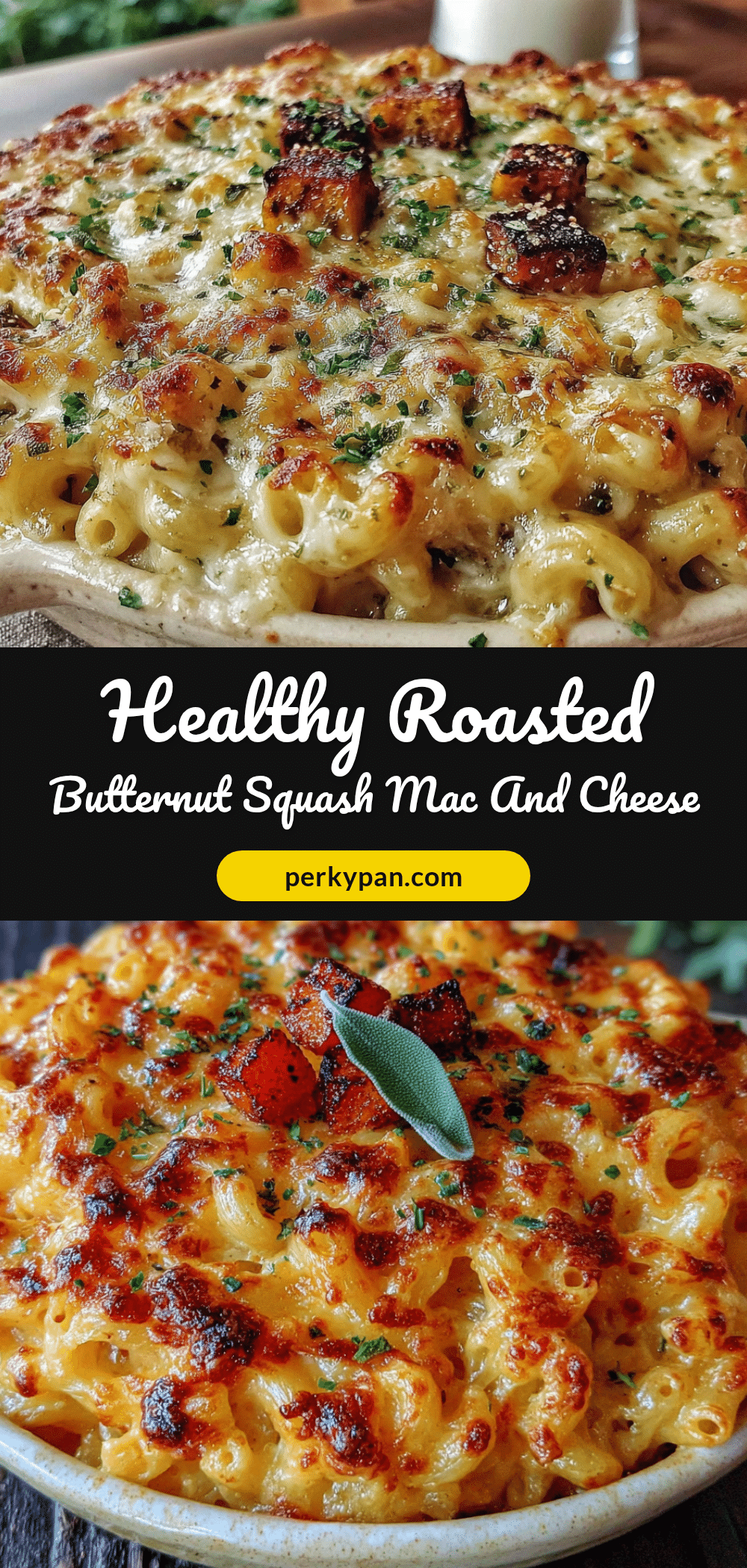
Healthy Roasted Butternut Squash Mac and Cheese: Easy & Creamy

This creamy, cheesy mac and cheese is made healthier with roasted butternut squash blended into the sauce. It’s a comforting, crowd-pleasing dish that comes together in under 45 minutes and is perfect for cozy dinners.
- Prep Time: 15 minutes
- Cook Time: 30 minutes
- Total Time: 45 minutes
- Yield: 6 servings 1x
- Category: Main Course
- Cuisine: American
Ingredients
- 1 medium butternut squash (about 2–3 pounds), peeled, seeded, and cubed into 1-inch pieces
- 1 tablespoon olive oil
- 1/2 teaspoon salt
- 1/4 teaspoon black pepper
- 2 tablespoons unsalted butter
- 2 tablespoons all-purpose flour
- 1 1/2 cups milk (whole milk preferred)
- 1 cup roasted butternut squash puree
- 1 1/2 cups sharp cheddar cheese, shredded
- 1/4 cup grated Parmesan cheese
- 1/2 teaspoon Dijon mustard
- 1/4 teaspoon garlic powder
- Salt and pepper to taste
- 8 ounces elbow macaroni or short pasta
- Salt for pasta water
- 1/4 cup panko breadcrumbs (optional topping)
- 1 tablespoon melted butter (optional topping)
- 2 tablespoons grated Parmesan cheese (optional topping)
Instructions
- Preheat oven to 400°F (200°C). Line a baking sheet with parchment paper. Toss cubed butternut squash with olive oil, salt, and pepper. Spread in a single layer on the baking sheet. Roast for 25-30 minutes, flipping halfway, until tender and lightly caramelized.
- While squash roasts, bring a large pot of salted water to a boil. Cook pasta according to package directions until al dente. Drain, reserving 1/2 cup pasta water. Do not rinse.
- Transfer roasted squash to a blender or food processor. Add 1/4 cup milk and blend until completely smooth. Set aside.
- In the same large pot, melt butter over medium heat. Whisk in flour and cook for 1-2 minutes, stirring constantly. Slowly pour in remaining milk while whisking vigorously. Cook for 2-3 minutes until thickened.
- Reduce heat to low. Stir in squash puree, Dijon mustard, garlic powder, and a pinch of salt and pepper. Gradually add shredded cheddar and Parmesan, stirring until each addition melts. If too thick, add a splash of reserved pasta water.
- Add cooked pasta to the sauce and stir until coated. Pour into a greased 9×13-inch baking dish. If using topping, mix panko, melted butter, and Parmesan, then sprinkle over top.
- Bake at 375°F (190°C) for 15-20 minutes, until bubbly and golden. For a crispier topping, broil for the last 2 minutes.
- Let rest for 5 minutes before serving. Serve warm.
Notes
Don’t skip roasting the squash—it concentrates the natural sugars and adds depth. Shred your own cheese for a smoother sauce. If the sauce seems too thick, add a splash of reserved pasta water. For a gluten-free version, use gluten-free flour and pasta. For a dairy-free version, use plant-based butter, milk, and cheese.
Nutrition
- Serving Size: 1 serving (about 1/6
- Calories: 420
- Sugar: 8
- Sodium: 520
- Fat: 18
- Saturated Fat: 9
- Carbohydrates: 48
- Fiber: 5
- Protein: 18
Keywords: healthy mac and cheese, butternut squash mac and cheese, creamy mac and cheese, comfort food, vegetarian, easy dinner