Love this? Save it for later!
Share the inspiration with your friends
Introduction
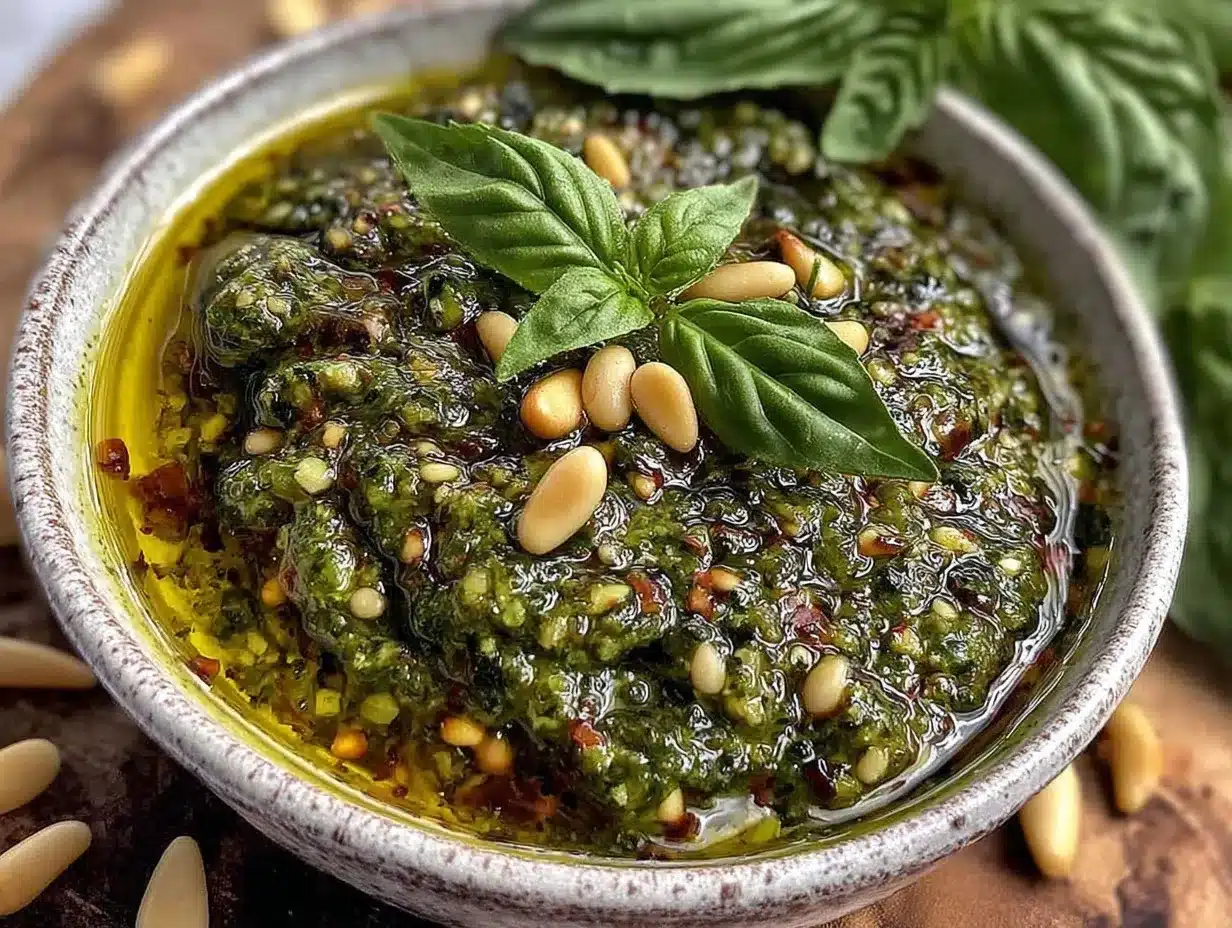
This was supposed to be a simple tomato sauce experiment. I grabbed the wrong container — a jar of pine nuts instead of walnuts — and the blender was humming louder than usual because I was already late for dinner. Honestly, I was about to toss it all and start over, but curiosity got the better of me. What came out was nothing like the thick red sauce I had planned — instead, a vibrant green sauce bursting with fresh basil and that unmistakable nutty crunch from perfectly toasted pine nuts.
Let me tell you, the kitchen was a mess. I cracked a bowl while reaching for the olive oil, and my phone buzzed with a text just as I was about to taste the first spoonful. Maybe you’ve been there — balancing distraction and disaster in equal parts.
But that unexpected batch of fresh basil pesto stayed with me. It’s quick, packed with flavor, and honestly, better than most store-bought versions I’d tried before. I keep making it whenever I need a quick sauce that feels fancy yet demands almost no effort. If you’ve got a bunch of basil and a handful of pine nuts, you’re halfway there already.
Why You’ll Love This Recipe
I’ve tested this fresh basil pesto recipe more times than I can count — from rushed weeknights to weekend lunches — and it always delivers. Here’s why it’s become my go-to:
- Quick & Easy: Ready in about 10 minutes, perfect for when you want something fresh without the fuss.
- Simple Ingredients: No need for specialty shopping trips — basil, pine nuts, garlic, olive oil, and Parmesan. You probably have most of these already.
- Perfect for Any Occasion: Whether it’s a casual pasta dinner or a last-minute appetizer spread, this pesto fits right in.
- Crowd-Pleaser: Kids and adults alike love this sauce’s bright flavor and creamy texture.
- Unbelievably Delicious: Toasting the pine nuts brings out a warm nuttiness that balances the fresh basil beautifully.
This isn’t just another pesto recipe — the toasty pine nuts give it a depth that makes every bite feel special. Plus, blending the ingredients just enough to keep a little texture means it’s not a one-note sauce. It’s like comfort food with a green twist that makes you want to close your eyes and savor every forkful. Honestly, it’s the kind of recipe you’ll want to share — or maybe keep all to yourself.
What Ingredients You Will Need
This recipe uses simple, wholesome ingredients to deliver bold flavor and satisfying texture without fuss. Most of these are pantry staples, and many can be swapped if needed.
- Fresh basil leaves, about 2 packed cups (washed and dried) – the star of the show, look for bright green leaves without bruising
- Pine nuts, 1/3 cup (toasted until golden to bring out their nutty flavor) – I recommend Goya brand for consistent freshness
- Garlic cloves, 2 large (peeled and roughly chopped) – adds that classic kick
- Parmesan cheese, 1/2 cup grated (preferably Parmigiano-Reggiano for best flavor) – brings savory richness
- Extra virgin olive oil, 1/2 cup (cold-pressed, fruity flavor is ideal)
- Fresh lemon juice, 1 tablespoon (optional, brightens the flavor)
- Salt, to taste (I usually start with 1/2 teaspoon and adjust)
- Black pepper, freshly ground, a pinch
Substitution tips: If pine nuts are hard to find or pricey, try toasted walnuts or almonds. For a dairy-free pesto, swap Parmesan with nutritional yeast or omit entirely. If you want a gluten-free meal, this pesto is naturally safe.
Equipment Needed
- Food processor or high-speed blender: Essential for blending the pesto; a food processor gives better texture control.
- Small skillet or frying pan: For toasting pine nuts evenly without burning.
- Measuring cups and spoons: For precise ingredient amounts.
- Spatula: To scrape down the sides of the processor bowl.
- Grater: For fresh Parmesan cheese (pre-grated lacks that punch).
If you don’t have a food processor, a sturdy blender can work — just pulse in short bursts to avoid overheating. For toasting pine nuts, keep the heat medium-low; I learned the hard way that a few seconds too long can turn them bitter. A budget-friendly option for toasting is a dry pan without oil, which helps keep the nuts’ natural flavor.
Preparation Method
- Toast the pine nuts: Heat a dry skillet over medium-low heat. Add 1/3 cup pine nuts, stirring frequently for about 3-5 minutes until golden and fragrant. Remove immediately to a plate to cool. (Watch carefully — they can go from toasted to burned in seconds.)
- Prepare the basil: Wash and dry 2 packed cups of fresh basil leaves thoroughly to avoid watery pesto.
- Combine ingredients: In your food processor, add the cooled pine nuts, 2 large peeled garlic cloves, 1/2 cup grated Parmesan, and the basil leaves.
- Pulse to combine: Pulse the mixture 5-6 times until coarsely chopped. Don’t overblend — you want some texture.
- Slowly add olive oil: With the processor running, drizzle in 1/2 cup extra virgin olive oil through the feed tube. This emulsifies the pesto to a smooth but slightly chunky consistency. (If it looks too thick, add a teaspoon of water or more oil.)
- Add lemon juice and seasoning: Stir in 1 tablespoon fresh lemon juice, 1/2 teaspoon salt, and a pinch of freshly ground black pepper. Pulse once or twice to mix.
- Taste and adjust: Give it a taste — add more salt, lemon, or garlic if needed. Sometimes I like a bit more zing; other times, less garlic depending on the mood.
- Serve or store: Use immediately on pasta, sandwiches, or as a dip. You can refrigerate in an airtight container for up to 3 days; cover the top with a thin layer of olive oil to prevent browning.
Pro tip: If you want a creamier pesto, add a tablespoon of ricotta or cream cheese during blending. Just a little tweak can change the whole vibe.
Cooking Tips & Techniques
Getting the perfect fresh basil pesto is all about balance and timing. Here are some tips from my kitchen trials:
- Don’t skip toasting pine nuts: This step makes a huge difference — it brings out their richness and prevents any raw, bitter taste.
- Use fresh basil only: Dried basil doesn’t work here; the fresh leaves bring that vibrant green color and fresh aroma.
- Control the texture: Pulse instead of blending continuously to keep some chunkiness. Overprocessing can turn it into a paste that feels heavy.
- Be gentle with garlic: Too much raw garlic can overpower. Start with less; you can always add more after tasting.
- Olive oil quality matters: Use a good-quality extra virgin olive oil — it’s the backbone of the flavor and mouthfeel.
- Timing is key: Make pesto close to serving time for the brightest flavor; basil oxidizes and darkens quickly.
I once tried making a big batch and storing it for a week — no bueno. The flavor and color faded fast. Lesson learned: smaller batches, more often.
Variations & Adaptations
This fresh basil pesto recipe is pretty versatile. Here are some ways to change it up:
- Dietary swaps: For a vegan version, replace Parmesan with nutritional yeast and omit cheese altogether.
- Nut alternatives: Use toasted walnuts, almonds, or even sunflower seeds if pine nuts aren’t your jam.
- Seasonal tweaks: In summer, add a handful of fresh cherry tomatoes into the blend for a bright twist.
- Different herbs: Try swapping half the basil for fresh parsley or cilantro for a different flavor profile.
- Texture change: Add a bit of cream cheese or avocado to make it creamier and richer.
My favorite variation lately is adding a pinch of red pepper flakes for a subtle heat kick — it wakes up the flavors without overwhelming the basil’s freshness.
Serving & Storage Suggestions
Serve this fresh basil pesto at room temperature for the best flavor. It’s fantastic tossed with warm pasta, spread on crusty bread, or dolloped over grilled veggies and chicken.
Try pairing it with a simple crispy garlic chicken or drizzle it over roasted potatoes for a flavor punch. A chilled glass of white wine or sparkling water with lemon complements it beautifully.
Store leftover pesto in an airtight container in the refrigerator for up to 3 days. Pour a thin layer of olive oil on top to keep the vibrant green color and prevent oxidation. For longer storage, freeze pesto in ice cube trays, then transfer cubes to a freezer bag — that way, you can thaw just what you need.
When reheating, avoid high heat. Instead, stir cooled pesto into warm pasta or dishes to keep its fresh taste intact. Flavors actually deepen after a day or two, so leftovers can taste even better.
Nutritional Information & Benefits
| Nutrient | Per Serving (2 tbsp / 30g) |
|---|---|
| Calories | 150 |
| Fat | 14g (mostly healthy monounsaturated fats) |
| Protein | 3g |
| Carbohydrates | 2g |
| Fiber | 1g |
| Sodium | 180mg (variable depending on cheese and added salt) |
This fresh basil pesto is a great source of antioxidants from basil and healthy fats from olive oil and pine nuts. It’s naturally gluten-free and low-carb, making it suitable for many dietary preferences. Just watch out for nut allergies and dairy if you choose to include Parmesan.
From a wellness perspective, pesto offers a flavorful way to include fresh herbs and healthy fats in your diet without extra processed ingredients — a little green boost that’s as tasty as it is nutritious.
Conclusion
If you’re looking for a quick, flavorful sauce that feels fresh and homemade, this fresh basil pesto with toasty pine nuts is a winner. It’s simple, fast, and full of bright, comforting flavors that make even the most basic dishes pop.
Feel free to tweak it to your taste — maybe a little more garlic, a squeeze of lemon, or swapping nuts. That’s the beauty of this recipe: it’s flexible, forgiving, and always delicious.
Why do I keep coming back to this pesto? Because it’s proof that sometimes, happy kitchen accidents make the best meals. Give it a try and let me know how you like to make your pesto — I’d love to hear your tweaks and stories!
Don’t forget to share this recipe with friends who love quick and tasty sauces, and drop your questions or pesto wins in the comments below!
Frequently Asked Questions
Can I use frozen basil for this pesto recipe?
Frozen basil tends to lose its bright color and fresh flavor, so fresh basil is best for this recipe. If frozen is your only option, thaw and drain excess moisture before blending.
How long does homemade pesto last in the fridge?
Stored in an airtight container with a layer of olive oil on top, pesto lasts about 3 days in the refrigerator before it starts to darken and lose flavor.
Can I make pesto without a food processor?
Yes! You can finely chop the basil, garlic, and pine nuts by hand and then mix everything with oil and cheese. It takes more elbow grease but works in a pinch.
What dishes go well with fresh basil pesto?
Pesto is great with pasta, grilled meats, sandwiches, roasted vegetables, and even as a dip for bread or crackers.
Can I freeze fresh basil pesto?
Absolutely. Freeze pesto in small portions like ice cube trays, then transfer to a freezer bag. Thaw as needed to keep its fresh flavor intact.
Pin This Recipe!
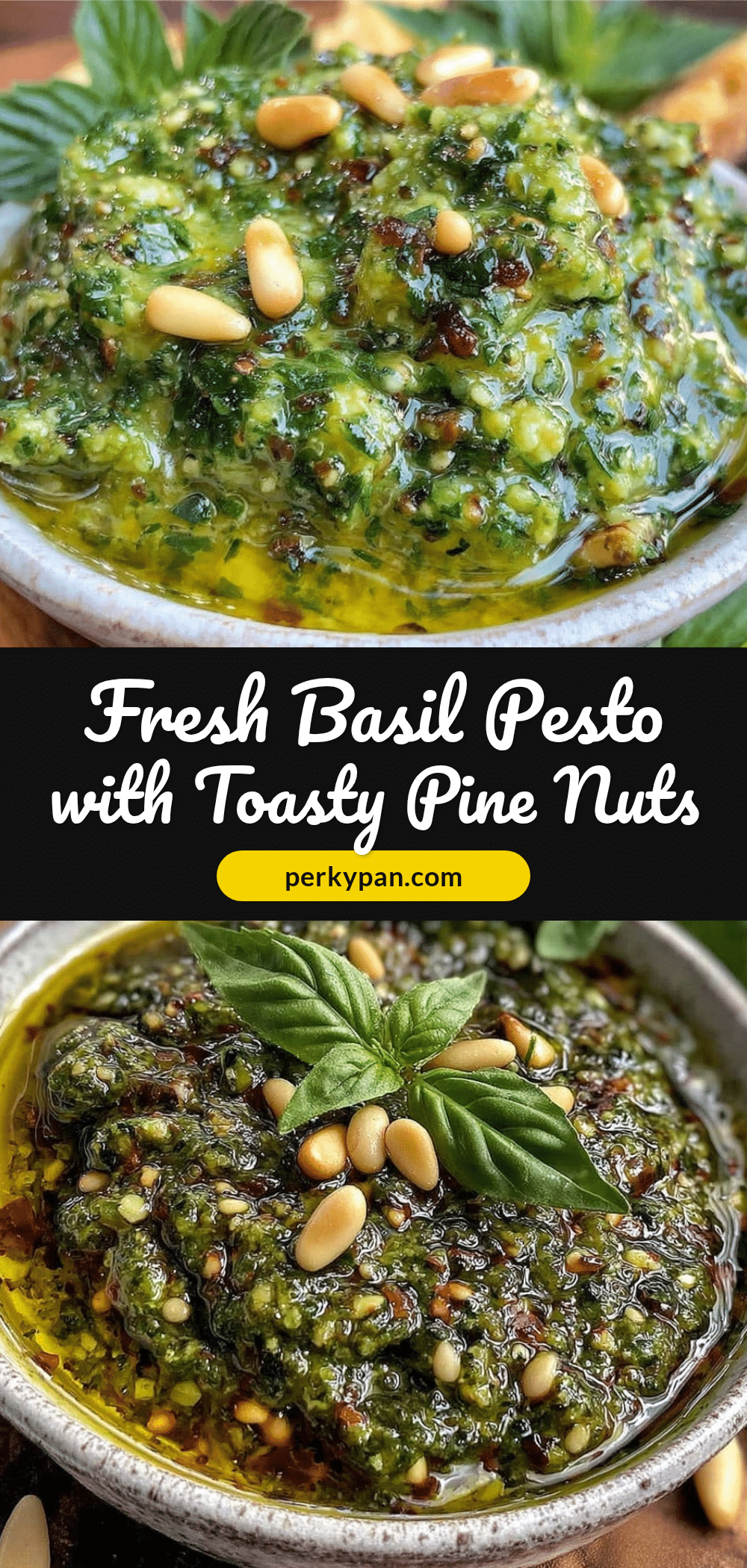
Fresh Basil Pesto Recipe with Toasty Pine Nuts
A quick and flavorful fresh basil pesto made with toasted pine nuts, garlic, Parmesan, and olive oil. Perfect for pasta, sandwiches, or as a dip.
- Prep Time: 10 minutes
- Cook Time: 5 minutes
- Total Time: 15 minutes
- Yield: About 1 cup (approximately 8 servings of 2 tbsp each) 1x
- Category: Sauce
- Cuisine: Italian
Ingredients
- 2 packed cups fresh basil leaves (washed and dried)
- 1/3 cup pine nuts (toasted until golden)
- 2 large garlic cloves (peeled and roughly chopped)
- 1/2 cup grated Parmesan cheese (preferably Parmigiano-Reggiano)
- 1/2 cup extra virgin olive oil (cold-pressed)
- 1 tablespoon fresh lemon juice (optional)
- 1/2 teaspoon salt (adjust to taste)
- Pinch of freshly ground black pepper
Instructions
- Toast the pine nuts: Heat a dry skillet over medium-low heat. Add 1/3 cup pine nuts, stirring frequently for about 3-5 minutes until golden and fragrant. Remove immediately to a plate to cool.
- Prepare the basil: Wash and dry 2 packed cups of fresh basil leaves thoroughly to avoid watery pesto.
- Combine ingredients: In your food processor, add the cooled pine nuts, 2 large peeled garlic cloves, 1/2 cup grated Parmesan, and the basil leaves.
- Pulse to combine: Pulse the mixture 5-6 times until coarsely chopped. Don’t overblend — you want some texture.
- Slowly add olive oil: With the processor running, drizzle in 1/2 cup extra virgin olive oil through the feed tube to emulsify the pesto to a smooth but slightly chunky consistency. Add a teaspoon of water or more oil if too thick.
- Add lemon juice and seasoning: Stir in 1 tablespoon fresh lemon juice, 1/2 teaspoon salt, and a pinch of freshly ground black pepper. Pulse once or twice to mix.
- Taste and adjust: Taste and add more salt, lemon, or garlic if needed.
- Serve or store: Use immediately on pasta, sandwiches, or as a dip. Refrigerate in an airtight container for up to 3 days with a thin layer of olive oil on top to prevent browning.
Notes
Toast pine nuts carefully to avoid burning. Use fresh basil for best flavor and color. Pulse to keep some texture, do not overblend. Add lemon juice and seasoning to taste. For creamier pesto, add ricotta or cream cheese. Store with olive oil layer to prevent browning. Can freeze in ice cube trays for longer storage.
Nutrition
- Serving Size: 2 tablespoons (30 gr
- Calories: 150
- Sodium: 180
- Fat: 14
- Carbohydrates: 2
- Fiber: 1
- Protein: 3
Keywords: basil pesto, fresh basil, pine nuts, quick pesto, easy pesto, homemade pesto, Italian sauce, pesto recipe