Love this? Save it for later!
Share the inspiration with your friends
There used to be a tiny bakery tucked behind a florist on a side street in Portland that made the most incredible sourdough focaccia. When they closed their doors three years ago, I actually stood outside staring at the “For Lease” sign for a solid five minutes feeling genuinely heartbroken. After twelve tries — including one that my husband politely described as “aggressively dense” — I finally got it. This rosemary garlic sourdough focaccia is the exact replica of that bakery’s masterpiece, and let me tell you, it was worth every single failed batch to get here.
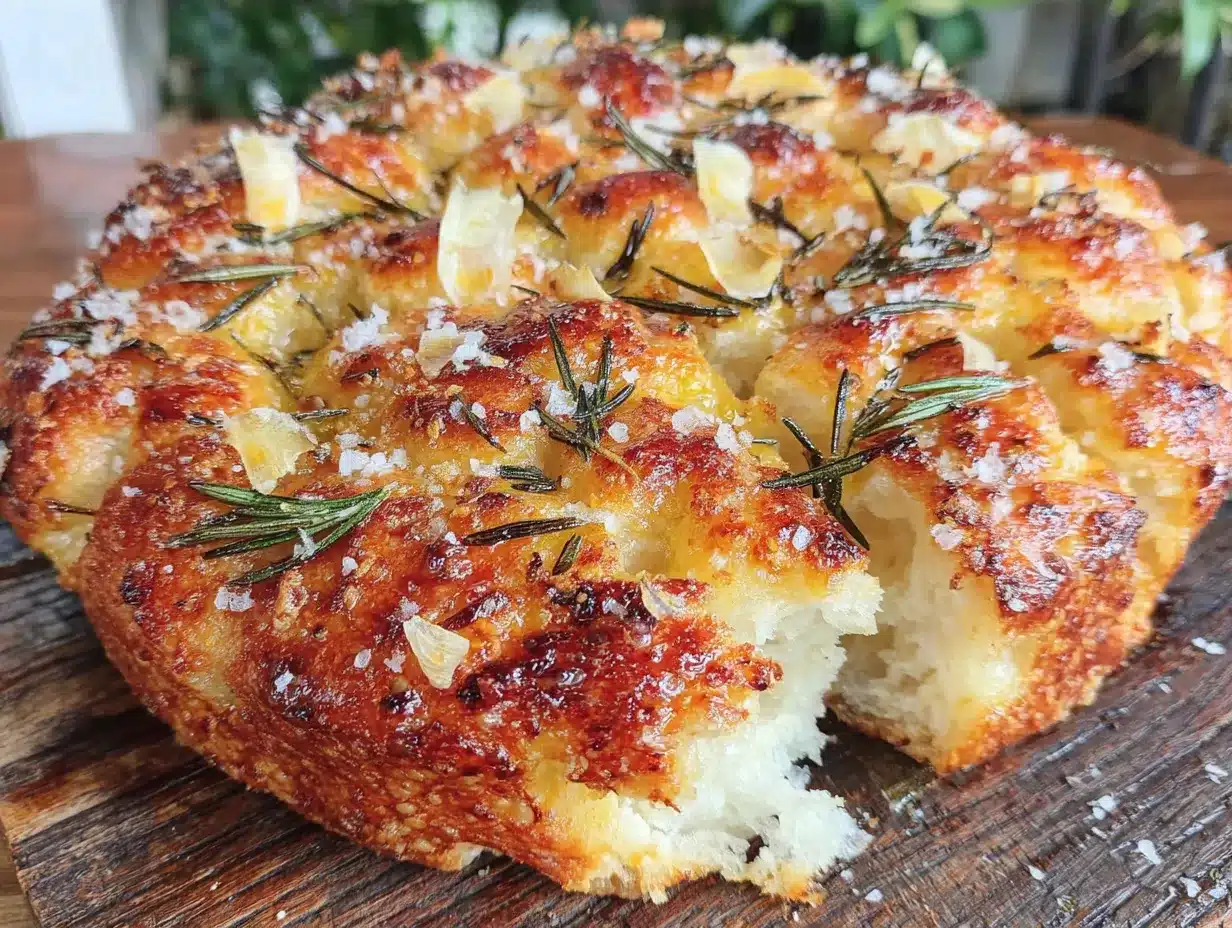
I remember the first time I bit into that focaccia at the bakery. The crust had this shattering crispness that gave way to an airy, almost cloud-like interior dotted with pockets of olive oil. The rosemary and garlic had infused every nook and cranny without being overwhelming. Honestly, I became a little obsessed. I mean, who knew bread could be this good without needing a ton of fancy ingredients?
Maybe you’ve been there — you find that one perfect thing at a local spot, and then poof, it’s gone. You know that feeling when you try to recreate something and it just isn’t right? That was me for months. But this focaccia? It’s the one. The texture is spot on, the flavor is deeply aromatic, and the best part is, you don’t need to be a professional baker to pull it off. This rosemary garlic sourdough focaccia has become my signature contribution to every dinner party and potluck, and I keep making it because it brings back that first bite every single time.
Why You’ll Love This Recipe
Let me be honest with you — I’ve tested this rosemary garlic sourdough focaccia recipe more times than I care to count. I’ve burned it, undercooked it, and once forgot the salt entirely (don’t ask). But through all those trials, I landed on a version that works every single time. Here’s why this one is different:
- Simple Ingredients : You probably already have flour, olive oil, garlic, and rosemary in your kitchen. No weird specialty items needed.
- Perfect for Beginners : If you’re new to working with sourdough, this is the most forgiving recipe to start with. The high hydration dough is almost impossible to overwork.
- Make-Ahead Friendly : The cold fermentation means you can prep the dough a day ahead and bake it fresh when you’re ready.
- Crowd-Pleaser : I’ve brought this to everything from casual game nights to holiday dinners, and it disappears every single time.
- Unbelievably Delicious : The combination of crispy, golden edges and soft, airy interior with that garlic-rosemary flavor is pure comfort food magic.
What makes this recipe different from the dozens of other focaccia recipes out there? It’s the sourdough starter. The natural fermentation adds a subtle tanginess that balances the richness of the olive oil and the punch of garlic. Plus, the long, cold fermentation develops complex flavors you just can’t get from a same-day yeast bread. This isn’t just another focaccia recipe — it’s your best version, perfected through trial and error so you don’t have to make the same mistakes I did.
This rosemary garlic sourdough focaccia is the kind of bread that makes you close your eyes after the first bite. It’s comfort food reimagined — slower to make, yes, but with a depth of flavor that’s absolutely worth the wait. Perfect for impressing guests without stress, or turning a simple soup night into something memorable.
What Ingredients You Will Need
This recipe uses simple, wholesome ingredients to deliver that signature focaccia texture and flavor. Most of these are pantry staples, which is part of why I love making this bread so often.
- Bread flour, 500 grams (about 4 cups) — I prefer King Arthur for consistent protein content, but any good bread flour works. The higher protein gives that chewy, airy crumb.
- Sourdough starter, 150 grams (about ¾ cup), active and bubbly — This is the heart of the recipe. Feed your starter 4-6 hours before mixing so it’s nice and active.
- Warm water, 350 grams (about 1½ cups), around 80°F — Not too hot! You want to keep the natural yeast happy.
- Olive oil, ¼ cup plus extra for drizzling — Use a good quality extra virgin here. I like California Olive Ranch for its fruity flavor.
- Fresh rosemary, 3 tablespoons, finely chopped — Dried works in a pinch, but fresh really shines here.
- Fresh garlic, 4 cloves, thinly sliced — Don’t use pre-minced garlic from a jar; it burns too easily.
- Flaky sea salt, 1½ teaspoons for the dough plus more for topping — Maldon is my go-to for that satisfying crunch on top.
- Honey, 1 tablespoon — Just a touch to help with browning and balance the tanginess.
Ingredient Tips from My Kitchen: If your sourdough starter is feeling sluggish, try feeding it with half whole wheat flour for a boost. For the rosemary, strip the leaves from the woody stems and chop them finely — nobody wants to bite into a twig. And please, please use fresh garlic here. The thin slices soften and caramelize during baking, creating these little pockets of savory goodness that dried garlic powder just can’t replicate.
Substitution Guidance: Need this gluten-free? I haven’t tested it with gluten-free flour blends, but a good 1-to-1 baking blend might work — just expect a denser texture. You can swap the honey for maple syrup if needed, and if you don’t have fresh rosemary, use 1 tablespoon of dried rosemary, crushed between your fingers to release the oils.
Equipment Needed
You don’t need a fancy kitchen to make this rosemary garlic sourdough focaccia. Here’s what you’ll actually use:
- Large mixing bowl — Glass or ceramic works best; avoid metal if you can, as it can react with the fermenting dough.
- Digital kitchen scale — Honestly, this is non-negotiable for consistent results. Baking by volume with sourdough is asking for trouble.
- Bench scraper — So helpful for folding the dough and cleaning up sticky messes.
- 9×13 inch baking pan — A metal or ceramic pan works great. I use a half-sheet pan for thinner, crispier focaccia.
- Plastic wrap or a shower cap — For covering the dough during fermentation. Reusable beeswax wrap works too!
- Parchment paper — Makes cleanup a breeze, though you can oil the pan generously instead.
- Instant-read thermometer — Optional but helpful for checking water temperature.
Budget-Friendly Tip: If you don’t have a bench scraper, a stiff metal spatula works fine. And honestly, I used a plastic shower cap from a hotel to cover my dough for months before buying proper bowl covers. Whatever works!
Preparation Method
- Feed your starter (4-6 hours before mixing). Take 50 grams of your starter and feed it with 100 grams of flour and 100 grams of water. Let it sit at room temperature until it’s doubled in size and full of bubbles. It should smell fruity and slightly tangy — not like nail polish remover.
- Mix the dough (10 minutes). In your large bowl, combine 350 grams of warm water, 150 grams of active sourdough starter, and 1 tablespoon of honey. Stir until dissolved. Add 500 grams of bread flour and 1½ teaspoons of salt. Mix with your hands or a wooden spoon until no dry flour remains. The dough will be shaggy and sticky — that’s perfect. Let it rest for 30 minutes (this is called autolyse).
- Add the olive oil (5 minutes). Drizzle ¼ cup of olive oil over the rested dough. Use your fingers to dimple and fold the oil into the dough until it’s fully incorporated. It will feel silky and slack. Cover and let it rest for 30 minutes.
- Perform stretch and folds (2 hours). Every 30 minutes for the next 2 hours, wet your hands slightly and perform a stretch and fold: grab one side of the dough, stretch it up, and fold it over the top. Rotate the bowl and repeat 4 times total. You’ll feel the dough strengthen with each fold.
- Bulk fermentation (4-6 hours at room temperature, or overnight in the fridge). Cover the bowl and let it rise until nearly doubled. At room temperature (around 72°F), this takes about 5 hours. For better flavor, let it rise for 2 hours at room temperature, then refrigerate overnight. The cold fermentation develops that signature sourdough tang.
- Prepare the pan (5 minutes). Generously oil your 9×13 pan with olive oil — don’t be shy here. Pour the dough into the pan. It won’t fill the corners yet. Let it rest for 30 minutes, then gently stretch it to the edges. If it resists, let it rest another 15 minutes and try again. Patience is key.
- Final proof (2-3 hours). Cover the pan and let the dough rise until it’s puffy and jiggly when you shake the pan. It should look like a soft pillow. This can take anywhere from 2 to 4 hours depending on temperature.
- Preheat and dimple (20 minutes). About 30 minutes before baking, preheat your oven to 425°F. Drizzle the top of the dough with olive oil. Wet your fingers and press deep dimples all over the surface — go all the way to the bottom of the pan. This is the most satisfying part, honestly.
- Add toppings (5 minutes). Scatter the sliced garlic and chopped rosemary evenly over the dimpled dough. Sprinkle generously with flaky sea salt. Don’t skimp — the salt crystals on top are what make focaccia addictive.
- Bake (25-30 minutes). Place the pan on the middle rack and bake until the top is deep golden brown and the edges are caramelized. The internal temperature should reach 200°F. Let it cool in the pan for 10 minutes, then transfer to a wire rack. I know it’s tempting, but let it cool for at least 20 minutes before cutting — the steam needs to redistribute.
Cooking Tips & Techniques
After making this rosemary garlic sourdough focaccia more times than I can count, I’ve learned a few things the hard way. Let me save you some trouble.
Don’t skip the stretch and folds. I know it feels repetitive, but those folds build the gluten structure that gives focaccia its light, airy crumb. I once tried to skip them and ended up with a flat, dense disc that was more cracker than bread. Not my finest moment.
Cold fermentation is your friend. If you have the time, let that dough rest overnight in the fridge. The flavor becomes so much more complex — nutty, tangy, and deeply savory. Plus, cold dough is way easier to handle and shape. I often mix the dough in the evening, do the folds, let it bulk ferment for a couple hours, then pop it in the fridge until the next afternoon.
The dimpling matters. Those deep wells you press into the dough aren’t just for looks. They hold pools of olive oil that create crispy, almost fried pockets during baking. Go deep — all the way to the bottom of the pan. And don’t be gentle about it. Really press in there.
Watch the garlic. Thin slices of fresh garlic can burn quickly if they’re exposed on top. I like to press some of the garlic slices down into the dimples so they’re partially protected by the dough. They’ll soften and caramelize without turning bitter.
Let it cool. I get it, the smell is intoxicating and you want to tear into it immediately. But cutting into hot focaccia compresses the crumb and makes it gummy. Give it at least 20 minutes. Use that time to make your dinner or pour yourself a glass of wine.
Variations & Adaptations
This rosemary garlic sourdough focaccia is wonderful as-is, but it’s also a fantastic base for experimentation. Here are some variations I’ve tried and loved:
- Tomato and Basil : Press cherry tomato halves into the dimples before baking, and swap the rosemary for fresh basil leaves scattered on top after baking. The tomatoes burst and create these juicy, sweet pockets.
- Cheese Lover’s : Sprinkle ½ cup of grated Parmesan over the top before baking, or press small cubes of feta into the dimples. Goat cheese works beautifully too — it gets all creamy and tangy.
- Everything Bagel : Skip the rosemary and garlic, and top the focaccia with everything bagel seasoning before baking. This version disappears fastest at parties, I swear.
- Kalamata Olive and Thyme : Press halved Kalamata olives into the dimples and use fresh thyme instead of rosemary. The briny olives pair perfectly with the tangy sourdough.
- Caramelized Onion : Cook down two large sliced onions in olive oil until deeply golden, then scatter them over the dough before baking. Sweet, savory, and absolutely irresistible.
Dietary Adaptations : For a dairy-free version, skip any cheese variations and load up on herbs and vegetables instead. This recipe is naturally egg-free and nut-free as written. If you’re watching your sodium, reduce the flaky salt on top — the dough itself has plenty of salt for flavor.
Serving & Storage Suggestions
This rosemary garlic sourdough focaccia is incredibly versatile. Serve it warm or at room temperature alongside soups, salads, or pasta dishes. It’s also amazing sliced in half and used for sandwiches — try it with roasted vegetables and pesto for a lunch that feels fancy but takes minutes to assemble.
For breakfast, I love toasting a slice and topping it with a fried egg. The crispy, oily bread soaks up the yolk perfectly. And honestly, it’s incredible just eaten plain, torn into pieces while you’re standing at the counter. No judgment here.
Storage : Keep leftover focaccia in an airtight container at room temperature for up to 2 days. Do not refrigerate it — the cold will make it go stale faster. To reheat, pop slices in a 350°F oven for 5-7 minutes, or toast them. The texture comes back beautifully.
Freezer Instructions : This focaccia freezes wonderfully. Wrap the fully cooled bread tightly in plastic wrap, then in foil, and freeze for up to 3 months. Thaw at room temperature and reheat in the oven before serving. I often bake a double batch and freeze one for emergencies — like unexpected guests or Tuesday nights when I just need some good bread in my life.
Flavor Development : Honestly, this focaccia is even better the next day. The flavors meld and deepen overnight, and the texture stays surprisingly good. Just make sure to store it properly so it doesn’t dry out.
Nutritional Information & Benefits
Per serving (1/8 of the recipe): approximately 280 calories, 10g fat, 40g carbohydrates, 7g protein, 2g fiber. These values are estimates and will vary based on specific ingredients used.
Health Benefits : Sourdough fermentation offers some unique advantages over traditional yeast bread. The fermentation process breaks down phytic acid, making the minerals in the flour more bioavailable. Some studies suggest sourdough has a lower glycemic index than regular bread, meaning it causes a slower, steadier rise in blood sugar. Plus, the natural fermentation creates beneficial bacteria that support gut health.
Dietary Considerations : This recipe is vegetarian and can be made vegan by substituting the honey with maple syrup. It contains gluten and is not suitable for celiac diets. If you’re watching your sodium, reduce the flaky salt topping — the dough itself has enough salt for good flavor.
My Wellness Perspective : I love that this bread is made with simple, whole ingredients and a traditional fermentation method. It feels nourishing in a way that processed bread just doesn’t. Plus, the process of making sourdough is almost meditative — it slows you down and connects you to your food. That counts for something, right?
Conclusion
This rosemary garlic sourdough focaccia is more than just a recipe — it’s a little piece of that bakery memory I’ve been chasing for years. The crispy edges, the airy crumb, the way the garlic softens into sweet little pockets — it’s everything I hoped it would be. And the best part? You can make it in your own kitchen without any fancy equipment or professional training.
I’d love for you to try this recipe and make it your own. Maybe you’ll add extra garlic like I do, or load it up with olives and herbs. Maybe you’ll serve it alongside your favorite soup, or just eat it straight from the pan while it’s still warm (no judgment here, honestly). Whatever you do, let me know how it turns out. Drop a comment below, share your photos, and tell me about your focaccia journey. I read every single comment and I love hearing about your baking wins.
Happy baking, friend. May your kitchen smell like garlic and rosemary, and may your focaccia be perfectly crispy on the bottom and pillowy soft on the inside.
Frequently Asked Questions
Can I use active dry yeast instead of sourdough starter?
You can, but the flavor and texture will be different. If you want to use yeast, substitute the sourdough starter with 2 teaspoons of active dry yeast dissolved in the warm water. Skip the honey and let the dough rise for about 2 hours instead of the longer sourdough fermentation. It’ll still be delicious focaccia, just without that signature tangy flavor.
Why is my focaccia dense and not airy?
This usually happens for one of three reasons: your sourdough starter wasn’t active enough, you didn’t give the dough enough time to rise, or you overworked it during shaping. Make sure your starter is bubbly and doubled before using, and be patient with the fermentation. Cold dough also takes longer to rise, so factor that in if you’re refrigerating it.
Can I make this recipe gluten-free?
I haven’t tested this recipe with gluten-free flour blends, so I can’t guarantee results. Gluten-free sourdough behaves very differently and usually requires a different hydration ratio. If you experiment, try using a good 1-to-1 gluten-free baking flour and expect a denser, more cake-like texture.
How do I know when my focaccia is fully baked?
The top should be deep golden brown and the edges should look caramelized and slightly darker. If you have an instant-read thermometer, the internal temperature should reach 200°F. You can also tap the bottom of the focaccia — it should sound hollow when it’s done. When in doubt, bake it an extra 2-3 minutes. Underbaked focaccia is gummy; overbaked is still delicious.
Can I freeze the dough instead of baking it?
Absolutely. After the bulk fermentation and shaping in the pan, you can freeze the unbaked focaccia. Wrap the pan tightly in plastic wrap and foil, then freeze for up to 1 month. When you’re ready to bake, thaw it in the refrigerator overnight, let it come to room temperature and finish proofing, then dimple, top, and bake as directed. The texture turns out beautifully.
Pin This Recipe!
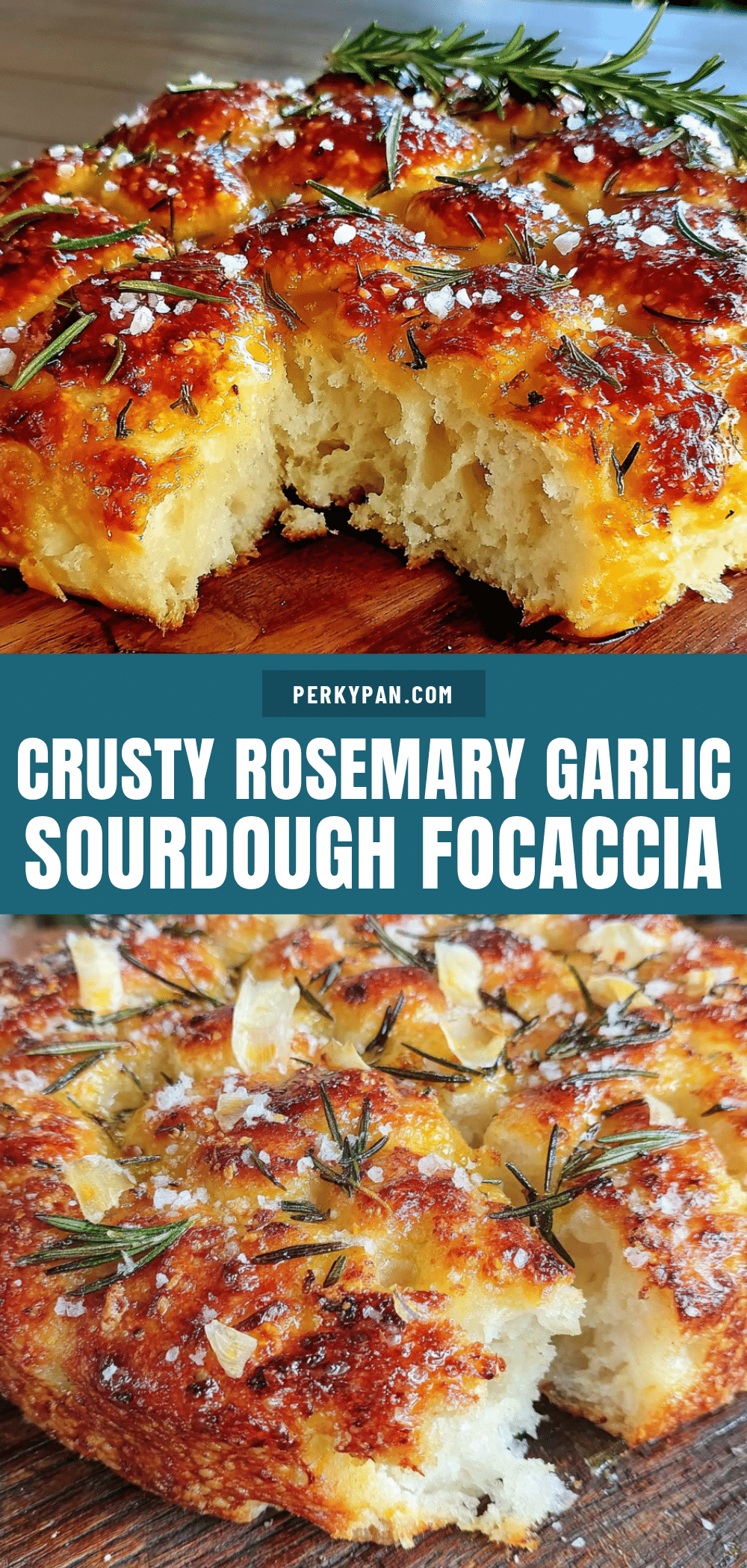
Easy Rosemary Garlic Focaccia Bread Recipe
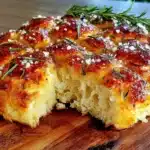
This rosemary garlic sourdough focaccia is a perfect replica of a beloved bakery’s masterpiece, featuring a shatteringly crisp crust and an airy, cloud-like interior infused with olive oil, rosemary, and garlic. It’s a forgiving recipe ideal for beginners, with simple ingredients and make-ahead convenience.
- Prep Time: 20 minutes
- Cook Time: 30 minutes
- Total Time: 14 hours (includes fermentation and proofing)
- Yield: 8 servings 1x
- Category: Bread
- Cuisine: Italian
Ingredients
- 500 grams bread flour (about 4 cups)
- 150 grams active sourdough starter (about ¾ cup)
- 350 grams warm water (about 1½ cups), around 80°F
- ¼ cup olive oil, plus extra for drizzling
- 3 tablespoons fresh rosemary, finely chopped
- 4 cloves fresh garlic, thinly sliced
- 1½ teaspoons flaky sea salt for dough, plus more for topping
- 1 tablespoon honey
Instructions
- Feed your starter 4-6 hours before mixing: take 50 grams of starter and feed with 100 grams flour and 100 grams water. Let sit until doubled and bubbly.
- In a large bowl, combine 350 grams warm water, 150 grams active sourdough starter, and 1 tablespoon honey. Stir until dissolved. Add 500 grams bread flour and 1½ teaspoons salt. Mix until no dry flour remains. Let rest 30 minutes (autolyse).
- Drizzle ¼ cup olive oil over the rested dough. Use fingers to dimple and fold oil into dough until fully incorporated. Cover and rest 30 minutes.
- Perform stretch and folds every 30 minutes for 2 hours: wet hands, grab one side of dough, stretch up, and fold over. Rotate bowl and repeat 4 times total.
- Cover bowl and let rise until nearly doubled (4-6 hours at room temperature, or 2 hours at room temperature then refrigerate overnight for better flavor).
- Generously oil a 9×13 inch pan with olive oil. Pour dough into pan. Let rest 30 minutes, then gently stretch to edges. If it resists, rest another 15 minutes and try again.
- Cover pan and let dough rise until puffy and jiggly (2-3 hours).
- Preheat oven to 425°F. Drizzle top with olive oil. Wet fingers and press deep dimples all over surface, going to bottom of pan.
- Scatter sliced garlic and chopped rosemary evenly over dough. Sprinkle generously with flaky sea salt.
- Bake on middle rack for 25-30 minutes until deep golden brown and edges caramelized. Internal temperature should reach 200°F. Cool in pan 10 minutes, then transfer to wire rack. Cool at least 20 minutes before cutting.
Notes
Don’t skip the stretch and folds; they build gluten structure. Cold fermentation overnight enhances flavor. Dimple deeply to create crispy oil pockets. Press garlic slices into dimples to prevent burning. Let cool at least 20 minutes before cutting to avoid gummy texture.
Nutrition
- Serving Size: 1/8 of recipe
- Calories: 280
- Sugar: 2
- Sodium: 480
- Fat: 10
- Saturated Fat: 1.5
- Carbohydrates: 40
- Fiber: 2
- Protein: 7
Keywords: focaccia, sourdough, rosemary, garlic, bread, homemade, easy, beginner-friendly