Love this? Save it for later!
Share the inspiration with your friends
This was supposed to be a whole roasted fish situation. You know the kind—fancy, dramatic, the centerpiece of a dinner that makes people say “wow, you really went all out.” I had the fish counter guy pick out a beautiful branzino, I had lemons and fresh herbs ready to stuff inside its cavity, and I had this whole vision of myself as someone who effortlessly roasts whole fish on a Tuesday night.
Then I got home, unpacked my bags, and realized the fish was gone. I mean, completely gone. Somewhere between the seafood counter and my kitchen counter, that branzino had vanished into thin air. I stood there staring at my empty counter, holding a bag of asparagus and a stick of butter, feeling like the universe was playing a practical joke on me. It was 7 PM, I was hungry, and my grand dinner plans had just evaporated.
So I did what any reasonable person would do. I grabbed the salmon fillets I had in the freezer (because of course I had backup fish, I’m not a complete amateur), defrosted them under cold running water, and decided to just wing it. I figured I’d sauté the asparagus, pan-sear the salmon, and call it a night. Nothing fancy, just dinner.
But then I got distracted—honestly, I was already annoyed about the missing fish—and I threw the butter in the pan a little too early. It started browning before I even had the salmon in there. I panicked, tossed in some garlic, and just went with it. What came out of that pan was nothing like the roasted branzino I had planned. It was better.
The garlic butter sauce was nutty and rich without being heavy, the salmon had this gorgeous golden crust, and the asparagus soaked up all that buttery goodness. I stood at my counter eating straight from the pan, and I knew I’d never bother with whole roasted fish again. Sometimes the best recipes come from your plans falling apart, you know?
Why You’ll Love This Recipe
Let me tell you why this garlic butter salmon with asparagus has become my go-to dinner for pretty much every occasion. I’ve tested this recipe at least a dozen times now, tweaking the heat levels, the garlic amount, and the cooking times until everything comes together perfectly every single time.
- Quick & Easy: This whole meal comes together in under 20 minutes. I’m talking from fridge to plate in the time it takes to watch one episode of a sitcom. Perfect for those nights when you’re starving and don’t want to wait.
- Simple Ingredients: You need salmon, asparagus, butter, garlic, lemon, and salt. That’s it. No trips to specialty stores, no hunting down obscure ingredients, no expensive pantry items you’ll use once.
- Perfect for Weeknights or Impressing Guests: This dish looks fancy enough for a dinner party but comes together so fast you won’t break a sweat. I’ve served it to my in-laws and to myself on a random Wednesday, and it works for both.
- Crowd-Pleaser: Even people who “don’t really like fish” have asked me for this recipe. The garlic butter sauce does something magical—it makes salmon approachable and craveable for everyone.
- Unbelievably Delicious: The texture combo here is next-level. You get that crispy, golden crust on the salmon, the tender flakes underneath, and the asparagus with just a little bite left in it. All coated in a garlic butter sauce that’s rich but somehow still light.
What makes this version different from every other salmon recipe out there? It’s the technique. Most recipes either pan-sear the salmon separately or roast everything together on a sheet pan. I do something a little different—I start the asparagus first, then nestle the salmon right in the same pan. Everything cooks together, everything picks up those garlic butter flavors, and you end up with one pan to wash. No fuss, no mess, just dinner.
This is the kind of meal that makes you close your eyes after the first bite. It’s comfort food reimagined—healthier, faster, but with that same soul-soothing satisfaction. Perfect for nights when you need to feel good about what you’re eating without sacrificing flavor.
What Ingredients You Will Need
This recipe uses simple, wholesome ingredients to deliver bold flavor and satisfying texture without the fuss. Most of these are pantry staples or easy-to-find items at any grocery store.
- Salmon fillets (4 fillets, about 150g/5 oz each): Look for fillets that are roughly the same thickness so they cook evenly. I prefer center-cut fillets for their even shape. Skin-on or skinless both work, but skin-on gives you that extra crispy texture. If you can, ask your fishmonger for wild-caught salmon—the flavor is noticeably better, though farm-raised works perfectly fine too.
- Asparagus (1 bunch, about 400g/14 oz): Look for spears that are bright green with tight tips. Thicker spears hold up better to pan-cooking, but thin ones work too—just reduce the cooking time by a minute or two. Snap off the woody ends before cooking; they’ll naturally break where the tender part begins.
- Unsalted butter (3 tablespoons, 42g): I use unsalted so I can control the salt level. If you only have salted butter, just reduce the added salt by a pinch. The butter is the star here, so use a good quality one if you can.
- Garlic (4 cloves, minced): Fresh garlic is non-negotiable here. Don’t use the jarred stuff—it won’t give you that same aromatic punch. I mince mine finely so it melts into the butter sauce.
- Lemon (1 large lemon): You’ll use both the zest and the juice. The zest adds brightness without acidity, and the juice cuts through the richness of the butter. Roll the lemon on the counter before juicing to get the most out of it.
- Olive oil (1 tablespoon, 15ml): Just a little to help the butter from burning and to give the asparagus some color. Use a regular olive oil, not extra virgin, since we’re cooking at medium-high heat.
- Salt (1 teaspoon, 5g): I use fine sea salt for seasoning. You’ll need more than you think—salmon can handle a generous amount of salt to bring out its flavor.
- Black pepper (½ teaspoon, 2g): Freshly ground is best. It adds a subtle warmth that complements the garlic butter beautifully.
- Red pepper flakes (¼ teaspoon, optional): I add these about half the time. They give a tiny kick without making things spicy. Totally optional, but I love the little warmth they bring.
- Fresh parsley (2 tablespoons, chopped, for garnish): This is purely for looks, but it does add a fresh pop of color and a hint of herbiness. Skip it if you don’t have any on hand.
One thing I’ve learned through testing—don’t skimp on the butter. I know it sounds indulgent, but three tablespoons for four servings is actually reasonable. The butter creates the sauce that coats everything, so cutting it down means a drier dish. Trust me on this one.
Equipment Needed
You don’t need much for this recipe, which is part of why I love it. Here’s what you’ll want to have on hand:
- Large skillet or frying pan (12-inch/30cm): A non-stick skillet works best here, but a well-seasoned cast iron or stainless steel pan works too. The key is having enough surface area to fit the salmon and asparagus without overcrowding. If your pan is too small, cook the asparagus in batches.
- Fish spatula: This thin, slotted spatula is perfect for flipping salmon without breaking it apart. If you don’t have one, a regular thin spatula works—just be gentle.
- Tongs: For turning the asparagus and moving things around the pan. I use these constantly in the kitchen.
- Cutting board and sharp knife: For trimming the asparagus and mincing the garlic. A dull knife will just crush the garlic instead of mincing it cleanly.
- Microplane or zester: For zesting the lemon. You can use the fine side of a box grater if you don’t have one.
- Paper towels: For patting the salmon dry. This step is crucial for getting that golden crust, so don’t skip it.
I’ve made this recipe in a cheap non-stick pan from the grocery store and in my fancy cast iron skillet, and honestly, it works great in both. Don’t overthink the equipment—just use what you have.
Preparation Method
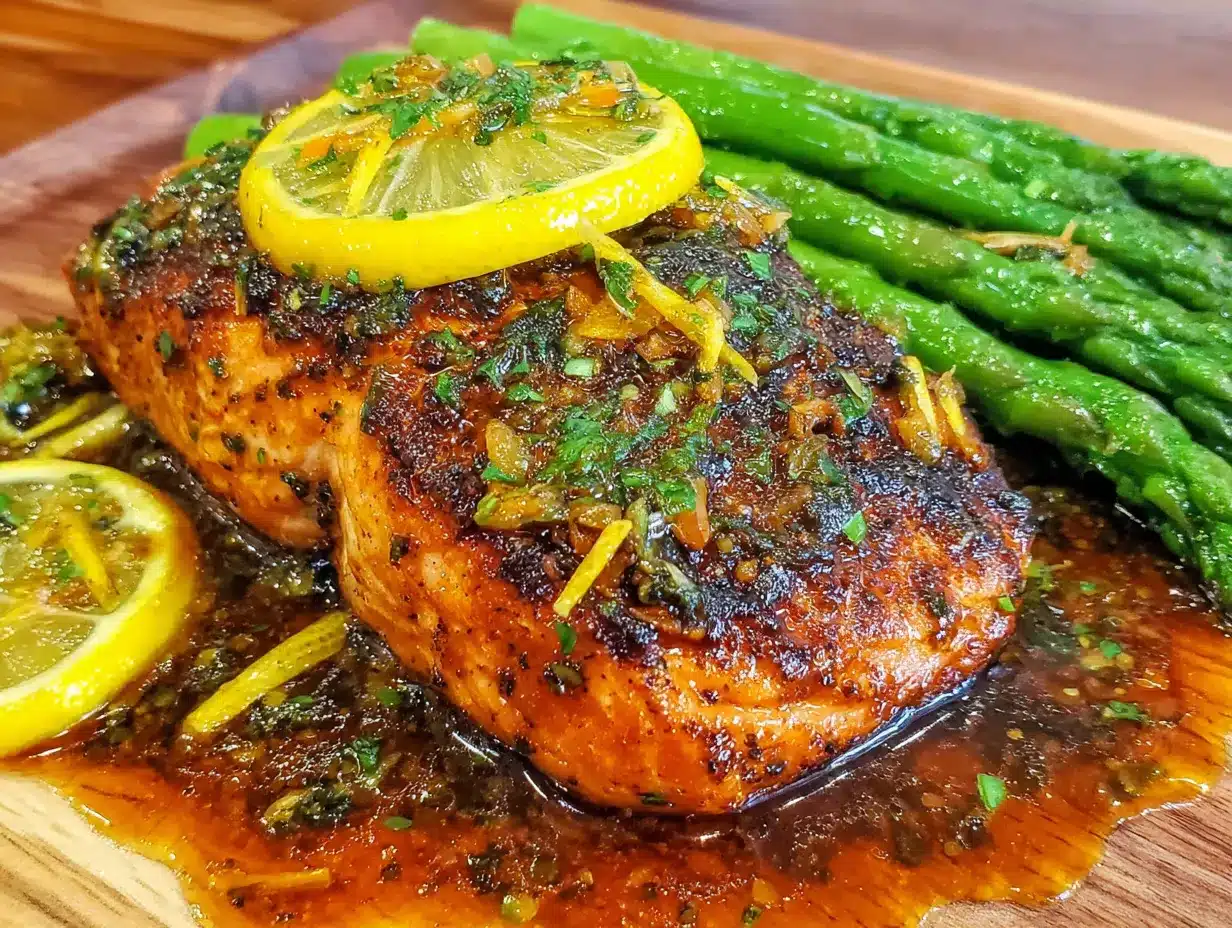
- Prep your ingredients first (5 minutes): Take the salmon out of the fridge and let it sit at room temperature for about 10 minutes. Pat it dry with paper towels—this is the most important step for getting a crispy crust. Season both sides generously with salt and pepper. Trim the woody ends off the asparagus (about 1-2 inches from the bottom). Mince your garlic and zest your lemon.
- Start the asparagus (3 minutes): Heat your skillet over medium-high heat. Add the olive oil and 1 tablespoon of the butter. Once the butter melts and starts to foam, add the asparagus in a single layer. Season with a pinch of salt. Cook for 2-3 minutes, tossing occasionally with tongs, until the asparagus is bright green and starting to get a few char marks. It should still have some crunch—don’t overcook it here since it’ll cook more later.
- Push the asparagus aside (1 minute): Use your tongs to push the asparagus to the edges of the pan, creating an empty space in the center. Add the remaining 2 tablespoons of butter to the center. Let it melt and start to bubble—you want it to get a little foamy and just start to brown around the edges. This is where the magic happens.
- Sear the salmon (4-5 minutes): Place the salmon fillets skin-side down (if using skin-on) or presentation-side down (if skinless) in the center of the pan, right in that buttery spot. Don’t move them once they hit the pan. Let them cook undisturbed for 4 minutes. You’ll see the edges start to turn opaque and the bottom develop a golden crust. If you try to flip too early, the salmon will stick.
- Add the garlic and lemon (1 minute): Sprinkle the minced garlic and lemon zest around the salmon and asparagus. Toss the asparagus gently to coat it in the garlic butter. Let everything cook together for about 1 minute—the garlic should become fragrant but not burnt. If it starts to brown too fast, reduce the heat slightly.
- Flip the salmon (2-3 minutes): Carefully flip the salmon fillets using your fish spatula. Cook for another 2-3 minutes, depending on thickness. For medium-rare salmon (my preference), cook until the center is just barely translucent when you peek at the side. For well-done, cook another minute or two. The asparagus should be tender-crisp at this point.
- Finish with lemon juice (30 seconds): Squeeze the juice of half the lemon over everything. Sprinkle the red pepper flakes if using. Give the pan a gentle shake to distribute the juices. Let it bubble for about 30 seconds to meld the flavors.
- Serve immediately: Transfer the salmon and asparagus to plates. Spoon any remaining garlic butter from the pan over the top. Garnish with fresh parsley and serve with lemon wedges from the remaining half lemon.
Here’s a trick I learned the hard way—if your salmon fillets are different thicknesses, the thin tail pieces will cook faster than the thick center pieces. To fix this, fold the thin tail piece under itself so it’s roughly the same thickness as the rest. This way everything cooks evenly and you don’t end up with dry tail pieces.
Cooking Tips & Techniques
After making this recipe more times than I can count, I’ve picked up a few tricks that make a real difference. Let me share what I’ve learned through trial and error.
Pat that salmon dry. I cannot stress this enough. Wet salmon steams instead of sears, and you’ll end up with pale, sad-looking fish instead of that gorgeous golden crust. I pat mine dry, then let it sit uncovered for a few minutes while I prep the asparagus. The surface dries out even more, and the crust gets even better.
Don’t crowd the pan. If you’re making this for a crowd, cook the salmon in batches. When you overcrowd the pan, the temperature drops, and everything starts steaming instead of searing. I learned this the hard way when I tried to cook six fillets at once for a dinner party. They came out pale and watery, and I had to start over. Two batches is better than one sad batch.
Watch your heat. Medium-high heat is the sweet spot for this recipe. Too low, and the butter won’t brown properly and the salmon won’t get that crust. Too high, and the garlic will burn before the salmon is cooked through. If you see the garlic turning dark brown, reduce the heat immediately. Burnt garlic is bitter and will ruin the whole dish.
Use a timer. I know it sounds silly, but set a timer for that 4-minute first sear. It’s easy to get distracted—checking your phone, pouring a glass of wine, whatever—and suddenly that perfect crust is a burnt crust. Four minutes feels like forever when you’re watching, but it’s exactly what the salmon needs.
Let the salmon rest. I know I said serve immediately, but if you can wait just 2 minutes after taking the pan off the heat, the salmon will be even better. The juices redistribute, and the texture becomes more tender. I usually use those 2 minutes to set the table or pour drinks.
One more thing—taste your asparagus before serving. If it’s still too crunchy for your liking, cover the pan with a lid for 30 seconds after you flip the salmon. The steam will soften it up without making it mushy. I personally like mine with a good crunch, but you do you.
Variations & Adaptations
One of the best things about this recipe is how easily it adapts to different tastes and dietary needs. I’ve experimented with quite a few variations, and here are my favorites.
Dairy-Free Version: Swap the butter for a high-quality vegan butter or ghee (if you can tolerate dairy). I’ve used Miyoko’s vegan butter with great results—it browns similarly to regular butter and creates a rich sauce. Coconut oil works in a pinch but will add a slight coconut flavor that might not pair as well with the salmon.
Low-Carb/Keto Adaptation: This recipe is already pretty low-carb, but you can swap the asparagus for broccoli florets or zucchini ribbons if you want to mix things up. The cooking time stays roughly the same, though zucchini will cook faster—add it after the salmon has been searing for 2 minutes.
Spicy Version: Double the red pepper flakes and add a pinch of cayenne pepper to the butter as it melts. I made this version for a friend who loves heat, and she said it was the best salmon she’d ever had. The spice cuts through the richness of the butter beautifully.
Herb Butter Version: Add a tablespoon of chopped fresh dill or thyme to the butter when you add the garlic. The herbs infuse into the butter and give the salmon a whole new dimension of flavor. I particularly love dill with salmon—it’s a classic combination for a reason.
Sheet Pan Version: If you want to avoid stovetop cooking entirely, toss the asparagus with olive oil, salt, and pepper, spread it on a sheet pan, top with seasoned salmon fillets, and dot with butter and garlic. Roast at 400°F (200°C) for 12-15 minutes. The texture is different—less crispy, more tender—but it’s just as delicious and even easier.
Mediterranean Twist: Add halved cherry tomatoes and sliced olives to the pan along with the asparagus. The tomatoes burst and create a little sauce that mixes with the garlic butter. I tried this on a whim one night and it was fantastic—bright, briny, and perfect for summer.
My personal favorite variation is the herb butter version with a squeeze of extra lemon at the end. Something about the dill and lemon together just makes the salmon sing. I’ve made it for three different dinner parties now, and everyone always asks for the recipe.
Serving & Storage Suggestions
This dish is best served immediately, right from the pan to the plate. The salmon should be warm and flaky, the asparagus tender-crisp, and the garlic butter sauce pooling around everything. I like to serve it with a side of rice, quinoa, or crusty bread to soak up all that buttery goodness.
For a complete meal, I recommend pairing this with a simple side salad dressed with lemon vinaigrette. The acidity in the salad cuts through the richness of the salmon and keeps the meal feeling light. A glass of crisp white wine—like Sauvignon Blanc or Pinot Grigio—is a natural pairing that complements the garlic and lemon beautifully.
If you have leftovers (which is rare in my house, but it happens), store them in an airtight container in the refrigerator for up to 2 days. The asparagus will soften over time, but the flavor will still be great. I don’t recommend freezing this dish—the texture of both the salmon and asparagus suffers too much.
For reheating, I’ve found the best method is to use a skillet over medium-low heat. Add a tiny splash of water or lemon juice to the pan, cover it, and warm gently for about 3-4 minutes. The steam will reheat everything without drying out the salmon. Microwave works in a pinch, but it will make the salmon rubbery and the asparagus mushy—use the stovetop if you can.
One thing I’ve noticed—the flavors actually meld together even more after a day in the fridge. The garlic butter sauce soaks into the salmon and asparagus, and the lemon brightens everything up. Leftovers the next day are honestly delicious, even if the texture isn’t quite as perfect as fresh.
Nutritional Information & Benefits
This garlic butter salmon with asparagus isn’t just delicious—it’s genuinely good for you. Here’s a rough breakdown per serving (one fillet plus asparagus):
- Calories: Approximately 380-420 calories
- Protein: 35-40 grams
- Fat: 22-26 grams (mostly healthy fats from salmon and butter)
- Carbohydrates: 6-8 grams
- Fiber: 3-4 grams
- Vitamin D: High (salmon is one of the best natural sources)
- Omega-3 Fatty Acids: Excellent source
- Vitamin K: High (from asparagus)
- Folate: Good source (from asparagus)
Salmon is packed with omega-3 fatty acids, which are essential for heart health, brain function, and reducing inflammation. Asparagus is a nutritional powerhouse too—it’s loaded with fiber, vitamins A, C, E, and K, plus it’s a natural diuretic that helps flush excess sodium from your body.
This meal is naturally gluten-free and low-carb, making it suitable for various dietary preferences. If you’re watching your saturated fat intake, you can reduce the butter to 2 tablespoons, though the sauce will be less rich. The protein content makes it incredibly satisfying—you’ll feel full and energized without that heavy, weighed-down feeling.
I personally love that this dish feels indulgent while still being genuinely healthy. It’s the kind of meal that makes you feel good about what you’re eating, without feeling like you’re sacrificing flavor for nutrition.
Conclusion
I still think about that missing branzino sometimes. I wonder where it ended up, if someone found it, if they had a great dinner that night. But honestly? I’m glad it disappeared. That happy accident led me to this recipe, and it’s become such a staple in my kitchen that I can’t imagine going back to my original plan.
This garlic butter salmon with asparagus is proof that the best dishes don’t come from perfect planning. They come from being flexible, working with what you have, and trusting your instincts. It’s quick enough for a busy Tuesday, fancy enough for company, and healthy enough to make you feel good about eating it.
I’d love to hear how this turns out for you. Did you try any variations? Did your salmon get that perfect golden crust? Leave a comment below and let me know—I read every single one, and I genuinely love hearing about your kitchen adventures. And if you loved this recipe, share it with a friend who needs a quick, delicious dinner in their life.
Happy cooking, friends. May your pans be hot, your butter be golden, and your dinner plans always turn out better than you expected.
Frequently Asked Questions
Can I use frozen salmon for this recipe?
Yes, absolutely. Just make sure to thaw it completely in the refrigerator overnight or under cold running water. Pat it very dry before cooking—frozen salmon tends to hold more moisture, so drying it thoroughly is extra important for getting that crust.
How do I know when the salmon is cooked through?
The easiest way is to look at the side of the fillet. When it’s cooked to medium, the center will be just barely translucent. For well-done, it should be opaque all the way through. You can also use a thermometer—145°F (63°C) is the safe temperature for salmon, though I prefer taking it off at 135°F (57°C) and letting carryover cooking finish it.
Can I use a different vegetable instead of asparagus?
Definitely. Broccoli florets, green beans, zucchini slices, or even bell pepper strips all work well. Just adjust the cooking time based on the vegetable you choose. Broccoli and green beans need about the same time as asparagus, while zucchini cooks faster.
Why did my salmon stick to the pan?
This usually happens for one of three reasons: the pan wasn’t hot enough when you added the salmon, you tried to flip it too early, or the salmon wasn’t patted dry. Give the pan time to heat up properly, let the salmon cook undisturbed for a full 4 minutes before trying to flip, and always pat the salmon dry before seasoning.
Can I make this recipe with a different type of fish?
Absolutely. This garlic butter preparation works beautifully with any firm-fleshed fish. Try it with cod, halibut, sea bass, or even thick white fish fillets. Just adjust the cooking time based on the thickness of your fish—thinner fillets will cook faster, so keep an eye on them.
Pin This Recipe!
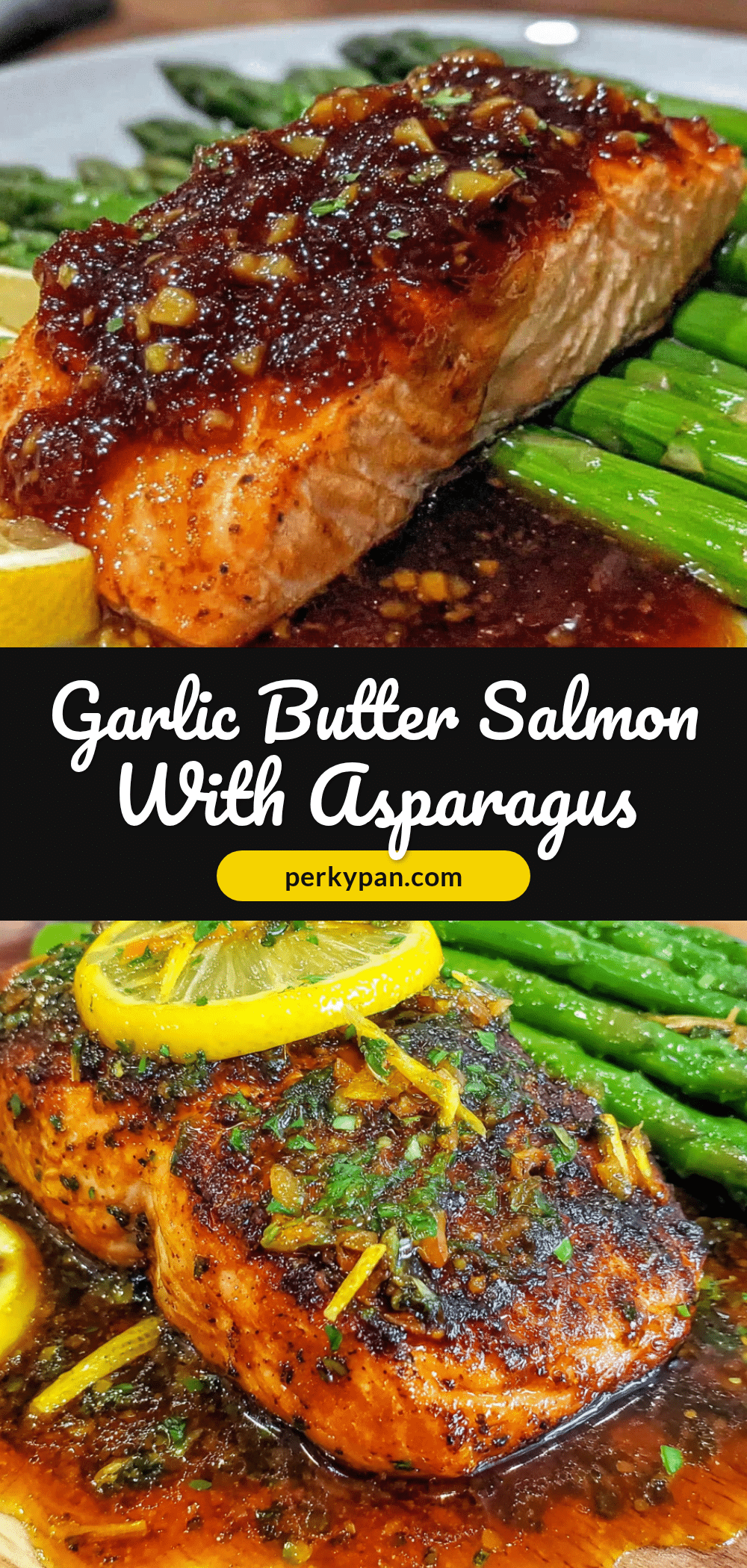
Easy Garlic Butter Salmon with Asparagus in 20 Minutes
A quick and delicious garlic butter salmon with asparagus that comes together in under 20 minutes. Perfect for busy weeknights or impressing guests, this one-pan meal features a nutty garlic butter sauce, crispy salmon, and tender-crisp asparagus.
- Prep Time: 5 minutes
- Cook Time: 15 minutes
- Total Time: 20 minutes
- Yield: 4 servings 1x
- Category: Main Course
- Cuisine: American
Ingredients
- 4 salmon fillets (about 150g/5 oz each)
- 1 bunch asparagus (about 400g/14 oz), woody ends trimmed
- 3 tablespoons unsalted butter (42g)
- 4 cloves garlic, minced
- 1 large lemon (zest and juice)
- 1 tablespoon olive oil (15ml)
- 1 teaspoon fine sea salt (5g)
- ½ teaspoon freshly ground black pepper (2g)
- ¼ teaspoon red pepper flakes (optional)
- 2 tablespoons fresh parsley, chopped (for garnish)
Instructions
- Prep your ingredients first (5 minutes): Take the salmon out of the fridge and let it sit at room temperature for about 10 minutes. Pat it dry with paper towels. Season both sides generously with salt and pepper. Trim the woody ends off the asparagus. Mince the garlic and zest the lemon.
- Start the asparagus (3 minutes): Heat a large skillet over medium-high heat. Add the olive oil and 1 tablespoon of the butter. Once the butter melts and starts to foam, add the asparagus in a single layer. Season with a pinch of salt. Cook for 2-3 minutes, tossing occasionally, until bright green and starting to char.
- Push the asparagus aside (1 minute): Push the asparagus to the edges of the pan, creating an empty space in the center. Add the remaining 2 tablespoons of butter to the center. Let it melt and bubble until foamy and just starting to brown.
- Sear the salmon (4-5 minutes): Place the salmon fillets skin-side down (or presentation-side down if skinless) in the center of the pan. Cook undisturbed for 4 minutes until the edges turn opaque and a golden crust forms.
- Add the garlic and lemon (1 minute): Sprinkle the minced garlic and lemon zest around the salmon and asparagus. Toss the asparagus to coat in the garlic butter. Cook for about 1 minute until fragrant.
- Flip the salmon (2-3 minutes): Carefully flip the salmon fillets. Cook for another 2-3 minutes, depending on thickness, until cooked to your liking.
- Finish with lemon juice (30 seconds): Squeeze the juice of half the lemon over everything. Sprinkle red pepper flakes if using. Give the pan a gentle shake and let bubble for 30 seconds.
- Serve immediately: Transfer the salmon and asparagus to plates. Spoon remaining garlic butter from the pan over the top. Garnish with fresh parsley and serve with lemon wedges from the remaining half lemon.
Notes
Pat the salmon dry for a crispy crust. Don’t crowd the pan; cook in batches if needed. Watch the heat to avoid burning the garlic. Let the salmon rest for 2 minutes before serving for best texture. For even cooking, fold thin tail pieces under to match thickness of center pieces.
Nutrition
- Serving Size: 1 salmon fillet plus
- Calories: 400
- Sugar: 2
- Sodium: 600
- Fat: 24
- Saturated Fat: 10
- Carbohydrates: 7
- Fiber: 3
- Protein: 37
Keywords: garlic butter salmon, salmon with asparagus, quick salmon recipe, one-pan salmon, healthy salmon dinner, weeknight dinner, low-carb salmon