Love this? Save it for later!
Share the inspiration with your friends
It was 11:17 PM on a particularly grumpy Tuesday, and the only thing I wanted was a bowl of something that felt like a hug. I didn’t have the energy for a complicated sear-and-simmer situation, but I had a chuck roast in the fridge, a bag of pearled barley in the pantry, and the sudden, desperate idea that maybe, just maybe, my slow cooker could do all the heavy lifting. Honestly, I was skeptical. Barley in a slow cooker? I was half expecting a mushy, flavorless disaster. But that night, tired and hungry, I just tossed everything in, set the timer, and went to bed. The next morning, the smell that hit me when I walked into the kitchen was unbelievable. It wasn’t just beef stew; it was deep, rich, and almost nutty. The barley had soaked up all that savory broth and turned into these perfect, chewy little pearls. It was a complete accident of timing and desperation, but it became the recipe I now turn to whenever the world feels a bit too loud. This is the kind of meal that makes you slow down, take a deep breath, and remember that some of the best things in life happen when you least expect them. Maybe you’ve been there—needing a win in the kitchen without actually having to work for it. That’s this stew.
Why You’ll Love This Recipe
Let me tell you, after making this stew about a dozen times—and tweaking it until it was just right—I can confidently say it’s a winner for so many reasons. It’s not just another beef stew recipe; it’s the one that makes you feel like you’ve got your act together, even on a chaotic Wednesday.
- Effortless Comfort: This is the definition of “set it and forget it.” You do a little bit of chopping, toss everything in the slow cooker, and then let it work its magic for 8 hours. It’s perfect for those days when you know you’ll be too busy to cook but still want a homemade dinner.
- Simple, Wholesome Ingredients: There’s no fancy grocery list here. You’ll find everything you need at a standard supermarket—beef chuck, carrots, onions, celery, and pearled barley. It’s real food that comes together beautifully.
- Deep, Developed Flavor: Most slow cooker stews can taste a bit flat. This one gets its incredible depth from a quick sear on the beef (trust me, it’s worth the extra 10 minutes) and a splash of red wine and Worcestershire sauce that just melts into the broth.
- Incredibly Hearty: The barley is the star here. It thickens the stew naturally as it cooks, creating a rich, almost creamy broth without needing any flour or cornstarch. Each spoonful is packed with tender beef, soft vegetables, and those satisfyingly chewy barley grains.
- Freezer-Friendly & Perfect for Meal Prep: This stew tastes even better the next day. I always make a double batch so I can freeze half for a busy week. It’s my secret weapon for nights when I don’t want to cook.
This isn’t just a meal; it’s a feeling. It’s the warmth you feel when you walk in from the cold, the satisfaction of a bowl that fills you up without weighing you down. It’s comfort food that does all the work for you.
What Ingredients You Will Need
This recipe relies on a few key ingredients that each play a crucial role. Don’t be tempted to skip any of the foundational ones—they build the flavor layer by layer.
- Beef Chuck (2 lbs, cut into 1.5-inch cubes): This is your best friend for stew. It has a great amount of marbling that breaks down during the long, slow cook, making the meat unbelievably tender. I always buy a whole chuck roast and cube it myself; it’s cheaper and lets me control the size of the pieces. Avoid pre-cut stew meat, which can be inconsistent.
- Pearled Barley (1 cup): This is the heart of the stew. Unlike hulled barley, pearled barley has had its outer bran layer removed, which means it cooks faster and releases starch, naturally thickening the broth. I recommend Bob’s Red Mill brand for consistent results. Do not use quick-cooking barley here; it will turn to mush.
- Yellow Onion (1 large, diced): The aromatic base. A good dice is important because it will practically melt into the broth, adding sweetness and savory depth.
- Carrots (3 large, peeled and cut into 1-inch chunks): They add a touch of natural sweetness and a pop of color. I like to cut them on a bias for a more rustic look. They hold up perfectly to the long cook time.
- Celery (3 stalks, sliced): Adds that classic savory, slightly peppery flavor that defines a good mirepoix. Don’t skip it, even if you think you don’t like it raw; it transforms in the stew.
- Garlic (4 cloves, minced): Essential for depth. I always use fresh garlic, not the jarred stuff. It makes a difference.
- Beef Broth (4 cups, low-sodium): The liquid base. Using low-sodium broth is crucial so you can control the salt level yourself. I love Kitchen Basics or Swanson’s organic lines.
- Red Wine (1/2 cup, optional but recommended): A dry red like a Cabernet Sauvignon or Merlot adds incredible complexity. If you don’t cook with wine, just use an extra 1/2 cup of beef broth.
- Tomato Paste (2 tablespoons): This is a secret flavor bomb. It adds a concentrated umami richness that you can’t get from fresh tomatoes. I buy it in a tube so I can just squeeze out what I need.
- Worcestershire Sauce (1 tablespoon): Another umami booster. It adds a tangy, savory kick that rounds out the beef flavor beautifully.
- Bay Leaves (2): They impart a subtle herbal note that is classic in stews. Remember to fish them out before serving!
- Dried Thyme (1 teaspoon): Earthy and slightly floral, thyme is a perfect partner for beef and barley.
- Olive Oil (2 tablespoons): For searing the beef. Use a good quality extra-virgin olive oil for the best flavor.
- Salt and Black Pepper (to taste): The final, essential seasonings. Season the beef generously before searing, and adjust at the end of cooking.
- Fresh Parsley (for garnish, optional): A sprinkle of fresh parsley right before serving adds a bright, fresh finish that cuts through the richness.
Equipment Needed
You don’t need a ton of fancy gear for this one, which is part of its beauty. Here is what you’ll want to have on hand.
- Slow Cooker (5 to 6-quart): This is the workhorse. I use a 6-quart Crock-Pot, and it’s the perfect size for this recipe. A larger one will work, but the stew might cook a little faster.
- Large, Heavy-Bottomed Skillet or Dutch Oven: You need this for searing the beef. A cast-iron skillet is ideal because it holds heat so well, giving you a beautiful brown crust. My first few times, I used a non-stick pan, and the sear was just not the same.
- Cutting Board and Sharp Chef’s Knife: A good knife makes all the difference when cubing the beef and chopping the vegetables. It’s safer and faster.
- Wooden Spoon or Spatula: For scraping up all those delicious browned bits from the bottom of the skillet after searing. That’s pure flavor.
- Measuring Cups and Spoons: For accuracy. I keep a set specifically for dry and liquid ingredients.
- Mixing Bowls: For holding the prepped ingredients. It helps keep your workspace organized.
Preparation Method
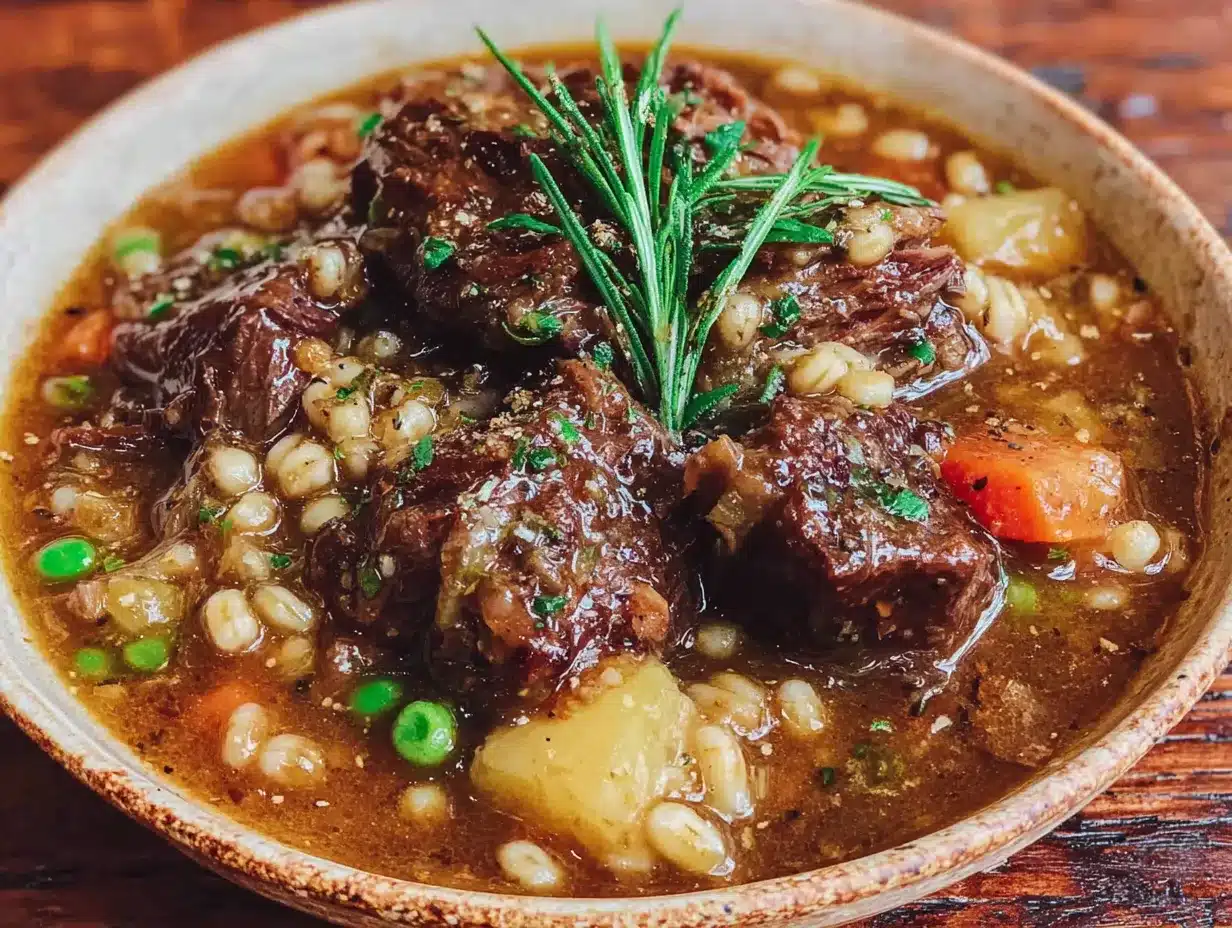
This process is simple, but each step is designed to build the most flavor possible. Don’t rush the sear—it’s the most important part.
- Prep the Beef (5 minutes): Pat the beef cubes dry with paper towels. This is non-negotiable! Wet meat won’t brown. Season them generously on all sides with salt and black pepper.
- Sear the Beef (15 minutes): Heat 1 tablespoon of olive oil in your large skillet over medium-high heat until it shimmers. Working in batches to avoid crowding the pan (crowding steams the meat), sear the beef cubes for 2-3 minutes per side, until a deep brown crust forms. Transfer the seared beef to the slow cooker. This step adds that deep, savory “browned” flavor that is the soul of the stew.
- Sauté the Aromatics (5 minutes): Reduce the heat to medium. Add the remaining 1 tablespoon of olive oil to the skillet. Add the diced onion, carrots, and celery. Cook, stirring occasionally, for about 5 minutes, until the onions become translucent. Add the minced garlic and cook for another 30 seconds until fragrant. Don’t let the garlic burn!
- Deglaze the Pan (2 minutes): Pour the red wine (or extra broth) into the skillet with the vegetables. Use your wooden spoon to scrape up all those browned bits from the bottom of the pan. This is called deglazing, and it’s where all the hidden flavor lives. Let the wine bubble and reduce by about half.
- Combine in the Slow Cooker: Pour the vegetable and wine mixture over the beef in the slow cooker. Add the beef broth, tomato paste, Worcestershire sauce, dried thyme, and bay leaves. Stir everything together until the tomato paste is mostly dissolved.
- Add the Barley (Crucial Timing): Here’s the trick I learned the hard way. Do not add the barley at the beginning! If you do, it will become a starchy, mushy mess after 8 hours. Instead, wait until the last 45-60 minutes of cooking. Stir in the 1 cup of pearled barley and let it cook on HIGH for that final hour.
- Slow Cook (8 hours on LOW or 4-5 hours on HIGH): Cover the slow cooker and cook on LOW for 7-8 hours or on HIGH for 3-4 hours. The beef should be fall-apart tender. After the initial cooking time, stir in the barley, switch the slow cooker to HIGH, and cook for the final 45-60 minutes.
- Finish and Serve (5 minutes): Once the barley is tender and chewy, turn off the slow cooker. Remove the bay leaves. Taste the stew and adjust the seasoning with more salt and pepper if needed. The flavor will have deepened significantly. Ladle into bowls and garnish with fresh parsley, if desired.
Cooking Tips & Techniques
Over the years, I’ve had my fair share of stew mishaps. Here are the lessons I’ve learned so you can skip the mistakes.
- The Maillard Reaction is Everything: I know it’s tempting to just dump everything in the slow cooker and walk away, but please don’t skip the sear. That brown crust on the beef is the result of the Maillard reaction, a chemical process that creates hundreds of new flavor compounds. It’s the single biggest difference between a good stew and a great one.
- Low and Slow Wins the Race: Cooking on LOW is almost always better for a stew like this. It gives the collagen in the beef chuck more time to break down into gelatin, resulting in melt-in-your-mouth meat and a richer, more velvety broth. Cooking on HIGH can sometimes make the beef tough.
- Don’t Overcrowd the Pan: When searing, if you put too many cubes of beef in the skillet at once, they will release steam and boil instead of brown. They need space. I always do it in two or three batches. It takes a little longer, but it’s worth it.
- Barley is a Sponge: Remember that the barley will continue to absorb liquid even after the slow cooker is turned off. If you are making this ahead of time, it might seem a little soupy when you first turn it off. That’s perfect. By the time you reheat it the next day, it will have thickened into a perfect stew.
- Taste as You Go (Almost): You can’t taste raw beef, but you can taste the broth before you add the barley. Check the seasoning level at that point. It should be slightly saltier than you think it needs to be, because the barley and beef will absorb some of that salt as they cook.
Variations & Adaptations
This recipe is a fantastic base, and it’s incredibly easy to adapt to what you have on hand or to fit different diets.
- Vegetarian Version: Swap the beef for 2 cans of drained and rinsed chickpeas or a large portobello mushroom, cubed. Use vegetable broth instead of beef broth. The barley will still provide that wonderful hearty texture.
- Gluten-Free Adaptation: Barley contains gluten, so it’s not suitable for a gluten-free diet. You can substitute it with 1 cup of brown rice, farro (if you tolerate it), or even quinoa. Add the rice or farro at the same time as the barley (last hour). Quinoa cooks faster, so add it only for the last 20 minutes.
- Add More Vegetables: This stew is a great vehicle for root vegetables. Try adding 2 cups of peeled and cubed parsnips, turnips, or sweet potatoes along with the carrots. You can also throw in a cup of frozen peas or green beans during the last 15 minutes of cooking for a pop of green.
- Herb Swap: If you don’t have dried thyme, you can use 1 teaspoon of dried rosemary or a couple of sprigs of fresh rosemary. I once made this with a bay leaf and a sprig of fresh sage, and it was fantastic.
- Make it Spicy: For a little heat, add a pinch of red pepper flakes along with the garlic, or stir in a teaspoon of smoked paprika with the tomato paste.
Serving & Storage Suggestions
This stew is a meal in a bowl, but the right accompaniments can make it even better.
- Serving: Ladle the stew into deep bowls while it’s piping hot. A sprinkle of fresh parsley adds a nice color contrast. It’s perfect on its own, but a slice of crusty sourdough bread or a warm, buttery dinner roll is ideal for sopping up every last drop of that delicious broth.
- Storage: Let the stew cool completely to room temperature before storing. Transfer it to an airtight container and refrigerate for up to 4 days. As I mentioned, the flavors will meld and deepen overnight, making it taste even better the next day.
- Freezing: This stew freezes beautifully. Portion it into freezer-safe bags or containers. I like to freeze it in individual portions for easy lunches. It will keep for up to 3 months. Thaw overnight in the refrigerator before reheating.
- Reheating: The best way to reheat this stew is gently on the stovetop over medium-low heat. You might need to add a splash of beef broth or water to thin it out, as the barley will have continued to absorb liquid. You can also reheat it in the microwave in 1-minute intervals, stirring in between.
Nutritional Information & Benefits
This stew is not just comfort food; it’s also packed with nutrients that are good for you.
- High in Protein: Beef chuck is an excellent source of high-quality protein, essential for muscle building and repair. A single serving provides a significant portion of your daily needs.
- Rich in Fiber: Barley is a whole grain that is particularly high in soluble fiber, which is great for heart health and can help you feel full and satisfied for longer.
- Packed with Vitamins: The carrots and celery provide a good dose of Vitamin A, Vitamin K, and various antioxidants that support your immune system.
- Mineral-Rich: Beef is a fantastic source of iron and zinc, both crucial for energy levels and a healthy immune system.
- Dietary Considerations: This recipe is naturally dairy-free and nut-free. For a gluten-free option, simply swap the barley for brown rice or quinoa.
Estimated values per serving (based on 6 servings): Calories: 450, Protein: 35g, Fat: 15g, Carbohydrates: 45g, Fiber: 8g, Sugar: 8g.
Conclusion
So there you have it—my cozy slow cooker beef and barley stew. It’s the kind of recipe that feels like a warm blanket on a cold day, a reliable friend on a busy night, and a little miracle of flavor that happens while you’re living your life. I love it because it reminds me that you don’t have to be a gourmet chef to make something truly special. You just need a little patience, a few good ingredients, and a slow cooker that does the heavy lifting. I honestly can’t wait for you to try it.
Have you made this stew? I’d love to hear how it turned out! Did you add any twists of your own? Drop a comment below and let me know. And if you loved it, please share this recipe with a friend who could use a little comfort tonight. Happy cooking!
Frequently Asked Questions
Can I use a different cut of beef?
Absolutely. Beef chuck is the best choice for its marbling, but you can also use beef brisket or even a bottom round roast. Just be aware that leaner cuts like top round might not get quite as tender, so you may want to cut them into smaller pieces.
My stew came out too watery. What did I do wrong?
This usually happens if the barley wasn’t given enough time to cook and release its starch, or if you added too much broth. Next time, make sure you cook the barley for the full 45-60 minutes on HIGH. You can also mash a few of the cooked barley grains against the side of the slow cooker to help thicken the broth.
Can I cook this on the stovetop instead of a slow cooker?
Yes, you can! After searing the beef and sautéing the vegetables in a large Dutch oven, add all the ingredients except the barley. Bring to a boil, then reduce to a simmer, cover, and cook for 1.5 to 2 hours, or until the beef is tender. Then, stir in the barley and simmer for another 30-40 minutes, until the barley is tender.
Can I add potatoes to this stew?
Definitely! If you want to add potatoes, I recommend using Yukon Gold or red potatoes. Cut them into 1-inch cubes and add them to the slow cooker at the same time as the barley (during the last hour). This prevents them from turning into mush.
How can I make this stew in an Instant Pot?
To make this in an Instant Pot, use the “Sauté” function to sear the beef and cook the vegetables. Deglaze with the wine, then add the broth, tomato paste, Worcestershire, and seasonings. Do NOT add the barley yet. Pressure cook on HIGH for 35 minutes, then do a natural pressure release for 15 minutes. Turn the pot back to “Sauté,” stir in the barley, and let it simmer for 20-25 minutes until tender.
Pin This Recipe!
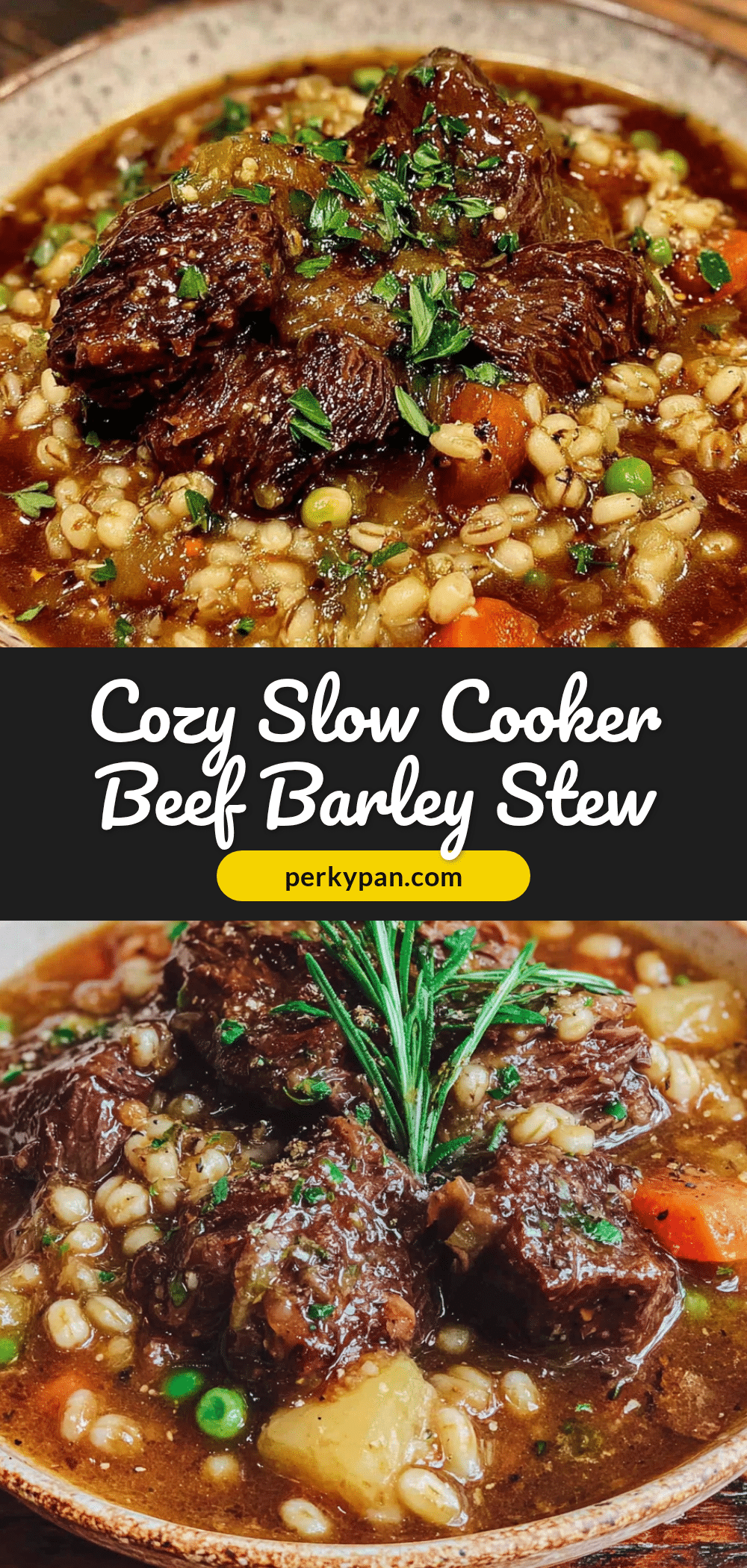
Cozy Slow Cooker Beef and Barley Stew – Easy Hearty Dinner
This hearty slow cooker beef and barley stew is the ultimate comfort food. With tender beef, chewy barley, and a rich, savory broth, it’s a set-it-and-forget-it meal that delivers deep flavor with minimal effort.
- Prep Time: 15 minutes
- Cook Time: 8 hours (LOW) or 4-5 hours (HIGH)
- Total Time: 8 hours 15 minutes (LOW) or 4 hours 20 minutes (HIGH)
- Yield: 6 servings 1x
- Category: Main Course
- Cuisine: American
Ingredients
- 2 lbs beef chuck, cut into 1.5-inch cubes
- 1 cup pearled barley
- 1 large yellow onion, diced
- 3 large carrots, peeled and cut into 1-inch chunks
- 3 stalks celery, sliced
- 4 cloves garlic, minced
- 4 cups low-sodium beef broth
- 1/2 cup dry red wine (optional, or extra broth)
- 2 tablespoons tomato paste
- 1 tablespoon Worcestershire sauce
- 2 bay leaves
- 1 teaspoon dried thyme
- 2 tablespoons olive oil
- Salt and black pepper to taste
- Fresh parsley for garnish (optional)
Instructions
- Pat the beef cubes dry with paper towels and season generously with salt and pepper.
- Heat 1 tablespoon olive oil in a large skillet over medium-high heat. Working in batches, sear the beef cubes for 2-3 minutes per side until a deep brown crust forms. Transfer to the slow cooker.
- Reduce heat to medium. Add remaining 1 tablespoon olive oil to the skillet. Add onion, carrots, and celery; cook for about 5 minutes until onions are translucent. Add garlic and cook for 30 seconds until fragrant.
- Pour the red wine (or extra broth) into the skillet and scrape up browned bits from the bottom. Let bubble and reduce by half.
- Pour the vegetable mixture over the beef in the slow cooker. Add beef broth, tomato paste, Worcestershire sauce, thyme, and bay leaves. Stir to combine.
- Cook on LOW for 7-8 hours or on HIGH for 3-4 hours, until beef is tender.
- During the last 45-60 minutes of cooking, stir in the pearled barley and cook on HIGH until tender.
- Remove bay leaves. Taste and adjust seasoning with salt and pepper. Serve hot, garnished with fresh parsley if desired.
Notes
Do not add barley at the beginning; it will become mushy. For a gluten-free version, substitute barley with brown rice or quinoa. The stew thickens as it sits; add a splash of broth when reheating if needed.
Nutrition
- Serving Size: 1 bowl (about 1.5 cu
- Calories: 450
- Sugar: 8
- Sodium: 800
- Fat: 15
- Saturated Fat: 5
- Carbohydrates: 45
- Fiber: 8
- Protein: 35
Keywords: slow cooker beef stew, beef and barley stew, hearty stew, comfort food, easy dinner, winter recipe, freezer-friendly