Love this? Save it for later!
Share the inspiration with your friends
I was standing in the middle of a hardware store last Tuesday—not my usual Tuesday spot, honestly—when the smell of oregano and something briny hit me from the garden center section. They were selling those little potted herb kits near the checkout, and someone must have knocked one over. And just like that, I was eight years old again, sitting cross-legged on the cracked linoleum floor of my neighbor Mrs. Giannopoulos’s kitchen.
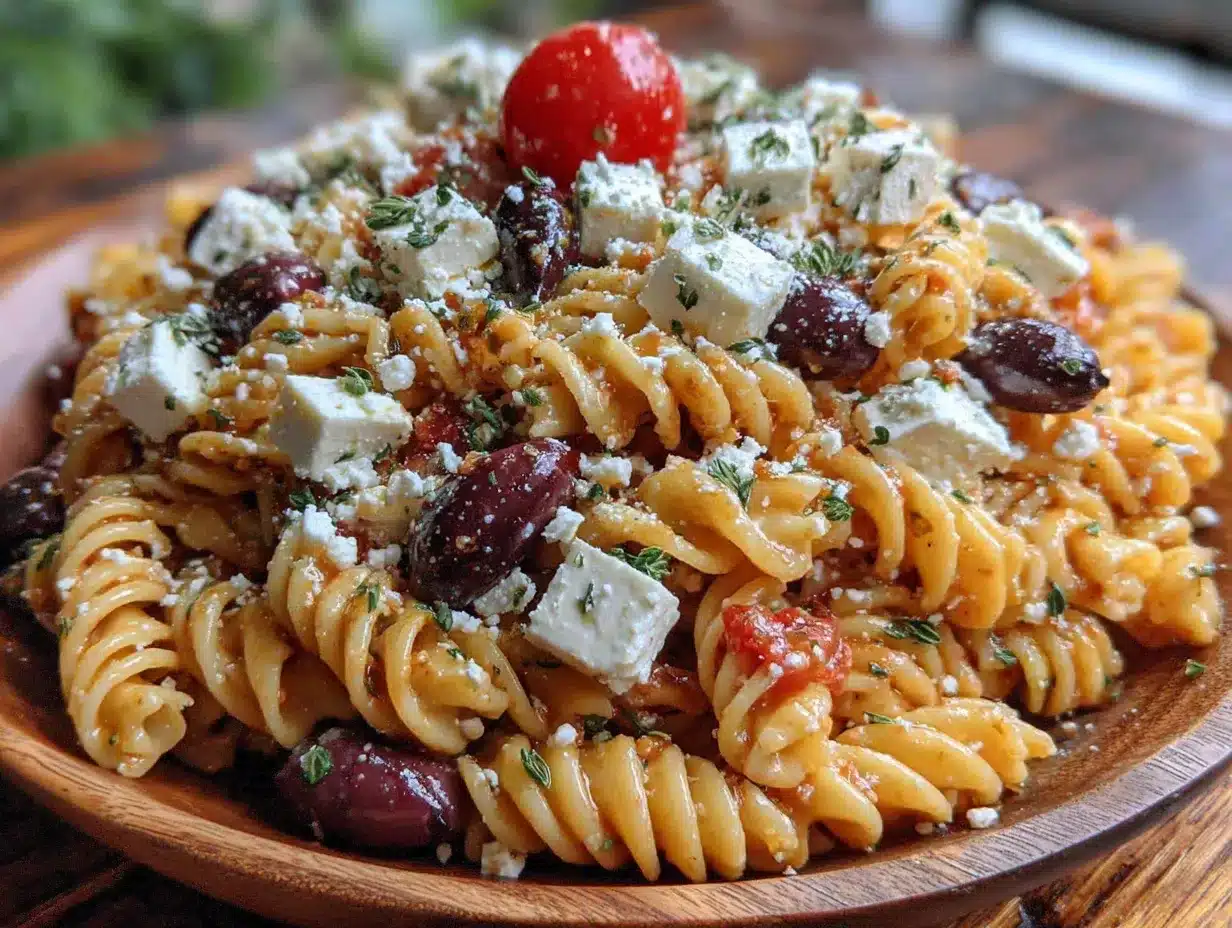
She wasn’t my grandmother, not by blood anyway. But every Tuesday after school, I’d end up at her place while my mom worked late. Mrs. G—that’s what everyone called her—always had a bowl of something waiting. Not cookies, not cake. Pasta salad. But not the gloppy, mayo-drenched kind you see at sad picnics. Hers was different. It had these little briny pops from olives, creamy chunks of feta that she’d sneak me when her back was turned, and a dressing that made your lips tingle in the best way. I remember the way the sun would catch the olive oil in her ceramic bowl, making it look like liquid gold swirling around the rotini.
I tried to recreate it for years, you know? Got it wrong so many times. Too much vinegar. Not enough salt. The wrong kind of pasta that turned to mush. I actually gave up for a while, convinced that memory was better than reality. But then, last winter, I was digging through a box of old cookbooks at a thrift store, and I found a stained index card tucked inside a Greek cookbook. The handwriting was shaky but familiar—Mrs. G’s. She’d written “Tuesday Salad” at the top, with a little smiley face next to it.
This recipe is my tribute to that card, to those Tuesday afternoons, and to the kind of simple food that somehow holds an entire childhood in every bite. It’s cozy, it’s bright, and it’s the one pasta salad I actually crave when the weather turns cool. Maybe you’ve got a memory like that—a dish you keep chasing. This one’s worth the chase.
Why You’ll Love This Recipe
This Cozy Mediterranean Pasta Salad with Feta and Olives isn’t just another side dish you bring to a potluck and forget about. Honestly, it’s the kind of recipe that becomes a regular in your weekly rotation—and for good reason. I’ve tested this version more times than I can count, tweaking the ratios until everything hit just right.
- Quick & Easy : Comes together in under 30 minutes, most of which is passive cooking time. Perfect for those evenings when you want something satisfying without spending hours in the kitchen.
- Simple Ingredients : No weird specialty items or trips to three different stores. You probably have most of the pantry staples already—olive oil, vinegar, garlic, dried oregano. The fresh stuff is just a quick produce aisle stop.
- Perfect for Cozy Nights & Busy Weeks : It’s equally at home on a Tuesday night dinner plate as it is on a holiday brunch table. The leftovers, honestly, might be even better than the first serving.
- Crowd-Pleaser : I’ve brought this to family gatherings, work potlucks, and casual dinner parties. It disappears fast. Even picky eaters tend to go back for seconds.
- Unbelievably Delicious : The texture is what gets me every time—tender pasta, briny olives, creamy feta, and that punchy, herby dressing that ties it all together. It’s comfort food that still feels fresh and bright.
What makes this version different from the rest? It’s the balance. Most pasta salads are either too dry or swimming in dressing. This one hits that sweet spot where every single bite is coated but nothing is soggy. The trick is marinating the feta and olives in the dressing while the pasta cooks—a little tip I picked up after years of ending up with bland feta chunks. It lets the flavors meld before everything even hits the bowl.
This isn’t just good. It’s the kind of pasta salad that makes you close your eyes after the first bite, because the tang of the feta and the saltiness of the olives take you somewhere else. It’s cozy food with a Mediterranean soul.
What Ingredients You Will Need
This recipe uses simple, wholesome ingredients that come together to create something genuinely special. Most of these are pantry staples or easy to find at any grocery store. I’ve included a few notes on what to look for based on my own trial and error.
For the Pasta Salad
- 12 ounces (340g) rotini or fusilli pasta – I prefer rotini for this because the spirals catch the dressing and little bits of feta. Fusilli works great too. Avoid long pasta shapes like spaghetti—you want something that holds onto the good stuff.
- 1 cup (150g) cherry tomatoes, halved – Use the ripest ones you can find. In summer, I use whatever’s from the farmer’s market. In winter, the vine-ripened ones from the grocery store work fine.
- 1 cup (150g) cucumber, diced – English cucumbers are my go-to because they’re less watery and don’t need peeling. If you’re using regular cucumbers, peel them and scoop out the seeds.
- 1/2 cup (75g) red onion, thinly sliced – Slice them as thin as you can manage. If raw onion is too sharp for you, soak the slices in cold water for 10 minutes before adding them to the salad.
- 1/2 cup (75g) Kalamata olives, pitted and halved – I really recommend splurging on the good ones from the olive bar, not the canned ones. The flavor difference is night and day. Castelvetrano olives work too if you prefer a milder, buttery taste.
- 1/2 cup (75g) green olives, pitted and halved – The mix of Kalamata and green olives gives this salad a nice complexity. The green ones add a briny brightness that balances the richness of the feta.
- 6 ounces (170g) block feta cheese, cubed or crumbled – Please, please buy a block of feta in brine, not the pre-crumbled stuff. It’s creamier, less salty, and holds its shape better. I usually go for sheep’s milk feta when I can find it.
- 1/4 cup (15g) fresh parsley, chopped – Flat-leaf parsley is best. Save a little for garnish at the end—it makes the whole thing look prettier.
- 1/4 cup (15g) fresh basil, chopped – If you can get your hands on fresh basil, it’s worth it. Dried basil just doesn’t have the same pop.
For the Dressing
- 1/3 cup (80ml) extra-virgin olive oil – Use a good one here. You’ll taste it. I like California Olive Ranch or anything that’s labeled “first cold press.”
- 3 tablespoons (45ml) red wine vinegar – Red wine vinegar gives the right tang without being too harsh. If you only have white wine vinegar, that works too.
- 1 tablespoon (15ml) lemon juice, freshly squeezed – Bottled lemon juice won’t give you the same brightness. Trust me on this one.
- 2 cloves garlic, minced – Fresh garlic is non-negotiable here. The jarred stuff has a weird metallic taste that throws off the whole dressing.
- 1 teaspoon dried oregano – This is the backbone of the Mediterranean flavor. Greek oregano is my favorite—it’s more aromatic than the regular kind.
- 1/2 teaspoon salt – Start with this and adjust at the end. Feta and olives are already salty, so you might need less than you think.
- 1/4 teaspoon black pepper – Freshly ground is best.
- 1/4 teaspoon red pepper flakes (optional) – I add these about half the time. It gives the salad a tiny kick without making it spicy.
Equipment Needed
You don’t need a fancy kitchen to pull this off. Here’s what you’ll need:
- Large pot – For boiling the pasta. Make sure it’s big enough that the pasta has room to move around.
- Colander – For draining the pasta. A fine-mesh one is nice but not necessary.
- Large mixing bowl – Big enough to toss everything together without spilling. I use a ceramic one that was my grandmother’s, but any large bowl works.
- Small bowl or jar – For whisking or shaking the dressing. A mason jar with a lid is actually perfect for this—just shake it up.
- Chef’s knife and cutting board – For chopping vegetables and herbs. A sharp knife makes a world of difference.
- Measuring cups and spoons – For accuracy. I’ve eyeballed this recipe before and regretted it.
- Wooden spoon or spatula – For tossing the salad. A silicone spatula works too.
If you don’t have a large mixing bowl, a big pot or even a clean sink basin lined with a plastic bag can work in a pinch—though I don’t recommend the bag trick unless you’re desperate. I once made this salad in a hotel room using a plastic takeout container as a bowl. It was messy, but it worked.
Preparation Method
- Start the pasta : Fill your large pot with water—about 4 to 5 quarts—and bring it to a rolling boil over high heat. Add a generous tablespoon of salt (about 1 1/2 teaspoons). The water should taste like the sea. Add the rotini and cook according to package directions until al dente, usually about 8 to 10 minutes. Set a timer—overcooked pasta turns this into mush.
- While the pasta cooks, prep the dressing : In a small bowl or mason jar, combine the extra-virgin olive oil, red wine vinegar, lemon juice, minced garlic, dried oregano, salt, black pepper, and red pepper flakes if using. Whisk vigorously or shake the jar until the dressing is emulsified and looks slightly cloudy. Taste it—it should be tangy and herby, with a good balance of salt. Set it aside.
- Marinate the feta and olives : This is the step that makes this salad different. In your large mixing bowl, add the cubed feta and halved olives. Pour about 2 tablespoons of the dressing over them and gently toss to coat. Let them sit while the pasta finishes cooking. This lets the feta soften and soak up all that garlicky, oregano goodness.
- Prep the vegetables : While the pasta cooks and the feta marinates, halve the cherry tomatoes, dice the cucumber, and thinly slice the red onion. Chop the parsley and basil, setting aside a little for garnish. If you’re using regular cucumber, peel it and scoop out the seeds first to avoid a watery salad.
- Drain and cool the pasta : When the pasta is al dente, drain it in a colander. Rinse it briefly with cool water to stop the cooking process—about 20 seconds is enough. Shake the colander well to remove excess water. You want the pasta to be cool but not cold. If you’re in a hurry, spread it on a baking sheet to cool faster.
- Assemble the salad : Add the cooled pasta to the large bowl with the marinated feta and olives. Add the cherry tomatoes, cucumber, red onion, and most of the parsley and basil (reserve a little for garnish). Pour the remaining dressing over everything.
- Toss gently : Using a wooden spoon or spatula, gently fold everything together until the pasta and vegetables are evenly coated with the dressing. Be careful not to break up the feta too much—you want some nice chunks in every bite. If the salad looks dry, add an extra drizzle of olive oil.
- Let it rest : Here’s the hard part—let the salad sit at room temperature for at least 15 minutes before serving. This gives the flavors time to meld together. I know you want to dig in right away, but trust me, it’s worth the wait. The pasta absorbs some of the dressing, and everything tastes more cohesive.
- Garnish and serve : Sprinkle the reserved parsley and basil on top. Give it one last gentle toss, then transfer to a serving platter or bowl. Serve at room temperature or slightly chilled.
Pro tip from my own kitchen : If you’re making this ahead of time, reserve about 2 tablespoons of the dressing to toss in right before serving. Pasta absorbs dressing as it sits, and a little fresh drizzle brings it back to life.
Cooking Tips & Techniques
I’ve made this salad more times than I can count, and I’ve definitely made my share of mistakes along the way. Here are the things I wish someone had told me when I started.
Don’t overcook the pasta. This is the number one mistake people make with pasta salad. You want it al dente—firm to the bite. Overcooked pasta turns into a starchy, mushy mess that absorbs too much dressing and falls apart when you toss it. Set a timer and taste a piece a minute before the package says it’s done.
Rinse the pasta with cool water. I know some people say never to rinse pasta, but for cold salads, it’s essential. It stops the cooking process immediately and removes excess starch that would make your salad gummy. Just don’t rinse it for more than 20 seconds, or you’ll wash away too much flavor.
Season the pasta water generously. This is your only chance to season the pasta itself. If the water tastes like the ocean, your pasta will be flavorful throughout. If you skimp on salt, your salad will taste flat no matter how good the dressing is.
Let the salad rest. This is the hardest lesson for impatient cooks (including me). The salad needs at least 15 minutes at room temperature for the flavors to meld. The first time I made this, I served it immediately and it was good. The second time, I let it rest, and it was amazing. The difference is real.
Use block feta, not pre-crumbled. I keep saying this because it matters so much. Pre-crumbled feta is coated in anti-caking agents that prevent it from melting into the dressing properly. Block feta in brine is creamier, less salty, and actually absorbs the flavors around it.
Taste as you go. This sounds obvious, but I’ve forgotten to do it more times than I’d like to admit. Taste the dressing before you add it. Taste the feta before you marinate it. Taste the finished salad and adjust the salt, pepper, or vinegar. Your taste buds are the best tool you have.
One thing I learned the hard way : I once tried to make this salad with sun-dried tomatoes instead of cherry tomatoes because that’s what I had on hand. It was not good. The sun-dried tomatoes were too chewy and threw off the whole texture. Stick with fresh cherry tomatoes—they add the juicy pop that this salad needs.
Variations & Adaptations
One of the best things about this Cozy Mediterranean Pasta Salad with Feta and Olives is how flexible it is. I’ve tried several variations over the years, and most of them turned out great. Here are a few to try.
Make it a meal : Add protein to turn this into a main dish. Grilled chicken, shrimp, or chickpeas all work beautifully. I’ve added leftover rotisserie chicken before, and it was fantastic. For a vegetarian version, add a can of drained and rinsed chickpeas—they soak up the dressing and add a nice heartiness.
Change the vegetables : This salad is great for using up whatever’s in your fridge. Roasted red peppers, artichoke hearts, chopped bell peppers, or even blanched green beans all work well. In the summer, I add fresh corn cut off the cob. In the winter, I sometimes swap the cucumber for roasted butternut squash cubes—it’s cozy and unexpected.
Try different herbs : If you don’t have fresh parsley and basil, dried herbs can work in a pinch (use about 1 teaspoon each). Or try fresh mint or dill for a different flavor profile. Mint adds a bright, refreshing note that’s lovely in the summer.
Dietary adaptations : To make this gluten-free, use your favorite gluten-free pasta. I like the chickpea-based ones for extra protein. To make it dairy-free, skip the feta or use a plant-based version. Just note that the texture will be different—plant-based feta doesn’t soften the same way.
My favorite personal variation : I once added a handful of toasted pine nuts and a drizzle of balsamic glaze on top right before serving. The crunch from the nuts and the sweetness from the glaze took this salad to a whole new level. It’s now my go-to version when I’m serving guests.
Serving & Storage Suggestions
This salad is best served at room temperature, which makes it perfect for entertaining. You can make it ahead of time, let it sit, and serve it without any last-minute fuss. I usually take it out of the fridge about 20 minutes before serving to take the chill off.
For a beautiful presentation, serve it on a large white platter or in a shallow ceramic bowl. The colors of the tomatoes, olives, and herbs pop against a neutral background. Sprinkle a little extra feta and fresh herbs on top right before serving—it makes everything look intentional and polished.
This salad pairs beautifully with grilled meats, fish, or roasted vegetables. I love serving it alongside grilled lemon herb chicken or a simple Greek salad for a full Mediterranean spread. It also works as a side for burgers, sandwiches, or even a cozy bowl of soup. For a drink, a crisp white wine like Sauvignon Blanc or a light rosé is perfect.
Storage : Leftovers keep well in an airtight container in the refrigerator for up to 4 days. The flavors actually get better as they meld together. Just know that the pasta will absorb some of the dressing over time, so the salad will be a little less saucy on day two.
Reheating : I actually prefer this salad cold or at room temperature, even the next day. If you want to warm it up, microwave individual portions for about 20 to 30 seconds—just enough to take the chill off without cooking the vegetables. You can also let it sit at room temperature for 30 minutes before serving.
Freezing : I don’t recommend freezing this salad. The texture of the pasta and vegetables will suffer, and the feta will become crumbly and watery when thawed. It’s best enjoyed fresh or within a few days of making it.
One more tip : If you’re making this for a party, double the dressing recipe. Keep the extra dressing in a jar and toss it in right before serving. It’s a lifesaver for keeping the salad fresh and flavorful.
Nutritional Information & Benefits
This Cozy Mediterranean Pasta Salad with Feta and Olives is as nourishing as it is delicious. Here’s a rough estimate per serving (based on 6 servings):
- Calories : Approximately 380-420
- Protein : 10-12g
- Fat : 18-22g (mostly from olive oil and feta)
- Carbohydrates : 42-48g
- Fiber : 4-5g
- Sodium : 650-750mg (varies based on feta and olives)
The health benefits here are real. Olive oil is packed with heart-healthy monounsaturated fats and antioxidants. Feta cheese provides calcium and protein, and because it’s lower in fat than many other cheeses, it fits nicely into a balanced diet. Olives are rich in iron and vitamin E, while tomatoes and cucumber add vitamin C, potassium, and hydration.
Dietary considerations : This recipe is naturally vegetarian. To make it gluten-free, use gluten-free pasta. To reduce sodium, use low-sodium olives and rinse the feta briefly under cold water. If you’re watching your fat intake, you can reduce the olive oil by a tablespoon or two, though the texture will be slightly different.
I personally love that this salad feels indulgent while still being packed with real, whole ingredients. It’s the kind of food that makes you feel good—not just because of the taste, but because you know you’re eating something that’s actually good for you.
Conclusion
This Cozy Mediterranean Pasta Salad with Feta and Olives is more than just a recipe—it’s a little piece of comfort that you can make any night of the week. It’s the dish I turn to when I need something familiar, something that doesn’t ask for too much effort but gives back so much in return. The briny olives, the creamy feta, the bright, herby dressing—it all comes together in a way that feels both simple and special.
I hope you make this your own. Add your favorite vegetables, swap in different herbs, or double the feta because why not? The best recipes are the ones that leave room for your own touch. And honestly, I’d love to hear how it turns out for you. Did you try a variation I haven’t thought of? Did it bring back a memory of your own?
Drop a comment below and let me know. Share a photo if you’re feeling proud—I always love seeing your creations. And if you’re looking for more cozy, comforting recipes, check out this creamy Tuscan chicken pasta or this easy roasted vegetable quinoa bowl. They’ve got the same cozy energy.
Until next time, happy cooking, and remember—sometimes the best meals are the ones that take you back to a Tuesday afternoon in someone else’s kitchen.
Frequently Asked Questions
Can I make this pasta salad ahead of time?
Absolutely. In fact, it’s even better the next day because the flavors have time to meld together. Just reserve a little extra dressing to toss in before serving, since the pasta will absorb some of it overnight.
What’s the best pasta shape for this recipe?
Rotini or fusilli are my top picks because the spirals catch the dressing and small bits of feta and olives. Penne, farfalle, or even orzo work well too. Just avoid long, thin pasta like spaghetti or angel hair.
Can I use dried herbs instead of fresh?
You can, but the flavor won’t be quite as bright. If you’re using dried herbs, reduce the amount by about two-thirds—so instead of 1/4 cup fresh basil, use about 1 tablespoon dried. Add them to the dressing rather than sprinkling them on top.
How do I keep the pasta from getting mushy in the salad?
Cook it al dente—firm to the bite—and rinse it with cool water immediately after draining. This stops the cooking process and removes excess starch. Also, don’t overdress the salad; start with less dressing and add more as needed.
Is this recipe suitable for a gluten-free diet?
Yes, just swap the regular pasta for your favorite gluten-free variety. Chickpea pasta, brown rice pasta, or lentil pasta all work well. Cook it according to package directions, and be careful not to overcook it, as gluten-free pasta can get mushy faster.
Pin This Recipe!
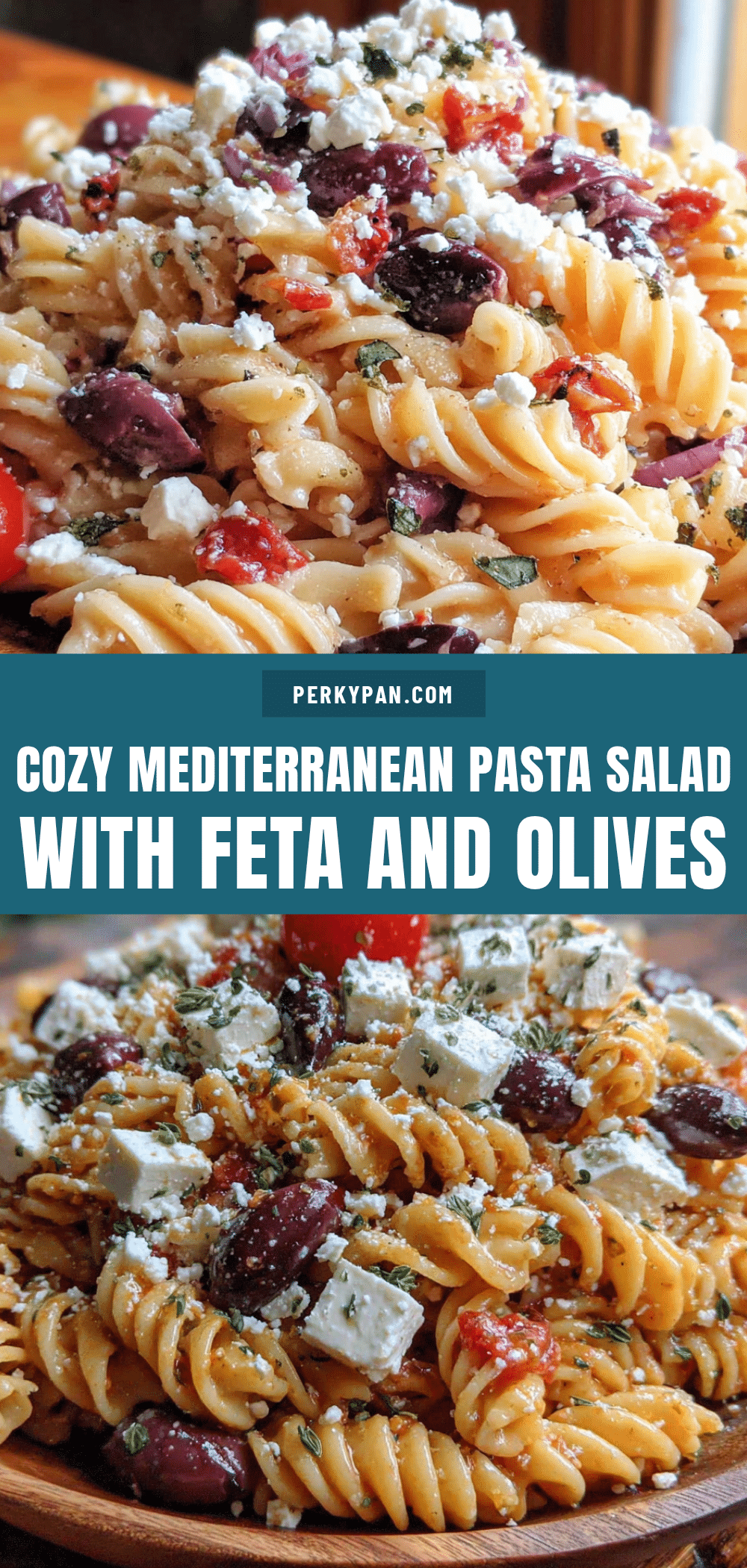
Cozy Mediterranean Pasta Salad with Feta and Olives
A cozy, bright pasta salad with briny olives, creamy feta, and a punchy herby dressing that comes together in under 30 minutes. Perfect for weeknight dinners or potlucks.
- Prep Time: 15 minutes
- Cook Time: 10 minutes
- Total Time: 25 minutes
- Yield: 6 servings 1x
- Category: Side Dish
- Cuisine: Mediterranean
Ingredients
- 12 ounces (340g) rotini or fusilli pasta
- 1 cup (150g) cherry tomatoes, halved
- 1 cup (150g) cucumber, diced
- 1/2 cup (75g) red onion, thinly sliced
- 1/2 cup (75g) Kalamata olives, pitted and halved
- 1/2 cup (75g) green olives, pitted and halved
- 6 ounces (170g) block feta cheese, cubed or crumbled
- 1/4 cup (15g) fresh parsley, chopped
- 1/4 cup (15g) fresh basil, chopped
- 1/3 cup (80ml) extra-virgin olive oil
- 3 tablespoons (45ml) red wine vinegar
- 1 tablespoon (15ml) lemon juice, freshly squeezed
- 2 cloves garlic, minced
- 1 teaspoon dried oregano
- 1/2 teaspoon salt
- 1/4 teaspoon black pepper
- 1/4 teaspoon red pepper flakes (optional)
Instructions
- Fill a large pot with 4-5 quarts of water and bring to a rolling boil. Add a generous tablespoon of salt. Add the rotini and cook according to package directions until al dente, about 8-10 minutes.
- While the pasta cooks, make the dressing: In a small bowl or mason jar, combine the olive oil, red wine vinegar, lemon juice, minced garlic, dried oregano, salt, black pepper, and red pepper flakes (if using). Whisk or shake until emulsified.
- In a large mixing bowl, add the cubed feta and halved olives. Pour about 2 tablespoons of the dressing over them and gently toss to coat. Let marinate while the pasta finishes cooking.
- Prep the vegetables: halve the cherry tomatoes, dice the cucumber, and thinly slice the red onion. Chop the parsley and basil, reserving some for garnish.
- Drain the pasta in a colander and rinse briefly with cool water (about 20 seconds) to stop the cooking. Shake well to remove excess water.
- Add the cooled pasta to the bowl with the marinated feta and olives. Add the cherry tomatoes, cucumber, red onion, and most of the parsley and basil. Pour the remaining dressing over everything.
- Gently fold everything together until evenly coated. Be careful not to break up the feta too much.
- Let the salad rest at room temperature for at least 15 minutes before serving to allow flavors to meld.
- Garnish with reserved parsley and basil. Serve at room temperature or slightly chilled.
Notes
For best results, use block feta in brine, not pre-crumbled. Let the salad rest for at least 15 minutes before serving. If making ahead, reserve extra dressing to toss in before serving.
Nutrition
- Serving Size: 1 serving
- Calories: 400
- Sugar: 5
- Sodium: 700
- Fat: 20
- Saturated Fat: 6
- Carbohydrates: 45
- Fiber: 4.5
- Protein: 11
Keywords: pasta salad, Mediterranean, feta, olives, easy, quick, vegetarian