Love this? Save it for later!
Share the inspiration with your friends
My sister asked why I couldn’t just use brown sugar in the glaze instead of messing with ketchup and vinegar. I started to explain why that wouldn’t work—then stopped. Honestly, I had no good reason. I’d been making the same meatloaf recipe for years, the one our grandmother passed down, and I’d never questioned the glaze. It was always ketchup, a splash of Worcestershire, maybe some mustard. But she had a point. Why not brown sugar? It was already in the pantry for the topping on her oatmeal.
So I tried it. That Tuesday night, I mixed up a simple glaze of brown sugar, a little ketchup, and some apple cider vinegar. I spread it over the meatloaf, slid it into the oven, and waited. The smell that filled the kitchen was different—richer, almost like caramel. When I pulled the loaf out, the top was glossy and dark, with these little sticky edges that looked like they’d been candied. I let it rest, sliced it, and took a bite. I mean, I actually stopped chewing for a second. It was better. Way better.
That moment stuck with me. Here I was, the one who’d been making meatloaf for over a decade, and my sister—who burns toast—had cracked the code. The brown sugar glaze wasn’t just a swap; it was the upgrade the recipe had been waiting for. It added this deep, sweet-savory layer that made the ketchup-only version taste, well, a little flat. Now I can’t make it any other way. Maybe you’ve been there too—stuck in a cooking rut, convinced your way is the only way, until someone casually suggests something that changes everything. That’s this recipe for me. It’s the one that taught me to stop being so sure of myself.
Why You’ll Love This Recipe
This isn’t just another meatloaf recipe. After years of tweaking—and yes, eating a lot of mediocre loaves—I landed on a version that hits every note. It’s tender without falling apart, flavorful without being heavy, and that brown sugar glaze? It’s the star. Here’s why it works so well.
- Quick & Easy: From start to table in about an hour, with just 15 minutes of hands-on prep. Perfect for a Tuesday night when you need dinner to happen without a fuss.
- Simple Ingredients: Ground beef, breadcrumbs, eggs, onion, and a few pantry staples. No fancy trips to a specialty store required.
- Perfect for Family Dinners: It’s the kind of meal that brings everyone to the table. Kids love the sweet glaze, and adults appreciate the savory depth.
- Crowd-Pleaser: I’ve brought this to potlucks and Sunday suppers, and the loaf always disappears first. People ask for the recipe every single time.
- Unbelievably Delicious: The texture is moist and tender—not dense or dry. The glaze caramelizes into a sticky, sweet crust that contrasts perfectly with the savory meat.
What makes this recipe different from the rest is the balance. I spent months testing ratios: more breadcrumbs for structure, less egg for tenderness, a splash of milk for moisture. The brown sugar glaze isn’t an afterthought—it’s a deliberate element that gets brushed on in layers so it bakes into the meat, not just on top. This isn’t just another version. It’s the best version, and I say that as someone who’s made a lot of meatloaf.
This recipe is the kind that makes you close your eyes after the first bite. It’s comfort food reimagined—familiar but better, like the version you remember from childhood but somehow improved. It’s perfect for impressing guests without stress, or turning a simple weeknight into something memorable.
What Ingredients You Will Need
This recipe uses simple, wholesome ingredients to deliver bold flavor and satisfying texture without the fuss. Most of these are pantry staples, so you likely already have everything on hand.
For the Meatloaf
- Ground beef, 2 pounds (80/20 blend works best for moisture and flavor)
- Breadcrumbs, 1 cup (plain or Italian-style; panko also works well)
- Milk, ½ cup (whole milk adds richness, but 2% or oat milk works too)
- Eggs, 2 large, lightly beaten (binds the mixture)
- Yellow onion, 1 medium, finely diced (about 1 cup)
- Garlic, 3 cloves, minced
- Ketchup, ¼ cup (adds tang and color)
- Worcestershire sauce, 2 tablespoons (adds umami depth)
- Dijon mustard, 1 tablespoon (optional, but I love the subtle kick)
- Fresh parsley, 2 tablespoons, chopped (optional, for freshness)
- Salt, 1½ teaspoons
- Black pepper, ½ teaspoon
- Dried thyme, ½ teaspoon (or 1 teaspoon fresh)
For the Brown Sugar Glaze
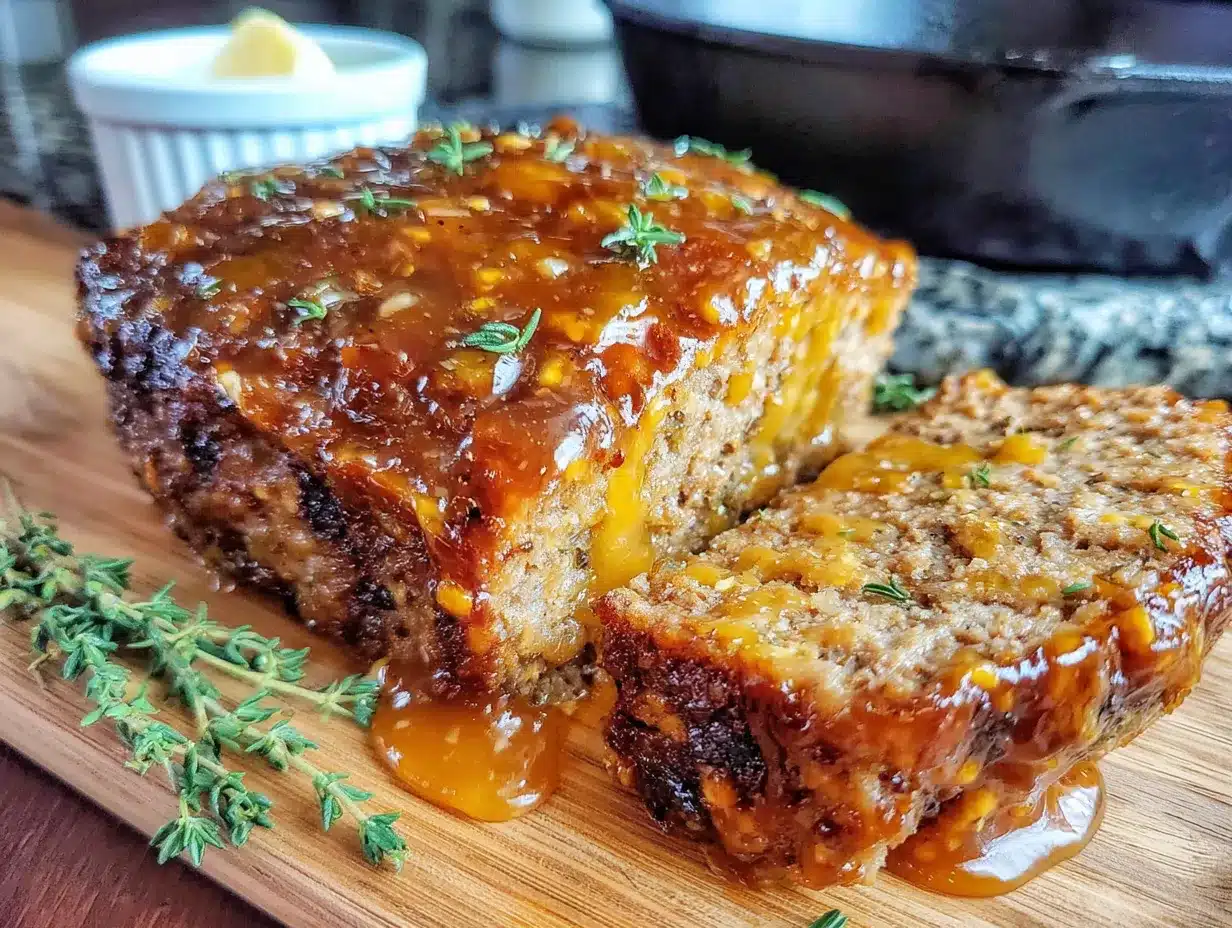
- Brown sugar, ½ cup, packed (light or dark—dark gives a deeper molasses flavor)
- Ketchup, ¼ cup
- Apple cider vinegar, 1 tablespoon (balances the sweetness)
- Worcestershire sauce, 1 teaspoon
- Garlic powder, ¼ teaspoon
Ingredient Notes: I prefer using 80/20 ground beef for this recipe. The fat keeps the meatloaf moist and flavorful. If you use leaner beef like 93/7, the loaf can turn out dry—you might want to add an extra tablespoon of milk or a drizzle of olive oil. For the breadcrumbs, I’ve used both plain and Italian-seasoned. Italian adds a little extra herb flavor, which is lovely. Panko gives a lighter texture if that’s your thing. For the brown sugar, I recommend dark brown sugar for the glaze. It has more molasses content, which creates a richer, almost caramel-like flavor. Light brown sugar works too, but the glaze won’t be as deep.
Equipment Needed
- Large mixing bowl (for combining the meatloaf ingredients)
- 9×5-inch loaf pan (standard size; glass, metal, or ceramic all work)
- Baking sheet (to place under the loaf pan to catch any drips)
- Small bowl (for mixing the glaze)
- Whisk or fork (for the glaze)
- Chef’s knife and cutting board (for dicing onion and mincing garlic)
- Measuring cups and spoons
- Meat thermometer (highly recommended for perfect doneness)
- Pastry brush (for applying the glaze; a spoon works in a pinch)
- Parchment paper (optional, for easy cleanup)
Alternatives: No loaf pan? You can shape the meatloaf into a free-form loaf on a lined baking sheet. It cooks a little faster that way, so start checking the temperature at 45 minutes. No pastry brush? Just spoon the glaze over the top and spread it gently. No meat thermometer? The meatloaf is done when the internal temperature reaches 160°F, and the juices run clear. I’ve used a cheap digital thermometer for years—it’s worth the $10 investment.
Preparation Method
- Preheat the oven to 350°F (175°C). Line a baking sheet with parchment paper or foil for easy cleanup. Place the loaf pan on the sheet.
- Saute the onion and garlic. In a small skillet over medium heat, add a drizzle of olive oil. Cook the diced onion for 4-5 minutes until softened and translucent. Add the minced garlic and cook for 30 seconds until fragrant. Let cool slightly. (This step is optional but I never skip it—raw onion can be too sharp, and sauteing it brings out the sweetness.)
- Mix the breadcrumb mixture. In a large bowl, combine the breadcrumbs and milk. Let it sit for 2-3 minutes until the breadcrumbs absorb the liquid. This is called a panade, and it’s the secret to a tender meatloaf.
- Add the remaining meatloaf ingredients. To the breadcrumb mixture, add the ground beef, beaten eggs, sauteed onion and garlic, ketchup, Worcestershire sauce, Dijon mustard (if using), parsley, salt, pepper, and thyme. Use your hands to gently mix everything together. Don’t overmix—stop as soon as everything is combined. Overworking the meat makes it tough.
- Shape the loaf. Transfer the mixture to the loaf pan. Press it gently into the pan, making sure there are no air pockets. Shape the top so it’s slightly domed in the center—this helps it cook evenly.
- Make the glaze. In a small bowl, whisk together the brown sugar, ketchup, apple cider vinegar, Worcestershire sauce, and garlic powder until smooth. Set aside.
- Bake for 30 minutes. Place the loaf pan on the baking sheet and bake for 30 minutes. The meatloaf will start to brown and release some juices.
- Apply the first glaze layer. Remove the meatloaf from the oven. Brush or spoon about half the glaze evenly over the top. Return to the oven and bake for 15 minutes.
- Apply the second glaze layer. Remove the meatloaf again and brush on the remaining glaze. Bake for another 10-15 minutes, or until the internal temperature reaches 160°F (71°C). The glaze should be bubbly and caramelized.
- Rest the meatloaf. Remove from the oven and let it rest in the pan for 10 minutes. This is crucial—the juices redistribute, and the loaf becomes easier to slice without falling apart.
- Slice and serve. Carefully transfer the meatloaf to a cutting board. Slice into 1-inch thick pieces. Spoon any remaining pan juices over the slices for extra flavor.
Sensory cues: At step 4, the mixture should feel moist but hold together when pressed. If it feels too wet, add a tablespoon more breadcrumbs. At step 7, you’ll smell the beef and spices starting to meld. At step 9, the glaze should be sticky and dark, with little caramelized edges. The meatloaf will feel firm but give slightly when pressed.
Cooking Tips & Techniques
I learned most of these the hard way—by making mistakes. Here’s what I wish I’d known from the start.
Don’t skip the panade. That mixture of breadcrumbs and milk is the difference between a meatloaf that’s tender and one that’s dry and crumbly. The breadcrumbs absorb the milk and create a soft paste that keeps the meat moist during cooking. I once tried to save time by skipping this step, and the meatloaf came out like a hockey puck. Never again.
Use a light hand when mixing. Overmixing is the number one mistake people make. It develops the protein in the meat, making the loaf dense and tough. Mix just until everything is combined—you should still see small flecks of onion and parsley. I use my hands because I can feel when it’s ready. If the mixture starts to feel sticky or tight, you’ve gone too far.
Layer the glaze for maximum flavor. Applying the glaze in two stages creates a thick, caramelized crust. The first layer bakes into the meat, infusing it with sweetness. The second layer stays on top, forming that sticky, glossy finish. I tried doing it all at once once, and the glaze just slid off. Trust the process—it’s worth the extra step.
Let it rest. I know it’s tempting to slice right into it, but resting is non-negotiable. The meatloaf continues to cook from residual heat, and the juices settle. If you cut it too soon, the slices will fall apart and the juices will run all over the board. Ten minutes. Set a timer.
Use a meat thermometer. The USDA recommends 160°F for ground beef. I’ve pulled meatloaf at 155°F and it was still pink in the center. But I’ve also left it in too long and ended up with dry meat. A thermometer takes the guesswork out. Insert it into the center of the loaf, not touching the pan. When it hits 160°F, it’s done.
Line the pan with parchment paper. This makes cleanup so much easier. The glaze can stick to the pan and burn, leaving you with a sticky mess. Just lift the loaf out by the parchment edges after it rests. I started doing this after a particularly disastrous cleanup that involved a lot of scrubbing and some choice words.
Variations & Adaptations
This recipe is flexible. Here are some ways to make it your own.
Turkey Meatloaf: Swap ground beef for ground turkey (93/7 works best). Turkey is leaner, so add an extra tablespoon of milk and a tablespoon of olive oil to keep it moist. The cooking time stays about the same, but start checking the temperature at 50 minutes. The brown sugar glaze works beautifully with turkey—it adds the moisture and flavor that turkey lacks.
Gluten-Free Option: Use gluten-free breadcrumbs or crushed gluten-free crackers (like rice crackers or almond flour crackers). I’ve also used rolled oats, pulsed in a food processor, as a substitute. The texture is slightly different—more rustic—but it holds together well. Just make sure your Worcestershire sauce is gluten-free too (Lea & Perrins is not, but there are gluten-free brands available).
Spicy Kick: Add 1-2 tablespoons of sriracha or chipotle in adobo (minced) to the meat mixture. For the glaze, swap the apple cider vinegar for a tablespoon of hot sauce. I tried this version for a game day party, and it was a hit. The heat cuts through the sweetness of the glaze perfectly.
Cheese-Stuffed Meatloaf: Press half the meat mixture into the pan. Make a shallow well down the center and fill it with shredded cheddar, mozzarella, or crumbled blue cheese. Top with the remaining meat mixture, sealing the edges. The cheese will melt into a gooey center. I did this with smoked gouda once, and it was ridiculous in the best way.
Vegetable-Packed Version: Finely grate a carrot and a zucchini, squeeze out the excess moisture, and add them to the meat mixture. You’ll need to reduce the breadcrumbs by a couple of tablespoons to compensate for the extra moisture. This version is great for sneaking veggies into a picky eater’s dinner. My nephew ate three slices before I told him there was zucchini in it.
Air Fryer Meatloaf: Shape the meat mixture into a free-form loaf that fits in your air fryer basket. Cook at 350°F for 25 minutes, then apply the glaze and cook for another 10-15 minutes until the internal temperature reaches 160°F. The glaze gets extra caramelized in the air fryer. Just make sure to check it early—air fryers run hot.
Serving & Storage Suggestions
Serving: Let the meatloaf rest for 10 minutes, then slice it into 1-inch thick pieces. Serve it warm, with extra pan juices spooned over the top. The glaze should be sticky and glossy. I like to serve it with mashed potatoes and green beans—the classic trio. The creamy potatoes balance the sweet-savory meatloaf, and the green beans add a fresh crunch. For a lighter side, try a simple arugula salad with lemon vinaigrette. The peppery greens cut through the richness.
Complementary dishes: This meatloaf pairs beautifully with roasted carrots, sautéed spinach, or a simple coleslaw. For a cozy dinner, serve it with buttered egg noodles or roasted baby potatoes. A glass of red wine—something like a Merlot or Zinfandel—complements the sweetness of the glaze. Or go with a cold beer, like a brown ale or lager.
Storage: Leftover meatloaf keeps well in the refrigerator for up to 4 days. Store it in an airtight container, or wrap the whole loaf tightly in foil. The flavors actually deepen overnight—the glaze soaks into the meat, making it even more flavorful the next day. I often make a double batch just for leftovers.
Freezing: Meatloaf freezes beautifully. You can freeze it whole or in individual slices. Wrap tightly in plastic wrap, then in foil, and freeze for up to 3 months. To thaw, transfer to the refrigerator overnight. To reheat, place slices in a 350°F oven for 10-15 minutes, or microwave for 1-2 minutes. The glaze might lose a bit of its gloss, but the flavor stays intact.
Reheating: For best results, reheat slices in a skillet over medium heat with a splash of beef broth or water. Cover the skillet and let it steam for 3-4 minutes. This restores moisture and keeps the meat tender. Avoid microwaving for too long—it can dry out the meat. If you’re reheating the whole loaf, wrap it in foil and warm it in a 300°F oven for 20-30 minutes.
Leftover ideas: Slice leftover meatloaf for sandwiches the next day. Toast some sourdough, add a smear of Dijon mustard, and pile on the meatloaf with lettuce and tomato. Or crumble it into a skillet with scrambled eggs and cheese for a hearty breakfast hash. I’ve also used leftover meatloaf in a pasta sauce—just crumble it into a tomato sauce and simmer for 10 minutes. It’s like a quick Bolognese.
Nutritional Information & Benefits
This recipe makes about 8 servings. The following values are estimates and will vary based on the exact ingredients and portion sizes.
| Nutrient | Per Serving (1 slice) |
|---|---|
| Calories | 385 |
| Total Fat | 22g |
| Saturated Fat | 8g |
| Cholesterol | 115mg |
| Sodium | 620mg |
| Total Carbohydrates | 18g |
| Dietary Fiber | 1g |
| Sugars | 12g |
| Protein | 28g |
Health Benefits: This recipe provides a solid amount of protein—about 28g per serving—which supports muscle repair and keeps you feeling full. The onions and garlic offer antioxidants and anti-inflammatory compounds. Using 80/20 beef adds iron and B vitamins, which are important for energy metabolism. If you’re watching your sodium, you can reduce the salt to 1 teaspoon and use low-sodium ketchup. The brown sugar glaze does add sugar, but it’s spread across 8 servings, so each slice has about 12g of sugar—comparable to a slice of bread. For a lower-carb option, swap the breadcrumbs for almond flour and use a sugar-free ketchup. This recipe is not gluten-free as written, but the adaptations above make it work.
Conclusion
This classic meatloaf with brown sugar glaze has become my go-to for a reason. It’s the recipe I turn to when I need a guaranteed win—whether it’s a Sunday dinner with the family, a potluck with friends, or just a Tuesday that needs a little comfort. The brown sugar glaze is the kind of simple change that makes you wonder why you didn’t try it sooner. It’s sweet, sticky, and savory all at once, and it turns an already good meatloaf into something you’ll crave.
I love that this recipe is forgiving. You can swap the beef for turkey, add cheese, or pack in vegetables, and it still works. It’s the kind of recipe that invites experimentation, which is exactly what cooking should be. So go ahead—make it your own. Add a little extra garlic. Use hot honey instead of brown sugar. Stuff it with cheddar. I’d love to hear how it turns out.
Drop a comment below and let me know how your meatloaf came out. Did you try a variation? Did the glaze caramelize just right? Share your photos and tag me on Pinterest—I love seeing your creations. And if you’re looking for more comfort food favorites, check out my classic mashed potatoes or my easy roasted green beans to complete the meal. Happy cooking, friends!
Frequently Asked Questions
Can I make this meatloaf ahead of time?
Absolutely. You can assemble the meatloaf up to 24 hours in advance. Just mix everything, shape it in the pan, cover it with plastic wrap, and refrigerate. When you’re ready to bake, let it sit at room temperature for 20 minutes while the oven preheats. You might need to add 5-10 minutes to the baking time since it’s starting from cold.
Why did my meatloaf fall apart?
This usually happens for one of two reasons: not enough binder or not enough resting time. Make sure you’re using enough breadcrumbs and eggs to hold the mixture together. The panade (breadcrumbs soaked in milk) is key. Also, don’t skip the 10-minute rest after baking. The meatloaf firms up as it cools, making it easier to slice cleanly.
Can I use a different type of ground meat?
Yes! Ground turkey, chicken, or pork all work well. Just keep in mind that leaner meats like turkey or chicken need extra moisture—add an extra tablespoon of milk or a drizzle of olive oil. Ground pork is fattier and will give you a very moist, rich meatloaf. You can also do a blend, like half beef and half pork, for extra flavor.
How do I know when the meatloaf is done without a thermometer?
Without a thermometer, look for these signs: the meatloaf should be firm to the touch in the center, the juices should run clear (not pink), and the glaze should be bubbly and caramelized. You can also insert a knife into the center—if it comes out hot to the touch, it’s likely done. But honestly, a meat thermometer is the most reliable way to get perfect results every time.
Can I double this recipe?
Definitely. This recipe doubles easily. Use two loaf pans or one large 9×13-inch baking dish. If using a larger dish, the cooking time will increase—start checking the temperature at 60 minutes. You’ll also need to double the glaze recipe. Leftovers freeze beautifully, so making a double batch is a great meal prep strategy.
PrintClassic Meatloaf with Brown Sugar Glaze Recipe: Easy & Best
This classic meatloaf features a tender, moist texture and a sweet-savory brown sugar glaze that caramelizes into a sticky, glossy crust. It’s an easy, family-friendly dinner that’s perfect for weeknights or special occasions.
- Prep Time: 15 minutes
- Cook Time: 55 minutes
- Total Time: 1 hour 10 minutes
- Yield: 8 servings 1x
- Category: Main Course
- Cuisine: American
Ingredients
- 2 pounds ground beef (80/20 blend)
- 1 cup breadcrumbs (plain or Italian-style)
- ½ cup milk (whole milk preferred)
- 2 large eggs, lightly beaten
- 1 medium yellow onion, finely diced (about 1 cup)
- 3 cloves garlic, minced
- ¼ cup ketchup
- 2 tablespoons Worcestershire sauce
- 1 tablespoon Dijon mustard (optional)
- 2 tablespoons fresh parsley, chopped (optional)
- 1½ teaspoons salt
- ½ teaspoon black pepper
- ½ teaspoon dried thyme
- ½ cup brown sugar, packed (light or dark)
- ¼ cup ketchup (for glaze)
- 1 tablespoon apple cider vinegar
- 1 teaspoon Worcestershire sauce (for glaze)
- ¼ teaspoon garlic powder
Instructions
- Preheat the oven to 350°F (175°C). Line a baking sheet with parchment paper or foil. Place a 9×5-inch loaf pan on the sheet.
- In a small skillet over medium heat, add a drizzle of olive oil. Cook the diced onion for 4-5 minutes until softened. Add the minced garlic and cook for 30 seconds until fragrant. Let cool slightly.
- In a large bowl, combine the breadcrumbs and milk. Let sit for 2-3 minutes until the breadcrumbs absorb the liquid.
- Add the ground beef, beaten eggs, sautéed onion and garlic, ¼ cup ketchup, 2 tablespoons Worcestershire sauce, Dijon mustard (if using), parsley, salt, pepper, and thyme to the breadcrumb mixture. Mix gently with your hands until just combined. Do not overmix.
- Transfer the mixture to the loaf pan. Press gently to remove air pockets and shape the top into a slight dome.
- In a small bowl, whisk together the brown sugar, ¼ cup ketchup, apple cider vinegar, 1 teaspoon Worcestershire sauce, and garlic powder until smooth. Set aside.
- Bake the meatloaf for 30 minutes.
- Remove from the oven and brush or spoon about half the glaze evenly over the top. Return to the oven and bake for 15 minutes.
- Remove again and brush on the remaining glaze. Bake for another 10-15 minutes, until the internal temperature reaches 160°F (71°C).
- Remove from the oven and let rest in the pan for 10 minutes.
- Carefully transfer to a cutting board. Slice into 1-inch thick pieces. Spoon any remaining pan juices over the slices before serving.
Notes
Don’t skip the panade (breadcrumbs soaked in milk) for a tender texture. Use a light hand when mixing to avoid a dense loaf. Layer the glaze in two stages for a thick, caramelized crust. Let the meatloaf rest for 10 minutes before slicing to allow juices to redistribute. A meat thermometer ensures perfect doneness at 160°F.
Nutrition
- Serving Size: 1 slice (1/8 of loaf
- Calories: 385
- Sugar: 12
- Sodium: 620
- Fat: 22
- Saturated Fat: 8
- Carbohydrates: 18
- Fiber: 1
- Protein: 28
Keywords: meatloaf, brown sugar glaze, classic meatloaf, easy meatloaf, comfort food, ground beef recipe