Love this? Save it for later!
Share the inspiration with your friends
I wasn’t expecting cooking advice from my accountant, Mr. Henderson, but there I was, sitting in his cramped office during a tax extension panic, listening to him describe exactly how to make chicken noodle soup. He had this way of talking about food that was completely at odds with the spreadsheets covering his desk. “The secret,” he said, not looking up from my 1099s, “isn’t the chicken. It’s letting the vegetables sweat until they practically give up.” I nodded, half-listening, more worried about my deductions than dinner. But something about the way he said it—like he was sharing a family secret instead of filing paperwork—stuck with me. Honestly, I forgot about it until three weeks later when I had a house full of guests coming over and absolutely nothing planned for a starter.
Let me tell you, I was desperate. I had eight people arriving in four hours, and my kitchen looked like a disaster zone. I remembered Mr. Henderson’s words and figured, why not? I had chicken, carrots, celery, and noodles. How hard could it be? The first batch was a mess—I rushed the broth, added too much salt, and the noodles turned into a gluey paste. But the second attempt? That was the one. The soup came together in a way that felt almost magical. The broth was clear but rich, the chicken fell apart with a fork, and the noodles had that perfect al dente bite. My guests, who I was secretly terrified of disappointing, went quiet after the first spoonful. Then came the compliments. “Where did you learn to make this?” someone asked. I just smiled and said, “My accountant.”
That night changed how I think about hosting. You know that feeling when you’re trying to impress people and everything has to be perfect? This soup taught me that simple, done right, is way more impressive than complicated and stressful. It’s become my go-to starter for any gathering, and honestly, it’s saved me more times than I can count. Whether I’m hosting a formal dinner party or a casual potluck, this soup is the dish that makes people lean in and ask for the recipe. And I always think of Mr. Henderson when I make it—the quiet accountant who knew more about cooking than most chefs I’ve met. Maybe you’ve been there, scrambling for a dish that feels special without the stress. This is that recipe.
Why You’ll Love This Recipe
This isn’t just another chicken noodle soup recipe. I’ve tested this version dozens of times, tweaking the broth, adjusting the cooking times, and figuring out exactly what makes it work for a crowd. The result is a soup that feels both familiar and impressive, which is exactly what you want when you’re hosting.
- Perfect for Hosting: This soup scales beautifully. You can easily double or triple the recipe without losing any flavor, making it ideal for dinner parties, potlucks, or festive get-togethers. I’ve served it to twelve people without breaking a sweat.
- Simple Ingredients: No fancy grocery trips needed. Chicken, carrots, celery, onion, garlic, egg noodles, and a few pantry staples are all you need. You probably have most of these in your kitchen right now.
- Make-Ahead Friendly: The broth gets better overnight. Make it a day ahead, and you’ll have even deeper flavor when your guests arrive. This is a lifesaver for busy hosts.
- Crowd-Pleaser: I’ve never met anyone who didn’t love this soup. Kids, adults, picky eaters—everyone goes back for seconds. It’s the kind of dish that makes people close their eyes after the first bite.
- Unbelievably Comforting: The texture and flavor combo is next-level comfort food. The broth is rich but not heavy, the chicken is tender, and the noodles soak up all that goodness without getting mushy.
What makes this recipe different from the rest? It’s the technique. Most recipes rush the broth or overcook the noodles. I’ve figured out the exact timing and methods to get a clear, flavorful broth and perfectly cooked noodles every time. It’s comfort food reimagined—healthier, faster, but with the same soul-soothing satisfaction. Perfect for impressing guests without stress, or turning a simple meal into something memorable.
What Ingredients You Will Need
This recipe uses simple, wholesome ingredients to deliver bold flavor and satisfying texture without the fuss. Most of these are pantry staples, so you can whip this up anytime you’re hosting.
For the Broth
- 2 tablespoons olive oil (or avocado oil for a higher smoke point)
- 1 large yellow onion, diced (about 1 ½ cups; adds sweetness and depth)
- 3 medium carrots, peeled and diced (about 1 cup; I recommend organic for better flavor)
- 3 celery stalks, diced (about 1 cup; use the leaves too for extra flavor)
- 4 cloves garlic, minced (fresh is non-negotiable here)
- 8 cups low-sodium chicken broth (I prefer Swanson or Kitchen Basics; homemade is even better if you have it)
- 2 cups water (adjust based on how thick you want the soup)
- 2 bay leaves (remove before serving; they add subtle earthiness)
- 1 teaspoon dried thyme (or 3 sprigs fresh)
- 1 teaspoon dried rosemary (crush it between your fingers to release oils)
- Salt and black pepper to taste (go easy on salt until the end; broth can be salty)
For the Chicken
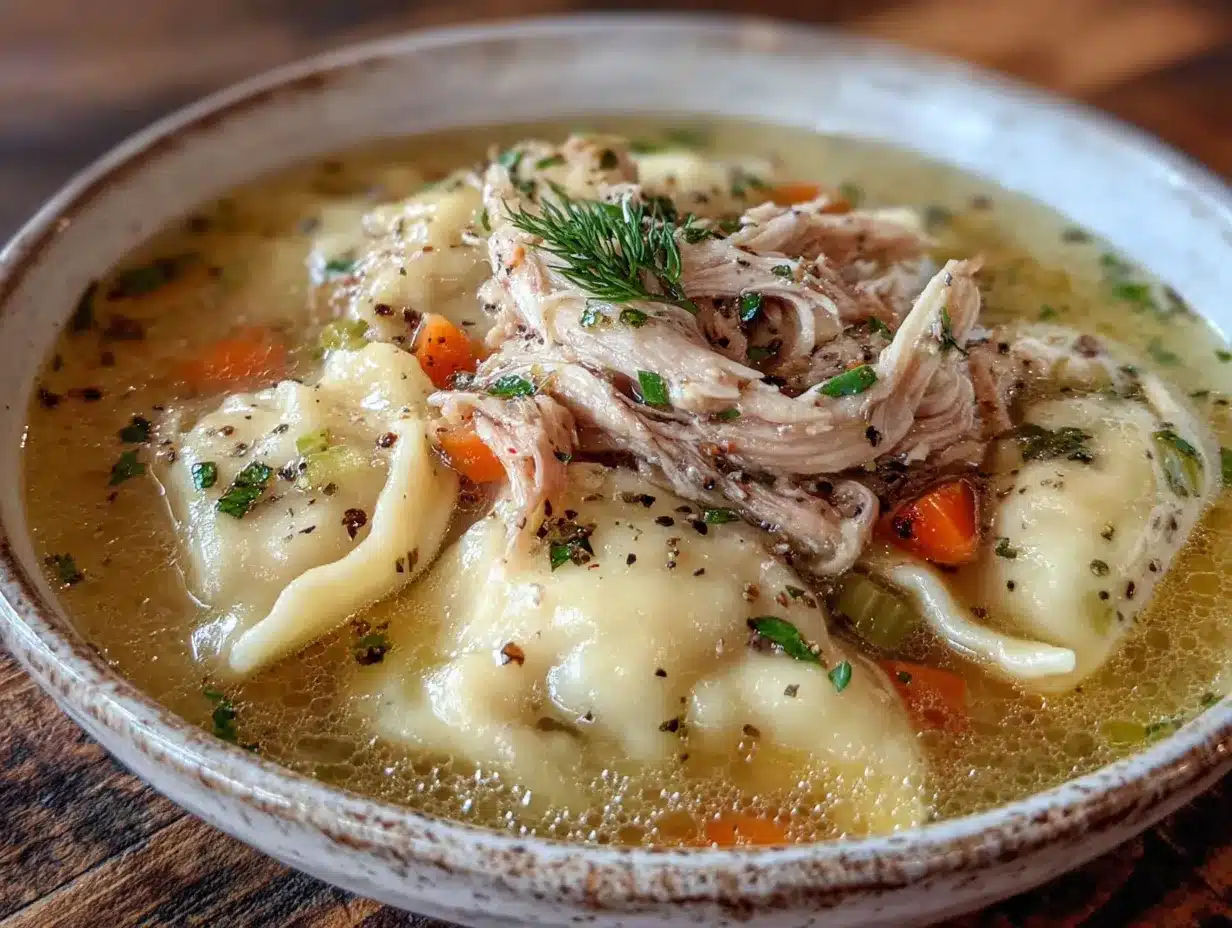
- 1 ½ pounds boneless, skinless chicken breasts or thighs (thighs are more forgiving and flavorful; I use a mix)
- 1 teaspoon salt (for seasoning the chicken)
- ½ teaspoon black pepper
- ½ teaspoon garlic powder
For the Noodles
- 8 ounces wide egg noodles (I recommend Reames or No Yolks; they hold up well in broth)
- 1 tablespoon butter (optional, but adds richness to the noodles)
For Garnish
- ¼ cup fresh parsley, chopped (adds color and freshness)
- Fresh dill or chives (optional but lovely for presentation)
- Lemon wedges (a squeeze of lemon at the end brightens everything)
Ingredient Selection Tips: Look for firm carrots and celery—limp vegetables will make the broth taste flat. For the chicken, I prefer thighs for their richness, but breasts work fine if you’re watching fat. If you’re using frozen chicken, thaw it completely before cooking to ensure even cooking. For a gluten-free option, use rice noodles or gluten-free egg noodles—just adjust the cooking time as they tend to cook faster.
Substitution Guidance: No chicken broth? Use vegetable broth and add a splash of soy sauce for depth. No egg noodles? Any small pasta works—orzo, ditalini, or even broken spaghetti. Just adjust cooking time based on the pasta shape. For a dairy-free version, skip the butter and use olive oil instead.
Equipment Needed
You don’t need fancy equipment to make this soup, which is part of its charm. Here’s what you’ll need:
- Large Dutch oven or heavy-bottomed pot (6-quart or larger; I use my Le Creuset, but any heavy pot works)
- Cutting board (wooden or plastic; just make sure it’s stable)
- Chef’s knife (a sharp one makes dicing vegetables so much easier)
- Wooden spoon or spatula (for stirring the vegetables)
- Measuring cups and spoons (for accuracy, especially with broth)
- Fine-mesh strainer (optional, for straining the broth if you want it crystal clear)
- Ladle (for serving)
- Thermometer (optional, but helpful for checking chicken doneness—165°F is the magic number)
Budget-Friendly Options: Don’t have a Dutch oven? A large stockpot works just fine. No fine-mesh strainer? Use a slotted spoon to remove the bay leaves and any solids. I’ve made this soup in a cheap stainless steel pot and it turned out just as good. The only thing I’d splurge on is a good chef’s knife—it makes prep faster and safer.
Personal Experience: I used to struggle with sticking vegetables in my old nonstick pot. Switching to a heavy-bottomed Dutch oven changed everything—the heat distributes evenly, and nothing burns. If you’re using a thinner pot, just keep the heat on medium-low and stir frequently.
Preparation Method
This recipe takes about 1 hour and 15 minutes total, including prep. The active cooking time is around 45 minutes, with the rest being hands-off simmering. Perfect for making while you get other things ready for your guests.
Step 1: Prep Your Vegetables (10 minutes)
Dice the onion, carrots, and celery into uniform pieces—about ½-inch cubes. This ensures they cook evenly and look nice in the soup. Mince the garlic and set it aside. I like to keep the garlic separate so it doesn’t burn when I’m sautéing the other vegetables.
Step 2: Season and Sear the Chicken (15 minutes)
Pat the chicken dry with paper towels. Season both sides with salt, pepper, and garlic powder. Heat 1 tablespoon of olive oil in your Dutch oven over medium-high heat. Add the chicken and sear for 4-5 minutes per side, until golden brown. Don’t crowd the pan—work in batches if needed. The chicken won’t be cooked through at this point, and that’s fine. Remove the chicken to a plate and set aside.
Step 3: Sauté the Vegetables (10 minutes)
Reduce the heat to medium. Add the remaining 1 tablespoon of olive oil. Add the onion, carrots, and celery. Cook, stirring occasionally, for 6-8 minutes until the vegetables soften and the onion becomes translucent. This is where Mr. Henderson’s advice comes in—let them sweat until they “practically give up.” You’ll notice the kitchen smelling amazing. Add the minced garlic and cook for 1 more minute, stirring constantly so it doesn’t burn.
Step 4: Build the Broth (5 minutes)
Pour in the chicken broth and water. Add the bay leaves, thyme, and rosemary. Stir to combine, scraping up any browned bits from the bottom of the pot—that’s flavor you don’t want to waste. Return the chicken to the pot, along with any juices that accumulated on the plate.
Step 5: Simmer the Soup (30 minutes)
Bring the soup to a gentle boil, then reduce the heat to low. Cover and let it simmer for 25-30 minutes. The broth should be bubbling gently, not roaring. This is the most important step—it’s where the flavors meld and the chicken becomes tender. While it simmers, the kitchen fills with this incredible aroma that will have your guests hovering near the stove.
Step 6: Shred the Chicken (5 minutes)
After 30 minutes, remove the chicken from the pot using tongs. Place it on a cutting board and let it cool for a few minutes. Use two forks to shred the chicken into bite-sized pieces. It should fall apart easily. If it doesn’t, give it another 5-10 minutes in the pot.
Step 7: Cook the Noodles (8-10 minutes)
Return the shredded chicken to the pot. Bring the soup back to a gentle boil. Add the egg noodles and cook according to package directions, usually 8-10 minutes. Stir occasionally to prevent sticking. Taste the broth and adjust salt and pepper as needed. Remember, the noodles will absorb some salt, so don’t be shy.
Step 8: Finish and Serve (2 minutes)
Remove the bay leaves and discard them. Stir in the butter if using, which adds a lovely richness. Ladle the soup into bowls and garnish with fresh parsley, dill, or chives. Serve with lemon wedges on the side—a squeeze of lemon brightens everything up. The soup is ready immediately, but it gets even better after sitting for a few hours.
Cooking Tips & Techniques
I’ve made this soup more times than I can count, and I’ve learned a few things along the way. Here are my best tips for getting it right every time.
Don’t Rush the Vegetables: This is the biggest mistake I see. People throw the vegetables in and cook them for 2 minutes before adding broth. Take your time. Let them sweat for a full 8 minutes until they’re soft and fragrant. This builds the flavor base of the entire soup. I once rushed this step when I was in a hurry, and the soup tasted flat. Never again.
Skim the Broth: As the soup simmers, you’ll see foam and impurities rise to the surface. Use a spoon to skim these off. It takes 30 seconds and makes your broth crystal clear instead of cloudy. I forgot to do this once when I was distracted by a phone call, and the soup looked murky. Still tasted good, but the presentation suffered.
Cook Noodles Separately for Leftovers: If you’re planning to have leftovers, cook the noodles separately and add them to individual bowls when serving. If you store noodles in the soup, they’ll absorb the broth and turn mushy by the next day. I learned this the hard way after a dinner party where I had tons of leftover soup. Now I cook the noodles separately and keep them in a container in the fridge.
Use a Thermometer for Chicken: Chicken breast can go from perfect to dry in 30 seconds. Use an instant-read thermometer to check for 165°F. Thighs are more forgiving, but I still check. This little tool has saved me from serving dry chicken more times than I can count.
Season in Layers: Add salt at each stage—a pinch on the vegetables, a bit on the chicken, and final adjustment at the end. This builds depth of flavor. Just be careful with the broth, as store-bought versions can be salty. Taste before adding more salt.
Variations & Adaptations
This recipe is incredibly flexible. Here are some ways to make it your own.
Herb and Lemon Variation
Add the zest of one lemon and a handful of fresh dill during the last 5 minutes of cooking. This brightens the soup and makes it feel lighter—perfect for spring gatherings. I tried this on a whim when I had leftover dill, and now it’s my go-to version for warmer months.
Spicy Chicken Noodle Soup
Add 1-2 teaspoons of red pepper flakes or a diced jalapeño when you sauté the vegetables. For even more heat, stir in a tablespoon of sriracha or chili oil at the end. My spice-loving friends beg me to make this version every time they visit.
Creamy Chicken Noodle Soup
Stir in ½ cup of heavy cream or full-fat coconut milk at the end of cooking. This turns the broth into a rich, velvety soup that feels more indulgent. It’s perfect for cold winter nights when you want something extra comforting. I made this for a holiday party and it disappeared in minutes.
Gluten-Free Adaptation
Use gluten-free egg noodles or rice noodles. Just note that rice noodles cook faster—usually 3-5 minutes—so add them at the very end. I’ve also used quinoa pasta, which holds up well in the broth.
Vegetarian Version
Skip the chicken and use vegetable broth. Add chickpeas or white beans for protein, and double the vegetables. Mushrooms add a meaty texture that mimics chicken. I’ve served this to vegetarian friends and they didn’t miss the meat at all.
Serving & Storage Suggestions
This soup is best served hot, right after the noodles are cooked. Here’s how to make it shine at your gathering.
Serving Temperature: Serve steaming hot, but not boiling. Let it cool for 2-3 minutes after ladling into bowls. The noodles need a moment to settle so they don’t burn your guests’ mouths. I’ve made that mistake before—not fun.
Presentation Tips: Ladle the soup into wide, shallow bowls so the noodles and vegetables are visible. Garnish with fresh herbs and a lemon wedge on the side. For a dinner party, I like to serve it in individual bowls with a sprig of thyme on top—looks fancy with zero effort. A slice of crusty bread on the side is always a hit for dipping.
What to Serve Alongside: This soup pairs beautifully with a simple green salad with vinaigrette, crusty bread with butter, or a cheese platter. For a heartier meal, serve it before roasted chicken or a pasta dish. I often make it as a starter for a roast chicken dinner—the flavors complement each other perfectly.
Storage Instructions: Store leftover soup and noodles separately in airtight containers in the refrigerator for up to 4 days. The broth will thicken slightly as it sits, which is normal. If you cooked the noodles separately, add them when reheating to avoid mushiness.
Freezing Instructions: The soup base (without noodles) freezes beautifully for up to 3 months. Let it cool completely, then transfer to freezer-safe containers. Thaw overnight in the refrigerator and reheat on the stove. Cook fresh noodles when you’re ready to serve. I always keep a batch in the freezer for unexpected guests.
Reheating Tips: Reheat on the stovetop over medium heat, stirring occasionally. Add a splash of water or broth if the soup has thickened too much. Microwave in 30-second bursts if you’re in a hurry, but the stovetop gives better results. The flavors actually deepen after a day or two in the fridge, so leftovers taste even better.
Nutritional Information & Benefits
This soup is as nutritious as it is delicious. Here’s what you’re getting in each serving (based on 8 servings):
- Calories: Approximately 280-320 per serving
- Protein: 25-30 grams (thanks to the chicken and broth)
- Carbohydrates: 25-30 grams (from the noodles and vegetables)
- Fat: 8-12 grams (mostly from olive oil and chicken)
- Fiber: 3-4 grams (from carrots and celery)
- Sodium: 600-800 mg (varies based on broth and added salt)
Health Benefits: This soup is packed with immune-boosting ingredients. Carrots are rich in beta-carotene, which supports eye health. Celery provides antioxidants and vitamin K. The chicken offers lean protein that keeps you full and satisfied. The broth is hydrating and soothing, especially if you’re feeling under the weather. Plus, the warm liquid can help clear nasal congestion—a natural remedy that actually works.
Dietary Considerations: This recipe is dairy-free if you skip the butter garnish. It’s also nut-free and soy-free. For a lower-sodium version, use no-salt-added broth and skip the added salt until the end. The recipe is naturally high in protein and moderate in carbs, making it suitable for most balanced diets.
Allergen Note: Contains gluten from the egg noodles. For a gluten-free version, use gluten-free noodles. The recipe is free of common allergens like nuts, dairy, and eggs (the noodles are egg-based, so check labels if you have egg allergies).
Conclusion
This classic homemade chicken noodle soup has become my secret weapon for hosting. It’s the dish that makes people think you spent hours in the kitchen when really, it’s just simple ingredients and a little patience. The best part? It’s completely forgiving. You can adjust the vegetables, swap the herbs, or change the noodles, and it still turns out amazing. That’s the beauty of a well-made soup—it adapts to you.
I hope you give this recipe a try for your next gathering. Whether it’s a formal dinner party or a casual potluck, this soup will steal the table. And if your guests ask where you learned to make it, feel free to say your accountant taught you. I won’t tell. Honestly, some of the best recipes come from the most unexpected places, and this one proves that point perfectly.
I’d love to hear how it turns out for you. Leave a comment below and let me know what variations you tried, or share a photo of your soup on Pinterest. Tag me so I can see your beautiful bowls! And if you’re looking for more crowd-pleasing starters, check out my creamy tomato basil soup or this roasted butternut squash soup for more hosting inspiration. Happy cooking, and remember—the secret is in the vegetables.
Frequently Asked Questions
Can I use chicken thighs instead of breasts?
Absolutely. Chicken thighs are actually more flavorful and forgiving than breasts. They stay tender even if you cook them a bit longer. Just adjust the cooking time slightly—thighs may need an extra 5-10 minutes to become fork-tender.
How do I prevent the noodles from getting mushy?
The easiest way is to cook the noodles separately and add them to individual bowls when serving. If you’re serving the whole pot at once, cook the noodles al dente (about 1-2 minutes less than package directions) so they finish cooking in the hot broth.
Can I make this soup in a slow cooker or Instant Pot?
Yes. For a slow cooker, sauté the vegetables on the stovetop first, then add everything except the noodles. Cook on low for 6-8 hours. Shred the chicken, then add the noodles and cook on high for 15-20 minutes. For an Instant Pot, use the sauté function for the vegetables and chicken, then pressure cook on high for 15 minutes. Quick release, shred the chicken, and add noodles on the sauté setting for 5-8 minutes.
How long does this soup last in the fridge?
Stored properly in an airtight container, the soup (without noodles) will keep for 3-4 days in the refrigerator. If you’ve already added noodles, it’s best within 2 days before they start to break down. The broth itself gets more flavorful over time.
Can I freeze this soup?
Yes, but freeze the broth and chicken without the noodles. The noodles will turn into a mushy mess when thawed. Store the soup base in freezer-safe containers for up to 3 months. When you’re ready to serve, thaw overnight in the fridge, reheat on the stove, and cook fresh noodles. It’s like having homemade soup on demand.
Pin This Recipe!
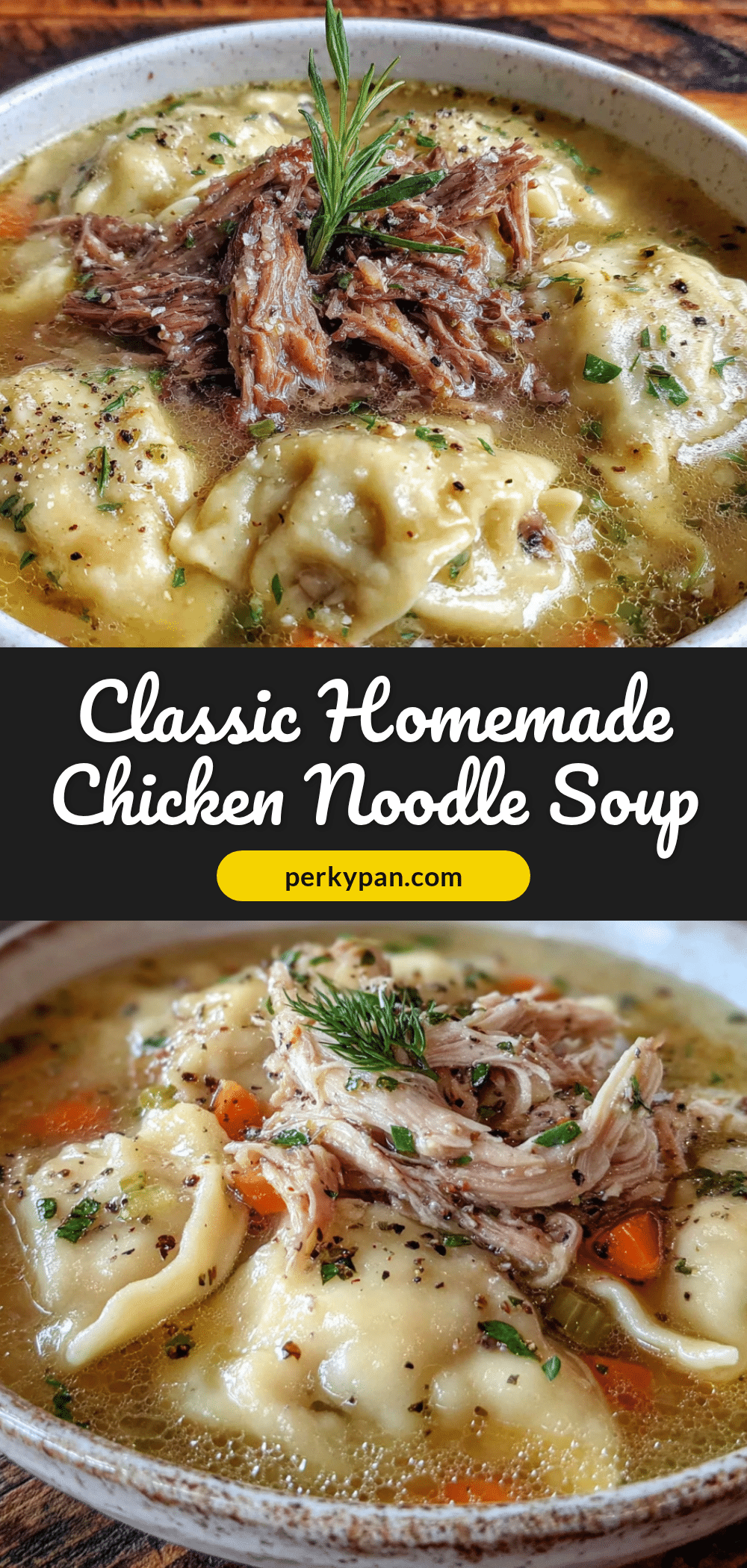
Classic Homemade Chicken Noodle Soup – The Best Easy Starter
This classic homemade chicken noodle soup is the perfect starter for any gathering. With simple ingredients and a few key techniques, you’ll get a clear, flavorful broth and perfectly cooked noodles every time.
- Prep Time: 15 minutes
- Cook Time: 45 minutes
- Total Time: 1 hour 15 minutes
- Yield: 8 servings 1x
- Category: Starter
- Cuisine: American
Ingredients
- 2 tablespoons olive oil (or avocado oil for a higher smoke point)
- 1 large yellow onion, diced (about 1 ½ cups)
- 3 medium carrots, peeled and diced (about 1 cup)
- 3 celery stalks, diced (about 1 cup)
- 4 cloves garlic, minced
- 8 cups low-sodium chicken broth
- 2 cups water
- 2 bay leaves
- 1 teaspoon dried thyme (or 3 sprigs fresh)
- 1 teaspoon dried rosemary
- Salt and black pepper to taste
- 1 ½ pounds boneless, skinless chicken breasts or thighs
- 1 teaspoon salt
- ½ teaspoon black pepper
- ½ teaspoon garlic powder
- 8 ounces wide egg noodles
- 1 tablespoon butter (optional)
- ¼ cup fresh parsley, chopped
- Fresh dill or chives (optional)
- Lemon wedges
Instructions
- Dice the onion, carrots, and celery into uniform pieces—about ½-inch cubes. Mince the garlic and set it aside.
- Pat the chicken dry with paper towels. Season both sides with salt, pepper, and garlic powder. Heat 1 tablespoon of olive oil in your Dutch oven over medium-high heat. Add the chicken and sear for 4-5 minutes per side, until golden brown. Remove the chicken to a plate and set aside.
- Reduce the heat to medium. Add the remaining 1 tablespoon of olive oil. Add the onion, carrots, and celery. Cook, stirring occasionally, for 6-8 minutes until the vegetables soften and the onion becomes translucent. Add the minced garlic and cook for 1 more minute, stirring constantly.
- Pour in the chicken broth and water. Add the bay leaves, thyme, and rosemary. Stir to combine, scraping up any browned bits from the bottom of the pot. Return the chicken to the pot, along with any accumulated juices.
- Bring the soup to a gentle boil, then reduce the heat to low. Cover and let it simmer for 25-30 minutes.
- After 30 minutes, remove the chicken from the pot using tongs. Place it on a cutting board and let it cool for a few minutes. Use two forks to shred the chicken into bite-sized pieces.
- Return the shredded chicken to the pot. Bring the soup back to a gentle boil. Add the egg noodles and cook according to package directions, usually 8-10 minutes. Stir occasionally to prevent sticking. Taste the broth and adjust salt and pepper as needed.
- Remove the bay leaves and discard them. Stir in the butter if using. Ladle the soup into bowls and garnish with fresh parsley, dill, or chives. Serve with lemon wedges on the side.
Notes
For leftovers, cook noodles separately and add to individual bowls when serving to prevent mushiness. The broth gets better overnight, so make it a day ahead for deeper flavor. Skim foam from the broth as it simmers for a clearer soup.
Nutrition
- Serving Size: 1 bowl (about 1 ½ cu
- Calories: 300
- Sugar: 5
- Sodium: 700
- Fat: 10
- Saturated Fat: 2
- Carbohydrates: 28
- Fiber: 3.5
- Protein: 27
Keywords: chicken noodle soup, homemade soup, easy starter, comfort food, dinner party soup