Love this? Save it for later!
Share the inspiration with your friends
I was at the hardware store last December, of all places, picking up a new oven thermometer because mine had finally given up after years of loyal service. The guy behind the counter, an older fellow named Carl who I’d only ever exchanged nods with about pipe fittings, took one look at my purchase and said, “You roasting a prime rib this Christmas?” I blinked. I mean, how did he know? He just grinned and started telling me about his method—the one his father used, the one he swore by for the past forty years. I wasn’t expecting cooking advice from a hardware store clerk, but there I was, standing in the lighting aisle, listening to him describe exactly how to make the perfect garlic herb prime rib roast.
Honestly, I almost didn’t write it down. I had my own plan, my own recipe I’d been tweaking for years. But something about the way he talked—like this was the only way to do it—made me grab a receipt from my pocket and scribble his tips on the back. That conversation completely changed how I approach this dish. I went home, combined his wisdom with a few things I’d learned the hard way, and made the best prime rib of my life. The power actually flickered halfway through roasting that year (an ice storm), but the roast came out perfect. Maybe you’ve been there, standing in a totally random spot, and a piece of cooking advice just lands in your lap. That’s this recipe for me. It’s the one I keep coming back to, the one that makes the holiday table feel truly special without all the stress.
Why You’ll Love This Recipe
This isn’t just another roast recipe—it’s the one that gets the “wow” every single time. After years of testing (and a few dry, disappointing holidays), I can tell you this method works. It’s built on simple, foolproof techniques that deliver a stunning result.
- Foolproof & Reliable: The reverse-sear method takes the guesswork out of roasting. You get a perfectly pink center from edge to edge, not just a tiny circle in the middle.
- Simple Ingredients: You don’t need a dozen exotic spices. Garlic, fresh herbs, salt, and pepper are the stars. You probably have most of them right now.
- Perfect for the Holidays: This roast is made for Christmas Eve, New Year’s dinner, or any special gathering where you want to impress without being in the kitchen all night.
- Always a Crowd-Pleaser: It’s the kind of main course that gets everyone talking. Kids ask for seconds, and adults ask for the recipe.
- Unbelievably Tender: The slow, low-temperature cooking breaks down the connective tissue, making every slice melt-in-your-mouth tender. The garlic herb crust adds a flavor punch that’s next-level comfort food.
What makes this version different? It’s the perfect balance of a deeply flavorful herb crust and a foolproof cooking technique. I’ve tested this with different cuts and oven setups, and the reverse-sear method is the key to consistency. This isn’t just another prime rib recipe—it’s the one that makes you close your eyes after the first bite. It’s comfort food reimagined for a special occasion: rich, savory, and incredibly satisfying without being complicated.
What Ingredients You Will Need
This recipe uses a short list of high-quality ingredients to create a bold, savory flavor. The magic is in the simple combination of fresh herbs, garlic, and a good cut of beef. Here’s what you’ll need to gather.
- For the Prime Rib:
- 1 (7-8 pound) bone-in prime rib roast (3-4 bones). Look for a roast with good marbling—that’s the fat running through the meat that keeps it juicy.
- 2 tablespoons kosher salt (I use Diamond Crystal; if using Morton’s, use about 1 ½ tablespoons)
- 1 tablespoon freshly ground black pepper
- For the Garlic Herb Paste:
- 8-10 cloves garlic, minced (from one whole head)
- ¼ cup fresh rosemary, finely chopped (about 4-5 sprigs)
- ¼ cup fresh thyme leaves, chopped (about 8-10 sprigs)
- 2 tablespoons fresh parsley, chopped
- 3 tablespoons olive oil (a good quality extra virgin works well)
- 2 tablespoons Dijon mustard (adds a tangy depth and helps the crust stick)
I recommend using fresh herbs here—dried just won’t give you the same bright, aromatic punch. For the beef, ask your butcher for a prime or choice-grade roast with the fat cap intact. If you can’t find a bone-in roast, a boneless roast works too, just adjust the cooking time slightly (it will cook a bit faster). For a milder garlic flavor, you can roast the garlic cloves first, but I love the bold kick of raw garlic in the crust.
Equipment Needed
You don’t need a ton of fancy gear for this recipe, but a few key tools make the process much smoother.
- Roasting Pan: A sturdy, heavy-duty roasting pan with a rack is ideal. The rack keeps the roast elevated so hot air can circulate all around it.
- Instant-Read Thermometer: This is non-negotiable. A digital instant-read thermometer is the only way to guarantee perfect doneness. I’ve used the same Thermapen for years, and it’s never let me down.
- Chef’s Knife: A sharp 8- or 10-inch chef’s knife makes mincing garlic and herbs a breeze.
- Cutting Board: A large wooden or plastic cutting board for prepping and carving.
- Kitchen Twine: To tie the roast between the bones for even cooking (optional but helpful).
- Aluminum Foil: For tenting the roast while it rests.
If you don’t have a roasting rack, you can use a makeshift one by placing a few thick carrot or celery stalks under the roast. It works in a pinch! For a budget-friendly option, a basic metal roasting pan from the grocery store will do the job just fine.
Preparation Method
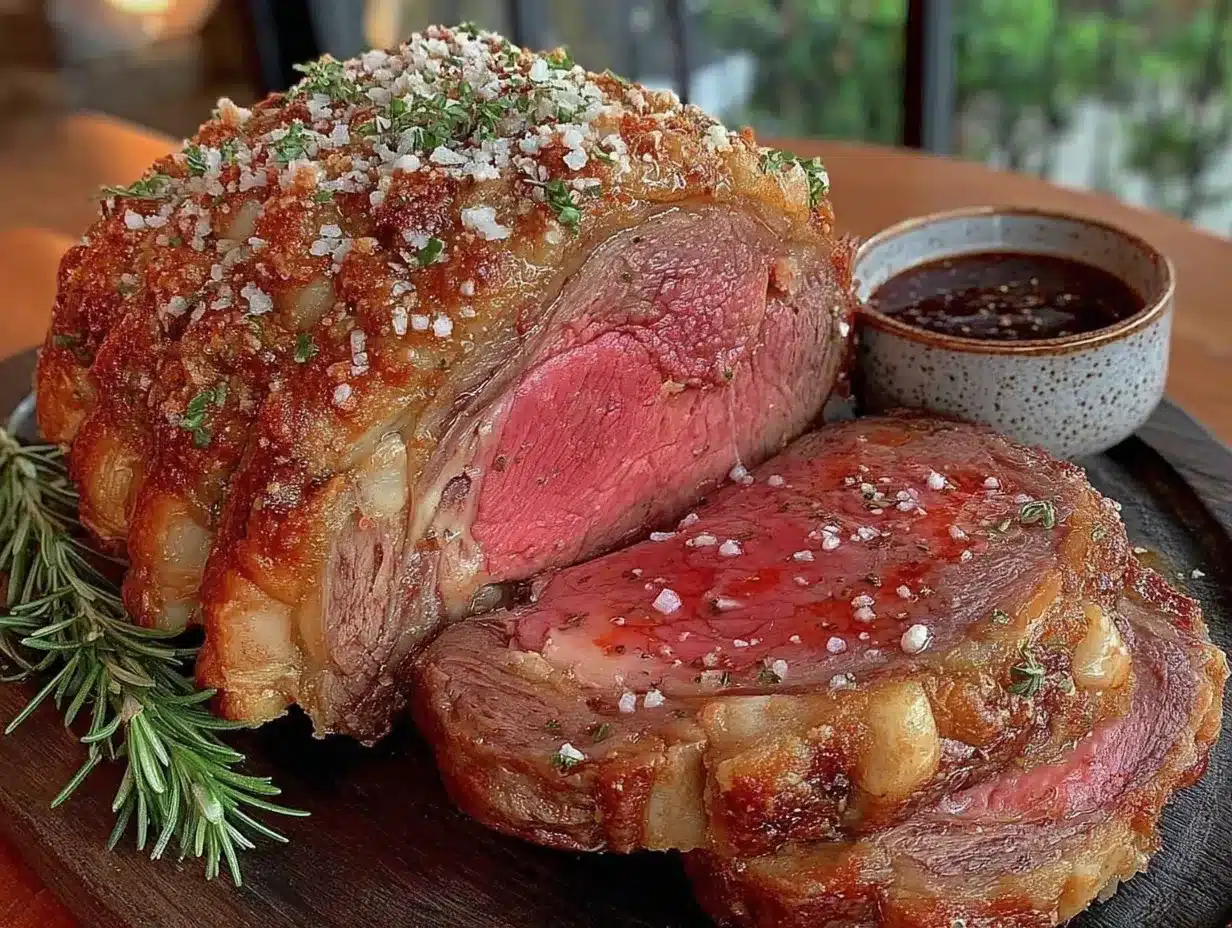
This method uses the reverse-sear technique, which means you cook the roast low and slow first, then blast it with high heat at the end to create a gorgeous crust. It’s the most reliable way to get a perfectly cooked roast.
- Prep the Roast (Day Before or 24 Hours Ahead): Pat the prime rib roast completely dry with paper towels. This is crucial for a good crust. In a small bowl, combine the kosher salt and black pepper. Rub this mixture all over the roast, making sure to get every side. Wrap the roast loosely in plastic wrap and place it on a tray in the refrigerator for at least 12 hours, or up to 24. This dry-brining step is the secret to deeply seasoned meat.
- Make the Herb Paste (Day Of): About an hour before you plan to cook, take the roast out of the fridge and let it sit at room temperature. In a small bowl, combine the minced garlic, rosemary, thyme, parsley, olive oil, and Dijon mustard. Mix until it forms a thick paste. The smell at this point is incredible—earthy, sharp, and so savory.
- Apply the Paste: Once the roast has come up in temperature a bit, pat it dry again (some moisture will have come to the surface). Rub the garlic herb paste all over the roast, pressing it into the fat cap and the sides. Don’t be shy—use it all. Let the roast sit for another 30 minutes while you preheat the oven.
- Low and Slow Roast: Preheat your oven to 250°F (120°C). Place the roast, bone-side down, on the rack in your roasting pan. Roast for about 3 to 3 ½ hours, or until the internal temperature reaches 120°F (49°C) for medium-rare. Start checking the temperature after 2 ½ hours. The roast will continue to cook as it rests, so pulling it at 120°F is perfect. Your kitchen will start to smell like a holiday dream at this point.
- The Sear (The Final Blast): Once the roast hits 120°F, remove it from the oven and tent it loosely with foil. Increase the oven temperature to 500°F (260°C). Let the oven come to full temperature—this takes about 15-20 minutes. Once it’s screaming hot, remove the foil and return the roast to the oven. Roast for 8-12 minutes, watching it closely, until the crust is deep golden brown and bubbling. Don’t walk away! Ovens vary, and you don’t want it to burn.
- Rest and Carve: Remove the roast from the oven and transfer it to a cutting board. Tent it loosely with foil and let it rest for at least 20-25 minutes. This is not optional—resting allows the juices to redistribute throughout the meat. After resting, remove the bones (they should pull away easily), slice the roast into ½-inch to ¾-inch thick slices, and serve immediately.
Cooking Tips & Techniques
Here are some hard-earned lessons from my kitchen to yours. I’ve made every mistake in the book so you don’t have to.
- Don’t Skip the Dry Brine: I know it seems like an extra step, but salting the roast a day ahead is the single most important thing you can do for flavor. The salt penetrates deep into the meat, seasoning it from the inside out. I once skipped this step in a rush, and the roast was noticeably less flavorful.
- Use a Reliable Thermometer: I cannot stress this enough. The difference between a perfectly cooked medium-rare roast and a well-done one is just a few degrees. An instant-read thermometer is your best friend. I’ve ruined a few roasts by trusting the pop-up timer that comes with the meat—don’t make that mistake.
- Let It Rest, Seriously: The hardest part of this whole recipe is waiting those 20-25 minutes after the roast comes out of the oven. But if you cut into it too soon, all those beautiful juices will run out onto the cutting board instead of staying in the meat. Trust the process. I once had a guest who kept asking, “Is it ready yet?” every five minutes. I held firm, and the roast was perfect.
- Multitasking Strategy: While the roast is doing its low-and-slow cook, you have plenty of time to prepare your sides. Roast some potatoes, make a salad, or set the table. The high-heat sear at the end is the only part that requires your full attention.
Variations & Adaptations
This recipe is wonderfully adaptable. Here are a few ways to make it your own.
- Herb Swap: Not a fan of rosemary? Swap it for an equal amount of fresh sage or oregano. I’ve made a version with sage and a touch of lemon zest, and it was fantastic for a springtime gathering.
- Spicy Crust: Add 1-2 teaspoons of red pepper flakes or a pinch of cayenne pepper to the herb paste for a subtle kick. It pairs beautifully with the richness of the beef.
- Garlic-Lover’s Version: If you’re like me and think there’s no such thing as too much garlic, roast a whole head of garlic alongside the roast (wrap it in foil with a drizzle of olive oil). Squeeze the soft, roasted cloves into the herb paste for a sweeter, mellower garlic flavor.
- Dietary Adaptation: This recipe is naturally gluten-free and low-carb, making it perfect for guests with those dietary needs. Just double-check your Dijon mustard is gluten-free (most are).
- Different Cooking Method: If you have a smoker, you can smoke the roast at 225°F for 2-3 hours before finishing it with the high-heat sear in the oven. It adds an incredible smoky depth that’s perfect for a holiday barbecue.
Serving & Storage Suggestions
This roast is a showstopper, so present it whole on a large platter for carving at the table. It makes for a beautiful, dramatic moment.
- Serving Temperature: Serve the sliced roast warm, not piping hot. The rested meat will be perfectly warm throughout. Pair it with classic sides like creamy mashed potatoes, roasted root vegetables, a crisp green salad, and a rich red wine jus or horseradish cream.
- Beverage Pairing: A full-bodied red wine like a Cabernet Sauvignon, a Merlot, or a Syrah is a classic pairing. For a non-alcoholic option, a tart cherry or pomegranate spritzer works beautifully.
- Storage: Store leftover roast in an airtight container in the refrigerator for up to 4 days. The flavors actually meld and deepen overnight, making leftovers almost better than the first meal.
- Reheating: The best way to reheat prime rib is low and slow. Place slices in a baking dish with a splash of beef broth, cover with foil, and warm in a 300°F (150°C) oven for 10-15 minutes. Avoid the microwave—it will toughen the meat.
- Freezing: You can freeze cooked, sliced prime rib for up to 3 months. Wrap slices tightly in plastic wrap, then place them in a freezer bag. Thaw overnight in the fridge before reheating.
Nutritional Information & Benefits
This is a rich, indulgent dish, so a serving size is typically about 8-10 ounces of cooked meat. Here’s a rough estimate of the nutritional breakdown per serving.
| Nutrient | Amount |
|---|---|
| Calories | ~650-750 |
| Protein | ~55g |
| Fat | ~50g |
| Saturated Fat | ~20g |
| Carbohydrates | ~2g |
| Sodium | ~800mg |
Prime rib is an excellent source of high-quality protein, iron, and B vitamins, particularly B12, which is essential for energy and nerve function. The garlic and herbs in the crust are packed with antioxidants. While it’s a treat for special occasions, it’s a satisfying and nutrient-dense meal when enjoyed in moderation.
Conclusion
This Garlic Herb Prime Rib Roast is more than just a holiday dinner—it’s the centerpiece of a memory. It’s the dish that brings everyone to the table, that sparks conversation, and that makes the effort feel absolutely worth it. I love this recipe because it proves that you don’t need to be a professional chef to create something truly spectacular. With a little patience and the right technique, you can pull off a roast that rivals any restaurant.
I encourage you to make it your own. Play with the herbs, adjust the garlic, and don’t be afraid to trust that thermometer. When you slice into that perfectly pink, herb-crusted roast and hear the “oohs” and “ahhs” from your guests, you’ll know exactly why I keep coming back to this method. If you make this roast, I’d love to hear about it! Drop a comment below and let me know how it turned out, or share your own twist on the recipe. Happy cooking, and here’s to a delicious holiday season!
Frequently Asked Questions
How long does it take to cook a prime rib roast?
For a 7-8 pound bone-in roast at 250°F, plan on about 3 to 3 ½ hours for medium-rare, plus a 15-minute high-heat sear at the end. Always rely on your thermometer, not the clock.
Can I use a boneless prime rib roast?
Yes, absolutely. A boneless roast will cook a bit faster because there’s no bone to slow down the heat transfer. Start checking the internal temperature about 30 minutes earlier than the recipe suggests.
What if I don’t have fresh herbs?
Fresh herbs are best for the crust, but in a pinch, you can use dried. Use about 1 tablespoon of dried rosemary and 1 tablespoon of dried thyme. The flavor won’t be as bright, but it will still be delicious.
How do I get a good crust without overcooking the meat?
The reverse-sear method is the key. By cooking the roast low and slow first, you can safely blast it with high heat at the end without worrying about overcooking the interior. Just watch it closely during the final sear.
Can I prepare the herb paste in advance?
Yes! You can make the garlic herb paste up to 2 days ahead. Store it in an airtight container in the refrigerator. Let it come to room temperature for about 15 minutes before applying it to the roast.
Pin This Recipe!
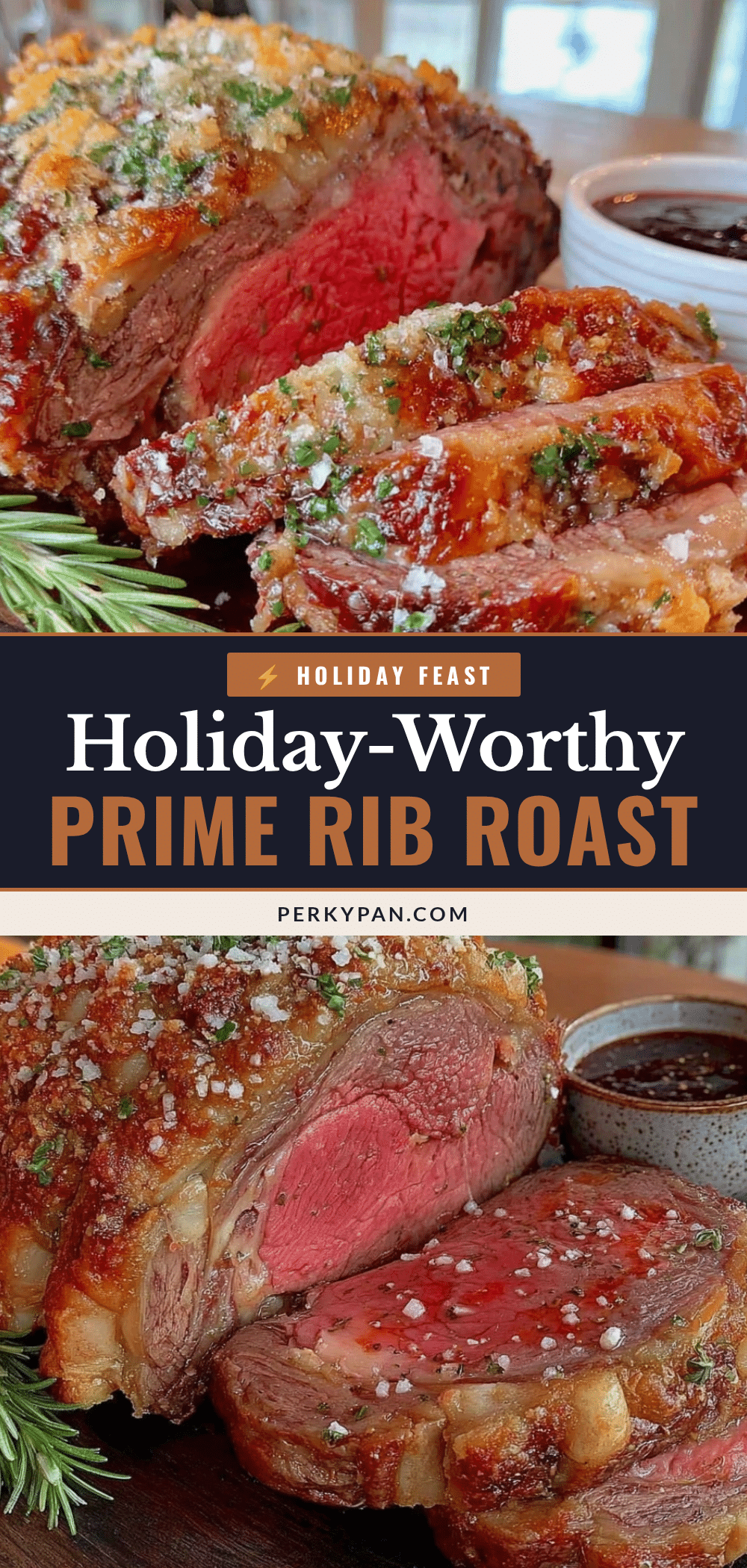
Best Garlic Herb Prime Rib Roast—Perfect Holiday Dinner
This foolproof reverse-sear method delivers a perfectly pink, tender prime rib with a flavorful garlic herb crust. It’s the ultimate holiday centerpiece that impresses every time.
- Prep Time: 15 minutes
- Cook Time: 3 hours 30 minutes
- Total Time: 3 hours 45 minutes
- Yield: 8 servings 1x
- Category: Main Course
- Cuisine: American
Ingredients
- 1 (7-8 pound) bone-in prime rib roast (3–4 bones)
- 2 tablespoons kosher salt (Diamond Crystal; if using Morton’s, use 1 ½ tablespoons)
- 1 tablespoon freshly ground black pepper
- 8–10 cloves garlic, minced (from one whole head)
- ¼ cup fresh rosemary, finely chopped (about 4–5 sprigs)
- ¼ cup fresh thyme leaves, chopped (about 8–10 sprigs)
- 2 tablespoons fresh parsley, chopped
- 3 tablespoons olive oil (good quality extra virgin)
- 2 tablespoons Dijon mustard
Instructions
- Prep the Roast (Day Before or 24 Hours Ahead): Pat the prime rib roast completely dry with paper towels. In a small bowl, combine the kosher salt and black pepper. Rub this mixture all over the roast. Wrap loosely in plastic wrap and place on a tray in the refrigerator for at least 12 hours, up to 24.
- Make the Herb Paste (Day Of): About an hour before cooking, take the roast out of the fridge and let it sit at room temperature. In a small bowl, combine minced garlic, rosemary, thyme, parsley, olive oil, and Dijon mustard. Mix until it forms a thick paste.
- Apply the Paste: Pat the roast dry again. Rub the garlic herb paste all over the roast, pressing it into the fat cap and sides. Let sit for another 30 minutes while preheating the oven.
- Low and Slow Roast: Preheat oven to 250°F (120°C). Place the roast, bone-side down, on a rack in a roasting pan. Roast for about 3 to 3 ½ hours, until internal temperature reaches 120°F (49°C) for medium-rare. Start checking after 2 ½ hours.
- The Sear: Once the roast hits 120°F, remove from oven and tent loosely with foil. Increase oven temperature to 500°F (260°C). Let oven come to full temperature (15-20 minutes). Remove foil and return roast to oven. Roast for 8-12 minutes, watching closely, until crust is deep golden brown.
- Rest and Carve: Remove roast from oven and transfer to a cutting board. Tent loosely with foil and let rest for at least 20-25 minutes. Remove bones (they should pull away easily), slice into ½-inch to ¾-inch thick slices, and serve immediately.
Notes
Don’t skip the dry brine—it deeply seasons the meat. Use a reliable thermometer for perfect doneness. Let the roast rest for at least 20-25 minutes before carving to keep juices in the meat. For a milder garlic flavor, roast the garlic cloves first. If using a boneless roast, start checking temperature about 30 minutes earlier.
Nutrition
- Serving Size: 8-10 ounces cooked m
- Calories: 650750
- Sodium: 800
- Fat: 50
- Saturated Fat: 20
- Carbohydrates: 2
- Protein: 55
Keywords: prime rib, garlic herb prime rib, reverse sear prime rib, holiday roast, Christmas dinner, New Year's dinner, beef roast