Love this? Save it for later!
Share the inspiration with your friends
This was supposed to be a simple weeknight dinner. I had a batch of cornbread sitting on the counter that was two days old, a roll of breakfast sausage in the fridge, and a vague plan to make stuffed peppers. Nothing fancy, just a Tuesday. But then my neighbor, Carol, knocked on the door holding a massive bag of fresh sage from her garden. “Here,” she said, practically shoving it into my hands. “I have too much, and I’m leaving for a trip tomorrow.” I thanked her, closed the door, and stared at the pile of sage on my counter. The stuffed peppers suddenly felt wrong. I mean, what was I going to do with all that sage? Stuff it into a pepper? That seemed disrespectful to the herb.
So I did what any reasonable person would do when faced with too much cornbread and a bundle of sage. I crumbled the cornbread into a bowl. I browned the sausage. I chopped the onion and celery I had planned for the peppers. And then I just started mixing things together, pouring in some chicken broth, and hoping for the best. Honestly, I was already mentally preparing to order pizza as a backup. The oven was set to 375, and I slid the baking dish in with zero confidence. My kitchen smelled like a Thanksgiving fever dream, but it was July. I figured I had made a huge mistake.
When I pulled that dish out of the oven, the top was golden brown and crispy. The sage had crisped up on the edges. The sausage was peeking through the cornbread in little pockets of savory goodness. I let it cool for about five minutes because I was still skeptical, and then I took a bite. Let me tell you, I did not see that coming. It was savory, it was rich, it was exactly what I wanted to eat even though it was ninety degrees outside. I ended up eating it for dinner three nights in a row, and I have been making it ever since. Maybe you have been there too, where a kitchen accident turns into the recipe you actually write down and share with everyone you know. This cornbread stuffing is that recipe for me.
Why You Will Love This Recipe
This is not just another side dish that gets pushed around the plate. This cornbread sausage stuffing is the kind of recipe that makes people ask for the recipe before they even finish their first helping. I have brought this to potlucks, Friendsgiving dinners, and even a casual summer barbecue, and it always gets the same reaction. People stop mid-bite and look at the dish with genuine surprise. It is that good.
- Quick & Easy: This whole thing comes together in about 45 minutes from start to finish. You can prep the components ahead of time, and then just bake it when your guests arrive. No stress, no fuss.
- Simple Ingredients: You do not need to hunt down anything fancy at the grocery store. Cornbread mix, breakfast sausage, fresh sage, and a few pantry staples. That is it.
- Perfect for Hosting: This dish is designed for a crowd. It scales beautifully, it holds well in a warm oven, and it looks gorgeous on a buffet table. Your guests will think you spent hours on it.
- Crowd-Pleaser: I have served this to picky eaters, vegetarians who made an exception, and people who swore they did not like stuffing. Every single one of them went back for seconds.
- Unbelievably Delicious: The combination of savory sausage, aromatic sage, and slightly sweet cornbread is a match made in comfort food heaven. The top gets perfectly crispy while the inside stays moist and tender.
What makes this version different from every other stuffing recipe out there is the technique. I brown the sausage first and let it render its fat, then I use that same pan to sauté the aromatics. That one step packs so much flavor into the base that you do not need to add a ton of extra seasoning. The cornbread does the heavy lifting, and the sage ties everything together. This is not just another recipe on the internet. It is the one you will come back to year after year.
What Ingredients You Will Need
This recipe uses simple, wholesome ingredients to deliver bold flavor and satisfying texture without the fuss. Most of these are pantry staples, and the fresh ingredients are easy to find at any grocery store.
- 1 batch of cornbread, crumbled (about 6 cups) – You can use homemade cornbread or a boxed mix. I prefer to make mine a day ahead and let it sit out overnight so it gets slightly stale. That texture soaks up the broth perfectly without turning mushy. If you are in a rush, you can cube it and toast it in the oven for 10 minutes.
- 1 pound breakfast sausage – I recommend using a good quality pork breakfast sausage. Jimmy Dean or a local butcher brand works great. If you want a little heat, go for the hot version. For a lighter option, turkey breakfast sausage works well too, just add a tablespoon of olive oil to the pan since it is leaner.
- 1 large yellow onion, diced – Yellow onion gives the best savory flavor base. You can use white onion in a pinch, but I would avoid red onion as it is too sharp for this dish.
- 3 stalks celery, diced – Celery adds that classic stuffing crunch and freshness. Make sure to dice it small so it blends into the dish without being too chunky.
- 4 cloves garlic, minced – Fresh garlic is non-negotiable here. Do not use the jarred stuff. It makes a real difference in the final flavor.
- 3 tablespoons fresh sage, chopped – This is the star of the show. Fresh sage has a peppery, slightly lemony flavor that dried sage just cannot replicate. If you only have dried, use 1 tablespoon and add it with the broth.
- 1 ½ cups chicken broth – Use low-sodium broth so you can control the salt level. Homemade broth is amazing here, but store-bought works perfectly fine.
- 2 large eggs, beaten – The eggs act as a binder and help the stuffing hold its shape when you slice into it. If you need an egg-free version, you can use a flax egg, but the texture will be a bit more crumbly.
- 4 tablespoons unsalted butter, melted – Butter adds richness and helps the top get that beautiful golden crust. You can use salted butter, just reduce the added salt in the recipe.
- Salt and black pepper to taste – Start with ½ teaspoon of salt and ¼ teaspoon of pepper, then adjust after tasting.
- Optional: ¼ cup fresh parsley, chopped – This is for garnish and a pop of freshness at the end. It is not essential, but it makes the dish look prettier on the table.
Equipment Needed
You do not need a fancy kitchen to make this recipe. Here is what you will need:
- Large skillet or frying pan – For browning the sausage and sautéing the vegetables. A 12-inch skillet gives you plenty of room to work.
- Large mixing bowl – For combining all the ingredients. Go big so you have room to mix without spilling everything over the counter.
- 9×13-inch baking dish – This is the perfect size for a standard batch. If you are doubling the recipe, use a larger roasting pan or two dishes.
- Wooden spoon or spatula – For breaking up the sausage as it cooks.
- Chef knife and cutting board – For dicing the onion, celery, and chopping the sage.
- Measuring cups and spoons – Accurate measurements matter for the broth and butter.
- Whisk – For beating the eggs before adding them to the mixture.
If you do not have a 9×13 dish, you can use a 10-inch cast iron skillet for a rustic look. Just make sure it is oven-safe. I have also used a disposable aluminum pan when bringing this to a potluck, and it works great. No cleanup needed.
Preparation Method
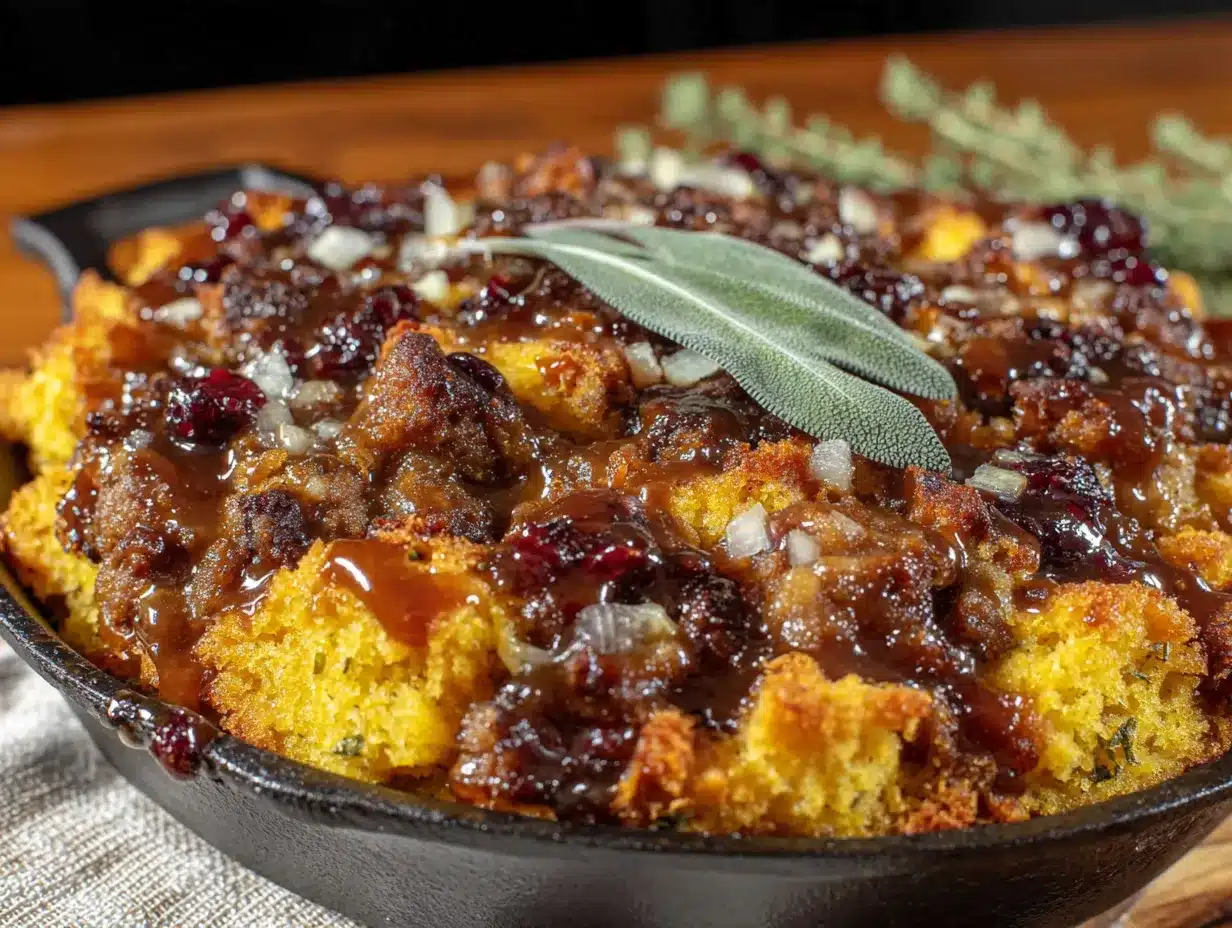
Let me walk you through this step by step. I have made this recipe more times than I can count, so I am going to share every little trick I have learned along the way.
- Preheat your oven to 375°F (190°C). Get this going first so the oven is hot and ready when you need it. While it is heating, grease your 9×13 baking dish with a little butter or non-stick spray.
- Brown the sausage. Place your large skillet over medium-high heat. Add the sausage and break it up with your wooden spoon as it cooks. Let it get nice and brown, about 6-8 minutes. Do not rush this step. Those browned bits on the bottom of the pan are pure flavor. Once the sausage is cooked through, use a slotted spoon to transfer it to a plate, leaving the rendered fat in the pan.
- Sauté the aromatics. Reduce the heat to medium. Add the diced onion and celery to the same pan with the sausage fat. Cook them for about 5 minutes, stirring occasionally, until the onion turns translucent and the celery softens. The smell at this point is incredible. Add the minced garlic and cook for another minute until fragrant. Be careful not to burn the garlic, it turns bitter fast.
- Combine the dry ingredients. In your large mixing bowl, add the crumbled cornbread. Pour the cooked sausage over it, then add the sautéed vegetables including all that garlicky goodness. Toss everything together gently with your hands or a spatula until it is evenly distributed.
- Add the fresh sage. Sprinkle the chopped sage over the mixture and stir it in. This is where the dish really starts to come alive. The sage will mellow out as it bakes, so do not be shy with it.
- Mix the wet ingredients. In a separate small bowl, whisk together the beaten eggs, chicken broth, and melted butter. Pour this mixture slowly over the cornbread mixture. Use your hands or a spatula to gently fold everything together. You want the cornbread to be evenly moistened, but not swimming in liquid. It should look like a wet, chunky batter.
- Season and taste. Add salt and pepper to the mixture. Here is a trick I learned the hard way: taste a small bit of the raw mixture. It will not taste exactly like the final dish, but it will tell you if you are way off on salt. Adjust if needed.
- Transfer to the baking dish. Spread the mixture evenly into your greased 9×13 dish. Use the back of a spatula to press it down gently so it is level. Do not pack it too tight, you want some air pockets for texture.
- Bake uncovered. Place the dish in the preheated oven and bake for 30-35 minutes. The top should be golden brown and slightly crispy. The edges will be darker and caramelized, which is the best part. If you want an extra crispy top, broil it for the last 2 minutes, but watch it closely so it does not burn.
- Rest before serving. Let the stuffing sit for about 5-10 minutes after it comes out of the oven. This allows it to set up so you can scoop clean portions. Garnish with fresh parsley if you are using it.
Cooking Tips & Techniques
I have made every mistake in the book with this recipe, so you do not have to. Here is what I have learned:
Do not overmix. I know it is tempting to keep stirring until everything looks perfectly uniform, but stop as soon as the ingredients are combined. Overmixing turns the cornbread into a paste, and you lose that wonderful crumbly texture that makes stuffing so good.
Stale cornbread is your friend. Fresh cornbread is too soft and will turn into mush when you add the broth. If you are making the cornbread from scratch, do it a day ahead and leave it uncovered on the counter overnight. If you are in a pinch, cube the cornbread and spread it on a baking sheet in a 300°F oven for 10 minutes. This dries it out just enough.
Watch your liquid ratio. The amount of broth you need can vary depending on how dry your cornbread is. Start with 1 ¼ cups and add more if the mixture looks too dry. It should be moist but not soggy. If you add too much liquid, your stuffing will be heavy and wet instead of light and fluffy.
Let the sausage fat work for you. Do not drain the fat after browning the sausage. That fat is liquid gold. It carries all the flavor from the sausage and seasons the vegetables perfectly. If you are using a lean sausage or turkey sausage, add 2 tablespoons of butter or olive oil to the pan before sautéing the vegetables.
Timing is everything when hosting. You can assemble this dish completely the night before. Just cover it with foil and refrigerate. When you are ready to bake, add about 10 minutes to the cooking time since it is starting from cold. This is a lifesaver when you are juggling multiple dishes for a dinner party.
Variations & Adaptations
One of the best things about this recipe is how flexible it is. I have tried several variations over the years, and they all turned out great.
Vegetarian Version: Skip the sausage and use 2 tablespoons of olive oil to sauté the vegetables. Add 8 ounces of cremini mushrooms, diced, and cook them until they release their liquid and start to brown. The mushrooms give you that same savory, umami flavor that the sausage provides. Use vegetable broth instead of chicken broth.
Gluten-Free Adaptation: This one is easy. Just use a gluten-free cornbread mix or make your own with gluten-free cornmeal. Everything else in the recipe is naturally gluten-free, so you are good to go. Double-check your sausage brand to make sure it does not contain any fillers with gluten.
Spicy Sausage Version: If you like heat, use hot breakfast sausage instead of mild. You can also add a diced jalapeño (seeds removed unless you want serious heat) to the sautéed vegetables. I made this version for a game day party, and it disappeared in minutes.
Apple and Sage Version: Add one peeled and diced Granny Smith apple to the sautéed vegetables. The apple adds a subtle sweetness that pairs beautifully with the sage and sausage. This is my personal favorite for fall gatherings. It makes the whole kitchen smell like autumn.
Dairy-Free Option: Substitute the butter with a plant-based butter or olive oil. Most cornbread mixes are dairy-free, but check the label to be sure. The texture will be slightly less rich, but still delicious.
Serving & Storage Suggestions
This cornbread stuffing is a showstopper on any table. Here is how to serve it and keep it fresh.
Serving Temperature: Serve it warm, straight from the oven. The contrast between the crispy top and the soft, moist interior is at its peak right after baking. If you are serving it as part of a buffet, you can keep it warm in a low oven (200°F) for up to an hour. Just cover it loosely with foil so it does not dry out.
What to Serve Alongside: This dish is incredibly versatile. It pairs beautifully with roasted turkey or chicken, but do not limit yourself to holiday meals. I have served it alongside grilled pork chops, roasted vegetables, and even a simple green salad. For a full holiday spread, add creamy mashed potatoes and roasted green beans with garlic for a complete meal.
Storage: Leftovers keep well in the refrigerator for up to 4 days. Store them in an airtight container. The flavors actually meld together overnight, so day-old stuffing is often even better than fresh.
Reheating: The best way to reheat this is in the oven. Place the stuffing in a baking dish, add a splash of chicken broth to keep it moist, cover with foil, and bake at 350°F for 15-20 minutes. You can also microwave individual portions, but the top will lose its crispiness. If you are in a rush, the microwave works fine.
Freezing: This stuffing freezes beautifully. Let it cool completely, then transfer it to a freezer-safe container or zip-top bag. It will keep for up to 3 months. To reheat, thaw it in the refrigerator overnight and then follow the reheating instructions above. I often make a double batch and freeze one for later.
Nutritional Information & Benefits
Here is the estimated nutritional breakdown for one serving (based on 8 servings per batch):
| Nutrient | Amount per Serving |
|---|---|
| Calories | 385 |
| Total Fat | 22g |
| Saturated Fat | 9g |
| Cholesterol | 85mg |
| Sodium | 720mg |
| Total Carbohydrates | 32g |
| Dietary Fiber | 2g |
| Sugars | 6g |
| Protein | 14g |
Health Benefits: Sage is not just for flavor. It is packed with antioxidants and has anti-inflammatory properties. The celery provides vitamin K and fiber, while the eggs add high-quality protein. If you use turkey sausage, you can reduce the fat content significantly. This is comfort food that also gives you some nutritional value.
Dietary Considerations: This recipe is not suitable for vegetarians or vegans in its standard form, but the variations above address those needs. It contains gluten, dairy, and eggs, so it is not allergy-friendly as written. However, the gluten-free and dairy-free adaptations are easy to implement.
Conclusion
This cornbread sausage stuffing started as a kitchen accident, and now it is the recipe I am known for. Every time I bring it to a gathering, someone asks me for the recipe, and I get to tell them the story of Carol and her overflowing sage bush. That is what I love about cooking. Sometimes the best things come from moments when you are not trying to be perfect.
I hope you give this recipe a try, whether it is for a holiday dinner, a potluck with friends, or just a random Tuesday when you need some comfort food. Feel free to make it your own. Swap in different herbs, add some dried cranberries, or go heavy on the garlic. This recipe is forgiving, and it loves to be customized.
If you make this, I would love to hear about it. Leave a comment below and tell me how it turned out. Did you add your own twist? Did your guests go back for thirds? Share your stories, and do not forget to pin this recipe for later. Happy cooking, my friend. You have got this.
Frequently Asked Questions
Can I make this cornbread stuffing ahead of time?
Absolutely. You can assemble the entire dish the night before, cover it, and refrigerate it. Just add about 10 minutes to the baking time since it is starting from cold. This is actually my preferred method when I am hosting a big dinner.
Can I use dried sage instead of fresh?
Yes, but the flavor will be different. Dried sage is more concentrated and slightly mustier. Use 1 tablespoon of dried sage instead of 3 tablespoons of fresh. Add it with the broth rather than with the vegetables for better distribution.
What is the best cornbread to use for stuffing?
I prefer a slightly sweet cornbread for this recipe. The sweetness balances the savory sausage and sage beautifully. Jiffy cornbread mix is a popular choice, but any homemade or store-bought cornbread works. Just make sure it is stale or dried out before you use it.
How do I prevent my stuffing from being too dry or too soggy?
The key is the liquid ratio. Start with 1 ¼ cups of broth and add more only if needed. The mixture should look moist but not wet. Also, make sure your cornbread is properly dried out. Fresh cornbread absorbs liquid unevenly and can lead to a mushy texture.
Can I double this recipe for a larger crowd?
Yes, this recipe doubles beautifully. Use a large roasting pan instead of a 9×13 dish, and increase the baking time by about 10-15 minutes. Check for doneness by looking for a golden brown top and an internal temperature of 165°F.
Pin This Recipe!

Best Easy Cornbread Sausage Stuffing Recipe

This cornbread sausage stuffing is a savory, rich, and crowd-pleasing side dish that comes together in about 45 minutes. It features crumbled cornbread, breakfast sausage, fresh sage, and simple pantry staples, making it perfect for holidays, potlucks, or any comforting meal.
- Prep Time: 15 minutes
- Cook Time: 30 minutes
- Total Time: 45 minutes
- Yield: 8 servings 1x
- Category: Side Dish
- Cuisine: American
Ingredients
- 1 batch of cornbread, crumbled (about 6 cups)
- 1 pound breakfast sausage
- 1 large yellow onion, diced
- 3 stalks celery, diced
- 4 cloves garlic, minced
- 3 tablespoons fresh sage, chopped
- 1 ½ cups chicken broth, low-sodium
- 2 large eggs, beaten
- 4 tablespoons unsalted butter, melted
- Salt and black pepper to taste
- Optional: ¼ cup fresh parsley, chopped
Instructions
- Preheat your oven to 375°F (190°C). Grease a 9×13-inch baking dish with butter or non-stick spray.
- Brown the sausage in a large skillet over medium-high heat, breaking it up with a wooden spoon, for 6-8 minutes until cooked through. Transfer sausage to a plate with a slotted spoon, leaving the rendered fat in the pan.
- Reduce heat to medium. Add diced onion and celery to the same pan and cook for about 5 minutes until onion is translucent and celery softens. Add minced garlic and cook for 1 minute until fragrant.
- In a large mixing bowl, combine crumbled cornbread, cooked sausage, and sautéed vegetables. Toss gently to distribute evenly.
- Sprinkle chopped sage over the mixture and stir to combine.
- In a small bowl, whisk together beaten eggs, chicken broth, and melted butter. Pour slowly over the cornbread mixture and fold gently until evenly moistened. Season with salt and pepper to taste.
- Transfer the mixture to the prepared baking dish and spread evenly, pressing down gently without packing too tight.
- Bake uncovered for 30-35 minutes until the top is golden brown and slightly crispy. For extra crispiness, broil for the last 2 minutes, watching closely.
- Let the stuffing rest for 5-10 minutes before serving. Garnish with fresh parsley if desired.
Notes
For best texture, use stale cornbread (day-old or dried in the oven). Do not overmix to avoid a pasty texture. The sausage fat adds flavor, so do not drain it. You can assemble the dish the night before and refrigerate; add 10 minutes to baking time. For a vegetarian version, omit sausage and use mushrooms and vegetable broth.
Nutrition
- Serving Size: 1 serving (1/8 of re
- Calories: 385
- Sugar: 6
- Sodium: 720
- Fat: 22
- Saturated Fat: 9
- Carbohydrates: 32
- Fiber: 2
- Protein: 14
Keywords: cornbread stuffing, sausage stuffing, easy stuffing recipe, Thanksgiving side dish, cornbread sausage stuffing