Love this? Save it for later!
Share the inspiration with your friends
The woman at the next stall watched me fumbling with a piping bag—my third attempt at making rosettes that looked more like sad little blobs than anything bakery-worthy. She didn’t say anything at first. Then she reached across the table, took the bag from my hands, and showed me how to hold it at a perfect forty-five-degree angle. “You’re squeezing from your shoulder,” she said with a gentle laugh. “The wrist does the work.”
Her name was Edna, and she’d been making spritz cookies for over fifty years—every Christmas, without fail, since she was a girl in her grandmother’s kitchen in Wisconsin. She told me about the old brass cookie press her grandmother had brought over from Germany, the one with the wooden plunger that creaked like a haunted door. “That thing made the best trees you ever saw,” she said. “But honestly, the almond extract matters more than the press.”
I took her advice home with me that day, along with a little bag of her own Christmas Buttery Almond Spritz Cookies she’d pressed into my hand. “Try these,” she said. “But don’t sell them—share them.”
So here I am, sharing them with you. These Christmas Buttery Almond Spritz Cookies are everything a holiday cookie should be: tender, melt-in-your-mouth buttery, with just the right whisper of almond that makes you close your eyes after the first bite. They hold their shape beautifully—even for someone like me who still sometimes squeezes from the shoulder—and they’ve become my go-to for cookie swaps, gift tins, and those quiet December afternoons when you need a warm kitchen and something sweet to show for it.
Maybe you’ve had a spritz cookie disaster before—the dough that wouldn’t stick, the shapes that blurred into each other, the time you forgot the almond extract and ended up with what can only be described as sad butter pucks. I’ve been there. Let me tell you, this recipe fixes all of that.
Why You’ll Love This Recipe
After testing this recipe six times—yes, six—to get the texture just right, I can say with confidence that these Christmas Buttery Almond Spritz Cookies are worth every bit of effort. And honestly, they’re not even that much effort. Here’s why this recipe stands out:
- Quick & Easy : From start to finish, these cookies come together in about 30 minutes. No chilling time, no rolling, no cutting. Just mix, press, bake, and try not to eat them all before they cool.
- Simple Ingredients : You probably have everything in your kitchen right now. Butter, sugar, flour, eggs, almond extract—that’s it. No fancy trips to specialty stores needed.
- Perfect for Christmas : These cookies are practically made for holiday cookie platters. They look festive, they hold their shape, and they travel well for gift-giving.
- Crowd-Pleaser : Every single time I bring these to a gathering, someone asks for the recipe. Kids love the shapes, adults love the buttery almond flavor, and everyone loves that they’re not too sweet.
- Unbelievably Delicious : The combination of real butter and pure almond extract creates this delicate, almost shortbread-like texture that literally melts on your tongue. It’s the kind of cookie that makes you reach for another one before you’ve finished the first.
What makes these different from other spritz cookie recipes? It’s the ratio. I tested versions with more flour (too dry), more butter (too greasy), and more sugar (too sweet). This version hits that perfect middle ground where the cookie is tender but sturdy enough to hold the intricate shapes from your cookie press. Plus, using room temperature butter that’s actually soft—not melted, not cold—makes all the difference in getting that smooth, pipeable dough.
These aren’t just cookies. They’re the kind that make you feel like you’ve got your act together during the chaos of December. One batch, and suddenly you’re the person who shows up to the cookie swap with something that looks like it came from a bakery. But better, because you made it yourself.
What Ingredients You Will Need
This recipe uses simple, wholesome ingredients that work together to create that signature buttery almond flavor and tender texture. Most of these are pantry staples you probably already have on hand, especially if you do any holiday baking.
- Unsalted butter, softened (1 cup / 226g) — This is the star of the show. Use good quality butter here—I prefer Kerrygold or Land O’Lakes for the best flavor. Make sure it’s truly softened to room temperature, not melted. You want it to give slightly when you press it with your finger, but not be greasy.
- Granulated sugar (3/4 cup / 150g) — Regular white sugar works perfectly. Don’t substitute with powdered sugar or brown sugar—they’ll change the texture. The sugar helps create that delicate, crisp edge while keeping the inside tender.
- Large egg (1, room temperature) — The egg binds everything together and adds richness. Take it out of the fridge with the butter so they come to room temperature together.
- Pure almond extract (1 teaspoon) — This is non-negotiable for that signature flavor. I use Nielsen-Massey almond extract because it’s pure and not overly artificial tasting. If you only have imitation almond extract, you’ll need to use a little more—about 1 1/2 teaspoons—but the flavor won’t be quite as nuanced.
- Vanilla extract (1/2 teaspoon) — A little vanilla rounds out the almond flavor and adds depth. Don’t skip it—it makes the almond taste more like real almonds rather than just almond flavoring.
- All-purpose flour (2 1/4 cups / 280g) — Standard all-purpose flour works best. Don’t use bread flour (too much gluten, tough cookies) or cake flour (not enough structure, shapes won’t hold). Spoon and level your flour—scooping directly from the bag can pack in too much and make the dough dry.
- Salt (1/4 teaspoon) — Just a pinch to balance the sweetness and enhance the butter flavor. If you use salted butter, reduce this to a tiny pinch or omit it entirely.
- Food coloring (optional) — For festive colors! I like gel food coloring because it doesn’t add extra liquid. Red and green are classic Christmas choices, but you can also do white with sprinkles on top.
- Sprinkles or sanding sugar (optional, for decorating) — These are purely for decoration. Add them before baking so they stick to the dough.
For the almond flavor, I’ve tried using almond flour instead of extract, but it changes the texture too much—the cookies become crumbly and don’t hold their shape well. Stick with the extract for the best results. If you want a stronger almond flavor, you can add up to 1 1/2 teaspoons of almond extract, but be careful—it can get overpowering.
One note on butter: I’ve tested this with European-style butter (higher fat content) and regular American butter. Both work, but European butter gives a slightly richer flavor and more tender crumb. If you’re using European butter, you might need to add an extra tablespoon of flour because the higher fat content makes the dough a bit softer.
Equipment Needed
You don’t need a lot of fancy equipment for these cookies, but a few key tools make the process much smoother.
- Cookie press — This is the most important tool. I use a Wilton cookie press, which is affordable and comes with multiple discs for different shapes. You can find them at most craft stores or online. If you don’t have one, you can pipe the dough through a piping bag with a large star tip—the shapes won’t be as defined, but they’ll still taste amazing.
- Electric mixer — A stand mixer with the paddle attachment is ideal, but a hand mixer works perfectly fine. You need to cream the butter and sugar until light and fluffy, which takes a good 3-4 minutes of mixing. Doing that by hand is possible but exhausting.
- Baking sheets — Use light-colored, rimmed baking sheets. Dark sheets can cause the bottoms to brown too quickly. If all you have are dark sheets, reduce the oven temperature by 25°F.
- Parchment paper or silicone baking mats — These prevent sticking and make cleanup a breeze. I prefer silicone mats because they’re reusable and give a more even bake.
- Cooling rack — Essential for letting the cookies cool properly. If you leave them on the hot baking sheet, they’ll continue to cook and can become overdone.
- Spatula — A thin, flexible metal spatula works best for transferring the delicate cookies from the baking sheet to the cooling rack.
If you’re just starting out, don’t feel like you need to buy everything at once. Start with the cookie press and a hand mixer—you can always upgrade later. I used a hand mixer for years before I got my stand mixer, and honestly, the cookies turned out just as good.
Preparation Method
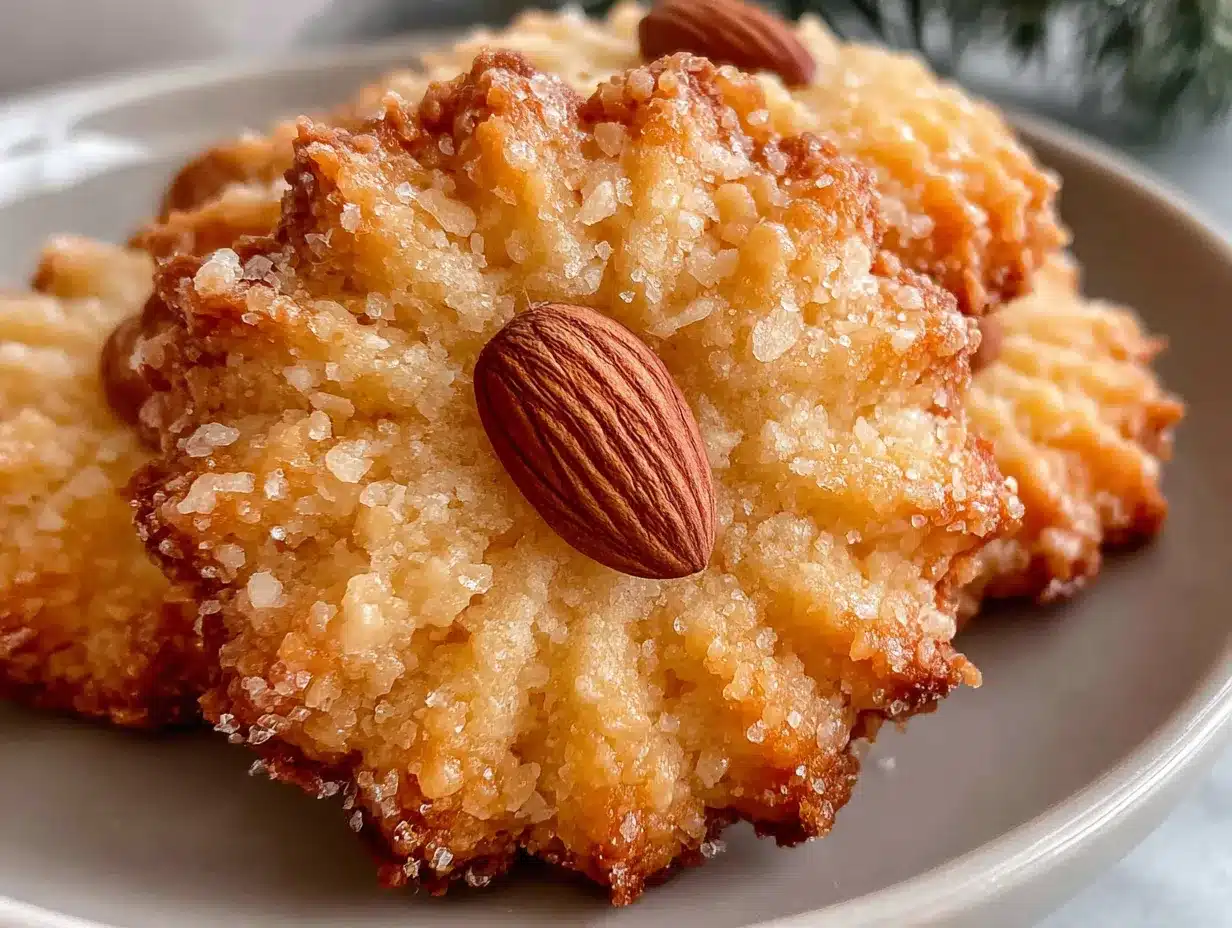
Making these Christmas Buttery Almond Spritz Cookies is straightforward, but there are a few tricks to getting perfect results every time. Follow these steps closely, especially if this is your first time using a cookie press.
- Preheat your oven to 375°F (190°C). Line two baking sheets with parchment paper or silicone baking mats. Don’t grease the sheets—the dough needs a little friction to stick to the surface.
- Cream the butter and sugar. In a large mixing bowl, beat the softened butter and granulated sugar together on medium speed until light, fluffy, and pale in color. This takes about 3-4 minutes with a stand mixer or 5 minutes with a hand mixer. Scrape down the sides of the bowl halfway through. You’ll know it’s ready when it looks like thick, creamy frosting.
- Add the egg and extracts. Beat in the egg, almond extract, and vanilla extract on low speed until just combined. Don’t overmix here—you don’t want to incorporate too much air. Scrape the bowl again to make sure everything is evenly mixed.
- Mix the dry ingredients. In a separate bowl, whisk together the all-purpose flour and salt. Gradually add this to the wet mixture, mixing on low speed until just combined. The dough should be soft but not sticky. If it feels too sticky, add a tablespoon more flour. If it feels too dry, add a teaspoon of milk.
- Add food coloring (optional). If you want colored cookies, add a few drops of gel food coloring and mix until evenly distributed. For red and green swirls, divide the dough in half and color each portion separately.
- Load the cookie press. Fit your cookie press with the desired disc. I love using the tree shape for Christmas, but snowflakes, stars, and wreaths are also festive. Fill the press with dough, following the manufacturer’s instructions. Don’t overfill—about halfway is usually perfect.
- Press the cookies. Hold the press perpendicular to the baking sheet, press down firmly, and lift straight up. The dough should release cleanly. If it sticks to the press, your dough might be too soft—pop it in the fridge for 10 minutes to firm up. If the dough doesn’t stick to the baking sheet, the sheet might be too greasy or the dough might be too dry. Try pressing a little harder or chilling the dough slightly.
- Decorate (optional). If you’re using sprinkles or sanding sugar, sprinkle them on the cookies immediately after pressing, before baking. The dough will still be soft enough for them to stick.
- Bake for 7-9 minutes. The cookies are done when the edges are just barely golden. The centers should still look pale and slightly soft. Don’t overbake! These cookies continue to set as they cool, and overbaking makes them dry and crumbly.
- Cool on the baking sheet for 2 minutes. This allows the cookies to firm up slightly so they don’t break when you move them. Then transfer them to a wire cooling rack to cool completely.
- Repeat with remaining dough. Let the baking sheets cool completely between batches—if you press dough onto a hot sheet, it will spread and lose its shape.
One thing I learned the hard way: don’t try to press all the cookies at once and then bake them. The dough can dry out if it sits too long, and the cookies won’t spread as nicely. Press one batch, bake it, then press the next batch while the first one is baking.
If your first few cookies don’t come out perfect, don’t worry. It takes a little practice to get the hang of the cookie press. I still have a few wonky ones in every batch—I call them “the baker’s tax” and eat them myself.
Cooking Tips & Techniques
After making these cookies more times than I can count, I’ve picked up a few tricks that make the process smoother and the results more consistent.
Temperature matters more than you think. The butter needs to be truly softened—not cold, not melted. If you press your finger into it, it should leave an indent without resistance. Cold butter won’t cream properly, and melted butter will make the cookies spread too much. If you forgot to take the butter out ahead of time, cut it into small cubes and let it sit for 15-20 minutes. Don’t microwave it—you’ll end up with partially melted butter and uneven dough.
Don’t overmix the dough. Once you add the flour, mix only until it’s incorporated. Overmixing develops gluten, which makes the cookies tough instead of tender. I usually stop mixing when there are still a few streaks of flour visible and finish incorporating them by hand with a spatula.
Chill the dough if needed. If the dough feels too soft or sticky to press cleanly, wrap it in plastic wrap and refrigerate for 15-20 minutes. This firms up the butter and makes the dough easier to work with. Don’t chill it for too long, though—if it gets too cold, it will be hard to press and won’t stick to the baking sheet.
Press firmly and lift straight up. This is the most common mistake I see. You need to press the cookie press firmly against the baking sheet—don’t be shy about it. Then lift straight up without twisting. If you twist, the cookie will smear. It took me about three batches to get this right, so be patient with yourself.
Watch the oven like a hawk. These cookies go from perfectly baked to overdone in about 60 seconds. Start checking at 7 minutes. The edges should be just barely golden, and the centers should still look slightly underdone. They’ll continue to set on the baking sheet as they cool.
One of my biggest failures: I once forgot to add the almond extract entirely. The cookies were still good—buttery and sweet—but they were missing that signature flavor that makes them special. Now I always measure out my extracts before I start mixing, just so I don’t forget.
Variations & Adaptations
One of the best things about this recipe is how adaptable it is. Here are some variations I’ve tried and loved:
Chocolate Spritz Cookies: Replace 1/4 cup of the flour with 1/4 cup of unsweetened cocoa powder. The chocolate flavor pairs beautifully with the almond extract. I made these for a holiday party and they disappeared faster than the plain ones.
Lemon Almond Spritz: Replace the vanilla extract with 1 teaspoon of lemon extract and add 1 tablespoon of lemon zest. The bright citrus cuts through the richness of the butter and makes these feel lighter and more refreshing. Perfect for a Christmas brunch.
Gluten-Free Version: Substitute the all-purpose flour with a 1:1 gluten-free baking flour blend that contains xanthan gum. I’ve tested this with Bob’s Red Mill 1:1 Baking Flour and the texture was surprisingly good—slightly more crumbly than the original, but still tender and buttery.
Vegan Adaptation: Use vegan butter sticks (not spreadable margarine) and a flax egg (1 tablespoon ground flaxseed mixed with 3 tablespoons water, let sit for 5 minutes). The cookies won’t be quite as tender, but they’ll still be delicious. I recommend adding an extra tablespoon of flour to compensate for the higher moisture content of vegan butter.
Flavor Twists: Try adding 1/2 teaspoon of peppermint extract instead of vanilla for a festive minty version. Or add 1/4 teaspoon of cardamom for a warm, spiced flavor that’s perfect for Christmas. I once made a batch with orange zest and a pinch of cinnamon—they tasted like a Christmas morning hug.
Different Shapes for Different Occasions: While these are perfect for Christmas, you can use different cookie press discs for other holidays. Hearts for Valentine’s Day, flowers for spring, pumpkins for fall. The recipe works year-round.
Serving & Storage Suggestions
These Christmas Buttery Almond Spritz Cookies are best served at room temperature, straight off the cooling rack if you can manage it. The texture is at its peak—tender, buttery, with that perfect melt-in-your-mouth quality.
For a beautiful presentation, arrange the cookies on a festive platter or in a tin lined with parchment paper. I like to mix different shapes and colors together for visual interest. If you’re giving them as gifts, layer them in a tin with wax paper between each layer to prevent breaking.
These cookies pair beautifully with:
- A cup of hot coffee or espresso
- Mulled wine or hot cider
- A glass of cold milk (classic for a reason)
- Hot chocolate with a peppermint stick
Storage: Store the cookies in an airtight container at room temperature for up to 2 weeks. They actually get slightly better after a day or two as the flavors meld together. Just make sure the container is sealed tightly—these cookies can dry out if exposed to air.
Freezing: These cookies freeze beautifully. Place them in a single layer on a baking sheet and freeze until solid, then transfer to a freezer-safe container or bag with parchment paper between layers. They’ll keep for up to 3 months. To thaw, let them sit at room temperature for about 30 minutes. Don’t microwave them—they’ll lose their delicate texture.
Reheating: If you want that just-baked warmth, pop them in a 300°F oven for 3-4 minutes. This brings back the buttery flavor and makes them taste freshly made. Just watch them closely—they can go from warm to overdone very quickly.
One thing I’ve noticed: the almond flavor becomes more pronounced after a day or two. So if you’re making these for a cookie swap or holiday party, bake them a day ahead. The flavor will be even better, and you’ll have one less thing to do on the day of the event.
Nutritional Information & Benefits
Let’s be honest—these are cookies, not health food. But they’re made with real ingredients, and there’s something to be said for that. Here’s the approximate nutritional breakdown per cookie (based on 48 cookies per batch):
| Nutrient | Amount per Cookie |
|---|---|
| Calories | 85 |
| Total Fat | 5g |
| Saturated Fat | 3g |
| Cholesterol | 18mg |
| Sodium | 25mg |
| Total Carbohydrates | 9g |
| Sugars | 4g |
| Protein | 1g |
Almond extract, despite its name, is typically made from the pits of stone fruits like peaches and apricots, not from almonds themselves. It adds that wonderful flavor without any of the allergens associated with tree nuts. That said, if you have a tree nut allergy, check the label—some brands process almond extract in facilities that also handle nuts.
Butter contains vitamin A and healthy fats, and in moderation, it’s not the villain it’s sometimes made out to be. These cookies are a treat, meant to be enjoyed in reasonable portions. I’d rather have one or two really good cookies made with real butter than a dozen of something made with margarine and artificial flavors.
If you’re watching your sugar intake, you can reduce the sugar to 1/2 cup, but the cookies won’t be as tender and they won’t hold their shape quite as well. Sometimes the best thing you can do for yourself is just enjoy the cookie as it’s meant to be.
Conclusion
These Christmas Buttery Almond Spritz Cookies have become a staple in my holiday baking rotation for a reason. They’re simple enough to make on a busy December evening, but special enough to give as gifts or bring to a cookie swap. The buttery almond flavor, the delicate texture, the way they look so pretty on a platter—everything about them just feels like Christmas.
I love that this recipe came from a chance encounter at a market, from a woman who’d been making them for fifty years and was generous enough to share her wisdom with a stranger. Every time I make them, I think of Edna and her creaky old brass cookie press. I hope she’d be happy knowing her recipe is still being made, still being shared, still bringing a little bit of joy to people’s holidays.
Now it’s your turn. Try this recipe, make it your own, and don’t worry if your first batch isn’t perfect. The beauty of baking is that there’s always another batch. And honestly, even the imperfect ones are still pretty delicious.
I’d love to hear how these turn out for you! Drop a comment below and let me know what shapes you used, how you decorated them, or any fun variations you tried. And if you share them on social media, tag me—I love seeing your creations. Happy baking, friend!
Frequently Asked Questions
Why did my spritz cookies not stick to the baking sheet?
This usually happens when the dough is too cold or the baking sheet is too greasy. Make sure your dough is at room temperature and your baking sheet is clean and ungreased. Press firmly and lift straight up without twisting.
Can I make the dough ahead of time?
Yes! You can prepare the dough up to 3 days in advance and store it in the refrigerator. Let it sit at room temperature for about 15-20 minutes before pressing, so it’s soft enough to work with. You can also freeze the dough for up to 3 months.
Why did my cookies spread and lose their shape?
This usually means the dough was too warm or the butter was too soft. If your kitchen is hot, chill the dough for 10-15 minutes before pressing. Also, make sure your baking sheets are completely cool before pressing new cookies onto them.
Can I use salted butter instead of unsalted?
You can, but reduce or omit the added salt in the recipe. Salted butter typically contains about 1/4 teaspoon of salt per stick, so if you use salted butter, just skip the additional salt in the recipe.
How do I get the cookies to be more almond-flavored?
You can increase the almond extract to 1 1/2 teaspoons, but be careful not to go overboard—almond extract is potent and can become bitter if you use too much. You can also add 1/4 cup of finely ground almond flour, though this will make the cookies slightly more crumbly.
Pin This Recipe!
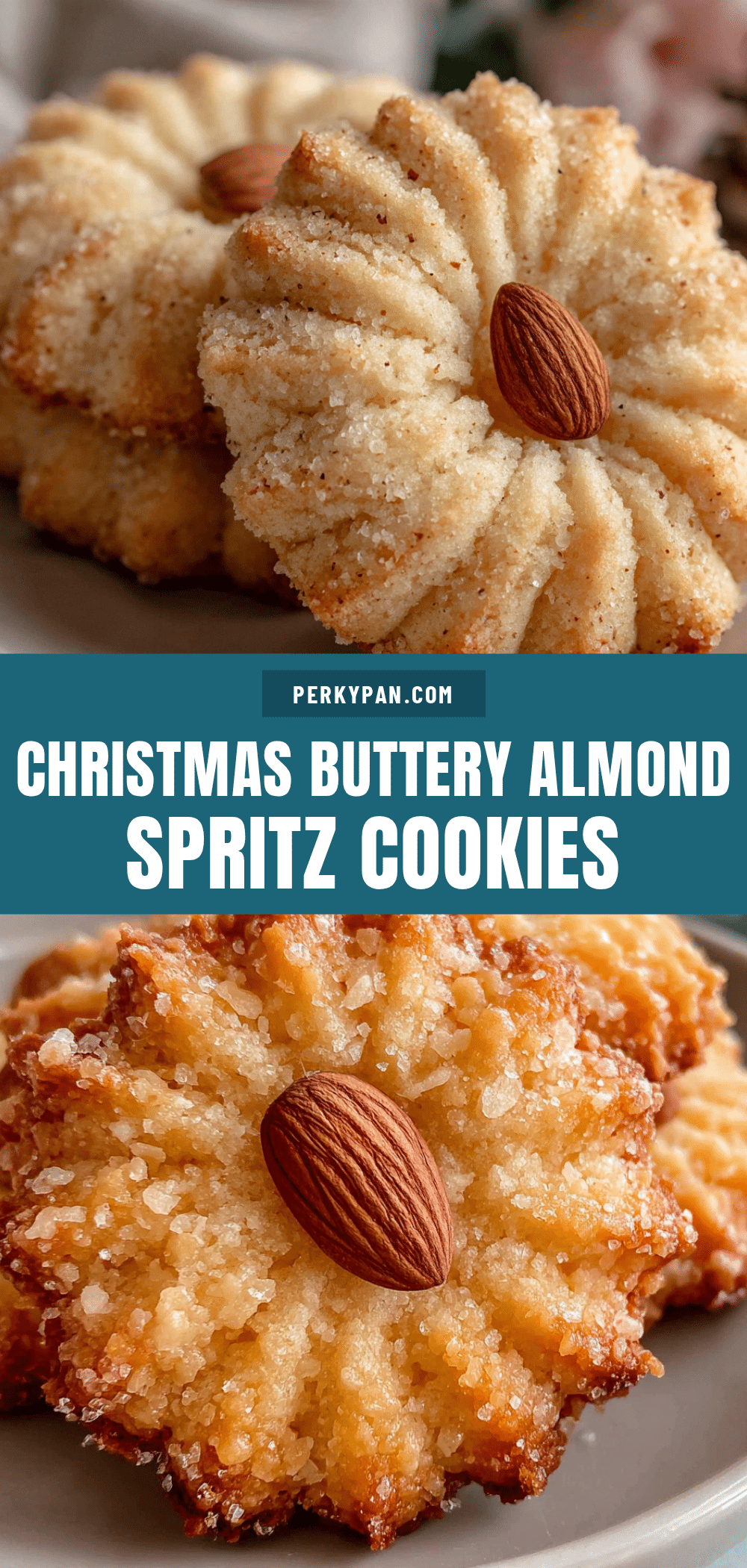
Best Christmas Buttery Almond Spritz Cookies Recipe
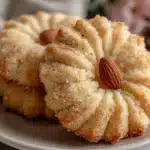
These Christmas Buttery Almond Spritz Cookies are tender, melt-in-your-mouth buttery, with just the right whisper of almond that makes you close your eyes after the first bite. They hold their shape beautifully and have become a go-to for cookie swaps, gift tins, and quiet December afternoons.
- Prep Time: 15 minutes
- Cook Time: 8 minutes
- Total Time: 30 minutes
- Yield: 48 cookies 1x
- Category: Dessert
- Cuisine: American
Ingredients
- 1 cup (226g) unsalted butter, softened
- 3/4 cup (150g) granulated sugar
- 1 large egg, room temperature
- 1 teaspoon pure almond extract
- 1/2 teaspoon vanilla extract
- 2 1/4 cups (280g) all-purpose flour
- 1/4 teaspoon salt
- Food coloring (optional)
- Sprinkles or sanding sugar (optional, for decorating)
Instructions
- Preheat your oven to 375°F (190°C). Line two baking sheets with parchment paper or silicone baking mats. Do not grease the sheets.
- In a large mixing bowl, beat the softened butter and granulated sugar together on medium speed until light, fluffy, and pale in color, about 3-4 minutes with a stand mixer or 5 minutes with a hand mixer. Scrape down the sides of the bowl halfway through.
- Beat in the egg, almond extract, and vanilla extract on low speed until just combined. Scrape the bowl again.
- In a separate bowl, whisk together the all-purpose flour and salt. Gradually add this to the wet mixture, mixing on low speed until just combined. The dough should be soft but not sticky. If too sticky, add a tablespoon more flour; if too dry, add a teaspoon of milk.
- If using food coloring, add a few drops of gel food coloring and mix until evenly distributed.
- Fit your cookie press with the desired disc. Fill the press with dough, about halfway full.
- Hold the press perpendicular to the baking sheet, press down firmly, and lift straight up. The dough should release cleanly.
- If using sprinkles or sanding sugar, sprinkle them on the cookies immediately after pressing, before baking.
- Bake for 7-9 minutes, until the edges are just barely golden. The centers should still look pale and slightly soft.
- Cool on the baking sheet for 2 minutes, then transfer to a wire cooling rack to cool completely.
- Repeat with remaining dough, letting baking sheets cool completely between batches.
Notes
Use room temperature butter that is soft but not melted. Don’t overmix the dough once flour is added. If dough is too soft, chill for 15-20 minutes. Press firmly and lift straight up without twisting. Watch the oven closely as cookies go from perfectly baked to overdone quickly. The almond flavor becomes more pronounced after a day or two.
Nutrition
- Serving Size: 1 cookie
- Calories: 85
- Sugar: 4
- Sodium: 25
- Fat: 5
- Saturated Fat: 3
- Carbohydrates: 9
- Protein: 1
Keywords: Christmas cookies, spritz cookies, almond cookies, buttery cookies, holiday baking, cookie press cookies