Love this? Save it for later!
Share the inspiration with your friends
Last Saturday, I found myself standing in my cluttered kitchen, the clock mocking me as the afternoon sun poured in. I had just returned from the farmer’s market, arms full of the freshest summer vegetables—crisp cucumbers, bright cherry tomatoes, slender green beans, and a handful of sweet baby carrots. Honestly, I was aiming to make a simple salad, but then I remembered a fleeting conversation from earlier that week. The local grocer had mentioned how quick pickling was the secret to preserving the season’s best flavors without the fuss of traditional canning. I wasn’t expecting to fall head over heels for a recipe that took less than an hour to make, but there I was, spoon in hand, tasting the tangy, crunchy magic of these quick-pickled summer vegetables.
You know that feeling when a recipe surprises you? It’s like a little kitchen epiphany. I mean, I’d always thought pickling was a weekend project, something you’d do in bulk and wait weeks to enjoy. But this quick-pickling method, which honestly came from a scribbled note on a napkin I found at a local café, changed the game. Maybe you’ve been there—staring at a pile of summer veggies wondering how to keep that fresh snap and vibrant flavor alive a little longer. This recipe does just that.
What really hooked me was the balance of tart, sweet, and a little hint of spice, all wrapped around the natural crunch of summer’s bounty. Sure, I got distracted mid-prep (spilled some brine on the counter—classic me), but the ease of this quick-pickled summer vegetables recipe made it a keeper. It’s the kind of recipe that’s just as perfect for a lazy weeknight snack as it is for impressing guests at a backyard barbecue. Let me tell you, this simple jar of pickled joy has become a staple in my fridge—and I think you’re going to love it just as much.
Why You’ll Love This Recipe
This easy quick-pickled summer vegetables recipe is one I’ve refined through countless trials and a few happy accidents. It’s not just fast—it’s smart, balancing fresh garden flavors with just the right tang and crunch. Let me share why it’s so popular in my kitchen:
- Quick & Easy: Ready in under 45 minutes, it’s perfect for those days when you want something fresh without the wait.
- Simple Ingredients: No need for exotic spices or hard-to-find items. Most ingredients are pantry staples or straight from the garden.
- Perfect for Summer Gatherings: Whether it’s a picnic, potluck, or just a casual dinner, these pickled veggies bring brightness to any table.
- Crowd-Pleaser: Kids, adults, even picky eaters tend to love the crunchy, tangy bite they offer.
- Unbelievably Delicious: The secret lies in the balance of vinegar, sugar, and a touch of spice—this combo turns humble veggies into flavor bombs.
What sets this recipe apart? I’ve found that using a quick-pickling brine—just a simple mix of white vinegar, sugar, salt, and a pinch of crushed red pepper—keeps the veggies crisp and lively. Plus, the addition of fresh dill and garlic gives it that garden-fresh pop that makes you close your eyes after the first bite. It’s not just about preserving these vegetables; it’s about celebrating them in a new, exciting way. Honestly, it feels like bringing a little jar of summer sunshine to your plate.
What Ingredients You Will Need
This recipe calls for fresh, crisp vegetables paired with a straightforward pickling brine. The ingredients all work together to deliver bold, refreshing flavors without any fuss.
- Cucumbers (about 2 cups, sliced into rounds or spears) – I prefer Kirby cucumbers for their firm texture.
- Cherry tomatoes (1 cup, halved) – Opt for colorful varieties to brighten the jar.
- Green beans (1 cup, trimmed) – Choose slender, fresh beans for the best crunch.
- Baby carrots (1 cup, peeled or whole if small) – Adds natural sweetness and color.
- White vinegar (1 cup / 240 ml) – The base of the brine. Heinz is my go-to for consistent acidity.
- Water (1 cup / 240 ml) – Balances the vinegar’s sharpness.
- Granulated sugar (2 tablespoons) – Sweetens the brine just enough to round out the sharpness.
- Salt (1 tablespoon, preferably kosher salt) – Enhances all the flavors.
- Fresh dill sprigs (2-3 sprigs) – Brings that classic pickled flavor, but you can swap with fresh thyme if you want a twist.
- Garlic cloves (2, peeled and smashed) – Adds a subtle aromatic depth.
- Crushed red pepper flakes (1/2 teaspoon, optional) – For a gentle heat that wakes up your taste buds.
If you want to switch it up, you can easily substitute apple cider vinegar for a fruitier note or swap sugar with honey for a natural sweetness. For a gluten-free option, all ingredients here are naturally gluten-free, so no worries!
Equipment Needed
- Glass jars with lids (2 pint-sized jars recommended) – Mason jars work perfectly and are easy to seal.
- Small saucepan – For heating the pickling brine.
- Sharp knife and cutting board – For prepping your vegetables.
- Tongs or fork – Helpful to pack vegetables into jars without bruising.
- Measuring cups and spoons – Precision matters in balancing the brine’s flavor.
If you don’t have mason jars, any glass container with a tight-fitting lid will do. I once used a repurposed pasta sauce jar in a pinch, and it worked just fine! Just make sure to sterilize your jars well to keep everything fresh.
Preparation Method
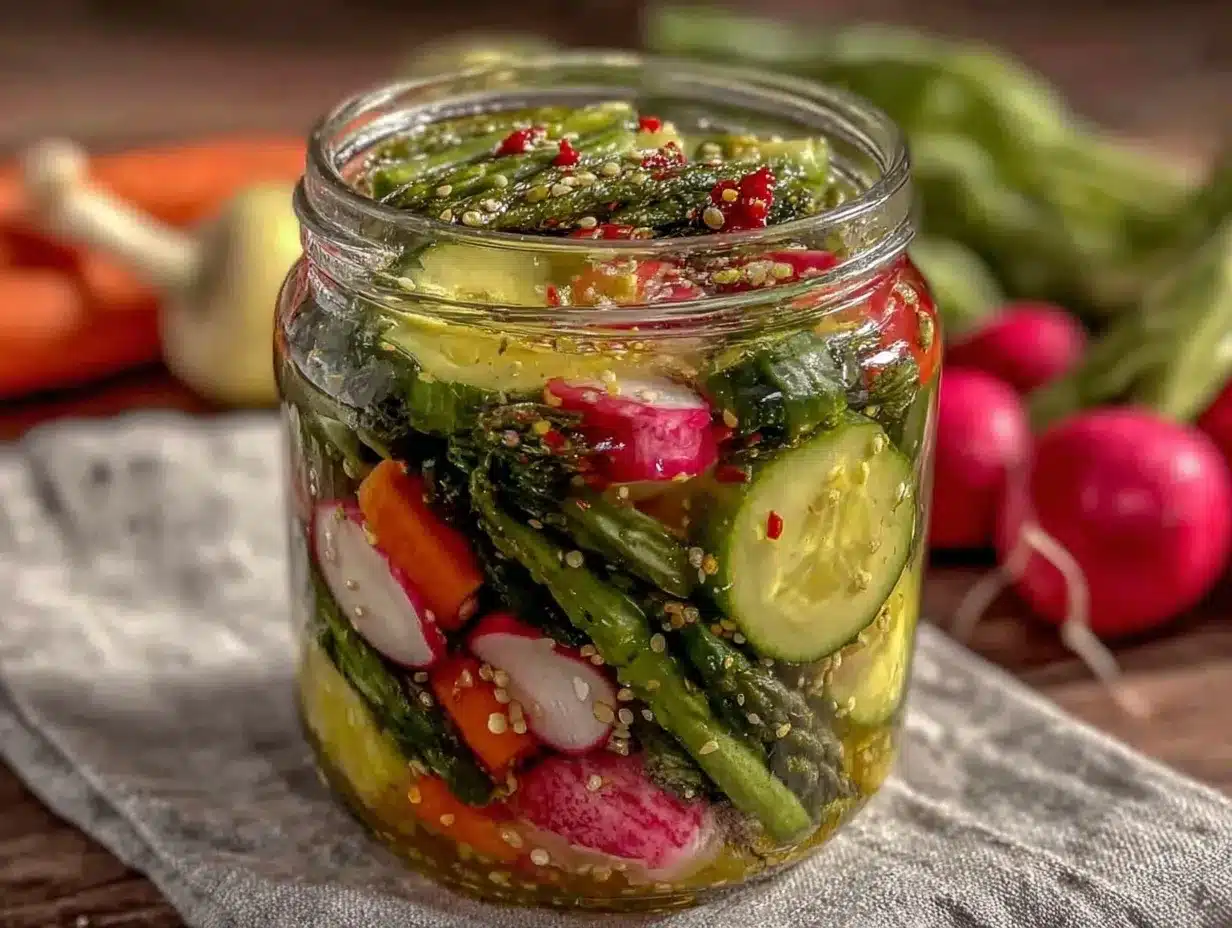
- Prepare the vegetables: Rinse all your vegetables under cold water. Trim the green beans and slice cucumbers into your preferred shape—either rounds or spears. Halve the cherry tomatoes and peel the baby carrots if needed. This should take about 10 minutes.
- Make the pickling brine: In a small saucepan, combine 1 cup (240 ml) white vinegar, 1 cup (240 ml) water, 2 tablespoons granulated sugar, and 1 tablespoon kosher salt. Bring the mixture to a gentle simmer over medium heat, stirring occasionally to dissolve the sugar and salt completely. This should take around 5 minutes.
- Pack the jars: Into each clean glass jar, place a few sprigs of fresh dill, one smashed garlic clove, and a pinch of crushed red pepper flakes if you like some heat. Then, tightly pack the prepared vegetables, alternating colors and shapes for a pretty presentation. Don’t overfill; leave about 1/2 inch (1.3 cm) of space at the top.
- Pour the brine: Carefully pour the hot brine over the vegetables, covering them completely. You might hear a satisfying sizzle as the brine hits the cold veggies—this is a good sign. Use a clean utensil to nudge the vegetables down if needed to ensure full coverage.
- Seal and cool: Tightly screw on the jar lids and let them cool to room temperature on the counter (about 30 minutes). Once cooled, transfer the jars to the refrigerator.
- Wait and enjoy: Though you can munch on these pickled vegetables after just an hour, the flavors really shine after chilling for at least 4 hours. They’ll keep in the fridge for up to 2 weeks, but honestly, they rarely last that long in my house!
Pro tip: If your cucumbers start to look a little soft after a few days, try adding a small piece of grape leaf to your jar next time—it’s an old trick to keep them crunchy. Also, don’t skimp on the salt and sugar balance; it’s the magic behind that perfect tangy-sweet bite.
Cooking Tips & Techniques
Quick pickling is all about speed and balance, but a few tips from my own kitchen escapades can make your batch even better:
- Choose firm, fresh vegetables: The crunch factor is everything here. If veggies are a bit limp, they won’t bounce back after pickling.
- Don’t skip the hot brine: Pouring the brine hot helps soften the veggies just enough to soak up flavor without turning mushy.
- Pack jars snugly but not too tight: This keeps veggies submerged and prevents air pockets that can cause spoilage.
- Adjust seasoning to taste: I often tweak the sugar and salt slightly based on the veggies’ natural sweetness.
- Multitask wisely: While the brine heats, prep your veggies. This keeps things moving fast, especially on busy days.
- Watch out for over-pickling: Leaving veggies in the brine too long can make them soggy. I recommend tasting after a day to find your perfect crunch level.
One time, I left the jars out too long at room temp (don’t ask!), and the flavors got a bit too sharp. Lesson learned: quick pickles belong in the fridge. Honestly, it’s a forgiving method, but these little tips make a big difference.
Variations & Adaptations
This recipe is a great base to play with, and I’ve tried a few fun twists that might inspire you:
- Spicy Kick: Add sliced jalapeños or a teaspoon of whole peppercorns for an extra punch.
- Herbal Swap: Use fresh basil or tarragon instead of dill for a different herbal note.
- Sweet & Fruity: Toss in a few slices of fresh mango or peach to the jar for a summery twist.
- Vinegar Variations: Try apple cider vinegar for a milder taste or rice vinegar for a touch of sweetness.
- Allergen-Friendly: This recipe is naturally gluten-free and vegan. You can swap sugar with maple syrup for a different sweetener alternative.
Personally, I once made a batch using leftover roasted beets and it turned out surprisingly delightful—vivid color and a deeper flavor. Don’t hesitate to experiment with whatever fresh veggies you have on hand.
Serving & Storage Suggestions
These quick-pickled summer vegetables taste best chilled and crunchy, making them a perfect side or snack. Serve them cold straight from the jar or as a tangy topping on sandwiches and tacos. They pair beautifully with grilled meats or creamy dishes like creamy garlic mashed potatoes for a refreshing contrast.
Store your pickled veggies in the refrigerator, tightly sealed. They’ll keep their fresh zing for up to two weeks, but honestly, mine never last that long! When reheating dishes that include these pickles, add them after cooking to maintain their crispness.
Over time, the flavors meld and intensify, so they only get better after a day or two. If you’re planning a summer gathering, making these a day ahead means you’ll have ready-to-serve, flavorful bites that steal the show.
Nutritional Information & Benefits
This easy quick-pickled summer vegetables recipe is a light, low-calorie treat packed with vitamins and fiber. Here’s an approximate breakdown per half-cup serving:
| Calories | Carbohydrates | Fiber | Vitamin C |
|---|---|---|---|
| 25 kcal | 5 g | 2 g | 15% DV |
Beyond the numbers, vinegar has been linked to blood sugar regulation and digestion support, while fresh vegetables provide antioxidants and essential nutrients. This recipe fits nicely into gluten-free, vegan, and low-fat diets, making it a versatile addition to a health-conscious lifestyle.
Conclusion
If you’re craving something fresh, tangy, and packed with summer’s best, this easy quick-pickled summer vegetables recipe should be your new go-to. It’s simple enough for weeknights, impressive enough for guests, and flexible enough to suit your mood or pantry. Honestly, I keep a jar or two in my fridge almost all summer long—it’s like a little crunchy happiness on demand.
Feel free to make it your own with different veggies or spices—you might just discover your own signature quick pickle. I’d love to hear how your batch turns out or any fun twists you give it, so drop a comment below and share your pickling adventures!
Here’s to bringing fresh flavor to your table with just a few simple ingredients and a little bit of patience.
FAQs About Easy Quick-Pickled Summer Vegetables
How long do quick-pickled vegetables last in the fridge?
They typically stay fresh and crunchy for up to 2 weeks when stored in a sealed jar in the refrigerator.
Can I use any vinegar for quick pickling?
White vinegar is most common, but apple cider or rice vinegar works well too—just adjust sugar slightly for taste.
Do I need to cook the vegetables before pickling?
Nope! Quick pickling uses fresh, raw vegetables that soften slightly from the hot brine but stay crisp.
Can I add other vegetables to this recipe?
Absolutely! Radishes, bell peppers, or even thinly sliced onions are great additions.
Is it safe to leave pickled vegetables at room temperature?
For quick pickles, it’s best to refrigerate promptly after cooling to prevent spoilage and maintain crispness.
Pin This Recipe!
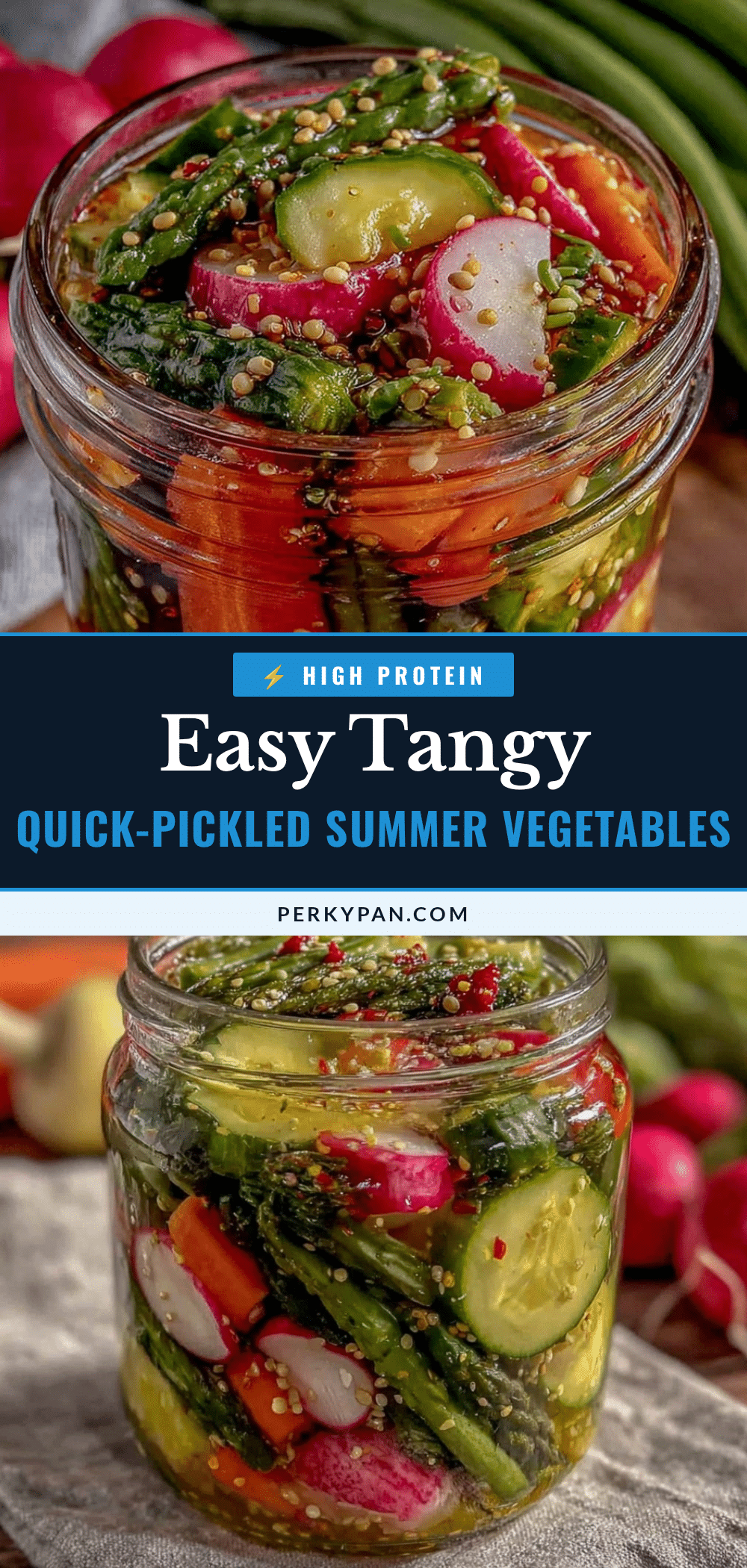
Easy Quick-Pickled Summer Vegetables
A fast and simple recipe for quick-pickled summer vegetables that balances tart, sweet, and a hint of spice, preserving the fresh crunch and vibrant flavors of summer’s best produce.
- Prep Time: 10 minutes
- Cook Time: 5 minutes
- Total Time: 45 minutes
- Yield: 2 pint-sized jars (approximately 6 servings) 1x
- Category: Side Dish
- Cuisine: American
Ingredients
- 2 cups cucumbers, sliced into rounds or spears (preferably Kirby cucumbers)
- 1 cup cherry tomatoes, halved
- 1 cup green beans, trimmed
- 1 cup baby carrots, peeled or whole if small
- 1 cup (240 ml) white vinegar
- 1 cup (240 ml) water
- 2 tablespoons granulated sugar
- 1 tablespoon kosher salt
- 2–3 sprigs fresh dill
- 2 garlic cloves, peeled and smashed
- 1/2 teaspoon crushed red pepper flakes (optional)
Instructions
- Rinse all vegetables under cold water. Trim green beans and slice cucumbers into preferred shape. Halve cherry tomatoes and peel baby carrots if needed. (About 10 minutes)
- In a small saucepan, combine white vinegar, water, sugar, and kosher salt. Bring to a gentle simmer over medium heat, stirring occasionally until sugar and salt dissolve. (About 5 minutes)
- Place a few sprigs of fresh dill, one smashed garlic clove, and a pinch of crushed red pepper flakes (if using) into each clean glass jar.
- Tightly pack the prepared vegetables into the jars, alternating colors and shapes for presentation. Leave about 1/2 inch of space at the top.
- Pour the hot brine over the vegetables, covering them completely. Use a utensil to nudge vegetables down if needed.
- Seal jars tightly and let cool to room temperature on the counter (about 30 minutes). Transfer to refrigerator.
- Chill for at least 4 hours before eating. Pickles keep in the fridge for up to 2 weeks.
Notes
Use firm, fresh vegetables for best crunch. Pour hot brine to soften veggies slightly without making them mushy. Pack jars snugly but not too tight to avoid air pockets. Adjust sugar and salt to taste. Store pickles in the refrigerator and consume within 2 weeks. Adding a grape leaf can help keep cucumbers crunchy.
Nutrition
- Serving Size: 1/2 cup
- Calories: 25
- Sugar: 2
- Sodium: 400
- Carbohydrates: 5
- Fiber: 2
- Protein: 0.5
Keywords: quick pickled vegetables, summer vegetables, easy pickles, quick pickling, fresh pickled veggies, healthy snack, gluten-free, vegan