Love this? Save it for later!
Share the inspiration with your friends
Introduction
“You really want cake that’s actually good for you?” my friend Mia asked one afternoon as I eyed the usual sugar-laden birthday treats at her kitchen counter. I was admittedly skeptical—cake and health rarely danced together in my world. But Mia, a fitness coach with a knack for tasty experiments, had been raving about this Wholesome High-Protein Protein Powder Cake with Creamy Frosting she whipped up for her clients. That day, she pulled out a cracked ceramic bowl (the one she swore was lucky) and started mixing ingredients that felt more like pantry staples than dessert components.
The batter smelled like a cozy hug—mildly sweet with a hint of vanilla and cocoa, not the usual sugar bomb I expected. While the oven timer ticked down, I made a mess (of course) trying to clean up and realized this cake wasn’t just another “healthier option” pretending to be dessert. It was genuinely satisfying. I mean, the frosting alone was creamy enough to tempt even the most stubborn sweet tooth.
Maybe you’ve been there—looking for a treat that fuels your body but doesn’t make you feel guilty afterward. This protein powder cake recipe stuck with me because it’s the rare cake that combines wholesome ingredients with that soft, tender crumb we all crave. Honestly, it’s become my go-to when I want to impress friends without going overboard on sugar or fussing with complicated baking tricks. Let me tell you, once you try this, you might start thinking of cake in a whole new way.
Why You’ll Love This Recipe
After testing this Wholesome High-Protein Protein Powder Cake several times (yep, I lost count after the third attempt), I can say it’s one of those rare recipes that really delivers on flavor without compromising on nutrition or ease.
- Quick & Easy: Comes together in under 40 minutes, perfect for busy weeknights or last-minute celebrations.
- Simple Ingredients: Uses everyday pantry staples plus your favorite protein powder—no fancy or hard-to-find items.
- Perfect for Any Occasion: Whether it’s a post-workout snack, a weekend brunch, or a guilt-free dessert, this cake fits right in.
- Crowd-Pleaser: Family, friends, and even skeptical dessert lovers always ask for seconds.
- Unbelievably Delicious: The moist texture combined with that luscious creamy frosting creates a comforting yet sophisticated taste.
This isn’t just another protein cake—it’s the kind of recipe that feels thoughtfully balanced. The secret lies in gently folding the protein powder to keep the cake tender, and the frosting uses just enough creaminess without being overpowering. Honestly, it’s the kind of recipe that makes you close your eyes after the first bite and think, “I can eat this and still hit my protein goals.” If you’ve tried other protein desserts that felt dry or chalky, this one is a refreshing change.
What Ingredients You Will Need
This recipe uses simple, wholesome ingredients to deliver bold flavor and satisfying texture without the fuss. Most of these are pantry staples, and you can easily swap ingredients based on your dietary needs.
- For the Cake Batter:
- 1 cup (120g) all-purpose flour (or almond flour for gluten-free)
- 1/2 cup (50g) whey or plant-based protein powder (vanilla or chocolate)
- 1/2 cup (100g) coconut sugar or brown sugar (offers natural sweetness)
- 1 tsp baking powder
- 1/2 tsp baking soda
- 1/4 tsp salt
- 2 large eggs, room temperature
- 1/2 cup (120ml) unsweetened almond milk (or any milk of choice)
- 1/4 cup (60ml) melted coconut oil or unsalted butter
- 1 tsp pure vanilla extract
- 2 tbsp Greek yogurt or dairy-free yogurt (adds moisture and tang)
- For the Creamy Frosting:
- 1/2 cup (120g) cream cheese, softened (can substitute with vegan cream cheese)
- 1/4 cup (60g) unsalted butter, softened
- 1/4 cup (30g) powdered erythritol or powdered sugar
- 1 tsp vanilla extract
- 2 tbsp milk or cream (adjust for desired consistency)
For best results, I prefer using Optimum Nutrition Whey Protein for its smooth texture and mild flavor. If you want a seasonal twist, swapping in pumpkin puree for half the oil and yogurt creates a fall-inspired cake that’s just as moist. And if dairy isn’t your thing, coconut or almond-based alternatives work beautifully here.
Equipment Needed
- Mixing bowls (preferably one medium and one large)
- Electric hand mixer or stand mixer (for frosting and batter mixing)
- Measuring cups and spoons (accuracy is key!)
- 8-inch (20cm) round cake pan or equivalent baking dish
- Parchment paper (to line the cake pan for easy release)
- Rubber spatula (great for folding in protein powder gently)
- Cooling rack (to cool the cake evenly)
If you don’t have a stand mixer, a sturdy whisk and some elbow grease will do just fine. I’ve baked this cake using both silicon and metal pans, but I find metal pans help with a slightly crisper crust, which I personally love. For frosting, using a hand mixer speeds things up, but a fork and patience work if you’re in a pinch.
Preparation Method
- Preheat your oven to 350°F (175°C). Lightly grease your 8-inch cake pan and line it with parchment paper to prevent sticking. This step saves many a messy moment, trust me.
- Combine dry ingredients: In a large bowl, whisk together the all-purpose flour, protein powder, coconut sugar, baking powder, baking soda, and salt. Make sure everything is evenly mixed—no clumps hiding in there!
- Mix wet ingredients: In a separate bowl, beat the eggs lightly. Add almond milk, melted coconut oil, vanilla extract, and Greek yogurt. Stir until smooth. The yogurt adds a subtle tang and makes the cake tender, so don’t skip this.
- Incorporate wet into dry: Slowly pour the wet mixture into the dry ingredients. Use a rubber spatula to fold everything together gently. Be careful not to overmix; you want a slightly lumpy batter to keep the cake light and fluffy.
- Pour batter into pan: Transfer the batter evenly into your prepared pan. Give it a gentle tap on the counter to settle and release any air bubbles. This little trick helps avoid weird holes in your cake texture.
- Bake: Place the pan in the oven and bake for 25-30 minutes. Start checking at 25 minutes by inserting a toothpick in the center; if it comes out clean or with a few moist crumbs, it’s done. Overbaking can dry out the cake, so keep an eye on it.
- Cool: Let the cake cool in the pan for 10 minutes, then transfer it to a wire rack to cool completely. Patience here is key—frosting a warm cake can turn it into a melty mess.
- Prepare the frosting: In a medium bowl, beat the softened cream cheese and butter together until smooth and creamy. Gradually add powdered erythritol and vanilla extract, then add milk one tablespoon at a time to reach your preferred consistency.
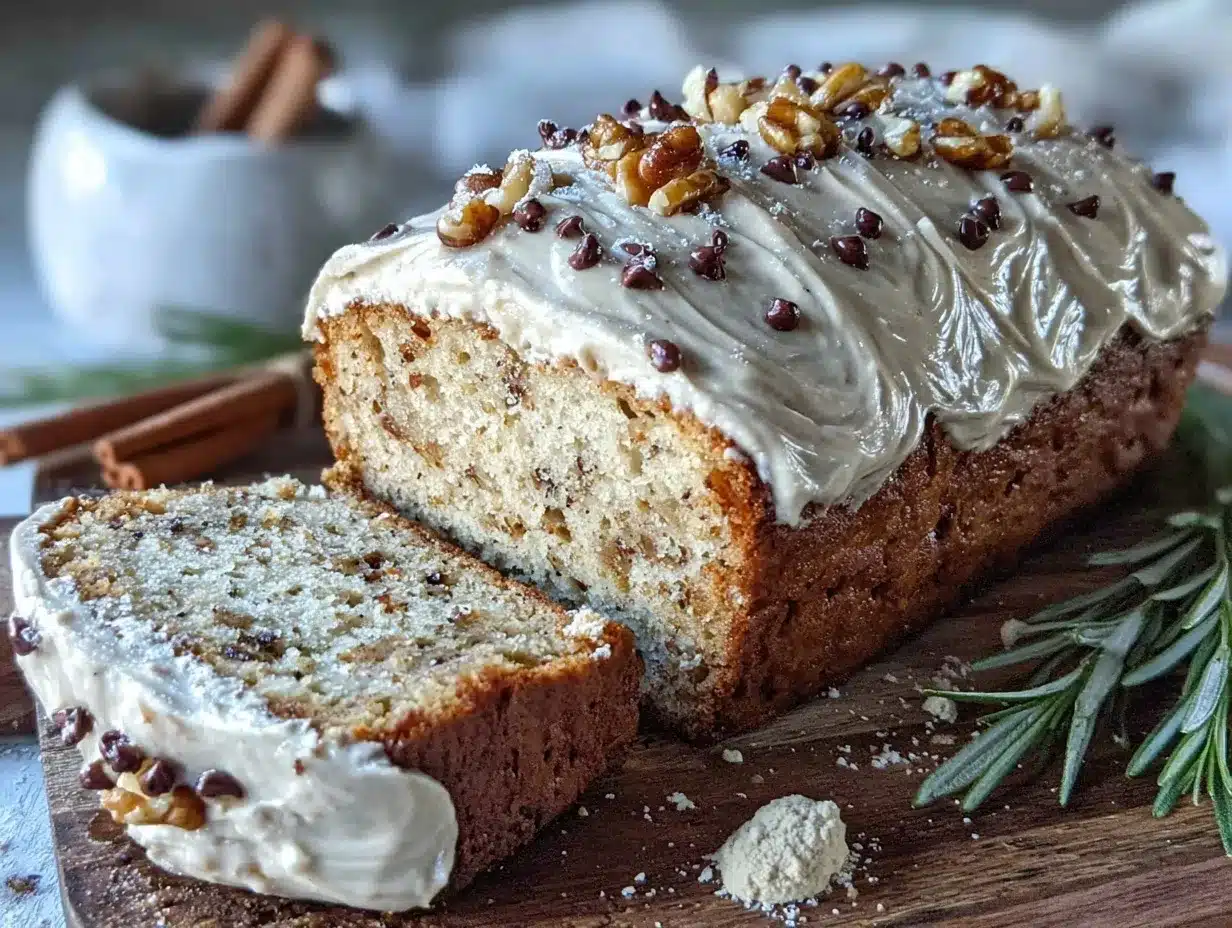
- Frost: Once the cake is completely cool, spread the creamy frosting evenly over the top. For a fun touch, sprinkle a few cacao nibs or chopped nuts on top.
- Serve and enjoy: Slice generously and savor the moist texture paired with that dreamy frosting. Leftovers keep well in the fridge for up to 4 days.
Cooking Tips & Techniques
One thing I learned early on is that protein powders can be tricky—you know how they sometimes dry baked goods out or give a chalky mouthfeel? The key is gentle folding and balancing wet ingredients like yogurt and oil to keep moisture locked in.
Avoid overmixing the batter; it’s tempting to get everything perfectly smooth, but that can make your cake dense. I always stop mixing as soon as the ingredients come together, lumps and all.
When making the frosting, make sure both the butter and cream cheese are softened to room temperature. Cold ingredients will create a lumpy, hard-to-spread mess. If you accidentally overbeat and it gets too soft, pop it in the fridge for 15 minutes—that usually sorts it out.
Timing is another thing—don’t rush cooling before frosting. I learned this the hard way when one batch slid right off the cake because I was too eager. A good cooling rack helps air circulate and speeds things up.
For multitasking, I usually start prepping the frosting while the cake is baking. It’s a nice way to keep the kitchen moving without stress. Also, if you want to save time, you can make the frosting a day ahead—just bring it back to room temperature before spreading.
Variations & Adaptations
- Chocolate Lover’s Version: Add 2 tablespoons of unsweetened cocoa powder to the dry ingredients and swap vanilla protein powder for chocolate. Use dark chocolate chips folded into the batter for extra richness.
- Vegan Adaptation: Use flax eggs (2 tbsp ground flaxseed + 6 tbsp water, chilled) instead of eggs, plant-based protein powder, coconut yogurt, and vegan cream cheese for frosting. Baking time might increase slightly.
- Seasonal Twist: Fold in 1/2 cup chopped fresh berries or diced apples for a fruity burst. Adjust sugar slightly if your fruit is very sweet.
- Low-Carb Option: Swap all-purpose flour for almond or coconut flour (note: adjust liquid as these absorb differently). Use erythritol or monk fruit sweetener to keep carbs down.
- Nut-Free Version: Replace coconut oil with sunflower oil and use oat or rice milk instead of almond milk.
Personally, I once tried adding a teaspoon of cinnamon and a hint of espresso powder—surprisingly delightful! It added warmth and complexity without overpowering the cake’s natural flavors.
Serving & Storage Suggestions
This cake is best served at room temperature to fully enjoy the creamy frosting and tender crumb. I like to slice it thick and pair it with a cup of hot coffee or a cold glass of almond milk.
If you’re hosting a brunch or light gathering, consider serving alongside fresh fruit or a simple green salad to balance the indulgence.
Store leftovers in an airtight container in the refrigerator for up to 4 days. The frosting keeps it moist, but if you notice dryness, a quick zap in the microwave (15 seconds) softens the cake nicely. You can freeze slices wrapped tightly in plastic wrap and foil for up to 2 months; thaw overnight in the fridge for best texture.
Fun fact: this cake actually tastes richer the next day as the flavors meld together. So sometimes, I bake it the night before just to savor it more the following day.
Nutritional Information & Benefits
Each serving (assuming 8 slices) provides approximately:
| Calories | 220 |
|---|---|
| Protein | 18g |
| Carbohydrates | 15g |
| Fat | 10g |
| Fiber | 2g |
This cake packs a protein punch thanks to the protein powder, eggs, and Greek yogurt, making it a satisfying treat that supports muscle repair and keeps you full longer. Using coconut sugar offers a lower glycemic index alternative to regular sugar, gently sweetening without big blood sugar spikes.
Gluten-free and low-carb options make this recipe adaptable for various dietary needs. Just be mindful of allergens like dairy and eggs if you’re serving to guests with restrictions.
From my perspective, this cake strikes a great balance between nourishment and indulgence, perfect for anyone wanting a treat that doesn’t derail their wellness goals.
Conclusion
Honestly, this Wholesome High-Protein Protein Powder Cake with Creamy Frosting is one of those recipes that I keep coming back to because it’s both comforting and sensible. It’s easy enough to make on a whim but special enough to serve at gatherings or celebrate small wins.
Feel free to make it your own—swap flavors, try different protein powders, or tweak the frosting. The key is to enjoy the process and the results. I hope this cake becomes a staple in your kitchen as it has in mine.
If you give it a try, I’d love to hear how you customized it or what your favorite frosting twist is. Leave a comment below or share your experience—I’m always excited to see your takes on this recipe!
Remember, baking can be fun and nourishing at the same time. Now go ahead, treat yourself—you deserve it.
Frequently Asked Questions
Can I use any type of protein powder in this cake?
Yes, you can use whey, pea, soy, or any plant-based protein powder. Just keep in mind that some powders absorb liquid differently, so you might need to adjust the wet ingredients slightly.
Is this cake suitable for gluten-free diets?
Absolutely! Simply substitute the all-purpose flour with almond or a gluten-free baking flour blend. The texture will be slightly different but still delicious.
Can I make this cake ahead of time?
Yes, it actually tastes better the next day. Bake it, cool completely, frost, and store covered in the fridge. You can also freeze slices for longer storage.
What if I don’t have Greek yogurt? Can I skip it?
You can substitute with dairy-free yogurt or sour cream. Skipping it altogether might make the cake less moist, so I recommend keeping some form of yogurt or a similar moistening agent.
How do I prevent the frosting from getting too runny?
Make sure your cream cheese and butter are softened but not melted. Add milk slowly and stop when you reach a spreadable consistency. If it gets too soft, chill it in the fridge for 10-15 minutes before frosting.
Pin This Recipe!
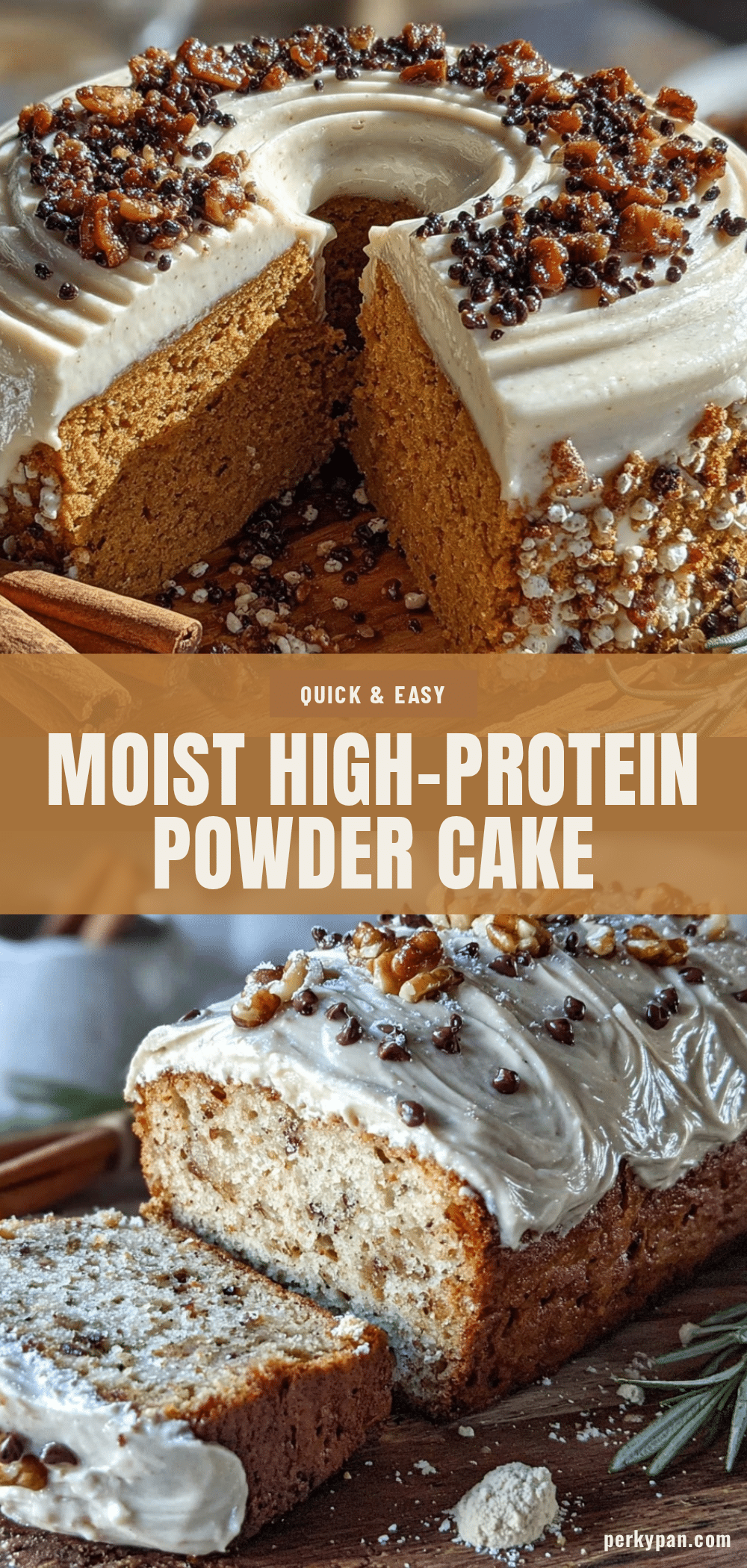
Wholesome High-Protein Protein Powder Cake with Creamy Frosting
A moist, tender high-protein cake made with simple pantry staples and topped with a luscious creamy frosting. Perfect for a guilt-free dessert or post-workout snack.
- Prep Time: 15 minutes
- Cook Time: 30 minutes
- Total Time: 45 minutes
- Yield: 8 servings 1x
- Category: Dessert
- Cuisine: American
Ingredients
- 1 cup (120g) all-purpose flour (or almond flour for gluten-free)
- 1/2 cup (50g) whey or plant-based protein powder (vanilla or chocolate)
- 1/2 cup (100g) coconut sugar or brown sugar
- 1 tsp baking powder
- 1/2 tsp baking soda
- 1/4 tsp salt
- 2 large eggs, room temperature
- 1/2 cup (120ml) unsweetened almond milk (or any milk of choice)
- 1/4 cup (60ml) melted coconut oil or unsalted butter
- 1 tsp pure vanilla extract
- 2 tbsp Greek yogurt or dairy-free yogurt
- For the Creamy Frosting:
- 1/2 cup (120g) cream cheese, softened (can substitute with vegan cream cheese)
- 1/4 cup (60g) unsalted butter, softened
- 1/4 cup (30g) powdered erythritol or powdered sugar
- 1 tsp vanilla extract
- 2 tbsp milk or cream (adjust for desired consistency)
Instructions
- Preheat your oven to 350°F (175°C). Lightly grease your 8-inch cake pan and line it with parchment paper.
- In a large bowl, whisk together the all-purpose flour, protein powder, coconut sugar, baking powder, baking soda, and salt until evenly mixed.
- In a separate bowl, beat the eggs lightly. Add almond milk, melted coconut oil, vanilla extract, and Greek yogurt. Stir until smooth.
- Slowly pour the wet mixture into the dry ingredients. Use a rubber spatula to fold everything together gently, avoiding overmixing.
- Transfer the batter evenly into the prepared pan. Tap gently on the counter to release air bubbles.
- Bake for 25-30 minutes. Check at 25 minutes by inserting a toothpick; it should come out clean or with a few moist crumbs.
- Let the cake cool in the pan for 10 minutes, then transfer to a wire rack to cool completely.
- For the frosting, beat softened cream cheese and butter until smooth and creamy. Gradually add powdered erythritol and vanilla extract, then add milk one tablespoon at a time to reach desired consistency.
- Once the cake is completely cool, spread the frosting evenly over the top. Optionally, sprinkle cacao nibs or chopped nuts.
- Slice generously and serve. Store leftovers in the fridge for up to 4 days.
Notes
Gently fold protein powder to keep cake tender. Avoid overmixing batter to prevent density. Use softened cream cheese and butter for smooth frosting. Chill frosting if too soft. Cool cake completely before frosting to avoid melting. Frosting can be made a day ahead and brought to room temperature before use. For vegan version, use flax eggs, plant-based protein, coconut yogurt, and vegan cream cheese; baking time may increase slightly.
Nutrition
- Serving Size: 1 slice (1/8 of cake
- Calories: 220
- Fat: 10
- Carbohydrates: 15
- Fiber: 2
- Protein: 18
Keywords: protein cake, high-protein dessert, healthy cake, protein powder cake, creamy frosting, low sugar cake, gluten-free option, vegan adaptation