Love this? Save it for later!
Share the inspiration with your friends
“You won’t believe how a simple jar of za’atar changed my hummus game forever,” my friend Yara said one afternoon as we sat on her sunlit balcony in Beirut. I had stopped by for a quick chat, but ended up watching her whip up what she called her “secret weapon” hummus. Honestly, I wasn’t expecting much—just another chickpea dip, right? But as she drizzled that fragrant, greenish oil speckled with sumac and thyme over the creamy blend, something clicked.
That moment stuck with me, probably because hummus had always been a staple in my kitchen but never that exciting. You know that feeling when you think you’ve had something countless times, but then suddenly, it surprises you? Like when a familiar song reveals a new lyric you never noticed. Well, this Lebanese hummus with za’atar oil and whole chickpeas was exactly that—a humble dish transformed into a flavor bomb.
Funny thing is, I forgot to soak the chickpeas the first time I tried making it myself. I ended up cooking them longer and making a mess of the kitchen, but the taste was so worth it. Maybe you’ve been there—trying to get dinner on the table and realizing you’re missing a key step. But trust me, with a little patience, this recipe will become your go-to for gatherings, quick lunches, or whenever you want to impress without fuss.
Since then, I’ve made it over and over, tweaking the balance of lemon and garlic, and perfecting that za’atar oil drizzle that makes all the difference. It’s not just another hummus recipe—it’s the kind you close your eyes for after the first bite. Let me walk you through it.
Why You’ll Love This Recipe
This flavorful Lebanese hummus with za’atar oil and chickpeas isn’t just your everyday dip—it’s a little celebration in a bowl. After testing dozens of versions, here’s why I keep coming back to this one:
- Quick & Easy: Ready in under 30 minutes, it’s perfect for busy weeknights or last-minute guests.
- Simple Ingredients: You probably have most of these in your pantry already—no fancy shopping needed.
- Perfect for Entertaining: Its vibrant flavors and beautiful presentation make it a star at any potluck or brunch.
- Crowd-Pleaser: Kids and adults alike rave about the creamy texture combined with the herby punch of za’atar oil.
- Unbelievably Delicious: The mix of smooth hummus, whole chickpeas for texture, and zesty za’atar oil is next-level comfort food.
What sets this recipe apart is the za’atar oil drizzle—homemade or store-bought, it adds a layer of earthiness and a subtle tang that turns simple hummus into something magical. Plus, tossing in some whole chickpeas on top keeps the texture interesting, making every bite a little adventure. Honestly, it’s comfort food reimagined with a fresh, aromatic twist.
Whether you’re trying to impress guests without stress or just craving a wholesome snack that feels special, this hummus hits all the right notes. And I promise, once you try it your way, you’ll never want the plain version again.
What Ingredients You Will Need
This Lebanese hummus recipe uses simple, wholesome ingredients to deliver bold flavor and satisfying texture without the fuss. Most are pantry staples, and a few are regional stars like za’atar that you can find in Middle Eastern markets or online.
- Chickpeas: 1 ½ cups cooked (or 1 can, drained and rinsed)—I prefer cooking from dried for creamier texture, but canned works in a pinch.
- Tahini: ½ cup (smooth sesame paste)—I recommend Al Wadi brand for the best consistency and flavor.
- Garlic: 2 cloves, minced—fresh is best for that punch.
- Lemon juice: 3 tablespoons, freshly squeezed—brightens the whole dish.
- Olive oil: 3 tablespoons for blending + 2 tablespoons for za’atar oil drizzle (use extra virgin for richer taste).
- Za’atar: 2 tablespoons (a blend of thyme, sumac, and sesame seeds)—look for a fresh, fragrant mix; Al Kanater is a trusted brand.
- Salt: 1 teaspoon or to taste.
- Ground cumin: ½ teaspoon—adds warmth and depth.
- Whole cooked chickpeas: ¼ cup for topping—adds texture and a rustic feel.
- Cold water: 2 to 4 tablespoons to adjust hummus consistency.
Substitutions: Use almond butter instead of tahini for a nutty twist or swap lemon juice for lime juice if you want a sharper tang. For a gluten-free option, this recipe is naturally free of gluten.
Equipment Needed
- Food processor or high-speed blender: Essential for achieving the creamy, smooth texture. I’ve tried both, and while a blender works, a food processor gives better control over consistency.
- Small bowl: For mixing the za’atar oil drizzle.
- Measuring cups and spoons: For precise ingredient amounts.
- Spatula: To scrape down the sides of the food processor.
- Serving dish: A shallow bowl or plate works best to showcase the za’atar oil drizzle and chickpea topping.
If you don’t have a food processor, a sturdy blender will work, just pause frequently to scrape the sides. For budget-friendly options, basic countertop food processors like the Cuisinart Mini-Prep offer great value without compromising texture.
Preparation Method
- Prepare the chickpeas: If using dried chickpeas, soak 1 cup overnight, then simmer for 1 to 1½ hours until tender but not mushy. For canned chickpeas, rinse under cold water and drain well. Reserve a few whole chickpeas for garnish. (Time: 10 minutes active prep, plus soaking/cooking time)
- Make the za’atar oil: In a small bowl, combine 2 tablespoons olive oil with 2 tablespoons za’atar spice. Stir gently to mix and let sit while you prepare the hummus to let the flavors meld.
- Blend the hummus base: In your food processor, combine cooked chickpeas (reserve some for topping), tahini, minced garlic, lemon juice, olive oil, ground cumin, and salt. Pulse to start breaking down the chickpeas.
- Add water gradually: With the processor running, add cold water 1 tablespoon at a time until the hummus reaches a creamy, spreadable consistency. This usually takes about 2 to 4 tablespoons. Don’t rush this step—adding water slowly prevents a runny hummus.
- Taste and adjust: Give your hummus a quick taste. Add more lemon juice, garlic, or salt if needed. Sometimes a little extra lemon brightens it up beautifully.
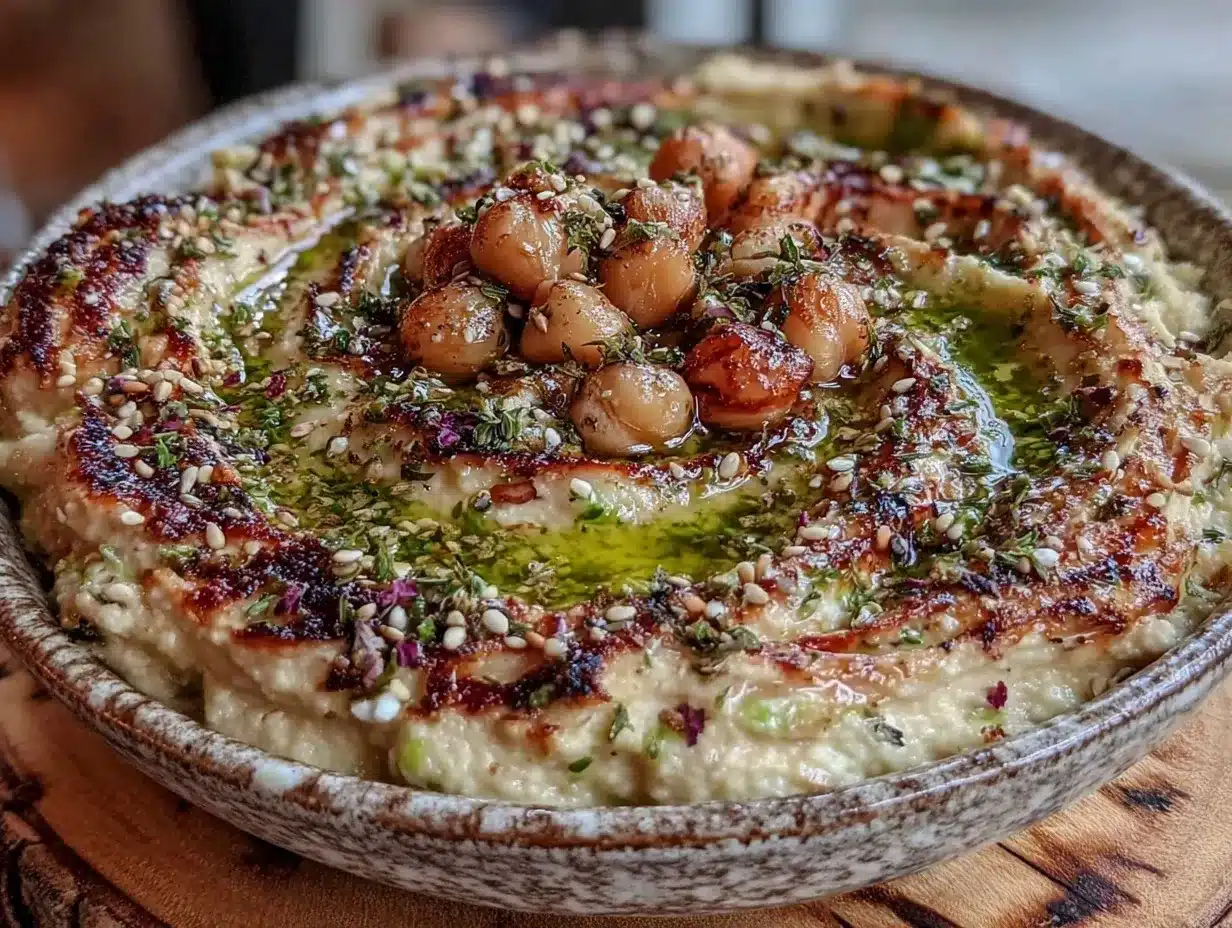
- Transfer and garnish: Spoon the hummus into your serving dish, smoothing the top with the back of a spoon. Add the reserved whole chickpeas in the center, then generously drizzle the za’atar oil over everything. The oil should pool in the little valleys you create on the hummus surface for that classic look.
- Serve immediately or chill: For best flavor, let the hummus sit for 30 minutes to allow the za’atar to infuse the oil and the flavors to meld. You can serve it chilled or at room temperature.
Tip: If the hummus is too thick, a little more cold water or olive oil can loosen it up. If too thin, add a spoonful of tahini or more chickpeas.
Cooking Tips & Techniques
One of the trickiest parts about hummus is getting the texture just right. Here are some tips I’ve learned the hard way:
- Cook chickpeas until tender but firm: Overcooking makes them mushy and bland; undercooking leads to gritty hummus.
- Use cold water to adjust texture: It helps keep the tahini from separating and gives that silky mouthfeel.
- Don’t skimp on the lemon juice: It brightens everything and balances the richness of tahini and olive oil.
- Make your own za’atar oil: Mixing fresh za’atar with olive oil intensifies the flavor more than just sprinkling the spice on top.
- Let it rest before serving: Flavors deepen with a bit of time; I usually prepare this an hour ahead.
- Avoid over-blending: Pulse rather than continuously blend to preserve a bit of texture and prevent overheating the tahini, which can turn bitter.
Honestly, the first time I tried blending the garlic in whole cloves, the flavor was too sharp. Now I lightly mince it first—that way, it blends smoothly without overwhelming the dish.
Variations & Adaptations
Want to mix things up with this Lebanese hummus? Here are some fun ideas:
- Spicy Za’atar Hummus: Add a pinch of cayenne or a drizzle of chili oil along with the za’atar for a gentle heat kick.
- Roasted Red Pepper Twist: Blend in some roasted red peppers for a smoky, colorful variation that pairs beautifully with the za’atar oil.
- Vegan Cream Cheese Hummus: Stir in a few tablespoons of vegan cream cheese or silken tofu to make it extra creamy and tangy.
- Low-Fat Option: Use less tahini and swap half the olive oil for water or a light vegetable broth to reduce calories without losing creaminess.
- Gluten-Free and Nut-Free: This recipe is naturally gluten-free and nut-free, making it perfect for many dietary needs.
Personally, I once added a spoonful of labneh on top along with za’atar oil and chickpeas for a tangy, creamy finish that my friends loved. Feel free to get creative and make it your own!
Serving & Storage Suggestions
This hummus shines best served at room temperature, allowing the olive oil and za’atar to release their full aroma. Pair it with warm pita bread, fresh veggie sticks, or as part of a mezze platter with olives and pickles.
For drinks, a crisp white wine or a fresh mint lemonade complements the herby, tangy flavors nicely.
Store leftovers in an airtight container in the refrigerator for up to 4 days. The flavors actually deepen overnight, but the za’atar oil drizzle is best added fresh each time you serve. To reheat, bring to room temperature or warm gently in a microwave for about 20 seconds, then stir well.
Nutritional Information & Benefits
This hummus is a nutritious powerhouse, packed with protein and fiber from chickpeas and healthy fats from olive oil and tahini. A typical serving (about 1/4 cup or 60g) contains approximately:
| Nutrient | Amount |
|---|---|
| Calories | 180 |
| Protein | 6g |
| Fat | 12g |
| Carbohydrates | 14g |
| Fiber | 4g |
The za’atar brings antioxidant properties thanks to its sumac and thyme components. Plus, this recipe is naturally gluten-free and suitable for vegetarian and vegan diets, making it a versatile and wholesome choice. I find it’s a great snack that keeps me full and energized without weighing me down.
Conclusion
So there you have it: a flavorful Lebanese hummus with za’atar oil and chickpeas that’s simple, satisfying, and perfect for almost any occasion. From that first accidental kitchen mess to the countless times I’ve made it since, this recipe holds a special place in my heart—and hopefully soon on your table too.
Feel free to tweak the garlic, lemon, or oil amounts to suit your taste. It’s your kitchen, your hummus! I’d love to hear how you make it your own, so don’t hesitate to leave a comment or share your favorite variations.
Trust me, once you try this, you’ll understand why it’s my favorite way to bring a little Lebanese sunshine into any meal. Happy dipping!
FAQs
What’s the best way to store leftover hummus?
Store it in an airtight container in the fridge for up to 4 days. Add the za’atar oil drizzle fresh before serving to keep flavors bright.
Can I make this recipe ahead of time?
Absolutely! It tastes even better after resting for an hour or two to let the flavors meld. Just add the za’atar oil and chickpeas right before serving.
Is it okay to use canned chickpeas instead of dried?
Yes, canned chickpeas save time and work well. Just rinse and drain them thoroughly before blending.
How can I make the hummus creamier?
Add a little extra tahini or olive oil and blend slowly. Also, peeling the chickpeas before blending can help, but it’s optional.
What if I don’t have za’atar spice?
You can mix thyme, sesame seeds, and a pinch of sumac as a substitute, or simply drizzle good quality olive oil with a little lemon zest for a lighter topping.
Pin This Recipe!

Flavorful Lebanese Hummus Recipe with Zaatar Oil Easy and Perfect
A simple yet flavorful Lebanese hummus enhanced with a fragrant za’atar oil drizzle and whole chickpeas for texture. Perfect for quick meals, entertaining, and a crowd-pleasing dip.
- Prep Time: 10 minutes active prep plus soaking/cooking time for dried chickpeas
- Cook Time: 1 to 1½ hours (if cooking dried chickpeas)
- Total Time: Approximately 1 hour 20 minutes (including soaking and cooking time for dried chickpeas)
- Yield: 6 servings 1x
- Category: Appetizer
- Cuisine: Lebanese
Ingredients
- 1 ½ cups cooked chickpeas (or 1 can, drained and rinsed)
- ½ cup tahini (smooth sesame paste)
- 2 cloves garlic, minced
- 3 tablespoons freshly squeezed lemon juice
- 3 tablespoons olive oil for blending
- 2 tablespoons olive oil for za’atar oil drizzle
- 2 tablespoons za’atar spice blend (thyme, sumac, sesame seeds)
- 1 teaspoon salt or to taste
- ½ teaspoon ground cumin
- ¼ cup whole cooked chickpeas for topping
- 2 to 4 tablespoons cold water to adjust consistency
Instructions
- Prepare the chickpeas: If using dried chickpeas, soak 1 cup overnight, then simmer for 1 to 1½ hours until tender but not mushy. For canned chickpeas, rinse under cold water and drain well. Reserve a few whole chickpeas for garnish.
- Make the za’atar oil: In a small bowl, combine 2 tablespoons olive oil with 2 tablespoons za’atar spice. Stir gently to mix and let sit while you prepare the hummus.
- Blend the hummus base: In your food processor, combine cooked chickpeas (reserve some for topping), tahini, minced garlic, lemon juice, 3 tablespoons olive oil, ground cumin, and salt. Pulse to start breaking down the chickpeas.
- Add water gradually: With the processor running, add cold water 1 tablespoon at a time until the hummus reaches a creamy, spreadable consistency (usually 2 to 4 tablespoons).
- Taste and adjust: Add more lemon juice, garlic, or salt if needed.
- Transfer and garnish: Spoon the hummus into your serving dish, smooth the top, add reserved whole chickpeas in the center, then drizzle the za’atar oil over everything.
- Serve immediately or chill: Let the hummus sit for 30 minutes to allow flavors to meld. Serve chilled or at room temperature.
Notes
Use canned chickpeas for a quicker version. Adjust water slowly to get the perfect creamy texture. Let hummus rest for at least 30 minutes before serving to deepen flavors. Homemade za’atar oil enhances flavor more than just sprinkling the spice on top. Avoid over-blending to preserve texture and prevent bitterness.
Nutrition
- Serving Size: About 1/4 cup (60g)
- Calories: 180
- Fat: 12
- Carbohydrates: 14
- Fiber: 4
- Protein: 6
Keywords: hummus, Lebanese hummus, za'atar oil, chickpeas, Middle Eastern dip, tahini, healthy dip, vegan, gluten-free