Love this? Save it for later!
Share the inspiration with your friends
Introduction
“I never thought a midnight craving would lead me to my best quick Thai Pad Thai with shrimp & peanuts recipe,” my friend Tina confessed one evening as we scrambled around my tiny kitchen, trying to whip up something tasty after a long day. It was one of those nights when the fridge was nearly empty, and the idea of ordering takeout felt too ordinary. Tina mentioned she’d once tasted an incredible Pad Thai from a street vendor during a trip to Bangkok, but recreating that magic seemed out of reach—until that very night.
Honestly, it started as a bit of a kitchen chaos. I forgot to soak the rice noodles early enough (classic me), and the shrimp was thawing slower than expected. But with some quick thinking, a splash of tamarind sauce, and a handful of peanuts, we managed a dish that not only satisfied the craving but became a new favorite for quick dinners. You know that feeling when a recipe just clicks? That’s what happened here.
Maybe you’ve been there too—wanting something bright and flavorful, but without the fuss. This quick Thai Pad Thai with shrimp & peanuts fits that bill perfectly. It’s got the tang, the crunch, and the perfect balance of sweet and savory, all ready in under 30 minutes. Let me tell you, it’s a little lifesaver for busy nights when you want something that feels like a treat but doesn’t take forever.
So, buckle up! I’m sharing this gem with you—a recipe that’s simple, vibrant, and has a story (and a few laughs) baked right in. It’s the kind of dish that makes you want to invite friends over or just savor quietly on a solo night. Either way, it’s a winner.
Why You’ll Love This Recipe
This quick Thai Pad Thai with shrimp & peanuts isn’t just another takeout copycat—it’s a dish I’ve tweaked through many trials in my own kitchen to get just right. Here’s why it’s bound to be your new go-to:
- Quick & Easy: Ready in about 25 minutes, perfect for those hectic weeknights or surprise guests arriving.
- Simple Ingredients: Most are pantry staples or easy to find at your local grocery, no exotic hunting required.
- Perfect for Busy Nights: This recipe packs punchy flavors without hours of prep, making it ideal for when time’s tight.
- Crowd-Pleaser: Shrimp, peanuts, and that signature tamarind tang—everyone loves the combo, kids included.
- Unbelievably Delicious: The balance of sweet, sour, salty, and crunchy textures hits all the right notes.
What sets this version apart? Well, I blend authentic tamarind paste with a pinch of brown sugar and fish sauce that I swear by for depth. Also, lightly toasting the peanuts adds that irresistible aroma and crunch. I’ve kept the shrimp juicy and fresh—not overcooked like some takeout spots—and the noodles perfectly tender. Honestly, it’s comfort food with a zing that makes you close your eyes after the first bite.
This recipe isn’t just about taste; it’s about quick satisfaction and fuss-free cooking that feels like a little mini escape to Thailand right in your kitchen.
What Ingredients You Will Need
This quick Thai Pad Thai with shrimp & peanuts recipe uses simple, wholesome ingredients to deliver bold flavor and satisfying texture without the fuss. Most are pantry staples, and a few fresh touches make all the difference.
- Rice noodles: 8 oz (225 g) flat, dried rice noodles (look for medium-width for the best texture)
- Raw shrimp: 12 oz (340 g), peeled and deveined (medium-sized, fresh or thawed frozen)
- Vegetable oil: 2 tablespoons (neutral oil like canola or sunflower works great)
- Garlic: 3 cloves, minced (fresh garlic is a must for that punch)
- Eggs: 2 large, lightly beaten (adds richness and protein)
- Bean sprouts: 1 cup, rinsed and drained (adds crunch and freshness)
- Green onions: 3 stalks, sliced thin (for a mild onion flavor)
- Roasted peanuts: 1/3 cup, roughly chopped (toasted if you want extra aroma)
- Tamarind paste: 2 tablespoons (the soul of Pad Thai; I recommend brands like Mae Ploy for authenticity)
- Fish sauce: 3 tablespoons (a splash of umami, use Red Boat for top quality)
- Brown sugar: 2 tablespoons (balances the tang and saltiness)
- Fresh lime: 1, cut into wedges (for squeezing over at the end)
- Optional chili flakes: to taste (for those who like a bit of heat)
- Cilantro: a small handful, chopped (optional garnish for color and brightness)
Tip: If you prefer gluten-free, double-check your fish sauce and tamarind paste labels, or swap the fish sauce with coconut aminos. If shrimp isn’t your thing, chicken strips or tofu work beautifully too. In summer, swapping bean sprouts with fresh shredded carrots adds a nice twist.
Equipment Needed
- Large bowl: for soaking and draining the rice noodles
- Large non-stick skillet or wok: essential for quick, even cooking and stir-frying
- Wooden spoon or spatula: for stirring without scratching your cookware
- Measuring spoons and cups: for precise seasoning balance
- Knife and cutting board: for prepping shrimp, garlic, and garnishes
- Small bowl: to mix sauce ingredients before adding to the pan
Personally, I find a wok speeds things up with its high sides and heat retention, but a large skillet works just fine if that’s what you have. If you don’t own one, a heavy-bottomed sauté pan is a good budget-friendly option. Just make sure it’s hot enough before adding ingredients to get that perfect sear and avoid soggy noodles.
Preparation Method
- Soak the rice noodles: Place 8 oz (225 g) dried rice noodles in a large bowl of warm water for about 8-10 minutes until they’re pliable but still a bit firm. Drain and set aside. Don’t over-soak or they’ll get mushy later.
- Prepare the sauce: In a small bowl, whisk together 2 tablespoons tamarind paste, 3 tablespoons fish sauce, and 2 tablespoons brown sugar until smooth. This mixture should taste tangy, salty, and slightly sweet—adjust to your liking.
- Heat the pan: Warm 2 tablespoons vegetable oil in a large non-stick skillet or wok over medium-high heat until shimmering.
- Cook garlic and shrimp: Add minced garlic and cook for 30 seconds until fragrant. Toss in 12 oz (340 g) peeled shrimp and stir-fry for about 2-3 minutes, until they turn pink and opaque. Remove shrimp to a plate and set aside to prevent overcooking.
- Scramble the eggs: Add the beaten eggs to the pan and scramble gently until just set, about 1-2 minutes.
- Add noodles and sauce: Toss drained noodles into the pan with eggs. Pour the tamarind sauce over the noodles. Stir vigorously for 2-3 minutes, coating noodles evenly and allowing sauce to thicken slightly. If noodles stick, add a splash of water.
- Return shrimp and add veggies: Add cooked shrimp back in along with 1 cup bean sprouts and sliced green onions. Toss everything together for another minute to warm through but keep the crunch.
- Finish with peanuts and garnish: Remove from heat, sprinkle 1/3 cup chopped roasted peanuts on top, and garnish with fresh cilantro if using. Serve immediately with lime wedges and chili flakes on the side.
Note: The key is to work quickly once the noodles hit the pan to keep them from getting soggy. Also, don’t forget to taste for seasoning before serving—sometimes a little extra fish sauce or lime juice can make all the difference.
Cooking Tips & Techniques
Let me share some tricks I’ve picked up while perfecting this quick Thai Pad Thai with shrimp & peanuts. First, soaking the noodles just right is crucial—you want them soft enough to cook quickly but firm enough to hold texture. Over-soaking is a rookie mistake that leads to mushiness.
When stir-frying, keep your heat on medium-high. You want that sizzle when the shrimp hits the pan. If your pan feels crowded, cook in batches to avoid steaming your ingredients. And don’t walk away—Pad Thai waits for no one!
Another tip: scramble the eggs separately in the same pan before adding noodles. This way, they don’t clump together and spread beautifully throughout the dish. Also, toasting your peanuts in a dry skillet for a few minutes really amps up the aroma and crunch—totally worth the extra step.
One mistake I made early on was overcooking the shrimp. They cook fast—just until pink and opaque—otherwise, they get rubbery. If you’re multitasking, set a timer; you’d be surprised how easy it is to lose track while tossing noodles!
Finally, don’t hesitate to adjust the sauce. Tamarind paste can vary in tartness, so taste and tweak the balance with a little more brown sugar or fish sauce. It’s all about that harmony between sweet, sour, salty, and umami.
Variations & Adaptations
Pad Thai is wonderfully versatile, and this recipe adapts well to different tastes and dietary needs.
- Vegetarian/Vegan: Replace shrimp with firm tofu, cubed and pan-fried until golden. Swap fish sauce for soy sauce or tamari and use maple syrup instead of brown sugar for a vegan-friendly sauce.
- Spicy Kick: Add sliced fresh Thai chilies or a teaspoon of chili paste to the sauce for a fiery version that wakes up your taste buds.
- Low-Carb Option: Substitute rice noodles with spiralized zucchini or shirataki noodles. Cook quickly and toss with the sauce—still delivers the signature flavors.
- Seasonal Twist: In fall or winter, try adding shredded carrots and snap peas for extra crunch and color.
Once, I tried swapping shrimp for leftover roast chicken and it was surprisingly good—less traditional, but perfect for using up dinner odds and ends. Feel free to get creative; Pad Thai welcomes your personal flair.
Serving & Storage Suggestions
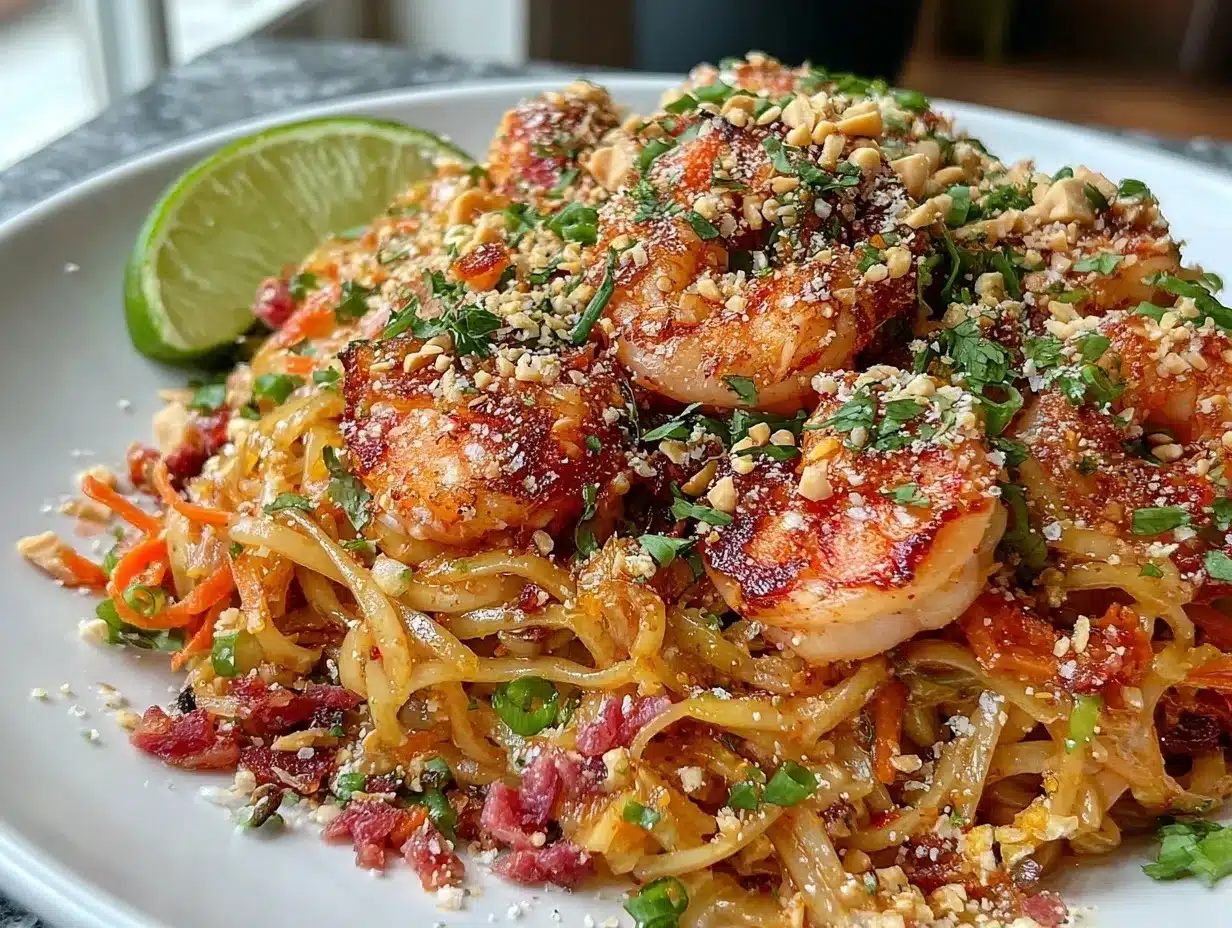
Serve this quick Thai Pad Thai with shrimp & peanuts hot off the stove with lime wedges on the side for squeezing. The fresh lime juice brightens the dish and balances the richness beautifully. Pair it with a crisp cucumber salad or a simple green salad tossed with a light vinaigrette for a refreshing contrast.
If you want a beverage pairing, iced jasmine tea or a light lager complements the flavors perfectly. You can even add a few sprigs of fresh mint on the side for an aromatic touch.
Leftovers keep well in an airtight container in the refrigerator for up to 2 days. When reheating, add a splash of water or lime juice and toss gently in a skillet over medium heat to revive the noodles’ texture without drying them out. Avoid microwaving if possible, as it tends to make the noodles gummy.
Over time, the flavors meld and deepen, so leftovers often taste even better the next day—though honestly, it rarely lasts that long in my house!
Nutritional Information & Benefits
A typical serving of this quick Thai Pad Thai with shrimp & peanuts (about 1.5 cups) contains approximately 400-450 calories, with a balanced mix of protein, carbs, and healthy fats. Shrimp is a lean protein source, low in calories but rich in selenium and vitamin B12, which support metabolism and brain health.
The peanuts add heart-healthy fats and a satisfying crunch, while tamarind provides antioxidants that aid digestion. Using moderate oil keeps the dish light compared to deep-fried alternatives.
This recipe is naturally gluten-free (just check your fish sauce), and swapping ingredients easily fits vegetarian or vegan diets. It’s a nourishing, flavorful option that satisfies without weighing you down.
Conclusion
If you’re searching for a quick, flavorful meal with a touch of exotic flair, this quick Thai Pad Thai with shrimp & peanuts is the answer. It’s fast, fuss-free, and packed with authentic taste that never feels like a compromise.
Don’t be afraid to tweak the spice level or protein to suit your preferences—you might find your own signature twist. For me, this recipe is a kitchen staple that brings a bit of joy to even the busiest nights.
Give it a try, and let me know how it turns out! I’m always eager to hear your adaptations and stories—cooking is so much better when we share. Happy cooking!
FAQs
How do I prevent my rice noodles from sticking together?
Soak them in warm water just until pliable, then drain well. Toss them gently with a little oil if needed before cooking, and stir continuously while cooking to keep them separated.
Can I make this recipe ahead of time?
Yes, you can prep the sauce and chop ingredients ahead. It’s best to cook the noodles and shrimp fresh to maintain texture, but leftovers reheat well if stored properly.
What can I substitute for tamarind paste?
If you don’t have tamarind paste, mix equal parts lime juice and brown sugar with a splash of soy sauce as a quick fix, though the flavor won’t be quite the same.
Is this recipe suitable for kids?
Absolutely! You can leave out the chili flakes to keep it mild. The sweet-savory flavors and crunchy peanuts usually make it a hit with little ones.
Can I use frozen shrimp?
Yes, just thaw completely and pat dry before cooking. This helps avoid excess water in the pan and keeps the shrimp from steaming.
For more easy and flavorful dinner ideas, you might enjoy my crispy garlic chicken recipe or the fresh summer salad perfect for busy weeknights.
Pin This Recipe!

Quick Thai Pad Thai with Shrimp

A quick and easy Thai Pad Thai recipe with shrimp and peanuts, perfect for busy nights. Ready in about 25 minutes, it balances sweet, sour, salty, and crunchy textures for a flavorful meal.
- Prep Time: 10 minutes
- Cook Time: 15 minutes
- Total Time: 25 minutes
- Yield: 4 servings 1x
- Category: Main Course
- Cuisine: Thai
Ingredients
- 8 oz (225 g) flat, dried rice noodles (medium-width)
- 12 oz (340 g) raw shrimp, peeled and deveined (medium-sized, fresh or thawed frozen)
- 2 tablespoons vegetable oil (neutral oil like canola or sunflower)
- 3 cloves garlic, minced
- 2 large eggs, lightly beaten
- 1 cup bean sprouts, rinsed and drained
- 3 stalks green onions, sliced thin
- 1/3 cup roasted peanuts, roughly chopped (toasted if desired)
- 2 tablespoons tamarind paste
- 3 tablespoons fish sauce
- 2 tablespoons brown sugar
- 1 fresh lime, cut into wedges
- Optional chili flakes, to taste
- Optional cilantro, a small handful chopped
Instructions
- Soak the rice noodles in a large bowl of warm water for 8-10 minutes until pliable but still firm. Drain and set aside.
- In a small bowl, whisk together tamarind paste, fish sauce, and brown sugar until smooth. Adjust seasoning to taste.
- Heat vegetable oil in a large non-stick skillet or wok over medium-high heat until shimmering.
- Add minced garlic and cook for 30 seconds until fragrant. Add shrimp and stir-fry for 2-3 minutes until pink and opaque. Remove shrimp and set aside.
- Add beaten eggs to the pan and scramble gently until just set, about 1-2 minutes.
- Add drained noodles and pour tamarind sauce over them. Stir vigorously for 2-3 minutes to coat noodles evenly and thicken sauce. Add a splash of water if noodles stick.
- Return shrimp to the pan along with bean sprouts and green onions. Toss together for 1 minute to warm through while keeping crunch.
- Remove from heat, sprinkle chopped roasted peanuts on top, garnish with cilantro if using, and serve immediately with lime wedges and chili flakes on the side.
Notes
Soak noodles just until pliable to avoid mushiness. Work quickly when stir-frying to keep noodles from getting soggy. Toast peanuts for extra aroma and crunch. Adjust sauce seasoning to taste. Avoid overcooking shrimp to keep them juicy. Leftovers keep well refrigerated for up to 2 days; reheat gently with a splash of water or lime juice.
Nutrition
- Serving Size: About 1.5 cups per s
- Calories: 425
- Sugar: 8
- Sodium: 900
- Fat: 18
- Saturated Fat: 3
- Carbohydrates: 45
- Fiber: 3
- Protein: 28
Keywords: Pad Thai, Thai recipe, shrimp Pad Thai, quick dinner, easy Thai food, peanuts, tamarind sauce, stir-fry