Love this? Save it for later!
Share the inspiration with your friends
“I wasn’t planning on making anything fancy this Easter,” I admitted to my friend over the phone last spring. But then, last-minute, I found myself rummaging through my pantry, desperate for a sweet finish to our holiday lunch. That’s when I remembered a dusty little recipe card I’d picked up at a local Lisbon market years ago—Portuguese custard tarts, or Pastéis de Nata, but with a twist: a ribbon of dark chocolate swirling through the creamy custard.
Honestly, the idea of combining the classic caramelized custard with bitter dark chocolate felt a bit daring for Easter, but I was running out of options. So, I went for it. The oven timer dinged right as the kids were peeling their second chocolate bunny, and the house filled with that irresistible scent—the crisp, flaky pastry mingling with the sweet, slightly burnt sugar aroma. I swear, even my usually picky uncle stopped mid-story to sneak one from the cooling rack.
Maybe you’ve been there, scrambling to make something memorable, only to stumble on a little kitchen magic. These decadent Portuguese tart custard tarts with dark chocolate became an Easter tradition for us—simple enough to whip up, yet impressive enough to feel like a celebration. The flaky crust, the silky custard, and that bittersweet chocolate surprise… it’s a sweet that lingers long after the last crumb disappears.
Why You’ll Love This Recipe
This decadent Portuguese tart custard tarts recipe with dark chocolate has been tested in my kitchen more times than I can count, always delivering that perfect balance of crispness and creaminess. Here’s why it might just become your go-to Easter treat:
- Quick & Easy: You can have these beauties ready in under 45 minutes, perfect when you’re juggling Easter prep and last-minute guests.
- Simple Ingredients: No need for exotic finds—most are pantry staples, and if you have quality dark chocolate on hand, you’re set.
- Perfect for Easter: These tarts bring a festive touch with a rich, indulgent flavor without being too heavy after a big meal.
- Crowd-Pleaser: Kids and adults alike can’t resist the creamy custard paired with the subtle bitterness of dark chocolate.
- Unbelievably Delicious: The flaky pastry shell combined with caramelized custard and chocolate ribbons offers a next-level texture and flavor combo.
This isn’t your average custard tart. The secret is a gentle folding of melted dark chocolate into the custard before baking, creating pockets of bittersweet richness that cut through the sweetness. Plus, the flaky crust gets that perfect golden crunch, holding all that luscious filling without sogginess—something I had to perfect after a few messy trial runs! Honestly, once you try this twist, you’ll wonder how you ever made Easter dessert without it.
What Ingredients You Will Need
To make these decadent Portuguese tart custard tarts with dark chocolate, you’ll need ingredients that work harmoniously for that iconic flaky crust and silky custard. Most are easy to find, and a few tips on quality make all the difference.
- For the Pastry Shell:
- 1 sheet of puff pastry (about 8 oz / 225 g), thawed (I prefer Pepperidge Farm for consistent flakiness)
- Butter, for greasing the tart tins
- For the Custard Filling:
- 1 cup whole milk (240 ml) – full-fat gives that rich texture
- 1/2 cup heavy cream (120 ml) – adds silkiness
- 3 large egg yolks, room temperature (about 55 g)
- 2/3 cup granulated sugar (135 g) – balances the bitterness of the chocolate
- 2 tablespoons all-purpose flour (16 g) – helps thicken the custard slightly
- 1 teaspoon vanilla extract – for warmth and depth
- 1/4 teaspoon ground cinnamon (optional) – a subtle nod to traditional Pastéis de Nata
- For the Chocolate Twist:
- 2 oz (60 g) dark chocolate, 70% cocoa or higher, chopped (I like Lindt Excellence 70% for smooth melting)
Substitution tips: Use almond flour in place of all-purpose for a gluten-free crust alternative. If dairy is an issue, coconut cream can replace heavy cream, and oat milk can stand in for whole milk—just expect a slightly different texture. Also, feel free to swap cinnamon with nutmeg for a different spice note.
Equipment Needed
- Tart or muffin tin — A 12-cup muffin pan works perfectly for individual tarts. If you don’t have one, small ramekins can also do the trick.
- Rolling pin — For gently pressing the puff pastry into shape. A wine bottle works in a pinch, which I learned during a camping trip!
- Mixing bowls — At least two: one for the custard and one for whisking egg yolks and sugar.
- Whisk and spatula — Essential for blending the custard smoothly without lumps.
- Small saucepan — For heating milk and cream gently.
- Fine sieve or strainer — Optional but recommended to achieve the smoothest custard texture by straining the mixture before filling the pastry.
- Pastry brush — For buttering the tins, although a paper towel works if you’re in a rush.
In my experience, investing in a good quality muffin pan with non-stick coating really pays off—these tarts release easily without losing their delicate edges. Plus, keeping your rolling pin lightly floured helps prevent the pastry from sticking or tearing.
Preparation Method
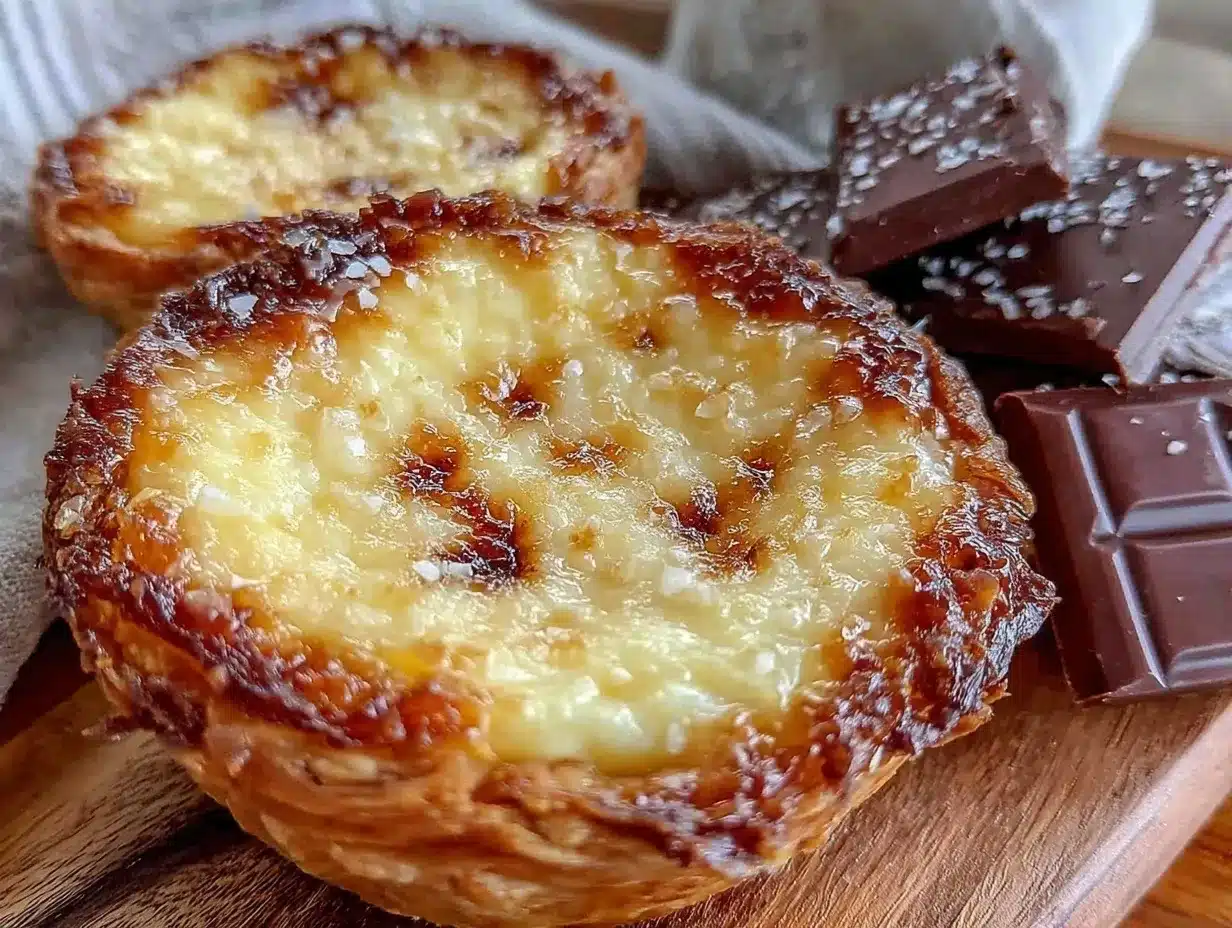
- Prep the pastry shells (10 minutes): Preheat your oven to 400°F (200°C). Lightly butter your muffin tin cups. Unfold the thawed puff pastry on a floured surface and roll it out gently to smooth any creases—about 12×12 inches (30×30 cm). Cut into 12 equal squares. Press each square into the muffin cups, pushing gently up the sides to form a shell. Prick the bottom lightly with a fork to prevent puffing up during baking.
- Make the custard base (15 minutes): In a medium saucepan, combine the milk and cream. Warm over medium heat until just steaming (do not boil), about 5 minutes. In a separate bowl, whisk the egg yolks, sugar, flour, vanilla extract, and optional cinnamon until smooth and pale. Slowly pour the warm milk mixture into the egg mixture while whisking continuously to prevent curdling.
- Cook the custard (5 minutes): Return the combined mixture to the saucepan. Cook over low heat, stirring constantly with a spatula, until it thickens slightly and coats the back of a spoon (about 170°F / 77°C). Remove from heat immediately. If you notice lumps, strain through a fine sieve to smooth it out.
- Add the chocolate swirl (5 minutes): Melt the dark chocolate gently in a microwave or double boiler. Let it cool slightly. Take about one-third of the custard and mix it with the melted chocolate until combined. Gently fold this chocolate custard back into the remaining plain custard with a few swirls—don’t overmix, so you get those beautiful dark streaks.
- Fill the pastry shells (5 minutes): Using a small ladle or spoon, carefully pour the custard mixture into each pastry shell, filling almost to the top but leaving a tiny gap for expansion.
- Bake (15-20 minutes): Place the muffin tin on the middle rack. Bake at 400°F (200°C) for 15-20 minutes until the pastry is golden and flaky, and the custard has set with slight caramelization on top. Keep an eye after 15 minutes to avoid over-browning.
- Cool and serve: Remove from the oven and allow the tarts to cool in the tin for 10 minutes before transferring to a wire rack. They’re best served slightly warm or at room temperature.
Pro tip: If you notice the edges browning too fast, cover them loosely with foil halfway through baking. Also, I learned the hard way that rushing the custard cooking step leads to grainy texture—low and slow wins here every time.
Cooking Tips & Techniques
Making Portuguese custard tarts might seem intimidating, but with a few insider tricks, you’ll nail it like a pro every time.
- Keep the custard smooth: Constant stirring over low heat prevents lumps. Resist the urge to crank up the heat—it cooks too fast and risks scrambling the eggs.
- Chocolate folding: Don’t fully mix the melted chocolate into the custard. Lightly folding creates those gorgeous marbled swirls that look impressive and taste delicious.
- Pastry handling: Chill the puff pastry before cutting if it’s too soft. Warm pastry tears easily and won’t hold shape. Also, avoid over-flouring your surface to keep the layers delicate.
- Baking temperature: High heat is key to crisp, flaky crust and caramelized custard top. If your oven runs hot, reduce to 375°F (190°C) and watch closely.
- Timing multitasking: While the tarts bake, use that time to tidy up or prepare coffee—no need to hover, but don’t wander too far!
One time, I forgot to prick the pastry bottoms, and the crust puffed up like a balloon, leaving no room for custard. Lesson learned: those tiny fork holes make a huge difference!
Variations & Adaptations
You can play around with this recipe to suit your taste or dietary needs without losing the essence of the tart.
- Flavor twists: Add a teaspoon of orange zest or a splash of coffee liqueur to the custard for a festive lift.
- Seasonal fruit topping: After baking, top with fresh raspberries or sliced strawberries for a bright contrast.
- Dairy-free option: Replace milk and cream with full-fat coconut milk and use a dairy-free dark chocolate. The custard will be a bit softer but still delicious.
- Gluten-free crust: Use gluten-free puff pastry or make a simple almond flour crust for a nuttier texture.
- Chocolate variations: Swap dark chocolate for white chocolate or milk chocolate for a sweeter, creamier profile.
I once tried adding a dash of chili powder to the chocolate mixture for a subtle heat—surprisingly addictive, but not for everyone!
Serving & Storage Suggestions
Serve these decadent Portuguese tart custard tarts with dark chocolate slightly warm to enjoy the custard’s creaminess and the crisp pastry’s crunch. A dusting of powdered sugar or a sprinkle of cinnamon adds a lovely finishing touch.
They pair beautifully with a robust espresso or a light dessert wine, making an elegant end to your Easter meal.
To store, keep the tarts in an airtight container at room temperature for up to 24 hours. For longer storage, refrigerate for 2-3 days—just bring them back to room temperature before serving to revive their texture. You can also freeze unbaked tarts for up to a month; bake from frozen, adding a few extra minutes to the baking time.
Flavors tend to deepen after a few hours, so sometimes I make them the day before Easter morning to let everything meld perfectly.
Nutritional Information & Benefits
Each tart contains approximately 220 calories, with a good balance of fat and protein thanks to the egg yolks and cream. The dark chocolate adds antioxidants, and cinnamon (if used) offers anti-inflammatory properties.
This recipe can be adapted to be gluten-free or dairy-free, making it accessible to various dietary preferences. Keep in mind, the tarts are indulgent treats, so enjoy them as a special occasion dessert rather than an everyday snack.
From my nutritionist friend’s perspective, combining protein-rich eggs with moderate sugar keeps the dessert satisfying without a sugar crash, which explains why these tarts feel so comforting and sustaining.
Conclusion
If you’re looking for a dessert that feels special but isn’t a headache to make, these decadent Portuguese tart custard tarts with dark chocolate are a perfect Easter choice. The flaky crust, silky custard, and chocolate ribbons create a harmony of textures and flavors that’s hard to beat.
Feel free to tweak the chocolate percentage or add your favorite spices to make this recipe truly your own. For me, it’s a comforting reminder of unexpected kitchen wins and shared moments around the table.
Give it a try this Easter, and let me know how your tarts turn out—I’d love to hear your variations or any tips you discover along the way. Here’s to sweet celebrations and delicious memories!
FAQs
What type of dark chocolate works best for these tarts?
I recommend using dark chocolate with at least 70% cocoa for a rich, slightly bitter contrast that balances the sweet custard perfectly.
Can I make the custard ahead of time?
Yes, you can prepare the custard a day ahead and keep it refrigerated. Bring it to room temperature and give it a good stir before filling the pastry shells.
Why is my custard sometimes grainy?
Graininess usually happens when the custard cooks too fast or curdles. Stir constantly over low heat and don’t let it boil.
Can I use homemade puff pastry for this recipe?
Absolutely! Homemade puff pastry gives a lovely flaky texture, but it takes longer to prepare. Store-bought puff pastry works great for convenience.
How do I prevent the pastry edges from burning?
If you notice the edges browning too quickly, cover them loosely with foil halfway through baking to protect them while the custard finishes cooking.
Pin This Recipe!

Decadent Portuguese Tart Custard Tarts with Dark Chocolate

These Portuguese custard tarts, or Pastéis de Nata, feature a flaky pastry shell filled with silky caramelized custard and a ribbon of bittersweet dark chocolate, perfect for Easter celebrations.
- Prep Time: 10 minutes
- Cook Time: 20 minutes
- Total Time: 30 minutes
- Yield: 12 servings 1x
- Category: Dessert
- Cuisine: Portuguese
Ingredients
- 1 sheet of puff pastry (about 8 oz / 225 g), thawed
- Butter, for greasing the tart tins
- 1 cup whole milk (240 ml)
- 1/2 cup heavy cream (120 ml)
- 3 large egg yolks, room temperature (about 55 g)
- 2/3 cup granulated sugar (135 g)
- 2 tablespoons all-purpose flour (16 g)
- 1 teaspoon vanilla extract
- 1/4 teaspoon ground cinnamon (optional)
- 2 oz (60 g) dark chocolate, 70% cocoa or higher, chopped
Instructions
- Preheat your oven to 400°F (200°C). Lightly butter your muffin tin cups. Unfold the thawed puff pastry on a floured surface and roll it out gently to smooth any creases—about 12×12 inches (30×30 cm). Cut into 12 equal squares. Press each square into the muffin cups, pushing gently up the sides to form a shell. Prick the bottom lightly with a fork to prevent puffing up during baking.
- In a medium saucepan, combine the milk and cream. Warm over medium heat until just steaming (do not boil), about 5 minutes. In a separate bowl, whisk the egg yolks, sugar, flour, vanilla extract, and optional cinnamon until smooth and pale. Slowly pour the warm milk mixture into the egg mixture while whisking continuously to prevent curdling.
- Return the combined mixture to the saucepan. Cook over low heat, stirring constantly with a spatula, until it thickens slightly and coats the back of a spoon (about 170°F / 77°C). Remove from heat immediately. If you notice lumps, strain through a fine sieve to smooth it out.
- Melt the dark chocolate gently in a microwave or double boiler. Let it cool slightly. Take about one-third of the custard and mix it with the melted chocolate until combined. Gently fold this chocolate custard back into the remaining plain custard with a few swirls—don’t overmix, so you get those beautiful dark streaks.
- Using a small ladle or spoon, carefully pour the custard mixture into each pastry shell, filling almost to the top but leaving a tiny gap for expansion.
- Place the muffin tin on the middle rack. Bake at 400°F (200°C) for 15-20 minutes until the pastry is golden and flaky, and the custard has set with slight caramelization on top. Keep an eye after 15 minutes to avoid over-browning.
- Remove from the oven and allow the tarts to cool in the tin for 10 minutes before transferring to a wire rack. They’re best served slightly warm or at room temperature.
Notes
If edges brown too fast, cover loosely with foil halfway through baking. Stir custard constantly over low heat to avoid graininess. Chill puff pastry if too soft before cutting. Do not overmix chocolate into custard to maintain marbled effect. Can prepare custard a day ahead and refrigerate.
Nutrition
- Serving Size: 1 tart
- Calories: 220
- Sugar: 15
- Sodium: 70
- Fat: 13
- Saturated Fat: 7
- Carbohydrates: 22
- Fiber: 2
- Protein: 4
Keywords: Portuguese custard tarts, Pastéis de Nata, dark chocolate tarts, Easter dessert, custard tarts, flaky pastry, chocolate swirl