Love this? Save it for later!
Share the inspiration with your friends
I was standing in the freezer aisle of a random grocery store last December when a whiff of sweetened condensed milk and cinnamon hit me—and suddenly I was seven years old in Tía Carmen’s tiny kitchen in Bayamón, watching her crack open a can of coconut cream with a church key opener. The way the thick, white cream slid into the blender, the clatter of ice cubes, the way she’d lick the spoon and close her eyes for just a second. She passed two years ago, and every holiday season since, I’ve been chasing that exact feeling—not just the taste, but the warmth that came with it. The way she’d hand me a tiny glass, tell me it was “just for tasting” (it absolutely was not), and shoo me away from the stove. I’ve made this recipe maybe thirty times now, trying to get it right. The first few attempts were disasters—too thin, too sweet, separated into a weird oily mess. But somewhere around attempt number seven, I stopped trying to replicate her exact movements and started understanding what she was actually doing. And that, honestly, is when the magic happened. Maybe you’ve been there—trying to recreate something from memory that feels just out of reach. This is my best attempt at bottling that feeling, and it’s pretty darn close.
Why You’ll Love This Recipe
Let me tell you—this isn’t just another coquito recipe floating around the internet. I’ve tested this version at three different family gatherings, two Friendsgiving dinners, and one very competitive office potluck where someone literally asked for the recipe before they finished their first sip. That’s the kind of reaction you’re looking at here.
- Authentic Puerto Rican Flavor : This uses real coconut cream and coconut milk—no shortcuts with canned cream of coconut that’s half corn syrup. The difference is night and day.
- Perfect for Holiday Hosting : You can make it up to a week ahead, which means one less thing to stress about when your guests are knocking at the door. Just shake and pour.
- Naturally Crowd-Pleasing : It’s creamy, spiced, and just sweet enough without being cloying. I’ve seen people who “don’t like coconut” go back for seconds.
- Simple Ingredients : No weird specialty items—everything is available at any decent grocery store. I mean it.
- Scalable for Parties : This recipe makes about 6 cups, but you can easily double or triple it. Tía Carmen used to make a gallon at a time for Nochebuena.
What makes this version different from the rest? It’s the technique. Most recipes just dump everything in a blender and call it a day. But I’ve learned that toasting the spices first, using room-temperature ingredients, and letting it rest overnight in the fridge makes all the difference. The flavors meld, the texture gets silky, and that raw alcohol bite mellows out beautifully. This is the kind of drink that makes people close their eyes after the first sip—I’ve seen it happen more times than I can count.
What Ingredients You Will Need
This recipe uses simple, honest ingredients to deliver that rich, tropical flavor without any fuss. Most of these are pantry staples if you keep a well-stocked kitchen, but a few might require a quick trip to the international aisle.
- 1 can (15 oz) cream of coconut (I prefer Coco López—it’s the gold standard and what most Puerto Rican families use)
- 1 can (13.5 oz) coconut milk (full-fat, not the light version—you want that richness)
- 1 can (12 oz) evaporated milk (Carnation works great; it adds body without making it too heavy)
- 1 can (14 oz) sweetened condensed milk (this is your sweetness and creaminess in one)
- 1 cup Puerto Rican rum (I use Don Q or Bacardi—avoid spiced rums as they clash with the cinnamon and vanilla)
- 1 teaspoon vanilla extract (pure, not imitation—trust me on this one)
- 1 cinnamon stick (for toasting and infusing—ground cinnamon works in a pinch but the stick is better)
- ½ teaspoon ground nutmeg (freshly grated if you have it—the pre-ground stuff loses its punch)
- ½ teaspoon ground cloves (go easy here—cloves are potent and can overwhelm everything)
- ¼ teaspoon salt (just a pinch—it balances the sweetness and brightens all the flavors)
For the garnish (optional but highly recommended):
- Ground cinnamon or nutmeg for dusting
- Cinnamon sticks for stirring
A quick note on the rum: Puerto Rican rum is the traditional choice because it’s smooth and slightly sweet. If you’re serving this to a crowd that includes non-drinkers, you can absolutely make a virgin version—just replace the rum with an equal amount of coconut water or extra coconut milk. I’ve done it for pregnant friends and it’s still delicious, just thinner.
Also, here’s something I learned the hard way: don’t use coconut cream that’s meant for cooking (the kind in the box). It’s too thin and won’t give you that luscious texture. Stick with the canned cream of coconut in the sweetened version—it’s what makes this drink taste like the real deal.
Equipment Needed
You don’t need a fancy kitchen for this—just a few basics you probably already own.
- Blender (a standard countertop blender works perfectly; I’ve also used an immersion blender in a pinch, but it doesn’t get as smooth)
- Large pitcher or glass bottle (for storing and serving—a swing-top bottle is ideal for shaking before pouring)
- Small skillet (for toasting the cinnamon stick—don’t skip this step)
- Measuring cups and spoons (standard set will do)
- Fine-mesh strainer (optional but helpful if you want to catch any cinnamon stick bits)
- Can opener (obvious, but you’d be surprised how many people forget)
If you don’t have a blender, you can whisk everything together by hand—just make sure the cream of coconut is well stirred first (it tends to separate in the can). It won’t be as silky smooth, but it’ll still taste amazing. I’ve done it this way when my blender broke mid-holiday prep, and honestly, nobody noticed.
Preparation Method
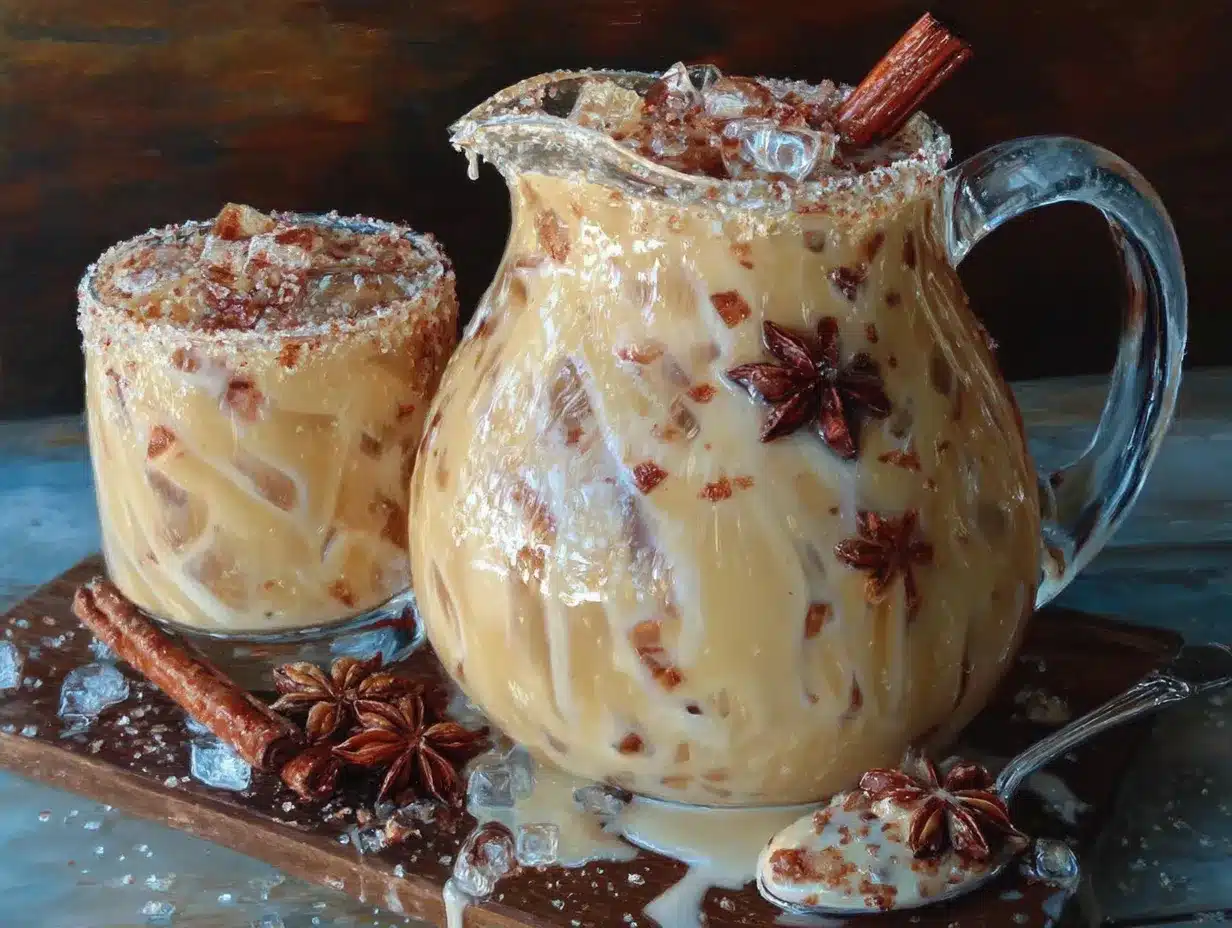
This is where the magic happens. Take your time with each step—rushing leads to that separated, grainy texture nobody wants.
- Toast the cinnamon stick (2 minutes). Place your cinnamon stick in a small dry skillet over medium heat. Shake it around for about 60-90 seconds until it becomes fragrant and starts to darken just slightly. You’ll smell it when it’s ready—it’s like the whole kitchen suddenly smells like Christmas. Let it cool for a minute before adding it to the blender.
- Open and stir your cream of coconut (1 minute). This stuff separates like crazy in the can. Open it up and give it a good stir with a spoon until it’s uniform and smooth. If it’s too thick to stir, microwave it for 10 seconds—just don’t overdo it.
- Combine the liquid ingredients (2 minutes). In your blender, add the cream of coconut, coconut milk, evaporated milk, sweetened condensed milk, and rum. Pour them in slowly—nobody wants a splatter situation. The mixture should look pale and creamy at this point.
- Add the spices and vanilla (30 seconds). Drop in the toasted cinnamon stick, ground nutmeg, ground cloves, salt, and vanilla extract. Yes, the whole cinnamon stick goes in—it’ll get blended and strained later. Don’t worry about grinding it first.
- Blend until smooth (1-2 minutes). Start on low speed and gradually increase to medium-high. Blend for a full 60-90 seconds until everything is completely combined and the mixture looks uniform. You should see tiny specks of spice throughout—that’s normal and beautiful.
- Strain the mixture (2 minutes). Place your fine-mesh strainer over a large bowl or directly into your pitcher. Pour the blended coquito through it to catch any cinnamon stick pieces or spice clumps. Use a spoon to gently press the liquid through—don’t rush this part. Discard the solids.
- Chill thoroughly (at least 4 hours, ideally overnight). Transfer the strained coquito to your serving pitcher or bottle. Seal it tight and refrigerate for at least 4 hours. Overnight is better—the flavors really come together during this time. The texture will also thicken slightly as it chills.
- Serve cold (5 minutes). Give the bottle a good shake before pouring—separation is natural. Pour into small glasses (coquito is rich, so shot glasses or small tumblers work best). Garnish with a dusting of cinnamon or nutmeg and a cinnamon stick for stirring. Serve immediately.
A few things I’ve learned from making this more times than I care to admit: First, don’t be alarmed if the mixture looks thin after blending—it thickens significantly as it chills. Second, if you’re making this for a party, transfer it to a pretty bottle and tie a cinnamon stick to the neck with twine. It looks gorgeous on a holiday table and people love it. Third, if you’re doubling the recipe, do it in two batches in the blender—overfilling leads to leaks and a mess you don’t want to clean up on Christmas Eve.
Cooking Tips & Techniques
I’ve made every mistake in the book with this recipe, so you don’t have to. Here’s what I’ve learned the hard way.
Don’t skip the toasting step. I know it seems fussy, but toasting that cinnamon stick for 90 seconds releases essential oils that you just can’t get from ground cinnamon. The first time I tried skipping it, the coquito tasted flat—like something was missing but I couldn’t figure out what. It was the toasting. That one step transforms the whole drink.
Temperature matters more than you think. If your coconut cream is cold from the fridge, it won’t blend smoothly. Let everything come to room temperature before you start—about 30 minutes on the counter does the trick. I once made this in a hurry with cold ingredients and ended up with little lumps of coconut fat floating around. Not the look you want for a holiday party.
Shake before every pour. Coquito naturally separates as it sits—the coconut cream rises to the top and the spices settle at the bottom. This is completely normal. Just give the bottle a good shake (like, really shake it) before each serving. I keep a bottle on my counter during parties and people love the ritual of shaking it themselves.
Taste and adjust. After the coquito has chilled for a few hours, taste it. Need more cinnamon? Add a pinch. Too sweet? A splash more rum or coconut milk will balance it. Not boozy enough? Stir in an extra tablespoon of rum. Recipes are guidelines, not prison sentences—make it yours.
Plan ahead for best results. This is not a last-minute drink. It genuinely tastes better on day two or three. The spices mellow, the alcohol integrates, and the texture becomes velvety. I always make mine at least two days before I plan to serve it. It’s one less thing to worry about when you’re hosting, which is honestly the best gift you can give yourself during the holidays.
Variations & Adaptations
One of the best things about coquito is how flexible it is. Here are some variations I’ve tried and loved.
Dairy-Free Coquito : Replace the evaporated milk with another can of coconut milk and the sweetened condensed milk with a dairy-free version (condensed coconut milk works beautifully). It’s slightly less rich but still incredibly creamy. I made this for a friend with lactose intolerance and she nearly cried—in a good way.
Spiced Coquito : Add a star anise pod and two whole cloves to the blender along with the cinnamon stick. It gives the coquito a warm, almost chai-like flavor that’s perfect for winter gatherings. Just remember to strain them out before bottling—nobody wants to bite into a whole clove.
Chocolate Coquito : Melt ¼ cup of dark chocolate chips and add them to the blender with the other ingredients. It turns into a rich, almost dessert-like drink that’s incredible served over ice. My nephew calls it “Christmas chocolate milk” and I can’t argue with that.
Lower-Sugar Version : Use unsweetened coconut milk, light evaporated milk, and a sugar-free sweetened condensed milk. The texture won’t be quite as luxurious, but it’s still delicious. I’ve also had good results using monk fruit sweetener in place of some of the condensed milk—start with half and adjust from there.
Spiked Eggnog Coquito : Replace the evaporated milk with eggnog for a hybrid holiday drink that’s absolutely ridiculous in the best way. It’s richer, spicier, and dangerously easy to drink. I only make this for very small gatherings because I can’t be trusted with a full pitcher.
Serving & Storage Suggestions
Coquito is traditionally served ice-cold in small glasses—think shot glasses or small juice glasses. It’s rich and potent, so a little goes a long way. I like to serve mine in little mason jars with a cinnamon stick for stirring and a tiny dusting of nutmeg on top. It looks festive without being fussy.
For a holiday party, set up a coquito bar with garnishes: cinnamon sticks, star anise, toasted coconut flakes, and maybe some dark chocolate shavings. Let guests customize their own drinks—it’s an instant conversation starter and makes people feel special.
Storage is incredibly easy. Keep your coquito in a sealed bottle or pitcher in the refrigerator for up to two weeks. The flavors actually improve over the first few days, so don’t worry about making it ahead. Just remember to shake it well before each pour—separation is natural and expected.
Can you freeze coquito? Yes, but with a caveat. The texture changes slightly after freezing—it can become a bit grainy as the coconut fat crystallizes. If you do freeze it, thaw it in the refrigerator and give it a good blend or shake before serving. I’ve done this when I made too much for a party, and it was still good—just not quite as silky as fresh.
One last thing: coquito is not a drink you chug. It’s meant to be sipped slowly, enjoyed with conversation, and savored. Serve it alongside cookies, pastries, or a cheese board, and you’ve got yourself a holiday tradition worth repeating.
Nutritional Information & Benefits
Let’s be real—coquito is a treat, not a health drink. But it does have some redeeming qualities worth mentioning.
A standard 4-ounce serving (about half a cup) contains approximately:
- Calories: 280-320
- Fat: 15-18g (mostly from coconut, which contains healthy medium-chain triglycerides)
- Carbohydrates: 28-35g
- Sugar: 24-30g
- Protein: 4-6g
- Alcohol: varies based on rum amount
Coconut is rich in electrolytes like potassium and magnesium, and the cinnamon and cloves are loaded with antioxidants. The evaporated milk adds calcium and vitamin D. Is it a superfood? No. But it’s made with real ingredients and no artificial junk, which is more than you can say for most store-bought holiday drinks.
If you’re watching your sugar intake, this is definitely a once-in-a-while drink. I serve it at holiday gatherings and special occasions, not as an everyday thing. Balance, you know?
Allergen note: This recipe contains dairy (evaporated and condensed milk) and coconut. It’s naturally gluten-free and egg-free. For a dairy-free version, see the variations section above.
Conclusion
Look, I’m not going to tell you this is the only coquito recipe you’ll ever need—but it’s the one I reach for every single holiday season. It’s the one that makes people pause mid-conversation and say, “Wait, what is this? It’s incredible.” It’s the one that reminds me of Tía Carmen’s kitchen, even though I’ve never quite gotten it to taste exactly like hers. Maybe that’s the point—it’s my version of her love, carried forward and shared with the people I care about.
I’d love to hear how yours turns out. Did you try a variation? Add a secret ingredient? Make it for a party and watch it disappear? Drop a comment below and let me know—I read every single one and I genuinely get excited when people share their tweaks and successes. And if you’re feeling generous, share this recipe with a friend who needs a little holiday magic in their life. Trust me, they’ll thank you.
Now go make some coquito. Your holiday table is waiting.
Frequently Asked Questions
Can I make coquito without alcohol?
Absolutely! Just replace the rum with an equal amount of coconut water or extra coconut milk. It’s still creamy and delicious—perfect for kids, pregnant women, or anyone who prefers a non-alcoholic version. The flavor is slightly different but equally satisfying.
How long does homemade coquito last?
Stored properly in a sealed container in the refrigerator, coquito stays good for up to two weeks. The flavors actually improve after the first day or two. Just remember to shake it well before serving, as separation is completely normal.
Why is my coquito grainy or separated?
This usually happens when ingredients are too cold or when the cream of coconut wasn’t stirred properly before blending. Let everything come to room temperature first, and make sure to blend thoroughly. If it’s already separated, a good shake or a quick re-blend usually fixes it.
Can I use light coconut milk or low-fat ingredients?
You can, but the texture won’t be as rich and creamy. Full-fat coconut milk and regular evaporated milk give coquito that signature velvety mouthfeel. If you’re watching calories, try making a half-batch with full-fat ingredients instead of compromising on quality.
What’s the best rum for coquito?
Puerto Rican rums like Don Q, Bacardi, or Ron del Barrilito are traditional choices. They’re smooth and slightly sweet, which complements the coconut and spices perfectly. Avoid spiced or dark rums—they can overpower the delicate flavors of the drink.
Pin This Recipe!
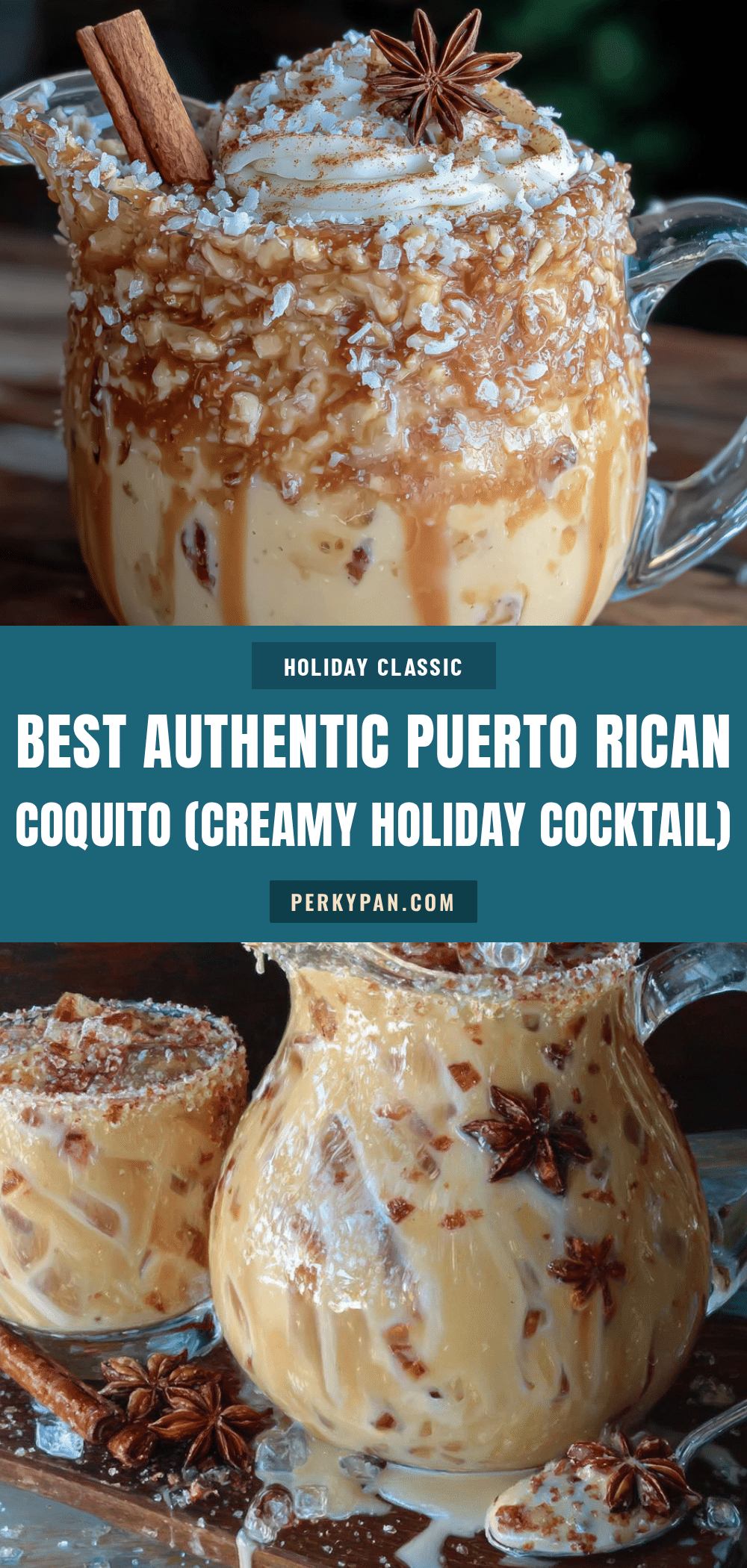
Best Authentic Puerto Rican Coquito Recipe (Easy Holiday Drink)

This creamy, spiced Puerto Rican coquito is the ultimate holiday drink, made with real coconut cream, coconut milk, and a blend of warm spices. It’s perfect for parties, can be made ahead, and tastes even better after a day or two in the fridge.
- Prep Time: 15 minutes
- Cook Time: 5 minutes
- Total Time: 4 hours 20 minutes (includes chilling)
- Yield: 6 cups (about 12 servings of 4 oz each) 1x
- Category: Beverage
- Cuisine: Puerto Rican
Ingredients
- 1 can (15 oz) cream of coconut (preferably Coco López)
- 1 can (13.5 oz) coconut milk (full-fat)
- 1 can (12 oz) evaporated milk
- 1 can (14 oz) sweetened condensed milk
- 1 cup Puerto Rican rum (e.g., Don Q or Bacardi)
- 1 teaspoon vanilla extract (pure)
- 1 cinnamon stick
- ½ teaspoon ground nutmeg
- ½ teaspoon ground cloves
- ¼ teaspoon salt
- Ground cinnamon or nutmeg for garnish (optional)
- Cinnamon sticks for stirring (optional)
Instructions
- Toast the cinnamon stick in a small dry skillet over medium heat for 60-90 seconds until fragrant. Let cool.
- Open the cream of coconut and stir until smooth. If too thick, microwave for 10 seconds.
- In a blender, combine cream of coconut, coconut milk, evaporated milk, sweetened condensed milk, and rum.
- Add the toasted cinnamon stick, ground nutmeg, ground cloves, salt, and vanilla extract.
- Blend on low speed, then increase to medium-high for 60-90 seconds until smooth and uniform.
- Strain the mixture through a fine-mesh strainer into a pitcher or bottle. Discard solids.
- Chill in the refrigerator for at least 4 hours, preferably overnight.
- Shake well before serving. Pour into small glasses, garnish with cinnamon or nutmeg and a cinnamon stick if desired. Serve cold.
Notes
Toast the cinnamon stick for best flavor. Let ingredients come to room temperature before blending. Shake well before each pour as separation is natural. For best results, make at least 2 days ahead. For a non-alcoholic version, replace rum with coconut water or extra coconut milk.
Nutrition
- Serving Size: 4 oz (about 1/2 cup)
- Calories: 300
- Sugar: 27
- Sodium: 120
- Fat: 16
- Saturated Fat: 12
- Carbohydrates: 32
- Fiber: 1
- Protein: 5
Keywords: coquito, Puerto Rican coquito, holiday drink, coconut drink, Christmas drink, rum cocktail, creamy drink