Love this? Save it for later!
Share the inspiration with your friends
My sister had claimed she hated mashed potatoes for the better part of a decade. Ten years. Every Thanksgiving, every holiday dinner, every time I’d mention making them, she’d make that face—you know the one—and say, “I just don’t get the hype.” Then last Christmas Eve, I made this version for a small family gathering, mostly because I needed something I could prep between wrapping presents and chasing my toddler. I set the bowl on the table and walked away to grab the gravy. When I came back, she was standing at the counter, fork in hand, scraping the last bits from the edges of the dish. “These are… different,” she said, not quite meeting my eyes. Different, she said. She asked for the recipe before she left that night. I mean, I didn’t say a word. I just smiled and handed her a sticky note. Honestly, that moment made my whole holiday. Maybe you’ve got someone in your life who swears they don’t like mashed potatoes. This recipe might just change their mind too.
Why You’ll Love This Recipe
Let me tell you why these mashed potatoes have become the unsung hero of my family’s dinner rotation. They’re not just good—they’re the kind of side dish that gets requested for birthdays, not just holidays.
- Make-Ahead Magic: You can prep these a full two days in advance. That means one less thing to juggle when you’re trying to get dinner on the table and the kids are asking for snacks every five minutes.
- Cream Cheese Secret: The cream cheese isn’t just for richness. It adds a subtle tang and an incredibly smooth texture that keeps these potatoes from turning gummy, even after reheating.
- Kid-Approved: My own kids, who usually push vegetables around their plates, ask for seconds of these. The cream cheese makes them creamy without being heavy, and there’s no weird lumps to scare off little eaters.
- Budget-Friendly: Potatoes are cheap. Cream cheese goes on sale all the time. This is a side dish that feeds a crowd without wrecking your grocery budget.
- Reheats Like a Dream: These potatoes actually taste better the next day. The flavors meld together, and the texture stays silky instead of getting gluey.
I’ve tested this recipe maybe a dozen times, tweaking the cream cheese ratio and the butter amount until it was just right. What sets it apart is the technique—you don’t just stir everything together and hope for the best. There’s a method to how you incorporate the cream cheese that makes all the difference. And honestly, the first time I made these for a potluck, someone asked me if I’d added a secret ingredient. I just winked. It’s that good.
What Ingredients You Will Need
This recipe uses simple, honest ingredients to create something genuinely special. Most of these are probably in your kitchen right now, which is exactly how I like to cook.
- Russet Potatoes, 5 pounds (about 8-10 medium potatoes) — These are my go-to for mashed potatoes. They’re starchy and fluffy, which gives you that light, creamy texture. Yukon Golds work too, but they’ll give you a denser, more buttery result.
- Cream Cheese, 8 ounces (one block), softened — I use Philadelphia full-fat cream cheese. The block style works better than the spreadable tub variety. Let it sit out for at least 30 minutes before you start.
- Unsalted Butter, 1/2 cup (1 stick), softened — Salted butter works if that’s what you have, just adjust your salt at the end. I prefer unsalted so I can control the seasoning myself.
- Whole Milk, 1/2 to 3/4 cup, warmed — Warm milk incorporates more smoothly than cold. If you’re dairy-free, unsweetened oat milk works surprisingly well here.
- Sour Cream, 1/4 cup — This is optional, but I add it for extra tang. It brightens up the whole dish.
- Salt, 1 to 1 1/2 teaspoons, plus more for the cooking water — I use Diamond Crystal kosher salt. If you’re using table salt, start with less.
- Black Pepper, 1/2 teaspoon, freshly ground — Freshly ground pepper makes a difference here. Don’t skip it.
- Garlic Powder, 1/2 teaspoon — This is my little secret. It adds savory depth without being obviously garlicky. My kids have no idea it’s in there.
- Chives or Parsley, for garnish (optional but pretty)
I usually grab my potatoes from the big bag at the grocery store—it’s cheaper that way. Look for potatoes that feel firm and don’t have any green spots or sprouting eyes. For the cream cheese, I’ve tried store brands and honestly, they work fine too. Just make sure it’s the block style, not the whipped kind.
Equipment Needed
You don’t need fancy tools for this recipe, which is part of its charm. Here’s what you’ll need:
- Large Pot — A 6- to 8-quart pot works best. You need enough room for the potatoes to boil without crowding.
- Colander — For draining the potatoes. Nothing fancy needed.
- Potato Masher or Ricer — I prefer a good old-fashioned potato masher. It gives you control over the texture. A ricer produces ultra-smooth potatoes, but honestly, I like a tiny bit of texture. My grandmother’s masher has a wooden handle that’s worn smooth from years of use—it’s my favorite tool.
- Large Mixing Bowl — You’ll need space to combine everything.
- 9×13 Baking Dish — This is what I use for the make-ahead step. A 3-quart casserole dish works too.
- Spatula or Wooden Spoon — For mixing. I use a silicone spatula because it doesn’t scratch my bowls.
- Aluminum Foil — To cover the dish before refrigerating or reheating.
If you don’t have a potato masher, a sturdy fork works in a pinch. It takes a little longer, but it gets the job done. And if you’re buying a masher for the first time, the ones with a zigzag wire pattern are my favorite—they break up potatoes more efficiently than the flat kind.
Preparation Method
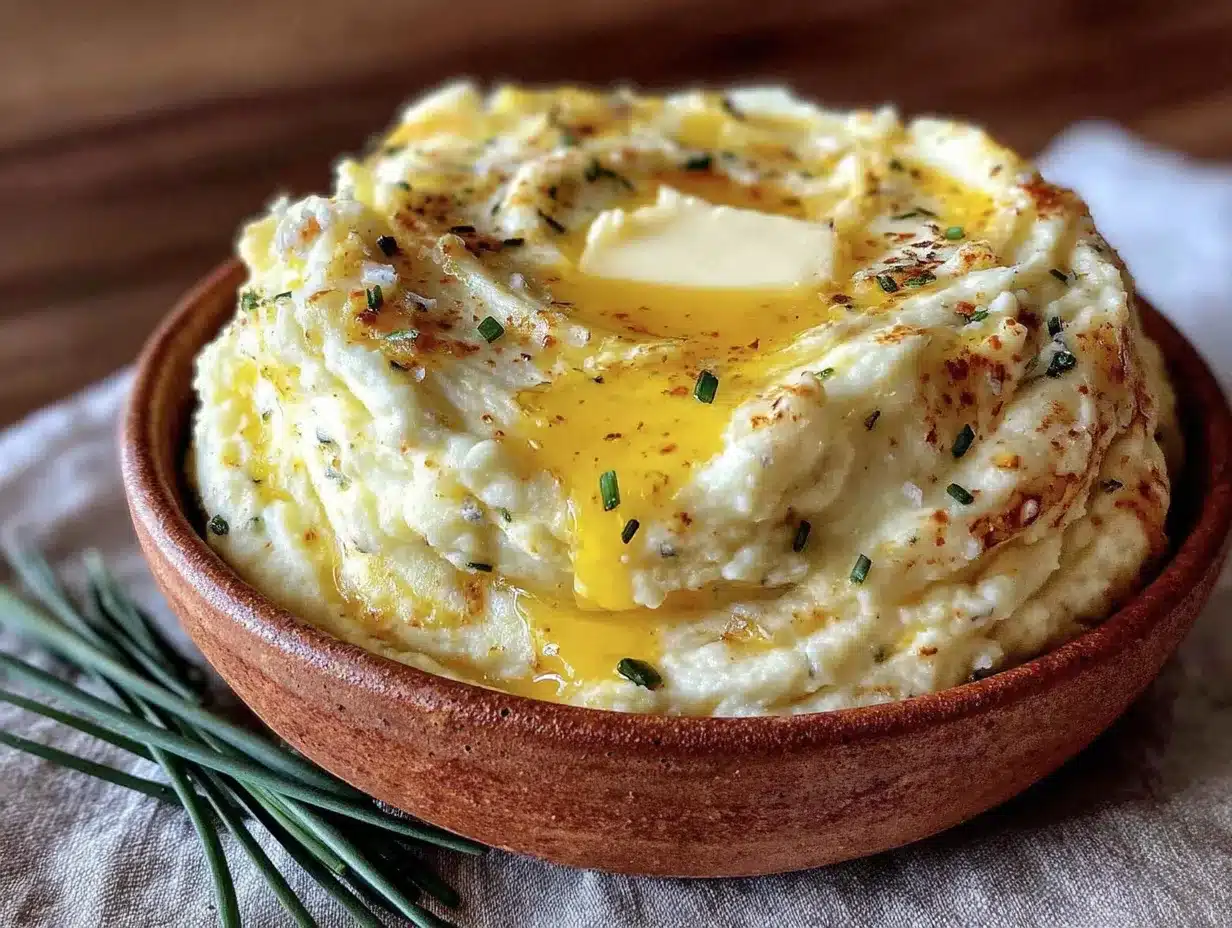
Let me walk you through this step by step. I’ve made these potatoes more times than I can count, and I’ve learned a few things along the way.
- Prep the potatoes: Peel your potatoes and cut them into 1-inch chunks. Try to make them roughly the same size so they cook evenly. I know peeling potatoes is tedious, but trust me, the texture is worth it. If you’re really in a hurry, you can leave the skins on, but the texture won’t be as smooth.
- Boil the potatoes: Place the potato chunks in your large pot and cover them with cold water by about an inch. Add a generous tablespoon of salt to the water—this seasons the potatoes from the inside out. Bring to a boil over high heat, then reduce to a simmer. Cook for 12 to 15 minutes, until the potatoes are fork-tender. You should be able to pierce a chunk easily with no resistance. Don’t overcook them, or they’ll become waterlogged and gluey.
- Drain and steam: Drain the potatoes in your colander. Here’s a trick I learned the hard way: let them sit in the colander for a full 2 to 3 minutes. The residual steam helps evaporate excess moisture, which means fluffier potatoes. I usually shake the colander gently a few times to help the steam escape.
- Mash the potatoes: Return the drained potatoes to the pot (or transfer to your mixing bowl). Mash them while they’re still hot. I use my masher in a rocking motion, working from one side to the other. Don’t over-mash—you want them broken up but not pasty. About 30 seconds of mashing is usually enough.
- Add the cream cheese: Cut your softened cream cheese into a few pieces and add it to the hot mashed potatoes. Stir gently with your spatula until the cream cheese is fully melted and incorporated. The heat from the potatoes will do the work here. This is where the magic happens—the cream cheese makes everything silky without being heavy.
- Add the butter: Add the softened butter and stir until melted and combined. I like to let the butter soften on the counter for about an hour before I start. Cold butter will take longer to incorporate and might cool down your potatoes.
- Add the milk and sour cream: Slowly pour in the warmed milk while stirring. Then add the sour cream, salt, pepper, and garlic powder. Stir until everything is smooth and well combined. Taste and adjust the seasoning—I usually end up adding a little more salt here. The potatoes should taste well-seasoned, not bland.
- Transfer to baking dish: Spread the mashed potatoes evenly into your greased 9×13 baking dish. Smooth the top with your spatula. At this point, you can either serve them immediately or proceed to the make-ahead steps.
- For make-ahead: Let the potatoes cool to room temperature (about 30 minutes). Cover tightly with aluminum foil and refrigerate for up to 2 days. When you’re ready to serve, remove from the fridge and let sit at room temperature for 20 minutes while you preheat the oven to 350°F. Bake covered for 25 minutes, then uncover and bake for another 10 to 15 minutes until heated through and slightly golden on top.
One time I forgot to warm the milk and added it cold directly to the potatoes. The whole mixture seized up and got a little stiff. I stirred in an extra splash of warm milk and it recovered, but it taught me to always warm the liquid ingredients first. Learn from my mistake!
Cooking Tips & Techniques
I’ve made every mistake in the book with mashed potatoes, so you don’t have to. Here are the things I wish someone had told me years ago.
Don’t overwork the potatoes. This is the number one mistake. Over-mashing or using a food processor will break down the starch too much and release the gluten, turning your potatoes into a gluey mess. Use a masher or a ricer, and stop as soon as the ingredients are combined. Lumps are okay—actually, they’re desirable. They tell people these were made by hand.
Warm your dairy. Cold milk or cream cheese will cool down your potatoes and make them stiff. I microwave my milk for about 30 seconds until it’s warm to the touch. For the cream cheese, leaving it on the counter for an hour works perfectly. If I forget, I microwave it in 10-second bursts until it’s soft but not melted.
Salt the water generously. The water should taste like the sea. This seasons the potatoes from the inside out, and it makes a huge difference in the final flavor. You can’t fix bland potatoes by adding salt at the end—it has to start in the cooking water.
Test for doneness properly. Don’t just poke one potato chunk. Test several from different parts of the pot. If some are tender and others are still firm, you need to cook them a little longer. Uneven cooking is usually because your chunks weren’t the same size.
Reheating strategy. If you’re reheating a small portion, the microwave works fine—just cover the bowl with a damp paper towel to add moisture. For a full dish, the oven is better. Add a splash of milk on top before reheating to restore creaminess.
Variations & Adaptations
This recipe is flexible, which I love. Here are some ways I’ve adapted it over the years.
Garlic Lover’s Version: Roast a whole head of garlic (cut the top off, drizzle with olive oil, wrap in foil, and bake at 400°F for 40 minutes). Squeeze the soft roasted cloves into the potatoes along with the cream cheese. It adds a sweet, mellow garlic flavor that’s completely different from raw garlic. My husband requests this version for his birthday dinner every year.
Dairy-Free Adaptation: Use vegan cream cheese and plant-based butter. I’ve had good luck with Kite Hill brand cream cheese and Miyoko’s butter. Use unsweetened oat milk instead of dairy milk. The texture is slightly different—a bit less creamy—but still delicious. My sister-in-law is dairy-free, and she said these were the best mashed potatoes she’d had in years.
Loaded Mashed Potatoes: Stir in 1 cup of shredded cheddar cheese and 1/2 cup of cooked, crumbled bacon before transferring to the baking dish. Top with extra cheese and bake until bubbly. This turns a side dish into a meal. I’ve served this for dinner with a simple salad on the side, and everyone was happy.
Herb-Infused Version: Add 2 tablespoons of fresh chopped rosemary and thyme to the potatoes along with the butter. The herbs add a lovely fragrance that pairs beautifully with roasted chicken or beef. I use this version for Easter dinner.
Make it a Casserole: Spread the potatoes in the dish, top with breadcrumbs mixed with melted butter, and bake until golden and crispy on top. It adds a lovely crunch that contrasts with the creamy potatoes underneath.
Serving & Storage Suggestions
These potatoes are versatile, and I serve them with everything from weeknight meatloaf to holiday turkey. Here’s how to get the most out of them.
Serving Temperature: Serve them hot, straight from the oven. I like to let them sit for about 5 minutes after baking so they set up slightly. A pat of butter on top right before serving is never a bad idea.
What to Serve With: They pair beautifully with roasted chicken, beef stew, pork chops, or meatloaf. For holidays, they’re perfect alongside turkey and gravy. I also love them with a simple pan-seared salmon and green beans for an easy weeknight dinner.
Storage: Leftovers keep in the refrigerator for up to 5 days in an airtight container. The cream cheese helps them stay creamy even after a few days. I’ve eaten them on day 4 and they were still delicious.
Freezing: These freeze beautifully for up to 3 months. Spoon the cooled potatoes into a freezer-safe container or zip-top bag. To thaw, transfer to the refrigerator overnight. Reheat in the oven at 350°F, covered, for about 20 minutes. Add a splash of milk if they seem dry.
Reheating: For individual portions, the microwave works great. Cover the bowl with a damp paper towel and heat in 30-second bursts, stirring between each. For a full dish, reheat in the oven at 350°F, covered with foil, for 20 to 25 minutes.
Flavor Development: Honestly, these potatoes taste even better the next day. The flavors meld together overnight, and the texture stays creamy. I often make them a day ahead on purpose, even when I don’t need to.
Nutritional Information & Benefits
I’m not a nutritionist, but I’ve done my homework on this recipe. Here’s what you should know.
Estimated Per Serving (based on 12 servings): Calories: 285, Fat: 16g, Carbohydrates: 30g, Protein: 5g, Fiber: 2g, Sodium: 380mg. These are estimates and will vary based on exact ingredients and portion sizes.
Health Benefits: Potatoes get a bad rap, but they’re actually nutritious. They’re a good source of vitamin C, potassium, and vitamin B6. The skin contains most of the fiber, so if you’re feeling adventurous, leave some skins on for extra nutrition. Cream cheese adds calcium and protein, though it also adds fat—everything in moderation.
Dietary Considerations: This recipe contains dairy and gluten (if using regular cream cheese). For a gluten-free version, it’s naturally gluten-free as written. For lower fat, you can use reduced-fat cream cheese and milk, though the texture won’t be quite as rich.
Allergen Notes: Contains milk. If you’re serving guests with allergies, make sure to label the dish clearly.
I personally believe that food should be enjoyed without guilt. These potatoes are a comfort food, meant for special occasions and cozy dinners. They’re not an everyday dish, and that’s okay. A serving of these with a balanced meal is perfectly fine.
Frequently Asked Questions
Can I use red potatoes or Yukon Golds instead of Russets?
Absolutely. Yukon Golds will give you a naturally buttery, denser texture. Red potatoes are waxier and will result in a creamier, slightly heavier mash. Russets are my preference for fluffiness, but any potato works. Just avoid new potatoes—they’re too waxy and won’t mash well.
How far ahead can I make these mashed potatoes?
You can make them up to 2 days in advance and keep them covered in the refrigerator. I’ve even made them 3 days ahead in a pinch, and they were still good. Just make sure they’re completely cooled before refrigerating, and add a splash of milk when reheating to restore creaminess.
Can I freeze these mashed potatoes?
Yes, they freeze beautifully for up to 3 months. Spoon cooled potatoes into a freezer-safe container, leaving some room for expansion. Thaw overnight in the refrigerator before reheating. I’ve frozen them in individual portions for quick side dishes on busy nights.
Why did my mashed potatoes turn out gluey?
This usually happens from over-mashing or using a food processor. The agitation releases too much starch, creating a gluey texture. To avoid this, use a potato masher or ricer and stop as soon as the ingredients are combined. Also, make sure you’re not overcooking the potatoes, which makes them waterlogged.
Can I make this recipe dairy-free?
Yes, with a few substitutions. Use vegan cream cheese, plant-based butter, and unsweetened oat or almond milk. I’ve tested this with Kite Hill cream cheese and Miyoko’s butter, and the results were excellent. The texture is slightly less creamy, but still delicious and satisfying.
Conclusion
These make-ahead cream cheese mashed potatoes have become a staple in my kitchen for good reason. They’re forgiving, they’re delicious, and they make holiday cooking actually manageable. I love that I can prep them while my kids are doing homework, then just pop them in the oven when it’s time to eat. The cream cheese adds a richness that feels special, but the recipe itself is simple enough for a Tuesday night.
I hope you give these a try, whether for a holiday feast or just a regular dinner that feels a little more special. Feel free to tweak the seasonings, add your favorite mix-ins, or make them dairy-free if that works for your family. Cooking should be flexible and fun.
If you make these, I’d love to hear how they turned out. Leave a comment below or tag me in your photos—I genuinely get excited when people try my recipes. And if you have a picky eater in your house who swears they don’t like mashed potatoes, well, you know what to do. Just don’t say I told you so. At least not right away.
PrintMake-Ahead Cream Cheese Mashed Potatoes: The Best Easy Side
These make-ahead cream cheese mashed potatoes are creamy, tangy, and incredibly smooth. Perfect for holidays or busy weeknights, they can be prepped two days in advance and reheat beautifully without turning gummy.
- Prep Time: 20 minutes
- Cook Time: 30 minutes
- Total Time: 50 minutes (plus optional make-ahead time)
- Yield: 12 servings 1x
- Category: Side Dish
- Cuisine: American
Ingredients
- 5 pounds Russet potatoes (about 8–10 medium), peeled and cut into 1-inch chunks
- 8 ounces cream cheese (one block), softened
- 1/2 cup unsalted butter (1 stick), softened
- 1/2 to 3/4 cup whole milk, warmed
- 1/4 cup sour cream (optional)
- 1 to 1 1/2 teaspoons salt (plus more for cooking water)
- 1/2 teaspoon freshly ground black pepper
- 1/2 teaspoon garlic powder
- Chives or parsley for garnish (optional)
Instructions
- Peel potatoes and cut into 1-inch chunks. Place in a large pot and cover with cold water by about an inch. Add a generous tablespoon of salt to the water.
- Bring to a boil over high heat, then reduce to a simmer. Cook for 12 to 15 minutes until fork-tender.
- Drain potatoes in a colander and let sit for 2 to 3 minutes to steam dry.
- Return drained potatoes to the pot or a large mixing bowl. Mash while still hot using a potato masher or ricer until broken up but not pasty (about 30 seconds).
- Cut softened cream cheese into pieces and add to hot mashed potatoes. Stir gently until fully melted and incorporated.
- Add softened butter and stir until melted and combined.
- Slowly pour in warmed milk while stirring. Add sour cream, salt, pepper, and garlic powder. Stir until smooth and well combined. Taste and adjust seasoning.
- Spread mashed potatoes evenly into a greased 9×13 baking dish. Smooth the top with a spatula.
- For make-ahead: Let potatoes cool to room temperature (about 30 minutes). Cover tightly with aluminum foil and refrigerate for up to 2 days.
- When ready to serve, remove from fridge and let sit at room temperature for 20 minutes. Preheat oven to 350°F. Bake covered for 25 minutes, then uncover and bake for 10 to 15 minutes until heated through and slightly golden on top.
Notes
Don’t over-mash the potatoes to avoid a gluey texture. Warm the milk and cream cheese before adding to keep potatoes hot. Salt the cooking water generously for best flavor. These potatoes taste even better the next day as flavors meld.
Nutrition
- Serving Size: 1 serving (about 1/1
- Calories: 285
- Sugar: 3
- Sodium: 380
- Fat: 16
- Saturated Fat: 10
- Carbohydrates: 30
- Fiber: 2
- Protein: 5
Keywords: make-ahead mashed potatoes, cream cheese mashed potatoes, easy side dish, holiday mashed potatoes, creamy mashed potatoes, make ahead side dish