Love this? Save it for later!
Share the inspiration with your friends
The neighborhood holiday potluck was in twelve hours and I’d completely forgotten. Everyone else would be bringing their signature showstoppers—layered lasagnas, from-scratch pies, a brisket that had been marinating for three days. I had a half-empty spice rack, a jug of apple cider from the farmers market, and a spiral ham I’d panic-bought on the way home. Let me tell you, the frantic energy in my kitchen that night was real. I was convinced I’d be the one showing up with sad store-bought cookies.
But here’s the thing about this Perfect Brown Sugar Glazed Ham with Apple Cider Reduction—it doesn’t need three days of planning or a chef’s intuition. It needs a little patience and a whole lot of trust in the process. I threw that ham into the roasting pan, whisked together a sticky-sweet glaze with brown sugar, mustard, and that bright apple cider, and literally crossed my fingers. The oven did the heavy lifting while I cleaned up the mess I’d made. Honestly, I didn’t even taste it before I walked out the door. I was just hoping it wasn’t a disaster.
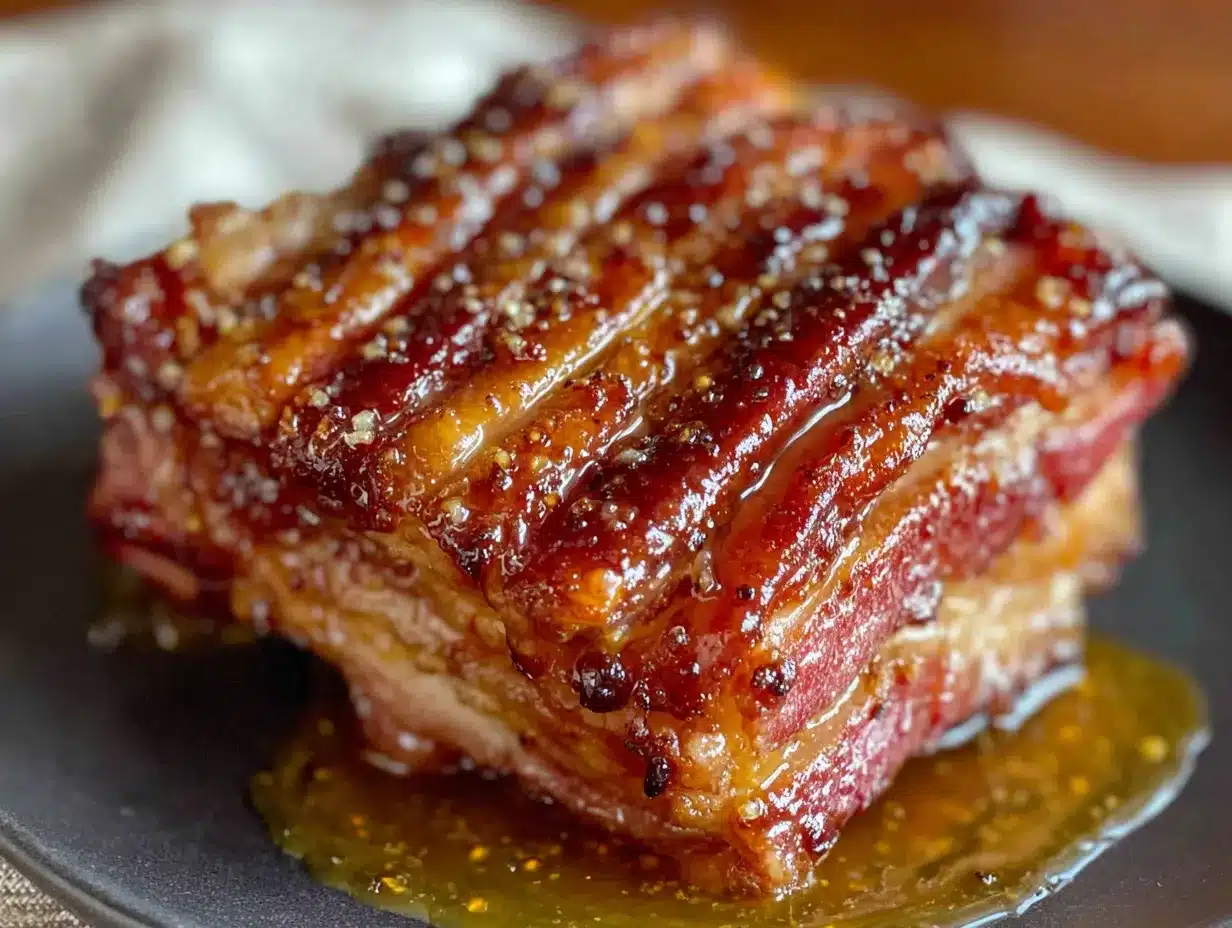
The moment I set that glistening, caramelized ham on the potluck table, people stopped mid-conversation. A neighbor named Frank actually put down his fork. The glaze had set into this gorgeous, lacquered shell, and the smell—warm, spiced, and fruity—filled the whole room. It was gone in twenty minutes. Someone asked me for the recipe, and I had to admit I’d kind of made it up under pressure. That’s when I knew this one was special. It’s the recipe that saves you when you have no time, no plan, and a reputation to salvage. And honestly? I keep making it even when I do have time, because it’s just that good. Maybe you’ve been there—scrambling, hoping, and then being shocked when something simple turns out to be the star of the show.
Why You’ll Love This Recipe
This isn’t just another holiday ham recipe. After years of testing glazes—some too sweet, some too sharp, some that just slid right off the meat—I landed on this combination. The brown sugar adds that deep, molasses-like sweetness, while the apple cider reduction brings a bright, tangy acidity that cuts through the richness of the ham. It’s a balance I’ve tweaked and perfected in my own kitchen, and it never fails.
- Quick & Easy: Despite looking like a centerpiece-worthy production, this ham comes together with just 15 minutes of active prep. The oven does the rest.
- Simple Ingredients: Brown sugar, apple cider, Dijon mustard, and a few spices. No hunting down obscure ingredients at specialty stores.
- Perfect for Holidays & Gatherings: Whether it’s Christmas dinner, Easter brunch, or a Sunday supper with friends, this ham feels celebratory without the stress.
- Crowd-Pleaser: I’ve served it to picky kids, skeptical in-laws, and serious foodie friends. Every single one went back for seconds.
- Unbelievably Delicious: The glaze caramelizes into a sticky, crackly crust, while the apple cider reduction keeps the meat incredibly moist. It’s the kind of ham that makes you close your eyes after the first bite.
What makes this version different? It’s the reduction technique. Most recipes just pour a glaze over the ham and hope for the best. Here, you simmer the apple cider down until it’s concentrated and syrupy before mixing it with the brown sugar. That extra step locks in a depth of flavor you just can’t get from a quick mix. It’s comfort food reimagined—familiar, but with a little something extra that makes it memorable. Perfect for impressing guests without breaking a sweat.
What Ingredients You Will Need
This recipe relies on a handful of pantry-friendly ingredients that work together to build layers of flavor. Most of these are staples you probably already have, especially if you keep a well-stocked baking cabinet.
- Spiral-Sliced Ham (8-10 pounds): I prefer a fully cooked, bone-in spiral ham for the best flavor and easiest serving. The pre-cut slices make carving a breeze, and the bone adds richness to the glaze as it cooks. Look for one labeled “natural juices” or “honey cured” for the best texture. I’ve had great results with brands like Hormel Cure 81 or Kirkland Signature from Costco.
- Apple Cider (2 cups): Not apple juice! Fresh, unfiltered apple cider has a tangy, complex flavor that reduces beautifully. If you can find it at a local orchard or farmers market, even better. In a pinch, a good quality store-bought cider works fine—just avoid anything labeled “from concentrate” if you can.
- Brown Sugar (1 cup, packed): Light or dark brown sugar both work here. Dark brown sugar has more molasses content, which gives the glaze a deeper, almost toffee-like flavor. I usually go with light brown sugar for a more balanced sweetness, but honestly, use what you have.
- Dijon Mustard (2 tablespoons): This is the secret weapon. The sharp, tangy mustard cuts through the sweetness and adds a savory backbone to the glaze. Don’t substitute yellow mustard here—it’s too mild. Whole grain Dijon is a nice alternative if you want a little texture.
- Apple Cider Vinegar (1 tablespoon): A splash of acidity brightens the whole dish and helps balance the sugar. It also helps the glaze set into that crackly crust.
- Ground Cloves (1/2 teaspoon): A little goes a long way. Cloves add that classic holiday warmth that pairs perfectly with ham. If you’re not a clove fan, you can reduce it to 1/4 teaspoon or skip it altogether.
- Ground Cinnamon (1 teaspoon): Adds a gentle sweetness and warmth that complements the apple cider. Freshly ground cinnamon is nice, but pre-ground works perfectly.
- Whole Cloves (optional, for garnish): If you want that classic, picture-perfect ham look, stud the surface with whole cloves before baking. They’re purely decorative and add a subtle extra hit of clove flavor.
For the pan, you’ll also need about 1 cup of water or low-sodium chicken broth to pour into the bottom of the roasting pan. This keeps the ham moist and creates steam for even heating.
Equipment Needed
You don’t need a professional kitchen to pull this off. Here’s what you’ll need:
- Large Roasting Pan: A sturdy metal or ceramic pan with high sides is essential. I use a 12×16-inch enameled cast iron roaster, but any heavy-duty pan will work. Disposable aluminum pans are fine in a pinch, but they can buckle under the weight of a heavy ham—double up on them if you go that route.
- Roasting Rack: This keeps the ham elevated so the glaze can drip down and caramelize evenly. If you don’t have one, roll up a few balls of aluminum foil and place them under the ham to lift it off the bottom of the pan.
- Small Saucepan: For reducing the apple cider. A 1-quart saucepan is perfect.
- Basting Brush: A silicone brush is ideal for applying the glaze without shredding. A pastry brush or even a clean spoon works too.
- Meat Thermometer: Don’t skip this! Even though the ham is pre-cooked, you want to make sure it’s heated through to 140°F. An instant-read thermometer is best.
- Aluminum Foil: You’ll need this to tent the ham during the first part of baking to prevent it from drying out.
- Sharp Knife or Carving Set: For slicing if your ham isn’t spiral-cut. A long, thin carving knife makes clean slices.
Preparation Method
- Preheat and Prep: Preheat your oven to 325°F (163°C). Take the ham out of the refrigerator about 30 minutes before baking to take the chill off. This helps it cook more evenly. Remove any plastic packaging or netting, but leave the thin layer of skin on if it has one—it helps keep the ham moist.
- Make the Apple Cider Reduction: In a small saucepan, pour in 2 cups of apple cider. Bring it to a boil over medium-high heat, then reduce the heat to a steady simmer. Let it bubble away for about 15-20 minutes, stirring occasionally, until it’s reduced to about 1/3 cup. It should be syrupy and smell intensely of apples. Watch it closely toward the end so it doesn’t burn.
- Mix the Glaze: In a medium bowl, whisk together the reduced apple cider, packed brown sugar, Dijon mustard, apple cider vinegar, ground cloves, and ground cinnamon. It will be thick and sticky—that’s exactly what you want. Set aside about 1/4 cup of the glaze for final basting.
- Score the Ham (if not already scored): If your ham doesn’t have a diamond pattern on the surface, use a sharp knife to score shallow cuts about 1/4-inch deep in a crosshatch pattern. This helps the glaze penetrate and creates those beautiful caramelized edges.
- Place the Ham in the Roasting Pan: Set the ham flat-side down on the roasting rack in your pan. Pour 1 cup of water or chicken broth into the bottom of the pan—not over the ham. This creates steam and keeps the meat juicy.
- First Bake (Covered): Tent the ham loosely with aluminum foil. Bake at 325°F for about 10 minutes per pound. For an 8-pound ham, that’s about 1 hour and 20 minutes. The internal temperature should reach about 120°F at this stage.
- Apply the First Glaze Layer: Remove the foil carefully—hot steam will escape. Brush a generous layer of the glaze all over the ham, getting into the cuts and crevices. Reserve the remaining glaze for later.
- Second Bake (Uncovered): Return the ham to the oven, uncovered. Increase the temperature to 375°F (190°C). Bake for another 20 minutes. The glaze will start to bubble and caramelize.
- Apply More Glaze: Brush on another layer of glaze. If you’re using whole cloves for garnish, press them into the ham now, spacing them about an inch apart in the diamond pattern.
- Final Bake: Continue baking, uncovered, for another 20-30 minutes, basting every 10 minutes with the reserved glaze. The ham is ready when the internal temperature reaches 140°F (60°C) in the thickest part, and the glaze is dark, sticky, and crackly. You’ll smell it—that sweet, smoky, spiced aroma is unmistakable.
- Rest and Serve: Remove the ham from the oven and let it rest for 15-20 minutes. This allows the juices to redistribute. Transfer to a cutting board, slice along the spiral cuts, and serve with the pan drippings spooned over the top.
Cooking Tips & Techniques
I’ve made this ham more times than I can count, and I’ve definitely learned a few things the hard way. Here’s what I wish someone had told me the first time.
Don’t skip the reduction. I know it’s tempting to just mix cider and sugar together and call it a day, but reducing the cider first concentrates the flavor and thickens the glaze naturally. The first time I tried this recipe, I was impatient and skipped this step. The glaze was watery and slid right off the ham. Never again. That 15-minute reduction is non-negotiable.
Watch your oven temperature. Every oven runs a little differently. If you notice the glaze getting too dark or starting to burn around the edges during the uncovered baking phase, tent the edges with small pieces of foil. I’ve had a few batches where the sugar caught before the ham was fully heated through. Foil is your friend here.
Baste, baste, baste. That sticky, glossy finish doesn’t happen by accident. Each time you open the oven and brush on more glaze, you’re building another layer of flavor and caramelization. Set a timer so you don’t forget—I once got distracted by a phone call and missed a basting session. The ham still tasted good, but that picture-perfect shine was missing.
Let it rest. I know you’ll be tempted to slice into it immediately, especially with that smell filling your kitchen. But resting is crucial. If you cut too soon, all those juices will run out onto the cutting board instead of staying in the meat. Trust me, the wait is worth it.
Use the pan drippings. Don’t pour those down the drain! The liquid left in the bottom of the pan is liquid gold. Skim off some of the fat, then spoon the savory-sweet drippings over the sliced ham. It adds moisture and an extra punch of flavor.
Variations & Adaptations
This recipe is wonderfully flexible. Here are a few ways I’ve switched it up depending on the occasion or what I had on hand.
Maple-Bourbon Glaze: Swap the apple cider for 1 cup of pure maple syrup and add 2 tablespoons of bourbon. Reduce the brown sugar to 1/2 cup. The bourbon adds a smoky warmth that’s incredible for a New Year’s Eve dinner. Just be careful—the alcohol cooks off, but the flavor lingers beautifully.
Spicy Honey Glaze: Replace the brown sugar with 3/4 cup of honey and add 1 teaspoon of red pepper flakes or a minced chipotle pepper in adobo sauce. The heat cuts through the sweetness and gives the ham a subtle kick. I made this version for a Super Bowl party and it was a hit with the spice lovers.
Pineapple-Orange Twist: Substitute the apple cider with 1 cup of pineapple juice and the zest of one orange. Add 1/4 cup of orange juice to the glaze. This gives the ham a tropical, bright flavor that’s perfect for Easter or spring gatherings. The acidity from the pineapple also helps tenderize the meat.
Low-Sugar Option: Use a brown sugar substitute like Swerve or Lakanto, and reduce the apple cider to 1 cup (no need to reduce it as much). The glaze won’t caramelize quite as deeply, but it still tastes fantastic. I’ve made this for a friend who was watching her sugar intake, and she went back for thirds.
Smoker Method: If you have a smoker, this ham is incredible with a little wood smoke. Set your smoker to 250°F (121°C) and use apple or cherry wood chips. Smoke the ham for 2-3 hours, basting with the glaze every 30 minutes during the last hour. The smoky flavor with the sweet glaze is a match made in heaven.
Serving & Storage Suggestions
This ham is best served warm, straight from the oven. Slice it along the spiral cuts and arrange the pieces on a large platter. Spoon a few tablespoons of the pan drippings over the top to keep everything moist and glossy. I like to garnish with fresh rosemary sprigs or sliced apples for a pop of color—it makes the presentation look like it came straight out of a magazine.
What to serve with it: The sweet and savory flavor of this ham pairs beautifully with roasted vegetables like Brussels sprouts, carrots, or green beans. Mashed potatoes or a creamy potato gratin are classic choices that soak up the pan juices. For something lighter, a crisp apple and fennel salad with a lemon vinaigrette cuts through the richness. And don’t forget the dinner rolls—you’ll want something to mop up every last bit of glaze.
Storing leftovers: If you have any left (and that’s a big if), let the ham cool completely. Wrap it tightly in plastic wrap or aluminum foil, or store it in an airtight container. It will keep in the refrigerator for up to 5 days. The flavor actually gets better as it sits—the glaze seeps deeper into the meat.
Reheating: To reheat, place slices in a baking dish with a splash of apple cider or chicken broth. Cover with foil and warm in a 300°F oven for about 15-20 minutes. You can also reheat individual portions in the microwave, but the oven method keeps the texture better. Avoid boiling or overheating, as the ham can dry out.
Freezing: This ham freezes surprisingly well. Slice it, wrap individual portions in plastic wrap, then place them in a freezer bag. It will keep for up to 3 months. Thaw in the refrigerator overnight before reheating. The glaze might lose a little of its crackly texture, but the flavor is still fantastic.
Nutritional Information & Benefits
Here’s an approximate nutritional breakdown per serving (based on 12 servings, using an 8-pound ham with glaze):
| Nutrient | Amount |
|---|---|
| Calories | 380 |
| Protein | 35g |
| Fat | 18g |
| Saturated Fat | 6g |
| Carbohydrates | 22g |
| Sugar | 20g |
| Sodium | 1450mg |
Ham is a good source of high-quality protein, which helps with muscle repair and keeps you feeling full. It also provides important minerals like zinc, selenium, and phosphorus. The apple cider in the glaze adds a small amount of vitamin C and antioxidants. That said, ham is naturally high in sodium, so if you’re watching your salt intake, be mindful of portion sizes. You can also use a lower-sodium ham if available.
From a wellness perspective, I love that this recipe feels indulgent without being over-the-top. It’s a special occasion dish, but it’s made with real, recognizable ingredients. No artificial flavors or preservatives here—just good food made with care.
Conclusion
This Perfect Brown Sugar Glazed Ham with Apple Cider Reduction is the recipe that turns a potential kitchen disaster into a triumph. It’s proof that you don’t need hours of prep or a culinary degree to create something that looks and tastes like a masterpiece. The sweet, sticky glaze with that tangy apple cider kick is a combination that never gets old, and the way it fills your kitchen with that warm, spiced aroma is honestly one of my favorite things about the holidays.
I hope you give this recipe a try, whether it’s for a big family gathering or just a quiet Sunday dinner. Don’t be afraid to tweak it to your taste—add more mustard if you like it tangier, or throw in a pinch of cayenne for heat. That’s the beauty of cooking: making a recipe your own. If you do make it, I’d love to hear how it turned out. Drop a comment below and let me know if your guests asked for the recipe too. And hey, if you’re reading this while staring at a ham and panicking about a potluck in a few hours—trust the process. You’ve got this.
Frequently Asked Questions
Can I use a boneless ham instead of a spiral-sliced one?
Absolutely. Boneless hams work just fine, though they may cook a little faster since they’re more compact. Just make sure to check the internal temperature with a meat thermometer. The glaze will still caramelize beautifully on a boneless ham.
How do I prevent the glaze from burning?
Keep a close eye on the ham during the uncovered baking phase. If the edges of the glaze start to darken too quickly, tent those areas with small pieces of aluminum foil. Also, make sure your oven temperature is accurate—an oven thermometer can help.
Can I make the glaze ahead of time?
Yes! You can make the apple cider reduction and mix the glaze up to 3 days in advance. Store it in an airtight container in the refrigerator. Let it come to room temperature before using, or warm it slightly so it spreads easily.
What if I don’t have apple cider?
You can substitute with apple juice, but the flavor will be a little less tangy and complex. If using apple juice, add a splash of lemon juice or apple cider vinegar to mimic that brightness. Alternatively, try pear or white grape juice for a different but still delicious twist.
How long should I cook the ham if it’s still frozen?
I strongly recommend thawing the ham completely in the refrigerator before cooking—it can take 3-5 days depending on the size. Cooking from frozen is not recommended, as the outside will overcook before the center is heated through. If you’re in a real pinch, you can cook it from frozen at a lower temperature (300°F) and expect it to take about 50% longer, but the texture won’t be as good.
Pin This Recipe!
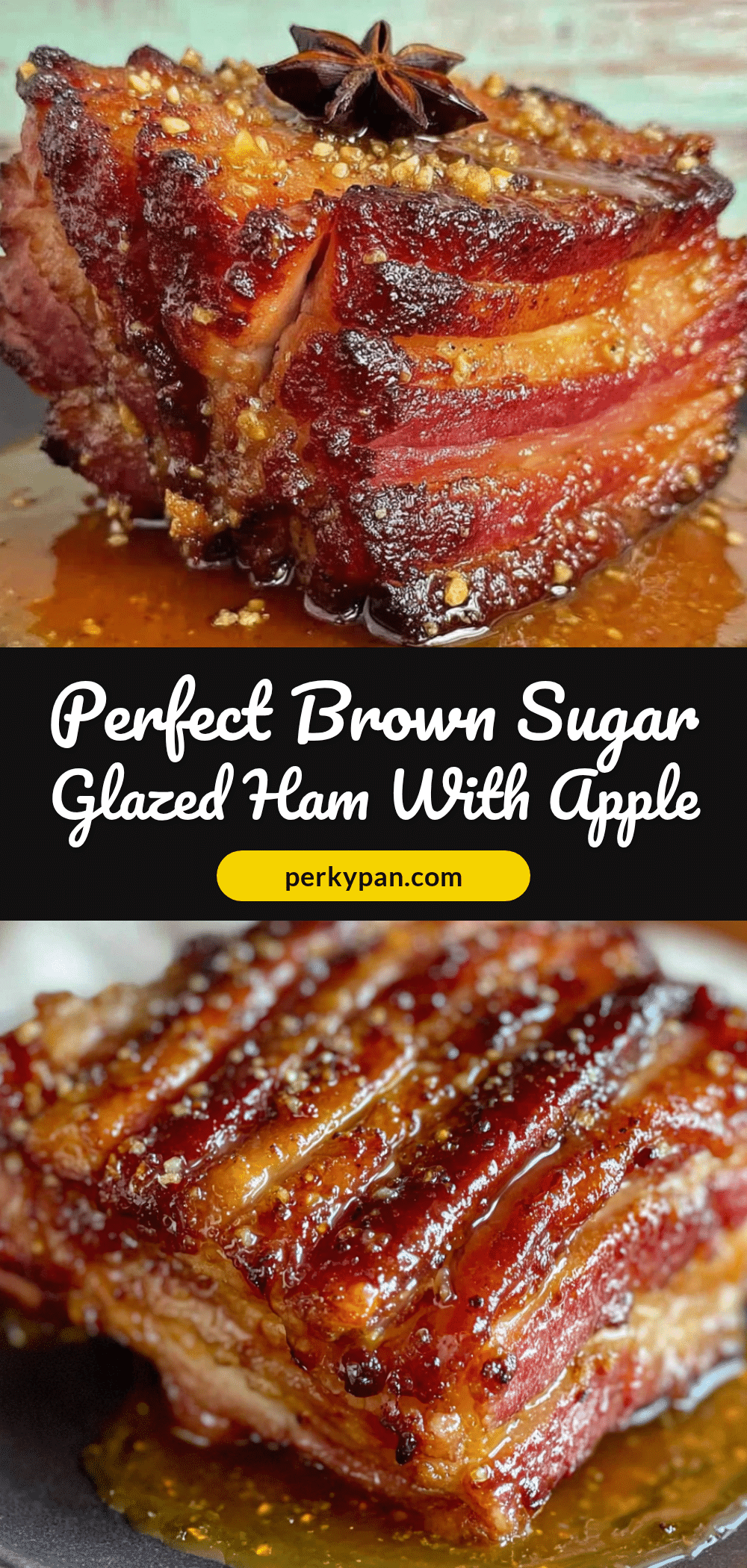
Perfect Brown Sugar Glazed Ham with Apple Cider Reduction
A stunning holiday ham with a sticky-sweet brown sugar glaze and tangy apple cider reduction that caramelizes into a crackly crust. This easy, crowd-pleasing recipe requires just 15 minutes of active prep and delivers a centerpiece-worthy dish perfect for any gathering.
- Prep Time: 15 minutes
- Cook Time: 1 hour 40 minutes to 2 hours 10 minutes
- Total Time: 2 hours to 2 hours 30 minutes
- Yield: 12 servings 1x
- Category: Main Course
- Cuisine: American
Ingredients
- 1 spiral-sliced ham (8–10 pounds), fully cooked, bone-in
- 2 cups apple cider (unfiltered, not apple juice)
- 1 cup brown sugar, packed (light or dark)
- 2 tablespoons Dijon mustard
- 1 tablespoon apple cider vinegar
- 1/2 teaspoon ground cloves
- 1 teaspoon ground cinnamon
- Whole cloves (optional, for garnish)
- 1 cup water or low-sodium chicken broth (for the pan)
Instructions
- Preheat oven to 325°F (163°C). Remove ham from refrigerator 30 minutes before baking. Remove packaging and netting, leaving thin skin layer if present.
- Make apple cider reduction: In a small saucepan, bring 2 cups apple cider to a boil over medium-high heat. Reduce heat to a steady simmer and cook for 15-20 minutes, stirring occasionally, until reduced to about 1/3 cup and syrupy.
- Mix glaze: In a medium bowl, whisk together reduced apple cider, packed brown sugar, Dijon mustard, apple cider vinegar, ground cloves, and ground cinnamon until thick and sticky. Set aside 1/4 cup for final basting.
- Score ham (if not already scored): Use a sharp knife to make shallow 1/4-inch deep cuts in a crosshatch pattern on the surface.
- Place ham flat-side down on a roasting rack in a large roasting pan. Pour 1 cup water or chicken broth into the bottom of the pan (not over the ham).
- First bake (covered): Tent ham loosely with aluminum foil. Bake at 325°F for about 10 minutes per pound (about 1 hour 20 minutes for an 8-pound ham), until internal temperature reaches about 120°F.
- Apply first glaze layer: Remove foil carefully. Brush a generous layer of glaze all over the ham, getting into cuts and crevices. Reserve remaining glaze.
- Second bake (uncovered): Return ham to oven, uncovered. Increase temperature to 375°F (190°C). Bake for 20 minutes until glaze starts to bubble and caramelize.
- Apply more glaze: Brush on another layer of glaze. If using whole cloves for garnish, press them into the ham about 1 inch apart in the diamond pattern.
- Final bake: Continue baking uncovered for 20-30 minutes, basting every 10 minutes with reserved glaze, until internal temperature reaches 140°F (60°C) in the thickest part and glaze is dark, sticky, and crackly.
- Rest and serve: Remove ham from oven and let rest for 15-20 minutes. Transfer to cutting board, slice along spiral cuts, and serve with pan drippings spooned over the top.
Notes
Don’t skip the apple cider reduction—it concentrates flavor and thickens the glaze naturally. Watch oven temperature during uncovered baking; if glaze gets too dark, tent edges with foil. Baste regularly for a glossy finish. Let ham rest before slicing to retain juices. Use pan drippings spooned over sliced ham for extra moisture and flavor. Leftovers keep refrigerated for up to 5 days or frozen for up to 3 months.
Nutrition
- Serving Size: 1 serving (about 6-8
- Calories: 380
- Sugar: 20
- Sodium: 1450
- Fat: 18
- Saturated Fat: 6
- Carbohydrates: 22
- Protein: 35
Keywords: brown sugar glazed ham, apple cider ham, holiday ham, Easter ham, Christmas ham, spiral ham, glazed ham recipe