Love this? Save it for later!
Share the inspiration with your friends
I wasn’t expecting baking advice from the guy who fixes my Wi-Fi, but there I was, standing in my living room watching him reconfigure my router, listening to him describe exactly how to make cozy pumpkin sourdough bread with cinnamon swirl. It was a rainy Tuesday in October, the kind where the sky turns that heavy, bruised purple color that makes you want to stay under a blanket all day. He was kneeling on the rug, cables in hand, when he casually mentioned that his grandmother used to bake this specific loaf every time the first frost hit. Honestly, I nearly dropped my phone. Dave, the IT specialist who can fix your internet in ten minutes, also happens to be a wizard with wild yeast and pumpkin puree.
He didn’t have a fancy cookbook or a printed recipe card. Instead, he pulled out his phone and showed me a photo of a handwritten note on the back of an old utility bill. The handwriting was shaky, probably from an elderly hand, but the instructions were precise. He told me about the smell of his grandmother’s kitchen, how it always smelled like toasted spices and warm dough when she pulled this bread out of the oven. I mean, who knew that the secret to the perfect autumn loaf was hiding in a tech support conversation? It felt like a little secret being passed down, a piece of wisdom from a place I never expected to find it.
That night, after Dave left and the house was quiet again, I decided to try it. I didn’t have a sourdough starter that was quite as active as his, and I forgot to take my eggs out of the fridge until the batter was already mixing. Let me tell you, the kitchen was a mess of orange streaks and flour clouds. But when that loaf came out of the oven, golden and fragrant with cinnamon, I understood why Dave was so protective of this recipe. It wasn’t just bread; it was a hug in food form. Maybe you’ve been there, standing in your kitchen at 10 PM, wondering if you have the patience for a long fermentation, only to be rewarded with something magical the next morning.
This cozy pumpkin sourdough bread with cinnamon swirl has stayed with me because it captures that exact feeling of unexpected comfort. It’s the kind of bread that makes you slow down. It’s not about speed or perfection; it’s about the warmth it brings to your home and your hands. Every time I make it, I think of Dave on the floor, fixing my internet and sharing his heritage one loaf at a time. It reminds me that the best recipes often come from the most unlikely sources, and that cooking is really just another way to connect with the people around us. So, let’s make some bread.
Why You’ll Love This Recipe
This isn’t just another pumpkin bread recipe you’ll find buried in a magazine from 1995. This is the result of trial, error, and a lot of early mornings. I’ve tested dozens of variations of sourdough pumpkin bread, and this one hits the sweet spot between tangy complexity and sweet, spiced comfort. It’s the kind of loaf that has a crumb so tender it practically melts on your tongue, yet sturdy enough to hold up to a thick slice of butter or a smear of cream cheese. Here is why this specific version of cozy pumpkin sourdough bread with cinnamon swirl deserves a spot in your regular rotation.
- Quick & Easy for Sourdough: While sourdough is known for its long fermentation, this recipe uses a bulk fermentation method that fits into a weekend schedule. You mix it up, let it rest, and shape it. It’s perfect for busy weeknights or lazy Sunday mornings when you want something special without the stress.
- Simple Ingredients: You likely already have everything in your kitchen. Pumpkin puree, cinnamon, nutmeg, your starter, and flour. No fancy grocery trips needed for obscure ingredients. It’s wholesome, simple, and relies on quality basics rather than additives.
- Perfect for Autumn: This is the ultimate seasonal bread. It’s great for breakfast with coffee, a snack with tea, or even as a side to a hearty pumpkin soup for dinner. The flavors are deeply rooted in the season, bringing that cozy, nostalgic feeling to your table.
- Crowd-Pleaser: Whether you are bringing it to a potluck, sharing it with neighbors, or serving it to family, this bread always gets rave reviews. Kids love the sweetness of the cinnamon swirl, and adults appreciate the subtle tang of the sourdough. It appeals to everyone.
- Unbelievably Delicious: The texture and flavor combo is next-level comfort food. The pumpkin adds moisture that keeps the bread fresh for days, while the cinnamon swirl creates pockets of spicy sweetness in every bite. It’s rich but not heavy, sweet but not cloying.
What makes this recipe different from the rest is the balance. Many pumpkin breads are dense and cake-like, or they lack the distinct sourdough tang that makes it interesting. This recipe uses a high-hydration dough that results in an open, airy crumb, while the pumpkin puree provides enough structure to keep it from collapsing. I’ve spent years refining the ratio of wet to dry ingredients, and I can tell you that this is the best version I’ve found. It’s the kind of bread that makes you close your eyes after the first bite, just savoring the warmth. It’s comfort food reimagined—healthier, faster, but with the same soul-soothing satisfaction. It’s perfect for impressing guests without stress, or turning a simple meal into something memorable.
What Ingredients You Will Need
This recipe uses simple, wholesome ingredients to deliver bold flavor and satisfying texture without the fuss. The beauty of cozy pumpkin sourdough bread with cinnamon swirl lies in how these basic components interact. The pumpkin provides natural sweetness and moisture, while the sourdough starter adds a complex, tangy depth that balances the spices. You don’t need any special or hard-to-find items, which makes this recipe accessible for any baker, regardless of experience level. Most of these ingredients are pantry staples or easy-to-find seasonal items.
For the Bread Dough
- Bread Flour: 400g (3 ½ cups). I recommend using a high-protein bread flour like King Arthur, as it provides the structure needed for a good rise. Whole wheat flour can be substituted for up to 20% of the total flour for a nuttier flavor, but too much will make the bread dense.
- Pumpkin Puree: 200g (about 1 cup). Make sure you use 100% pure pumpkin puree, not pumpkin pie filling, which has added sugars and spices. Look for a brand with a thick consistency; if yours is watery, you may need to reduce the water slightly.
- Active Sourdough Starter: 100g (about ½ cup). This should be fed and active, bubbling up to its peak. A strong starter is crucial for the rise and flavor development. If your starter is weak, the bread may not rise properly.
- Warm Water: 180g (¾ cup + 1 tbsp). Use lukewarm water, around 80°F (27°C), to help activate the starter and blend the ingredients smoothly. Avoid hot water, which can kill the yeast.
- Egg: 1 large egg, room temperature. The egg adds richness and helps with the structure. You can substitute with a flax egg (1 tbsp ground flaxseed mixed with 3 tbsp water) for a vegan option, though the texture will be slightly denser.
- Unsalted Butter: 30g (2 tbsp), melted and cooled slightly. This adds tenderness and a rich mouthfeel. Use a high-quality butter for the best flavor.
- Granulated Sugar: 50g (¼ cup). This feeds the yeast and adds a touch of sweetness. You can use coconut sugar for a lower glycemic index, but it will darken the crust.
- Salt: 10g (1 ¾ tsp). Fine sea salt is best for even distribution. Salt is crucial for flavor and strengthening the gluten structure.
- Spice Blend: 2 tsp cinnamon, 1 tsp ginger, ½ tsp nutmeg, and ¼ tsp cloves. This classic pumpkin pie spice blend is essential for that autumnal flavor. Adjust to taste if you prefer more or less spice.
For the Cinnamon Swirl
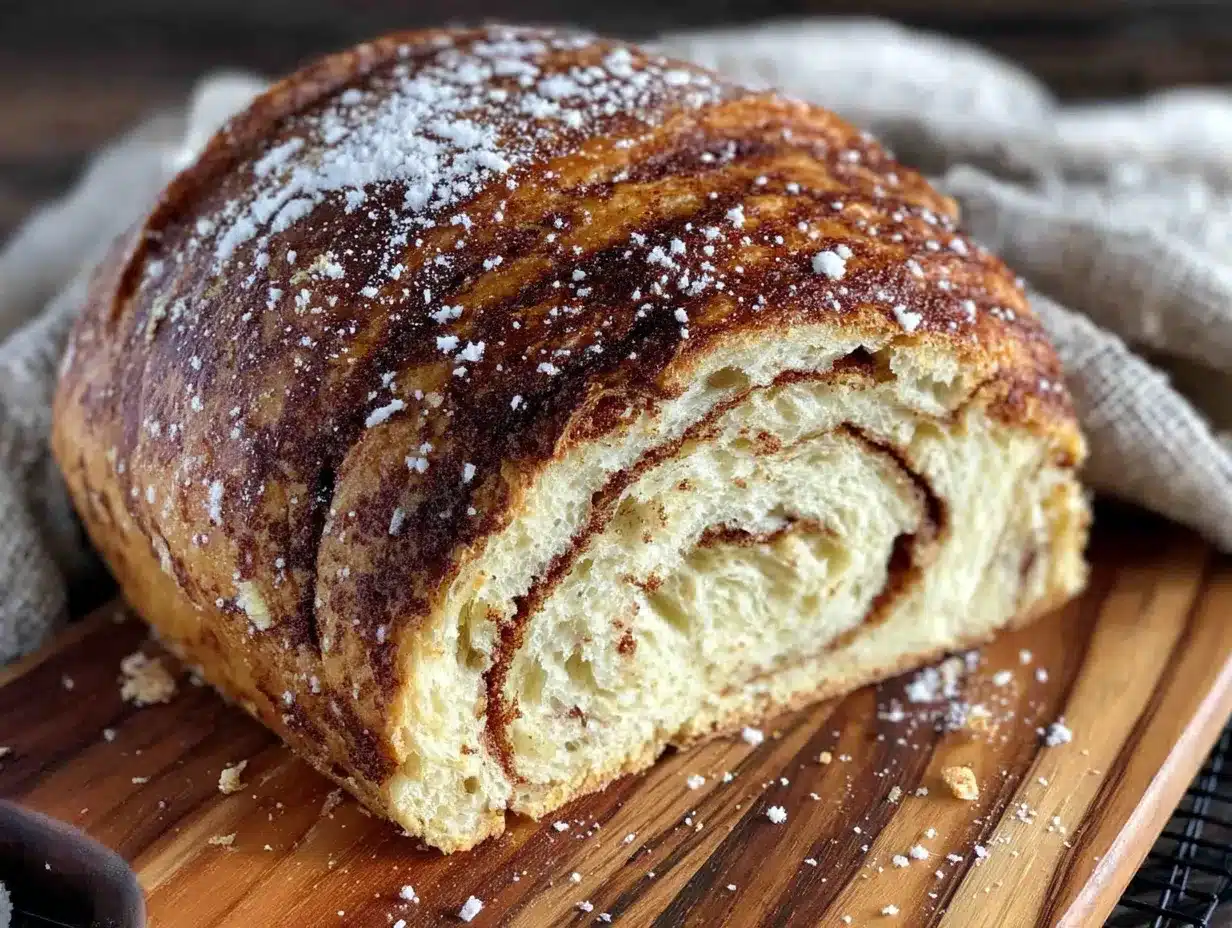
- Unsalted Butter: 45g (3 tbsp), softened. This helps the swirl adhere to the dough.
- Brown Sugar: 60g (⅓ cup). Packed brown sugar adds moisture and a caramel-like depth to the swirl.
- Cinnamon: 2 tsp. Use a good quality cinnamon for a strong, aromatic flavor.
One tip I’ve learned is to weigh your ingredients whenever possible. Volume measurements can vary significantly, especially with flour, which can lead to inconsistent results. If you must use cups, spoon the flour into the cup and level it off, rather than scooping directly from the bag. Also, ensure your pumpkin puree is at room temperature before mixing, as cold ingredients can shock the starter and slow down the fermentation process.
Equipment Needed
You don’t need a fancy kitchen to make this bread, but having the right tools makes the process much smoother. A digital kitchen scale is non-negotiable for baking with sourdough; it ensures precision and consistency. A large mixing bowl is essential for the bulk fermentation, and a bench scraper is incredibly helpful for handling the sticky dough and shaping the loaf. I recommend using a 9×5-inch loaf pan, preferably metal, as it conducts heat well and helps the bread bake evenly. A parchment paper sling makes it easy to lift the loaf in and out of the pan, preventing sticking and making cleanup a breeze. If you don’t have a proofing basket, a bowl lined with a floured kitchen towel works just as well. Keep your equipment clean and dry, as moisture can affect the starter’s activity. For budget-friendly options, a basic glass mixing bowl and a standard metal loaf pan will work perfectly fine.
Preparation Method
- Mix the Dough (10 minutes): In a large bowl, combine the warm water, active sourdough starter, pumpkin puree, melted butter, egg, and sugar. Whisk until smooth. Add the flour and salt, then mix with a sturdy spoon or your hands until no dry flour remains. It will be a sticky, shaggy mass. Cover the bowl and let it rest for 30 minutes. This autolyse step helps the flour hydrate and develops gluten.
- Stretch and Fold (1 hour): After the rest, perform a stretch and fold. Wet your hands to prevent sticking, grab one side of the dough, stretch it up, and fold it over the center. Rotate the bowl and repeat four times. Cover and let rest for 30 minutes. Repeat this process two more times, for a total of three sets of stretch and folds over an hour. This builds strength in the dough without kneading.
- First Rise (4-6 hours): After the final fold, cover the bowl tightly and let it rise at room temperature until it has increased in size by about 50-75%. The dough should look puffy and jiggly. The time will vary depending on your kitchen temperature, so keep an eye on it rather than the clock.
- Prepare the Swirl (5 minutes): While the dough rises, mix the softened butter, brown sugar, and cinnamon in a small bowl until it forms a thick paste. Set aside.
- Shape the Loaf (10 minutes): Turn the dough out onto a lightly floured surface. Gently press it into a rectangle, about 10×14 inches. Spread the cinnamon swirl mixture evenly over the surface, leaving a small border on one long edge. Starting from the long edge, roll the dough up tightly into a log. Pinch the seam to seal. Place the loaf seam-side down into a parchment-lined loaf pan.
- Second Rise (1-2 hours): Cover the pan with a damp kitchen towel or plastic wrap. Let it rise until the dough peaks about 1 inch above the rim of the pan. This usually takes 1-2 hours, but again, watch the dough, not the time.
- Bake (50-60 minutes): Preheat your oven to 375°F (190°C). Place the loaf in the oven and bake for 50-60 minutes. The crust should be deep golden brown, and the internal temperature should reach 205°F (96°C) if you have a thermometer. If the top is browning too quickly, tent it with foil after the first 30 minutes.
- Cool (1 hour): Let the bread cool in the pan for 10 minutes, then transfer it to a wire rack to cool completely before slicing. This is the hardest part, but slicing it warm can make the texture gummy.
Cooking Tips & Techniques
One common mistake with sourdough bread is over-proofing. If the dough rises too much, it will collapse in the oven and have a dense, gummy texture. To avoid this, learn to recognize the signs of proper proofing. The dough should feel airy and spring back slowly when poked, leaving a small indent. Another tip is to ensure your starter is at its peak activity before using it. A sluggish starter will result in a dense loaf. If your kitchen is cold, you can speed up the rise by placing the dough in a turned-off oven with the light on, which creates a warm, draft-free environment. Also, don’t skip the cooling step. The structure of the bread sets as it cools, and slicing it too early can ruin the texture. Finally, if your bread comes out too dark on top, lower the oven temperature by 25°F and bake for a longer time.
Variations & Adaptations
This recipe is quite versatile, and you can adapt it to suit your dietary needs or taste preferences. For a gluten-free version, you can substitute the bread flour with a high-quality gluten-free flour blend that contains xanthan gum. However, the texture will be different, so be prepared for a denser loaf. For a vegan option, replace the egg with a flax egg and use vegan butter. You can also add in mix-ins like chopped walnuts, pecans, or dried cranberries for extra texture and flavor. If you prefer a less sweet bread, reduce the granulated sugar to 30g and the brown sugar in the swirl to 40g. Another variation is to add a cream cheese filling by spreading a layer of sweetened cream cheese over the dough before rolling. I’ve also tried adding a pinch of cardamom to the spice blend, which gives it a lovely, aromatic twist.
Serving & Storage Suggestions
This cozy pumpkin sourdough bread with cinnamon swirl is best served slightly toasted, with a slab of butter melting into the warm crumb. It pairs wonderfully with a cup of black coffee or spiced chai tea. For storage, keep the bread in an airtight container or wrapped in plastic wrap at room temperature for up to 3 days. For longer storage, slice the bread and freeze it in a freezer-safe bag for up to 3 months. To reheat, simply toast slices from frozen or let them thaw at room temperature and warm them in the oven. The flavors actually develop and deepen over the first couple of days, making it even better on day two.
Nutritional Information & Benefits
While this bread is a treat, it does offer some nutritional benefits. Pumpkin is rich in vitamins A and C, as well as fiber, which supports digestive health. The sourdough fermentation process breaks down phytic acid, making the minerals in the flour more bioavailable and easier to digest. One slice contains approximately 220 calories, 6g of protein, and 4g of fiber. It is not gluten-free or dairy-free unless modified, so be mindful of allergens. From a wellness perspective, I find that the complex carbohydrates in sourdough provide a more sustained energy release than refined white bread, making it a better choice for a morning fuel.
Conclusion
Making cozy pumpkin sourdough bread with cinnamon swirl is more than just baking; it’s a ritual that connects you to the season and to the people you love. It’s a recipe that has stuck with me because of its unexpected origin and its undeniable comfort. I encourage you to try it, and don’t be afraid to make it your own. Add your favorite nuts, adjust the spices, or share it with a neighbor. I’d love to hear how it turns out in your kitchen. Leave a comment below with your tips or variations, and if you enjoyed this recipe, please share it with your friends who love autumn baking. Happy baking!
FAQs
Can I use canned pumpkin pie filling instead of pure pumpkin puree?
No, you should not use pumpkin pie filling. It contains added sugars, spices, and thickeners that will throw off the balance of your recipe. Always use 100% pure pumpkin puree for the best results.
How do I know when my sourdough starter is ready to use?
Your starter should be bubbly, doubled in size, and have a pleasant, tangy aroma. If you float a small spoonful in a glass of water and it floats, it’s ready to use.
Can I freeze this bread?
Yes, this bread freezes very well. Slice it first, wrap it tightly in plastic wrap, and place it in a freezer-safe bag. It will keep for up to 3 months.
Why is my bread dense and not fluffy?
Dense bread can result from an inactive starter, over-proofing, or under-mixing the dough. Make sure your starter is active and follow the stretch and fold steps to build gluten structure.
Can I make this bread in a bread machine?
While you can use the dough cycle, it’s not recommended for sourdough. The controlled environment of a bread machine doesn’t allow for the natural fermentation process that gives sourdough its unique flavor and texture. It’s best to mix and rise by hand.
Pin This Recipe!
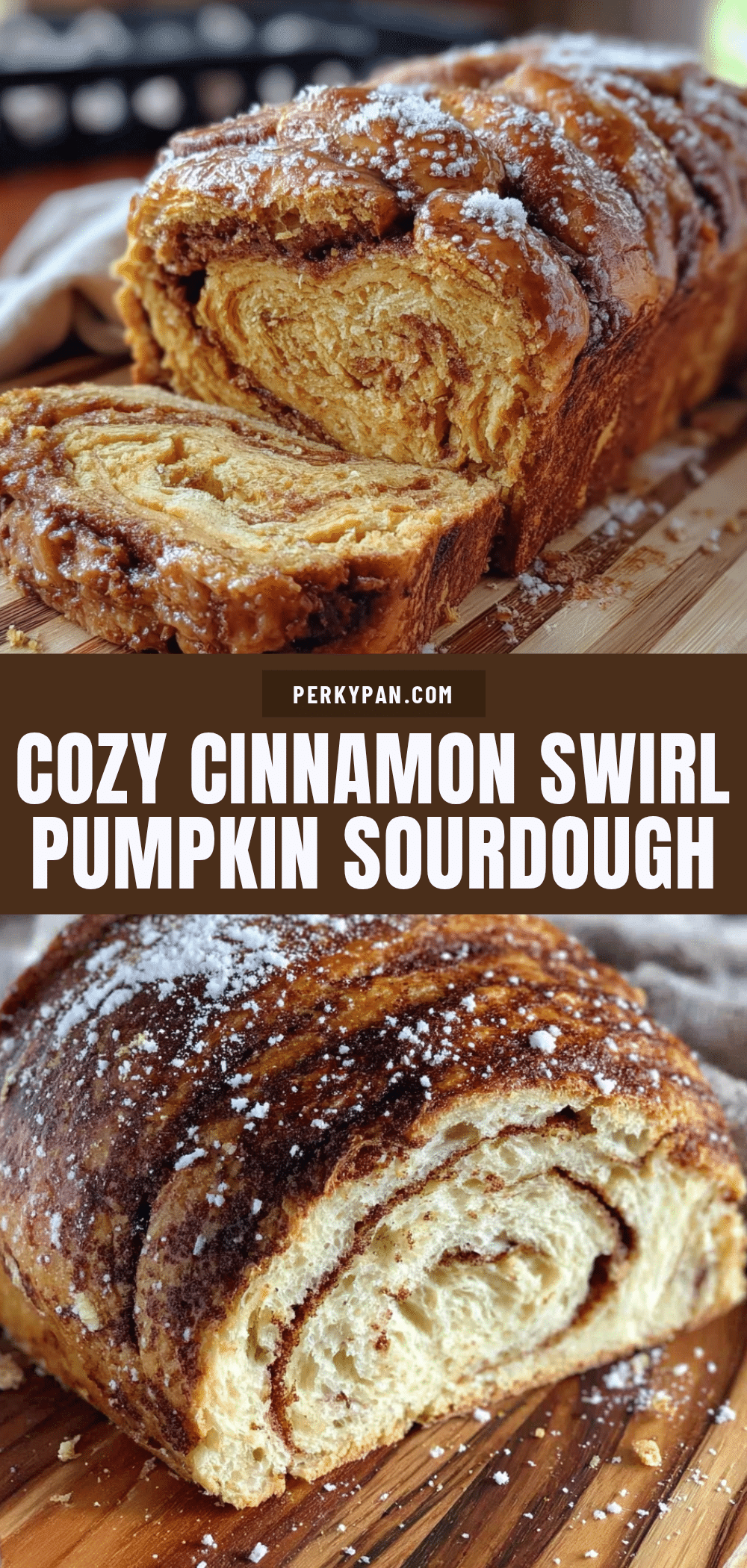
Cozy Pumpkin Sourdough Bread: Easy Autumn Swirl

A tender, tangy sourdough loaf infused with pumpkin puree and a sweet cinnamon swirl, offering the perfect balance of autumn spices and comfort food texture.
- Prep Time: 35 minutes
- Cook Time: 50-60 minutes
- Total Time: 6-8 hours
- Yield: 1 loaf 1x
- Category: Breakfast
- Cuisine: American
Ingredients
- 400g (3 ½ cups) Bread Flour
- 200g (about 1 cup) Pumpkin Puree
- 100g (about ½ cup) Active Sourdough Starter
- 180g (¾ cup + 1 tbsp) Warm Water
- 1 large Egg, room temperature
- 30g (2 tbsp) Unsalted Butter, melted and cooled
- 50g (¼ cup) Granulated Sugar
- 10g (1 ¾ tsp) Fine Sea Salt
- 2 tsp Cinnamon
- 1 tsp Ginger
- ½ tsp Nutmeg
- ¼ tsp Cloves
- 45g (3 tbsp) Unsalted Butter, softened (for swirl)
- 60g (⅓ cup) Brown Sugar, packed (for swirl)
Instructions
- Mix the Dough: In a large bowl, combine warm water, active sourdough starter, pumpkin puree, melted butter, egg, and sugar. Whisk until smooth. Add flour and salt, mixing until no dry flour remains. Cover and rest for 30 minutes.
- Stretch and Fold: Wet hands, stretch dough, and fold over center. Rotate and repeat four times. Cover and rest 30 minutes. Repeat two more times (total 3 sets over 1 hour).
- First Rise: Cover bowl tightly and let rise at room temperature for 4-6 hours until increased by 50-75% and puffy.
- Prepare Swirl: Mix softened butter, brown sugar, and cinnamon in a small bowl to form a thick paste.
- Shape Loaf: Turn dough onto floured surface. Press into a 10×14 inch rectangle. Spread cinnamon swirl mixture evenly, leaving a border. Roll tightly into a log, pinch seam, and place seam-side down in a parchment-lined loaf pan.
- Second Rise: Cover pan with damp towel or plastic wrap. Let rise for 1-2 hours until dough peaks 1 inch above pan rim.
- Bake: Preheat oven to 375°F (190°C). Bake for 50-60 minutes until deep golden brown and internal temperature reaches 205°F (96°C). Tent with foil if browning too quickly.
- Cool: Let bread cool in pan for 10 minutes, then transfer to a wire rack to cool completely before slicing.
Notes
Ensure pumpkin puree is 100% pure, not pie filling. Weigh ingredients for best results. If kitchen is cold, proof dough in an oven with the light on. Do not slice while warm to avoid gummy texture.
Nutrition
- Serving Size: 1 slice
- Calories: 220
- Sugar: 12
- Sodium: 350
- Fat: 8
- Saturated Fat: 4
- Carbohydrates: 35
- Fiber: 4
- Protein: 6
Keywords: pumpkin sourdough, cinnamon swirl bread, autumn baking, sourdough recipe, pumpkin bread, easy sourdough, fall recipes