Love this? Save it for later!
Share the inspiration with your friends
Last Christmas Eve, I found myself standing in the kitchen with a slightly burnt rosemary sprig in one hand and a very confused look on my face. I was attempting to impress some friends with a fancy dinner, and honestly, I thought prime rib was only for professional chefs or those who had a secret sauce up their sleeves. But here’s the thing — this herb-crusted prime rib with red wine jus wasn’t born out of perfection. It was a happy accident after I doubled down on herbs, forgot the timer, and improvised with what I had on hand.
You know that feeling when you’re juggling guests, wine glasses, and a kitchen that suddenly feels too small? Yeah, that was me. The aroma of garlic, thyme, and rosemary filled the air so intensely it pulled my neighbor in from across the hall to ask what was cooking. That moment, with the golden crust crackling in the oven and the rich, glossy red wine sauce simmering away, felt like magic — a dish that felt both regal and somehow totally approachable.
Maybe you’ve been there, staring at a prime rib roast wondering if you can really pull off something this impressive. Well, let me tell you, this recipe stuck with me because it’s not just about the roast itself; it’s about the warmth it brings to the table, the way it turns a simple dinner into a celebration. And the best part? You don’t have to be a pro to nail it. This step-by-step guide will take you there — with a crust that’s bursting with herbaceous goodness and a red wine jus that’s silky and comforting.
Why You’ll Love This Recipe
Having tested this perfect herb-crusted prime rib recipe countless times (and yes, made my fair share of kitchen messes along the way), I can say it really stands out. Here’s why it might just become your go-to for special occasions or whenever you want to impress without sweating it:
- Quick & Easy: It comes together with simple prep in under 30 minutes, then the oven does the heavy lifting while you relax or prepare sides.
- Simple Ingredients: No fancy herbs or obscure spices needed — just fresh rosemary, thyme, garlic, and pantry staples. You probably have most of these already.
- Perfect for Holidays & Dinner Parties: Whether it’s Christmas, a birthday, or a cozy Sunday dinner, this prime rib steals the spotlight every time.
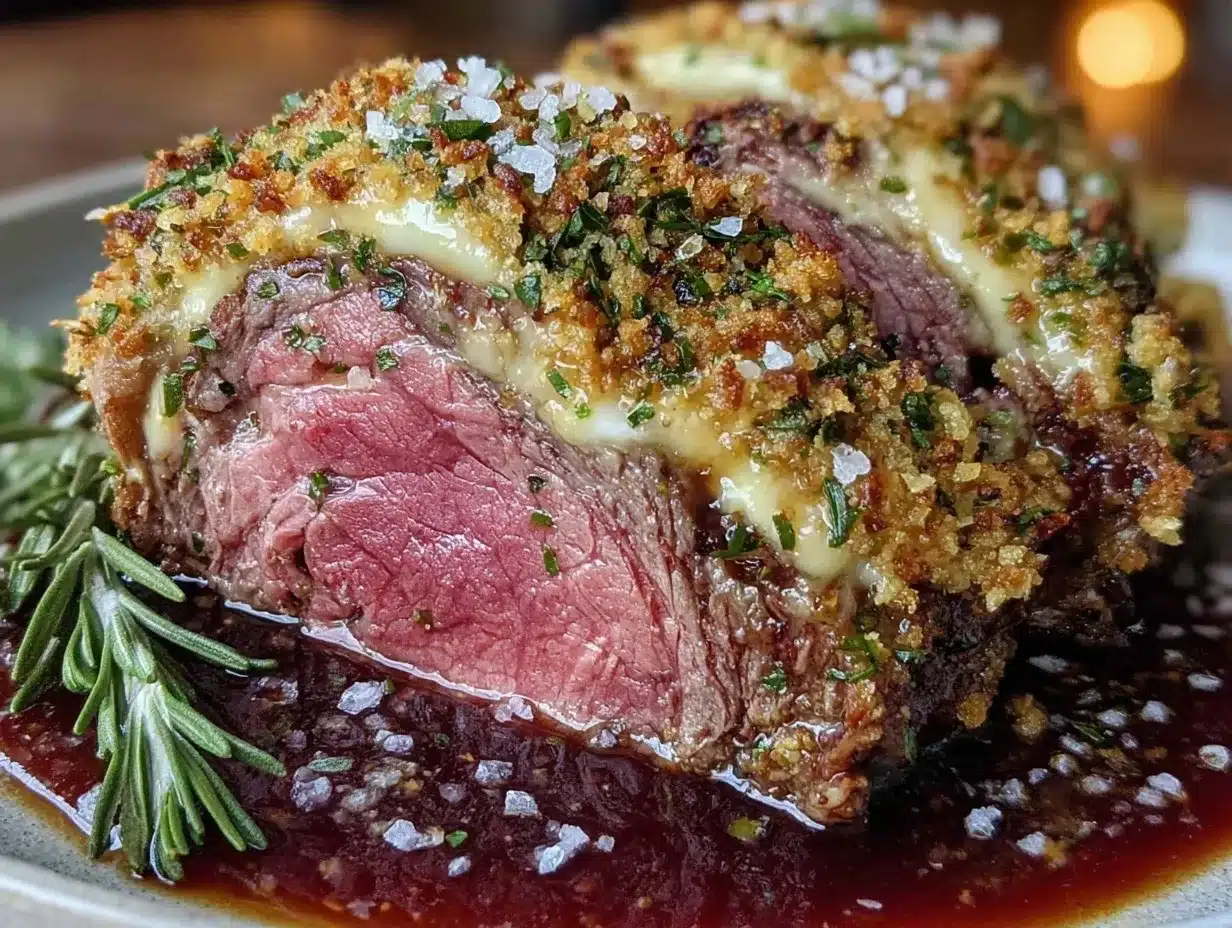
- Crowd-Pleaser: The juicy, tender center with that crispy herb crust always gets rave reviews from both steak lovers and those new to prime rib.
- Unbelievably Delicious: The flavor combo of earthy herbs, garlic, and that luscious red wine jus hits a next-level comfort note you won’t forget.
What makes this recipe different? I use a special herb paste that locks in moisture and creates that signature crust without drying out the roast. Plus, the red wine jus isn’t just a drizzle — it’s a deeply flavored sauce you can spoon over every bite. Honestly, this isn’t just another prime rib recipe; it’s the one I keep coming back to, the one that makes you close your eyes after the first forkful and say, “Yep, this is it.”
What Ingredients You Will Need
This perfect herb-crusted prime rib recipe uses straightforward, fresh ingredients to create bold flavor and a satisfying texture without any fuss. You don’t need a specialty butcher or exotic items — just quality basics you can find at most grocery stores.
- Prime Rib Roast (about 4 to 5 pounds / 1.8 to 2.3 kg), bone-in preferred for extra flavor and juiciness
- Fresh Rosemary, roughly chopped (about 2 tablespoons) — adds that piney, fragrant punch
- Fresh Thyme, finely chopped (1 tablespoon) — complements rosemary beautifully
- Garlic, minced (4 cloves) — the backbone of the herb crust
- Olive Oil (3 tablespoons), to bind the herbs and create a crust (I love Colavita for its smooth flavor)
- Dijon Mustard (2 tablespoons), brushed on the roast to help the crust stick and add subtle tang
- Salt (2 teaspoons), preferably kosher salt to season evenly
- Freshly Ground Black Pepper (1 teaspoon) — for a gentle heat and depth
- Red Wine (1 cup / 240 ml), dry variety like Cabernet Sauvignon or Merlot for the jus
- Beef Stock (1 cup / 240 ml), rich and flavorful, use low sodium if possible
- Shallots, finely chopped (2 small) — adds sweetness and complexity to the jus
- Butter (2 tablespoons), cold and cubed, to finish the jus with silkiness
Substitution tip: If you don’t have fresh herbs, 1 teaspoon each of dried rosemary and thyme can work but fresh really makes a difference. For a gluten-free option, double-check your beef stock ingredients. And if you’re after a dairy-free sauce, skip the butter and finish the jus with a splash of olive oil instead.
Equipment Needed
- Roasting Pan with Rack — the rack lets the heat circulate evenly around the prime rib, giving you that perfect crust.
- Sharp Chef’s Knife — for trimming and slicing the roast once cooked.
- Meat Thermometer (digital preferred) — I can’t stress this enough! It’s the key to cooking prime rib to your desired doneness without guesswork.
- Saucepan — for making the red wine jus.
- Mixing Bowl — to combine the herb paste.
- Basting Brush — to spread the Dijon mustard evenly.
If you don’t have a roasting rack, placing the meat on a bed of chopped vegetables (like carrots and onions) can work as a makeshift rack and add flavor to your jus. For budget-friendly thermometers, look for ones with instant-read digital displays — they make all the difference between “overcooked” and “just right.”
Preparation Method
- Prepare the prime rib: Remove the roast from the refrigerator about 1 hour before cooking to bring it to room temperature. This helps it cook evenly (about 60 minutes).
Pro tip: Pat the roast dry with paper towels to encourage a nice crust. - Make the herb paste: In a mixing bowl, combine the chopped rosemary, thyme, minced garlic, olive oil, salt, and pepper. Mix until it forms a spreadable paste.
- Coat the roast: Using a basting brush, spread the Dijon mustard all over the prime rib. Then, rub the herb paste evenly over the mustard-coated surface, pressing it gently to adhere.
- Preheat your oven: Set it to 450°F (230°C). Place the herb-coated prime rib on the roasting rack in your pan.
- Roast at high heat: Put the roast in the oven and cook at 450°F (230°C) for 20 minutes. This initial blast creates that gorgeous crust.
- Lower the temperature: Reduce the oven temperature to 325°F (165°C) and continue roasting. The general rule is about 15 minutes per pound for medium-rare (an internal temp of 130-135°F / 54-57°C). Use a meat thermometer inserted into the thickest part to check doneness.
- Rest the meat: Remove the roast from the oven and tent it loosely with foil. Let it rest for at least 20 minutes — this allows juices to redistribute and keeps the meat juicy.
- Make the red wine jus: While the meat rests, heat a saucepan over medium heat. Add a splash of olive oil and sauté the chopped shallots until translucent (about 3-4 minutes). Pour in the red wine and simmer until reduced by half (around 8-10 minutes). Add the beef stock and simmer again until slightly thickened (another 10 minutes). Remove from heat and whisk in cold butter cubes one at a time to finish the sauce with a silky texture.
- Slice and serve: Carve the prime rib into thick slices and drizzle generously with the red wine jus. Serve immediately.
If your oven runs hot, keep a close eye on the roast after the initial 20 minutes to prevent burning. And if you forget to bring the meat to room temperature, it might take longer to cook — so adjust accordingly. I once forgot the timer completely and got lucky with a slightly more charred crust that guests actually raved about!
Cooking Tips & Techniques
Cooking the perfect herb-crusted prime rib isn’t rocket science, but a few tricks can make a big difference:
- Room Temperature Meat: Always start with the roast at room temp. Cold meat cooks unevenly and dries out the edges before the center is done.
- Use a Meat Thermometer: This is non-negotiable if you want consistent results. Aim for 130-135°F (54-57°C) internal temp for medium-rare. Remove the roast from the oven a few degrees before the target temp since it continues to cook while resting.
- Don’t Skip the Rest: Resting is where magic happens. Without it, juices run out when slicing, leaving you with dry meat.
- High Heat for Crust: That first 20-minute blast at 450°F (230°C) seals in juices and crisps the herb crust. But don’t overdo it — watch for burning herbs.
- Make the Jus While the Meat Rests: Multitasking here saves time and lets flavors develop without waiting.
- Season Generously: Salt is your friend for prime rib. It not only flavors but also helps tenderize the meat.
One time, I accidentally switched the oven rack position — the bottom rack was too close to the heat and the crust got a bit too dark on one side. Lesson learned: middle rack is best for even cooking. Also, using a digital thermometer with an alert helped me avoid overcooking in my early attempts.
Variations & Adaptations
Feel like mixing it up? Here are some ideas to make your perfect herb-crusted prime rib your own:
- Garlic & Herb Butter: Instead of the olive oil paste, try spreading a softened garlic and herb butter under the crust for extra richness.
- Spicy Herb Crust: Add a pinch of smoked paprika or cayenne to the herb mix for a subtle kick.
- Different Herb Combinations: Swap thyme and rosemary for sage and oregano, or add fresh parsley for a brighter note.
- Cooking Method: Try reverse searing — cook the roast slowly in a low oven (250°F / 120°C) until nearly done, then sear at high heat for the crust. This method gives an even more tender interior.
- Allergen-Friendly: For those avoiding mustard, substitute with horseradish or leave it out and add a splash of soy sauce in the herb paste for umami.
Personally, I once made this with a rosemary and garlic compound butter, and honestly, it was a game changer. The butter melted into the roast, making each bite decadent but still balanced. It’s worth trying if you want to impress guests with minimal extra effort.
Serving & Storage Suggestions
This prime rib is best served warm, right after resting, to enjoy the juicy, tender slices and crispy herb crust at their peak. Serve with sides like roasted root vegetables, creamy mashed potatoes, or a fresh green salad to balance the richness.
The red wine jus pairs beautifully with mashed potatoes or even drizzled over steamed asparagus. For beverages, a full-bodied red wine such as Cabernet Sauvignon or Malbec complements the flavors perfectly.
Leftovers? Wrap tightly in foil and store in the fridge for up to 3 days. To reheat, gently warm slices in a low oven (about 300°F / 150°C) covered with foil, or in a skillet with a splash of broth to keep moist. The flavors actually deepen after a day, making it perfect for a prime rib sandwich the next day.
Nutritional Information & Benefits
Estimated per serving (based on 6 servings):
| Calories | 550 |
|---|---|
| Protein | 45g |
| Fat | 38g |
| Carbohydrates | 3g |
| Fiber | 0.5g |
Prime rib is a rich source of protein and essential nutrients like iron and vitamin B12. The fresh herbs add antioxidants and anti-inflammatory compounds, while the red wine jus contributes flavonoids known for heart health benefits when consumed in moderation.
This recipe is naturally gluten-free if you ensure your beef stock is gluten-free as well. For those watching carbs, it’s a perfect low-carb, high-protein main course.
Conclusion
If you’ve been searching for a prime rib recipe that feels fancy but is actually manageable, this perfect herb-crusted prime rib with red wine jus is your answer. It’s the kind of recipe that makes you look like you spent hours in the kitchen, but honestly, it’s more about simple ingredients and smart timing.
I love this recipe because it brings people together around the table — the rich flavors, the comforting jus, and that crispy herb crust create moments worth savoring. Try it your way, tweak the herbs or cooking method, and make it your own.
Don’t be shy — leave a comment with your experience or share your twists. I’d love to hear how this recipe becomes part of your own kitchen stories. Happy cooking!
FAQs About Perfect Herb-Crusted Prime Rib
How do I know when my prime rib is done?
Use a digital meat thermometer inserted into the thickest part of the roast. For medium-rare, aim for 130-135°F (54-57°C). Remember to remove the meat a few degrees before the target temp as it continues to cook while resting.
Can I prepare the herb crust ahead of time?
Yes! You can apply the herb paste and mustard to the roast up to 24 hours in advance. Keep it covered in the refrigerator and bring it to room temperature before roasting.
What if I don’t have red wine for the jus?
You can substitute with grape juice mixed with a splash of vinegar or use a rich beef broth alone. The flavor won’t be as deep but still tasty.
How do I slice prime rib properly?
Use a sharp, long slicing knife and cut against the grain into thick slices for the best texture and tenderness.
Can I make this recipe gluten-free?
Absolutely! Just double-check that your beef stock and any other packaged ingredients are gluten-free.
Pin This Recipe!
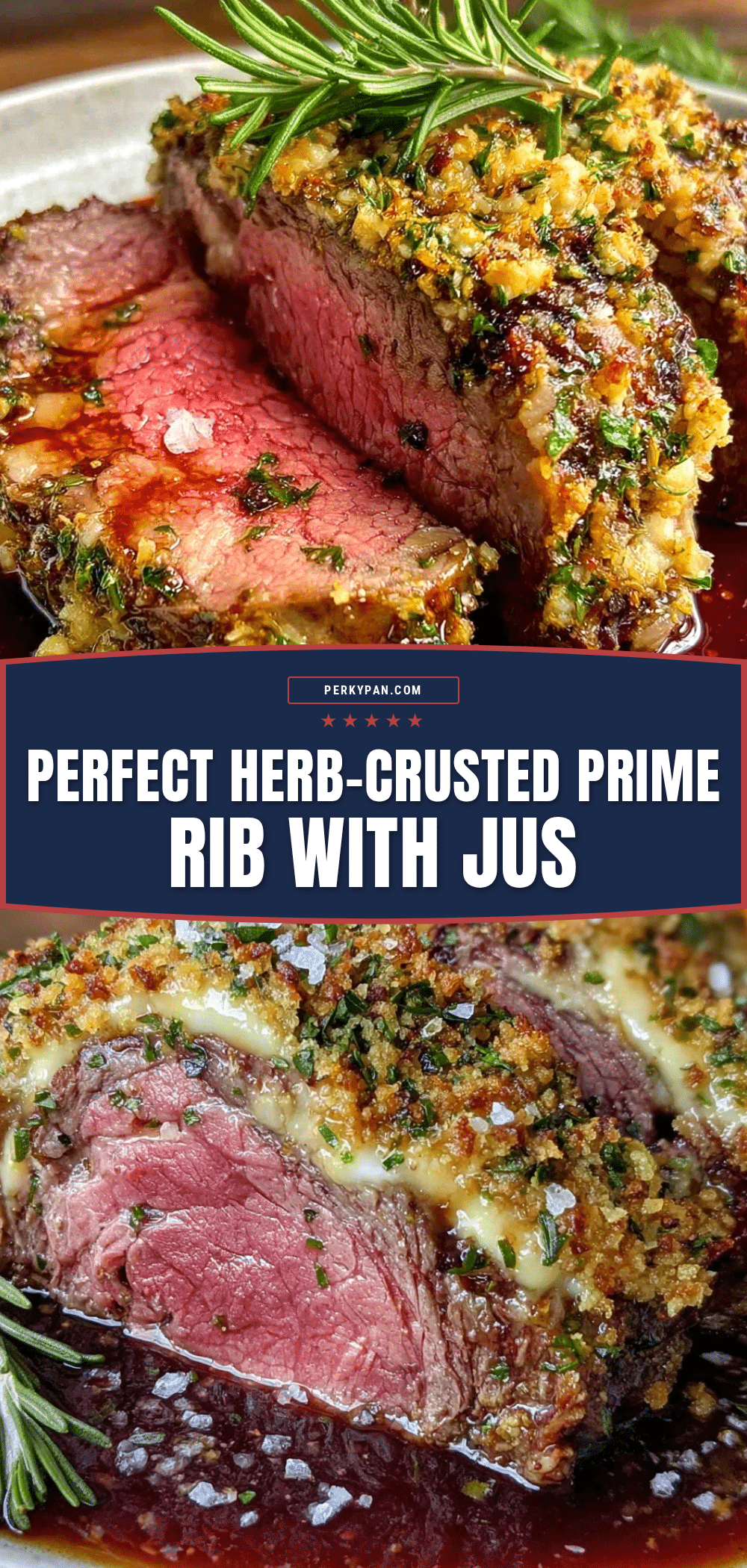
Perfect Herb-Crusted Prime Rib Recipe with Red Wine Jus
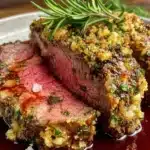
A simple yet impressive herb-crusted prime rib roast with a rich red wine jus, perfect for holidays and special occasions. This recipe delivers a juicy, tender center with a crispy herb crust and a silky, comforting sauce.
- Prep Time: 30 minutes
- Cook Time: 1 hour 30 minutes
- Total Time: 2 hours
- Yield: 6 servings 1x
- Category: Main Course
- Cuisine: American
Ingredients
- 4 to 5 pounds bone-in prime rib roast
- 2 tablespoons fresh rosemary, roughly chopped
- 1 tablespoon fresh thyme, finely chopped
- 4 cloves garlic, minced
- 3 tablespoons olive oil
- 2 tablespoons Dijon mustard
- 2 teaspoons kosher salt
- 1 teaspoon freshly ground black pepper
- 1 cup dry red wine (Cabernet Sauvignon or Merlot)
- 1 cup beef stock (low sodium if possible)
- 2 small shallots, finely chopped
- 2 tablespoons cold butter, cubed
Instructions
- Remove the roast from the refrigerator about 1 hour before cooking to bring it to room temperature. Pat dry with paper towels.
- In a mixing bowl, combine rosemary, thyme, garlic, olive oil, salt, and pepper to form a spreadable herb paste.
- Brush Dijon mustard all over the prime rib, then rub the herb paste evenly over the surface.
- Preheat oven to 450°F (230°C). Place the roast on a roasting rack in a roasting pan.
- Roast at 450°F for 20 minutes to create the crust.
- Reduce oven temperature to 325°F (165°C) and continue roasting about 15 minutes per pound for medium-rare (internal temp 130-135°F). Use a meat thermometer to check doneness.
- Remove roast from oven and tent loosely with foil. Rest for at least 20 minutes.
- While resting, heat a saucepan over medium heat with a splash of olive oil. Sauté shallots until translucent (3-4 minutes).
- Add red wine and simmer until reduced by half (8-10 minutes). Add beef stock and simmer until slightly thickened (about 10 minutes).
- Remove from heat and whisk in cold butter cubes one at a time to finish the jus.
- Slice the prime rib into thick slices and serve with red wine jus.
Notes
Bring the roast to room temperature before cooking for even doneness. Use a meat thermometer to avoid overcooking. Rest the meat for at least 20 minutes to keep it juicy. If you don’t have a roasting rack, use a bed of chopped vegetables as a makeshift rack. For dairy-free jus, omit butter and finish with olive oil.
Nutrition
- Serving Size: 1 slice (approximate
- Calories: 550
- Fat: 38
- Carbohydrates: 3
- Fiber: 0.5
- Protein: 45
Keywords: prime rib, herb crust, red wine jus, holiday roast, beef roast, dinner party, easy prime rib