Love this? Save it for later!
Share the inspiration with your friends
My friend Jenna asked me why I couldn’t just toss the citrus segments in with the greens instead of arranging them so carefully. I started to explain why that wouldn’t work—something about the weight of the oranges bruising the arugula, the juices making everything soggy. Then I stopped. Honestly, I had no real reason except that’s how I’d always done it.
So I handed her the knife and said, “Fine, you do it.” She dumped everything in a bowl, gave it a gentle toss, and you know what? It was perfect. The citrus got evenly distributed, every bite had that little burst of brightness, and the whole thing came together in half the time. I stood there feeling a little foolish, but mostly delighted. Sometimes the best lessons come from letting someone else take the lead.
That moment changed how I make this salad forever. This Bright Winter Citrus & Pomegranate Salad is the result—a recipe that’s been tested, tweaked, and absolutely perfected over countless winter dinners. It started as my attempt to bring some sunshine to dreary January days, and it’s become the thing friends request for every gathering. Maybe you’ve been there, stubbornly sticking to a method that’s more habit than necessity. I get it. But trust me on this one—this salad is worth the small rebellion.
Why You’ll Love This Recipe
Let me tell you why this Bright Winter Citrus & Pomegranate Salad has earned a permanent spot in my weekly rotation. I’ve made this for potlucks, quiet Tuesday dinners, and even a fancy New Year’s brunch—and it never fails to impress.
- Quick & Easy: Comes together in under 15 minutes. No cooking required, just a little knife work and assembly.
- Simple Ingredients: You’ll find everything at any grocery store—no specialty shops or expensive imports needed.
- Perfect for Winter: When produce feels limited, citrus and pomegranates are at their peak. This salad celebrates the season’s best.
- Crowd-Pleaser: I’ve watched people who “don’t like salad” go back for thirds. The sweet-tart combination wins everyone over.
- Unbelievably Delicious: The texture contrast alone is worth making it—crisp greens, juicy citrus, crunchy pomegranate arils, and creamy cheese all in one bite.
What makes this recipe different from the rest? It’s the balance. So many citrus salads end up either too sweet or too tart. This one hits that perfect middle ground with a honey-citrus dressing that ties everything together without overwhelming the fresh ingredients. I spent months tweaking the ratios—too much honey and it’s cloying, too much vinegar and it fights the fruit. This version is just right.
This salad isn’t just good—it’s the kind that makes you close your eyes after the first bite. It’s comfort food reimagined for people who want to eat well without sacrifice. Fresh, bright, and deeply satisfying.
What Ingredients You Will Need
This recipe uses simple, wholesome ingredients that deliver big flavor without fuss. Most are pantry staples or winter produce you can grab without a second thought.
For the Salad Base
- Mixed greens (5 ounces or 140g): I prefer a mix of arugula and baby spinach. The peppery arugula stands up to the sweet citrus beautifully. A spring mix works too.
- Navel oranges (2 large): Sweet, seedless, and easy to segment. Look for ones that feel heavy for their size—that means more juice.
- Blood oranges (2 medium): For that stunning deep red color and slightly raspberry-like flavor. If you can’t find them, use another navel orange or a cara cara.
- Pomegranate (1 large): You’ll get about 1 cup of arils. I recommend seeding it yourself—the pre-packaged ones are often dry and lack that satisfying pop.
- Feta cheese (4 ounces or 115g): Crumbled. The salty, tangy flavor contrasts perfectly with the sweet citrus. Goat cheese works beautifully too.
- Red onion (½ medium): Thinly sliced. Soak slices in cold water for 10 minutes if you want to mellow the bite.
- Pistachios (⅓ cup or 45g): Shelled and roughly chopped. Their green color and buttery crunch are perfect here. Toasted almonds or walnuts also work.
For the Honey-Citrus Dressing
- Extra virgin olive oil (3 tablespoons or 45ml): Use a good-quality one—it’s the backbone of the dressing. I like California Olive Ranch for everyday use.
- Fresh orange juice (2 tablespoons or 30ml): Squeezed from one of the oranges you’re segmenting. Fresh is non-negotiable here.
- Fresh lemon juice (1 tablespoon or 15ml): Adds brightness and helps balance the sweetness.
- Honey (1½ tablespoons or 30g): Local honey if you can get it. Maple syrup works as a vegan swap.
- Dijon mustard (1 teaspoon): Helps emulsify the dressing and adds a subtle tang.
- Salt and black pepper (to taste): I use flaky sea salt for finishing—it makes a difference.
One quick note on substitutions: if pomegranates aren’t in season, dried cranberries or fresh raspberries make a decent alternative. For a dairy-free version, skip the feta and add extra pistachios for creaminess from the healthy fats. I’ve tested this both ways and honestly, both are delicious.
Equipment Needed
You don’t need fancy tools for this salad, which is part of its charm. Here’s what you’ll want on hand:
- Large mixing bowl: Big enough to toss everything without spillage. I use my grandmother’s old ceramic one—it’s seen more salads than I can count.
- Sharp chef’s knife: A dull knife makes segmenting citrus frustrating. Trust me, I learned this the hard way after mangling three oranges in a row.
- Cutting board: Wood or plastic, whatever you prefer. Just make sure it’s stable.
- Small jar or bowl for dressing: A mason jar works perfectly for shaking up the vinaigrette. Less mess than whisking.
- Citrus juicer (optional): Helpful for extracting juice without seeds. A fork works in a pinch.
- Salad servers or tongs: For gentle tossing. Your hands work too, if you don’t mind getting a little dressed.
If you don’t have a citrus juicer, just squeeze the orange half over a small bowl and pick out any seeds with your fingers. It’s not fancy, but it gets the job done.
Preparation Method
Let me walk you through this step by step. The whole thing takes about 15 minutes, and I promise it’s worth every second.
- Prepare the dressing (5 minutes): In a small jar or bowl, combine 3 tablespoons olive oil, 2 tablespoons fresh orange juice, 1 tablespoon lemon juice, 1½ tablespoons honey, and 1 teaspoon Dijon mustard. Add a pinch of salt and a few grinds of black pepper. Screw the lid on tight and shake vigorously until emulsified, about 20 seconds. If using a bowl, whisk continuously while slowly drizzling in the oil. Taste and adjust—more honey if you like it sweeter, more lemon if you want it tangier. Set aside.
- Segment the citrus (7 minutes): Using a sharp knife, slice off the top and bottom of each orange so it sits flat on the cutting board. Cut away the peel and white pith, following the curve of the fruit. Hold the peeled orange in your non-dominant hand and carefully cut between each membrane to release the segments. Work over a bowl to catch the juices—you can use those in the dressing if you need more. Remove any seeds you find. This takes practice, so don’t stress if your first few segments look rough. They’ll still taste amazing.
- Seed the pomegranate (3 minutes): Cut the pomegranate in half crosswise. Hold one half cut-side down over a bowl and whack the skin firmly with a wooden spoon. The arils will rain down like jewels. Pick out any white pith pieces that fall in. I learned this trick from a produce vendor at my local farmers market, and it’s a game-changer—no more stained fingers or splattered juice.
- Prepare the remaining ingredients (2 minutes): Thinly slice the red onion. If you’re sensitive to raw onion’s bite, soak the slices in a bowl of cold water for 10 minutes while you prep everything else. Roughly chop the pistachios. Crumble the feta cheese.
- Assemble the salad (3 minutes): Place the mixed greens in a large bowl. Drizzle with about half the dressing and toss gently to coat. Add the citrus segments, pomegranate arils, sliced red onion, and crumbled feta. Drizzle with remaining dressing and toss very gently—you want everything distributed but not bruised. The greens should be lightly coated, not swimming in dressing.
- Finish and serve (1 minute): Sprinkle the chopped pistachios over the top. Add a final pinch of flaky sea salt and a crack of black pepper. Serve immediately while the greens are crisp and the citrus is cold.
A few things to watch for: if the dressing separates after sitting, just shake it again. If your citrus segments release a lot of juice, drain them slightly before adding to the salad to avoid a watery mess. And whatever you do, don’t overdress—you can always add more, but you can’t take it away.
Cooking Tips & Techniques
Over the years, I’ve made every mistake you can imagine with this salad. Here’s what I’ve learned so you don’t have to repeat my failures.
Master the citrus segmenting. This is the most intimidating part for most people, but it’s really not hard once you get the hang of it. The key is using a very sharp knife and taking your time. I destroyed my first few oranges—they looked like I’d attacked them with a lawnmower. Now I can segment one in under a minute. Start with the navel oranges since they’re firmer and easier to work with. Save the blood oranges for after you’ve warmed up.
Dry your greens thoroughly. Wet greens are the enemy of good salad. After washing, spin them dry in a salad spinner or pat them with paper towels. Any excess water will dilute the dressing and make everything sad. I’m speaking from experience—I once served a watery salad to dinner guests and wanted to crawl under the table.
Toast your pistachios. This is optional but transformative. Spread them in a dry skillet over medium heat for 2-3 minutes, shaking frequently until fragrant. They’ll release their oils and become incredibly nutty and crunchy. Just watch them closely—they burn fast. I’ve ruined more than one batch by walking away to answer the phone.
Dress just before serving. This salad does not keep well once dressed—the citrus juices and dressing will wilt the greens within 30 minutes. If you’re making it ahead, prep all the components separately and assemble right before serving. I keep the dressing in a jar and the greens in a bowl, then toss everything when guests arrive.
Balance your bites. When you serve yourself, try to get a little bit of everything in each forkful—a piece of citrus, a few pomegranate arils, some feta, a pistachio or two. That’s when the magic happens. The combination of textures and flavors is what makes this salad special.
Variations & Adaptations
This Bright Winter Citrus & Pomegranate Salad is endlessly adaptable. Here are some of my favorite variations:
The Creamy Avocado Version: Add one diced ripe avocado when you toss the salad. The creaminess pairs beautifully with the citrus and makes it more substantial as a main dish. I do this when I want to turn it into lunch. Just add the avocado at the very end to prevent browning.
The Protein-Packed Meal: Top with grilled chicken, seared shrimp, or crispy chickpeas to make it a complete meal. The citrus dressing works as a marinade too—I’ve brushed it on chicken thighs before grilling with excellent results. Leftover roasted salmon is also incredible here.
The Herb Lover’s Twist: Add ¼ cup fresh mint leaves and 2 tablespoons fresh dill, roughly chopped. The herbs add another layer of freshness that complements the winter citrus beautifully. This version is especially good with blood oranges.
The Dairy-Free Option: Skip the feta and add ¼ cup toasted pumpkin seeds for crunch and healthy fats. The salad is still incredibly satisfying without the cheese. I’ve also used vegan feta in a pinch—it works, though the texture is slightly different.
The Warm Weather Version: In summer, swap the citrus for ripe peaches or nectarines and use basil instead of mint. The same dressing works perfectly. It’s like having two different recipes in one.
I personally love the herb version the most. I stumbled on it when I had leftover mint from a cocktail party and decided to throw it in. Now I can’t go back.
Serving & Storage Suggestions
This salad is best served immediately, at room temperature or slightly chilled. I like to serve it as a side dish alongside roasted chicken, grilled fish, or a hearty winter soup. It’s also beautiful enough to stand alone as a light lunch or starter course.
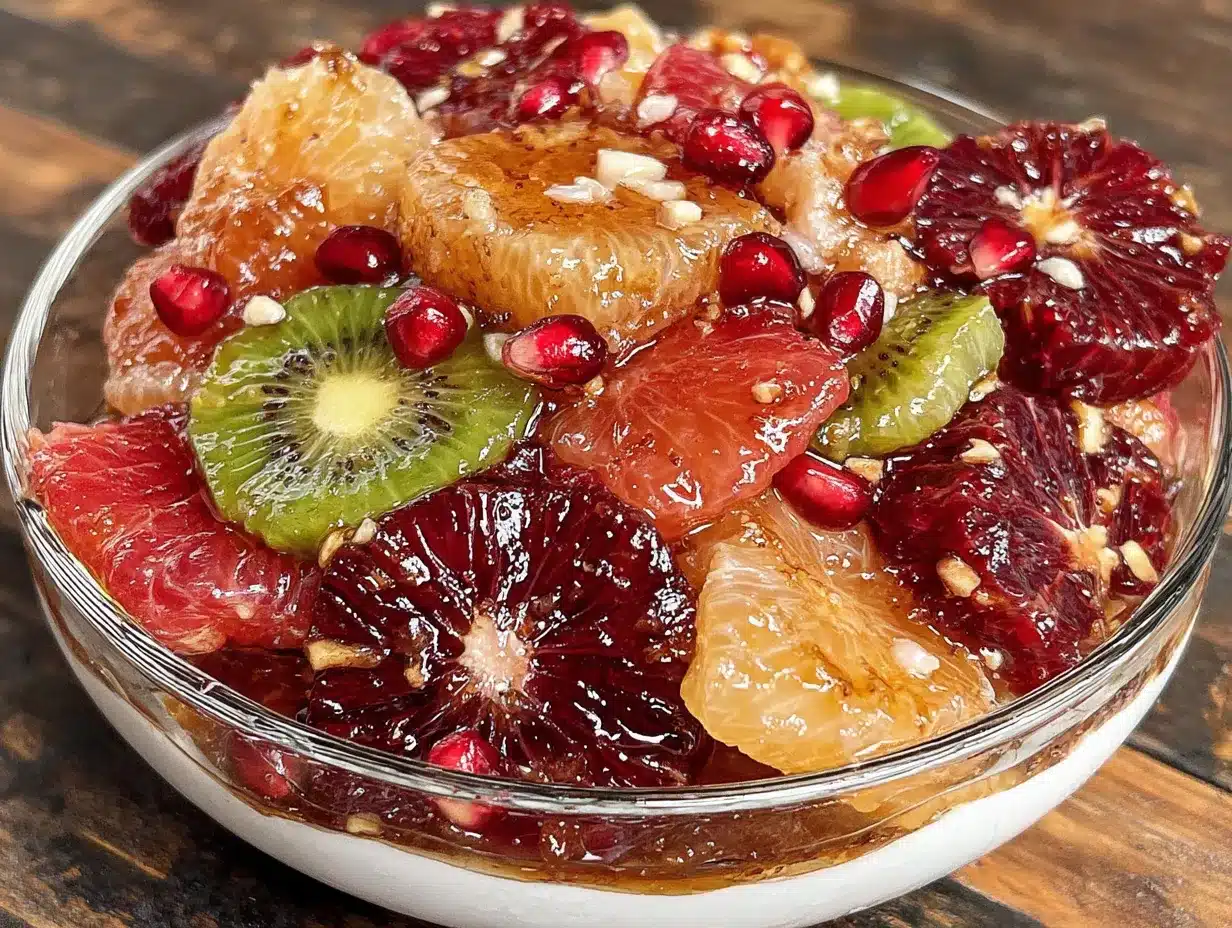
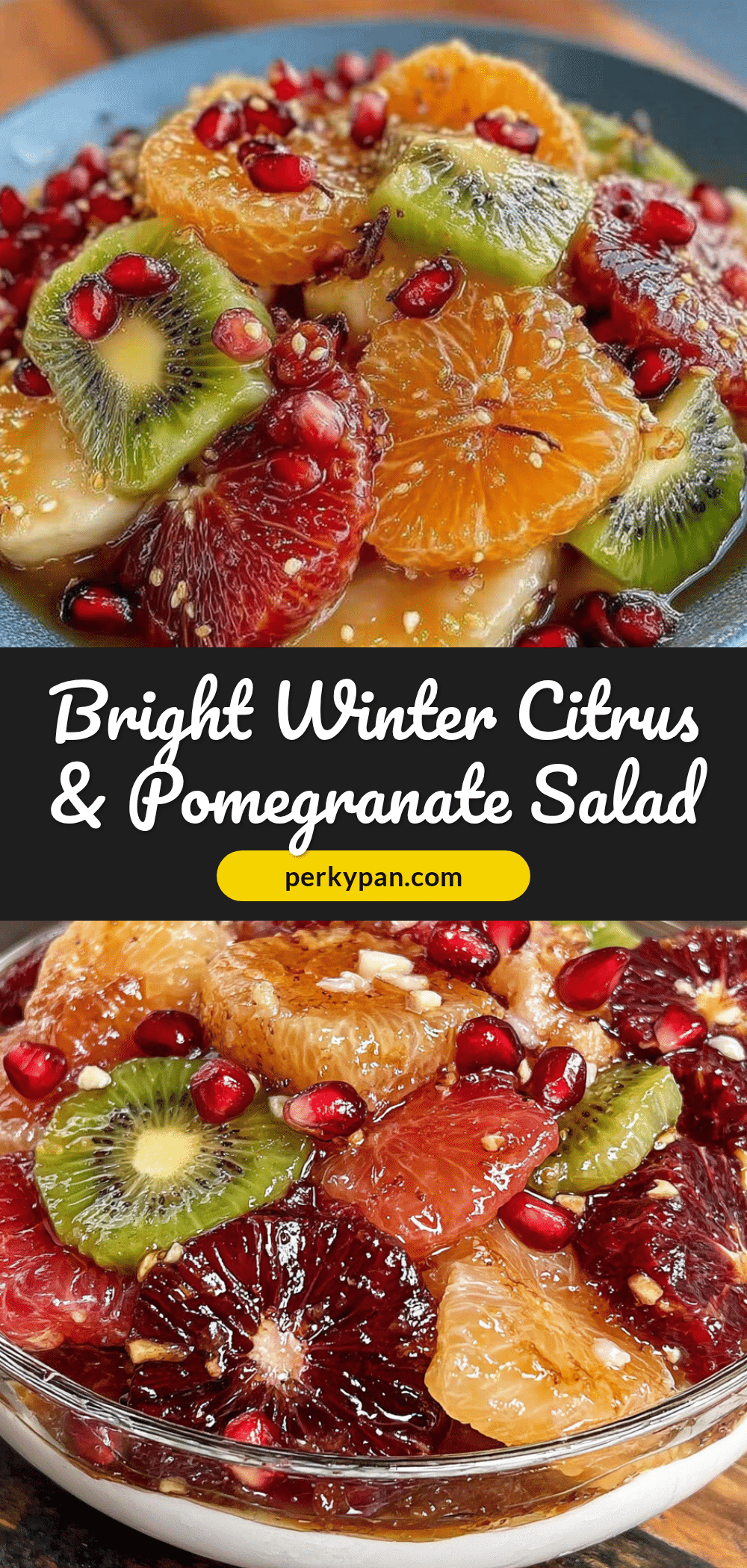
For presentation, I arrange the salad on a large white platter rather than a deep bowl. The colors really pop—bright orange citrus, ruby red pomegranate, creamy white feta, and green pistachios against the dark greens. It’s almost too pretty to eat. Almost.
If you have leftovers (which rarely happens in my house), store the undressed components separately in airtight containers in the refrigerator. The citrus segments will keep for 2-3 days, the pomegranate arils for up to a week, and the dressing for 5 days. When you’re ready to eat, just toss everything together fresh.
Do not freeze this salad. The greens will turn to mush and the citrus will lose all its texture. Trust me on this one—I learned the hard way when I tried to meal prep it for a busy week.
The flavors actually get better after the dressing sits for a day—the honey and citrus really meld together. But the greens themselves don’t hold up, so always dress fresh.
Nutritional Information & Benefits
This salad is as good for you as it is delicious. Here’s the estimated nutrition per serving (based on 4 servings):
- Calories: 285
- Protein: 7g
- Fat: 18g (mostly from olive oil, pistachios, and feta)
- Carbohydrates: 28g
- Fiber: 6g
- Sugar: 18g (natural from fruit)
- Vitamin C: 85% of daily value
- Vitamin A: 60% of daily value
The star ingredients here are doing serious work. Oranges and blood oranges are packed with vitamin C, which supports immune health—especially welcome during winter. Pomegranates are loaded with antioxidants called punicalagins, which are linked to heart health and reduced inflammation. Pistachios provide healthy fats and protein that help keep you full. And the dark leafy greens are a solid source of iron and calcium.
This salad is naturally gluten-free and can easily be made dairy-free or vegan with the swaps I mentioned. If you’re watching sodium, use less feta or skip it entirely—the dressing provides plenty of flavor on its own.
I love that I can serve this to friends with different dietary needs without anyone feeling left out. It’s wholesome eating that doesn’t taste like a compromise.
Conclusion
This Bright Winter Citrus & Pomegranate Salad has become my go-to for so many reasons. It’s quick enough for a weeknight, fancy enough for company, and healthy enough to make you feel good about what you’re eating. The colors alone are enough to chase away the winter blues.
I hope you’ll make this your own. Add more citrus if you love it, swap the nuts based on what you have, or pile on extra herbs. The best recipes are the ones you adapt to your own taste. And honestly, the more you make this, the more you’ll find your perfect version.
I’d love to hear how it turns out for you. Drop a comment below and let me know what variations you tried, or tag me in your photos if you share them online. Nothing makes my day like seeing someone else fall in love with a recipe I’ve poured my heart into.
Here’s to bright flavors, fresh ingredients, and the joy of a really good salad. Happy cooking, friends!
Frequently Asked Questions
Can I make this salad ahead of time?
You can prep all the components up to 2 days ahead—segment the citrus, seed the pomegranate, make the dressing, and wash the greens. Store everything separately in the fridge and assemble just before serving. The dressed salad doesn’t keep well, so wait until you’re ready to eat.
What can I use instead of feta cheese?
Goat cheese is my favorite substitute—it’s tangy and creamy in a similar way. You could also use shaved Parmesan, crumbled blue cheese for a bolder flavor, or skip the cheese entirely for a dairy-free version. I’ve even used ricotta salata with great results.
How do I pick a good pomegranate?
Look for one that feels heavy for its size and has firm, taut skin. The color can range from deep red to pale pink depending on the variety—that’s not a reliable indicator of ripeness. Avoid any with soft spots or cracks. A good pomegranate should feel dense and solid in your hand.
Can I use bottled lemon or orange juice?
I really don’t recommend it. Fresh juice makes a noticeable difference in the dressing—bottled juice has a flat, slightly metallic taste that doesn’t brighten the salad the same way. Since you’re already buying citrus for the segments, just squeeze one extra orange and lemon for the dressing. It takes 30 seconds and the result is worth it.
How do I keep the citrus segments from getting mushy?
The key is to segment them just before serving and drain off any excess juice before adding them to the salad. If you need to prep ahead, store the segments in a single layer on a paper towel-lined plate in the fridge. The paper towel absorbs excess moisture and keeps them firm.
Pin This Recipe!
Bright Winter Citrus & Pomegranate Salad
A quick and easy winter salad featuring bright citrus, pomegranate arils, creamy feta, and crunchy pistachios, all tossed in a honey-citrus dressing. Perfect for weeknights or special gatherings.
- Prep Time: 15 minutes
- Cook Time: 0 minutes
- Total Time: 15 minutes
- Yield: 4 servings
- Category: Salad
- Cuisine: American
Ingredients
- Mixed greens (5 ounces or 140g)
- Navel oranges (2 large)
- Blood oranges (2 medium)
- Pomegranate (1 large, about 1 cup arils)
- Feta cheese (4 ounces or 115g), crumbled
- Red onion (½ medium), thinly sliced
- Pistachios (⅓ cup or 45g), shelled and roughly chopped
- Extra virgin olive oil (3 tablespoons or 45ml)
- Fresh orange juice (2 tablespoons or 30ml)
- Fresh lemon juice (1 tablespoon or 15ml)
- Honey (1½ tablespoons or 30g)
- Dijon mustard (1 teaspoon)
- Salt and black pepper to taste
Instructions
- Prepare the dressing: In a small jar or bowl, combine olive oil, fresh orange juice, lemon juice, honey, and Dijon mustard. Add a pinch of salt and black pepper. Shake or whisk until emulsified. Set aside.
- Segment the citrus: Slice off the top and bottom of each orange. Cut away the peel and white pith. Hold the peeled orange and cut between the membranes to release segments. Work over a bowl to catch juices.
- Seed the pomegranate: Cut the pomegranate in half crosswise. Hold one half cut-side down over a bowl and whack the skin with a wooden spoon to release the arils. Pick out any white pith.
- Prepare remaining ingredients: Thinly slice the red onion. Soak in cold water for 10 minutes if desired to mellow the bite. Roughly chop the pistachios. Crumble the feta cheese.
- Assemble the salad: Place mixed greens in a large bowl. Drizzle with half the dressing and toss gently. Add citrus segments, pomegranate arils, sliced red onion, and crumbled feta. Drizzle with remaining dressing and toss gently.
- Finish and serve: Sprinkle chopped pistachios over the top. Add a pinch of flaky sea salt and black pepper. Serve immediately.
Notes
Dress just before serving to keep greens crisp. For a dairy-free version, skip the feta and add extra pistachios. Toasted pistachios add extra flavor. If pomegranates are not in season, dried cranberries or fresh raspberries can be substituted.
Nutrition
- Serving Size: 1 serving
- Calories: 285
- Sugar: 18
- Sodium: 350
- Fat: 18
- Saturated Fat: 4
- Carbohydrates: 28
- Fiber: 6
- Protein: 7
Keywords: winter salad, citrus salad, pomegranate salad, easy salad, healthy salad, holiday salad