Love this? Save it for later!
Share the inspiration with your friends
I wasn’t expecting cooking advice from my accountant, but there I was, sitting in his cramped office on a rainy Tuesday, watching him sort through a mountain of receipts while he described exactly how to make chicken noodle soup for his four kids. I’d only come in to get my taxes sorted, honestly, and I was mentally preparing for a conversation about deductions and quarterly estimates. Instead, between shuffling papers and typing numbers into his computer, he started talking about dill. Fresh dill, he insisted, not dried. “It’s the only way my kids will eat it,” he said, almost as an afterthought. I remember scribbling down his instructions on the back of an envelope while he described how the smell of simmering chicken and dill would fill his kitchen and bring everyone running. It felt so out of place—this warm, homey secret coming from a man who spent his days buried in spreadsheets. But he was so matter-of-fact about it, like this was the most important thing he’d tell me all year. And you know what? He was probably right. That conversation stuck with me, and I’ve been making his version of this easy chicken noodle soup with fresh dill ever since, tweaking it just a little to make it even more kid-friendly and budget-conscious for my own family.
This isn’t some fancy, complicated recipe. It’s the kind you make on a Sunday afternoon when you’ve got a whole chicken and some veggies that need using up. It’s the soup that gets better the next day, the one that costs pennies per serving but tastes like a hug. I messed it up the first time—added the noodles too early and they turned to mush. But even that bowl was good. There’s just something about that fresh dill, man. It’s a total game-changer. So, if you’ve been looking for a chicken noodle soup that actually gets your kids excited, or one that doesn’t break the bank, you’re in the right place. Let me tell you all about it.
Why You’ll Love This Recipe
Let’s be real for a second. Chicken noodle soup is a classic, but not all versions are created equal. Some are bland, some are watery, and some just don’t have that “oomph” that makes you want a second bowl. This one is different. I’ve tested it on my own picky eaters, my neighbor’s kids, and even my accountant’s family (he gave it two thumbs up, which is high praise from a man of few words). Here’s why it works so well for busy, budget-conscious families like ours:
- Budget-Friendly Ingredients: This soup relies on a whole chicken (often cheaper than boneless breasts), carrots, celery, onions, and a big bunch of fresh dill. No fancy creams, no expensive cuts of meat, no imported stock. You can easily feed a family of six for under fifteen bucks.
- Picky Eater Approved: The fresh dill adds a bright, almost sweet flavor that kids love. It’s not overpowering or “herby” in a weird way. It just makes the broth taste incredibly clean and comforting. My kids, who usually pick out any green thing, actually ask for extra dill now.
- Leftovers That Reheat Like a Dream: This is a huge one for me. I hate making a big pot of soup only to have it turn into a mushy, sad mess the next day. This recipe uses a trick—cooking the noodles separately and adding them to each bowl—that keeps everything perfect for days.
- Simple, No-Fuss Method: You don’t need to be a chef to make this. It’s a one-pot meal (mostly) that simmers away while you do laundry or help with homework. The hardest part is shredding the chicken, which takes about five minutes.
- Comfort Food, Reimagined: This isn’t just good soup. It’s the kind that makes you close your eyes after the first bite. The dill, the tender chicken, the perfectly cooked noodles—it all comes together in a way that feels both familiar and brand new.
So, what makes this different from every other chicken noodle soup recipe out there? It’s the dill, plain and simple. Most recipes rely on thyme, rosemary, or parsley. Those are great, but dill brings a unique freshness that cuts through the richness of the broth. It makes the whole thing feel lighter and brighter. Plus, I’ve perfected the timing so the vegetables are tender but not falling apart, and the broth is deeply flavorful without being cloudy. This isn’t just another version—it’s the one I’d serve to guests without a second thought, and the one I make when my family needs a little extra love.
What Ingredients You Will Need
This recipe uses simple, wholesome ingredients to deliver bold flavor and satisfying texture without the fuss. Most of these are pantry staples or easy to find at any grocery store. I’ve tested a few different brands and combinations, so I’ll share my honest thoughts on what works best.
- 1 whole chicken (3-4 pounds): This is the heart of the soup. A whole chicken is more affordable than boneless, skinless breasts, and the bones add incredible flavor to the broth. I usually buy whatever is on sale. If you’re in a hurry, you can use 2 pounds of bone-in, skin-on chicken thighs, but the whole bird really does make a difference.
- 2 tablespoons olive oil or butter: For sautéing the vegetables. I use olive oil most of the time, but butter adds a nice richness. Use what you have.
- 1 large yellow onion, chopped (about 1.5 cups): The base of the flavor. No need to be fancy here—just a rough chop is fine. It will soften as it cooks.
- 3 large carrots, peeled and sliced (about 1.5 cups): I like to slice them into rounds, but you can do half-moons or even a small dice. My kids prefer rounds because they’re fun to eat.
- 3 celery stalks, sliced (about 1 cup): Adds that classic soup crunch. If you have picky eaters who don’t like celery, you can grate it finely—it will melt into the broth and add flavor without the texture.
- 4 cloves garlic, minced: Fresh garlic is a must. I use a microplane for this because it’s faster and you don’t get big chunks of garlic. Jarred minced garlic works in a pinch, but fresh is better.
- 8 cups low-sodium chicken broth: I recommend using a good-quality brand like Kitchen Basics or Swanson for the best flavor. Low-sodium is key so you can control the salt level. If you’re feeling ambitious, you can use homemade stock.
- 2 cups water: This helps stretch the broth without diluting the flavor too much. You can also use all broth if you prefer a richer soup.
- 1 bay leaf: Adds a subtle, earthy note. Don’t skip it—it makes a difference.
- 1 teaspoon salt, plus more to taste: I start with a teaspoon and adjust at the end. Different broths have different salt levels, so taste as you go.
- 1/2 teaspoon black pepper: Freshly ground is best, but pre-ground works fine.
- 8 ounces wide egg noodles: These are classic for a reason. They hold up well and have a nice, chewy texture. I use the Reames frozen egg noodles when I can find them, but dried ones from the pasta aisle are perfect too.
- 1 large bunch fresh dill, chopped (about 1/2 cup packed): This is the star of the show. Don’t use dried dill—it’s a completely different flavor. Look for a bunch that’s bright green and perky, not wilted. I usually buy two bunches just to be safe, because I always end up snacking on some.
- Optional: 1 tablespoon lemon juice: A squeeze of lemon at the end brightens everything up. I add it about half the time, depending on my mood.
Substitution Guidance: If you’re gluten-free, use your favorite gluten-free egg noodles or rice noodles. For a dairy-free option, stick with olive oil instead of butter. You can also add a parmesan rind to the broth while it simmers for extra depth (just remove it before serving). If you don’t have a whole chicken, 1.5 pounds of boneless, skinless chicken breasts will work, but the broth won’t be as rich. I’ve done it in a pinch, and it’s still good, just not as flavorful.
Equipment Needed
You don’t need a lot of fancy equipment for this soup, which is part of why I love it. Here’s what you’ll need:
- Large stockpot or Dutch oven (at least 6 quarts): This is your main vessel. I use a Lodge enameled Dutch oven because it holds heat beautifully, but any heavy-bottomed pot will work. A cheap stockpot from the grocery store is fine too—just keep an eye on the heat so nothing burns on the bottom.
- Sharp chef’s knife and cutting board: For chopping the veggies and shredding the chicken. A dull knife makes everything harder and more dangerous. Trust me on this one.
- Slotted spoon or tongs: For removing the whole chicken from the pot once it’s cooked. Tongs work great for gripping the legs.
- Two forks or a hand mixer: For shredding the chicken. I usually just use two forks, but if you’re in a hurry, a hand mixer on low speed will shred the meat in about 30 seconds. Just be careful not to overdo it or you’ll end up with chicken mush.
- Small pot: For cooking the noodles separately. This is a crucial step for meal prep and leftovers.
- Fine-mesh strainer (optional): If you want a super-clear broth, you can strain it before adding the veggies back in. I usually skip this step because I don’t mind a little bit of sediment, and it’s extra work.
Maintenance tip: If you’re using a Dutch oven, avoid using metal utensils on the enamel coating. Stick with wood or silicone to prevent scratches. And for goodness’ sake, don’t put a hot pot directly into cold water—it can crack the enamel.
Preparation Method
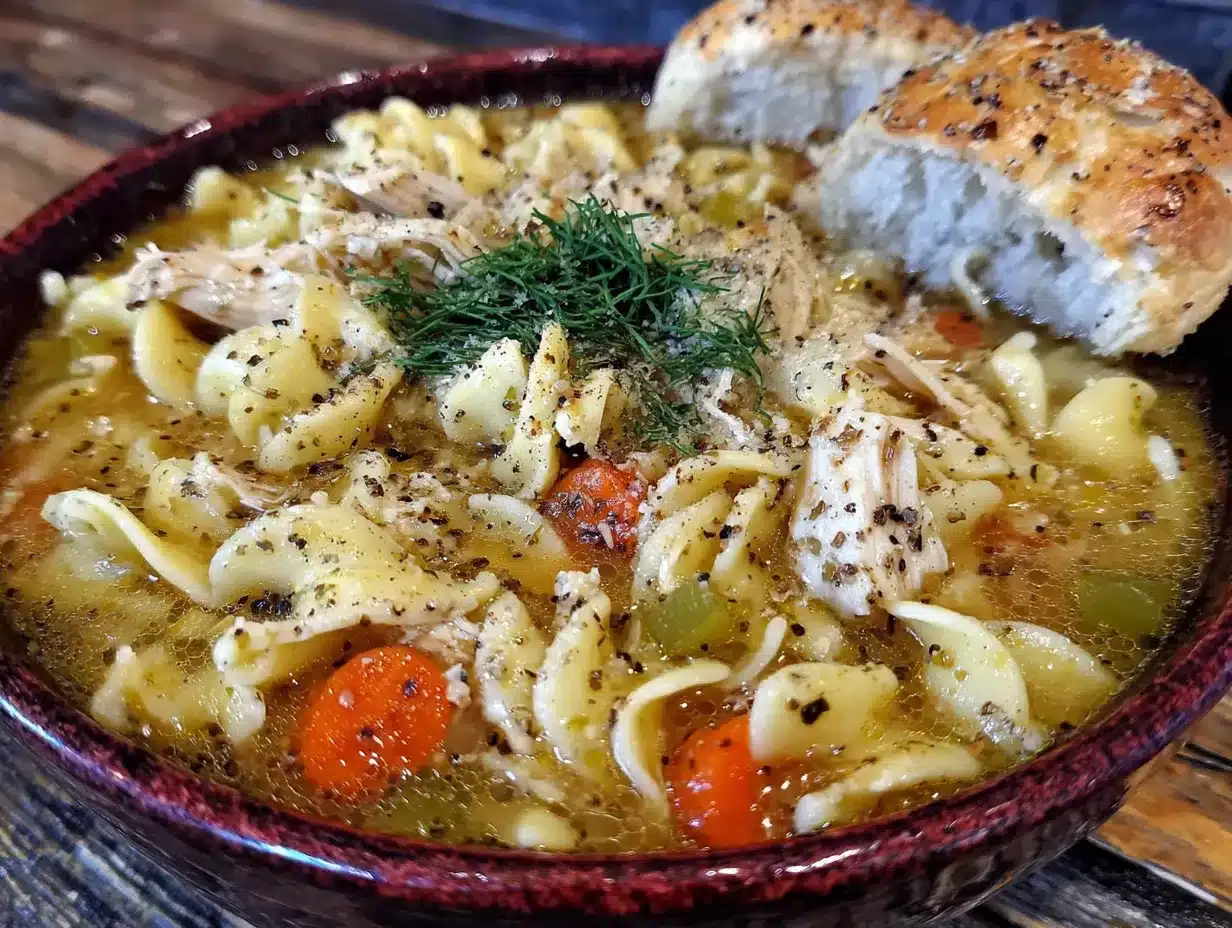
Alright, let’s get cooking. This might look like a lot of steps, but I promise it’s straightforward. I’ve broken it down so you can see the flow, and I’ve included some time estimates to help you plan.
- Prep the chicken (5 minutes): Take your whole chicken out of the fridge and let it sit on the counter for about 15 minutes to take the chill off. Remove the giblets from the cavity (if they’re in there) and pat the chicken dry with paper towels. This helps it brown better. Don’t skip the drying step—I’ve done it, and the chicken just steams instead of getting that nice golden color.
- Sauté the aromatics (10 minutes): Heat the olive oil or butter in your large stockpot over medium heat. Add the chopped onion, carrots, and celery. Cook, stirring occasionally, until the onions are translucent and the veggies start to soften, about 5-7 minutes. Add the minced garlic and cook for another 30 seconds until it’s fragrant. Don’t let the garlic burn—it gets bitter and ruins the whole pot.
- Add the chicken and liquid (5 minutes): Place the whole chicken in the pot, breast-side up. It might be a little snug, but that’s okay. Pour in the 8 cups of chicken broth and 2 cups of water. Add the bay leaf, 1 teaspoon of salt, and 1/2 teaspoon of black pepper. The liquid should almost cover the chicken—if it doesn’t, add a little more water until it’s close.
- Simmer the soup (45-60 minutes): Bring the pot to a gentle boil over medium-high heat, then reduce the heat to low so it’s at a steady simmer. Cover the pot with the lid slightly ajar to let some steam escape. Let it simmer gently for 45-60 minutes, or until the chicken is cooked through and the meat is starting to fall off the bone. You’ll know it’s done when you can easily wiggle a drumstick. Don’t let it boil hard—it will make the chicken tough and the broth cloudy.
- Remove the chicken (5 minutes): Using your tongs or a slotted spoon, carefully lift the whole chicken out of the pot and place it on a large cutting board or in a bowl. Be careful—it’s hot and heavy. Let it rest for about 10-15 minutes, or until it’s cool enough to handle. While it’s resting, you can start the next step.
- Strain and season the broth (optional, 5 minutes): If you want a super-clear broth, pour the liquid through a fine-mesh strainer into a large bowl, then return the strained broth to the pot. If you don’t care about clarity (I usually don’t), leave the veggies in the pot. Taste the broth and adjust the salt and pepper. This is where you can add a little more salt if needed—remember, the noodles will absorb some of it later.
- Shred the chicken (10 minutes): Once the chicken is cool enough to handle, use two forks to shred the meat. Discard the skin and bones. I usually separate the dark meat from the white meat because my kids prefer the white meat, but you can mix it all together. You should have about 4-5 cups of shredded chicken.
- Cook the noodles (8-10 minutes): While you’re shredding the chicken, bring a separate small pot of salted water to a boil. Add the egg noodles and cook according to package directions until al dente. Drain them in a colander and toss them with a little bit of olive oil to prevent sticking. Do not rinse them—you want that starchy coating.
- Finish the soup (5 minutes): Return the shredded chicken to the pot with the broth. Bring the soup back to a gentle simmer over medium heat. Stir in the chopped fresh dill. Let it cook for 2-3 minutes so the flavors meld. If you’re using the lemon juice, stir it in now. Taste one more time and adjust the seasoning.
- Serve it up: Ladle the soup into bowls. Add a generous handful of the cooked noodles to each bowl—don’t dump all the noodles into the pot unless you’re serving the whole thing immediately. Top with a little extra fresh dill for garnish, if you’re feeling fancy.
Troubleshooting Tip: If your soup tastes flat, it probably needs more salt or a squeeze of lemon. The dill can also be a little shy, so don’t be afraid to add more. I’ve accidentally doubled the dill before, and it was amazing. Also, if you’re short on time, you can skip simmering the whole chicken and use pre-cooked rotisserie chicken. Just simmer the veggies in the broth for 20 minutes, then add the shredded rotisserie chicken and dill. It’s faster, but the broth won’t be as rich. I do this on busy weeknights and it’s still a hit.
Cooking Tips & Techniques
I’ve made this soup more times than I can count, and I’ve learned a few things the hard way. Here are my best tips to make sure your soup turns out perfect every single time.
Don’t rush the simmer. That 45-60 minutes of gentle simmering is where the magic happens. The collagen from the chicken bones breaks down into the broth, making it silky and rich. If you’re in a hurry, you can use a pressure cooker, but honestly, the slow simmer is worth the wait. I once tried to speed things up by boiling the chicken hard, and the meat was tough and stringy. Never again.
Cook the noodles separately. This is the single most important tip for leftovers. If you add the noodles directly to the pot, they’ll keep absorbing liquid and turn into mushy, bloated pasta within a few hours. By cooking them separately and adding them to each bowl, you get perfectly cooked noodles every time. I learned this after a particularly sad batch of leftover soup that looked more like porridge than noodles.
Add the dill at the end. Fresh dill is delicate. If you boil it for too long, it loses its bright flavor and turns into a sad, brownish mess. Stir it in just before serving, and let it warm through for a couple of minutes. That’s all it needs. I’ve made the mistake of adding it at the beginning, and the soup tasted like nothing. Don’t be like me.
Taste and adjust. This is the most important rule of cooking, period. Your broth might be saltier or less salty than mine, depending on the brand you use. Your dill might be stronger or milder. Taste the soup at the end, and don’t be afraid to add more salt, pepper, or dill. It’s your soup—make it taste good to you.
Use a whole chicken for the best flavor. I know it’s a little more work, but the difference is night and day. The bones add body and flavor that you just can’t get from boneless meat. Plus, you get both white and dark meat, which makes the soup more interesting. If you’re really short on time, use bone-in, skin-on chicken thighs. They’re more forgiving and have great flavor.
Variations & Adaptations
One of the best things about this soup is how easy it is to adapt. Here are a few ways I’ve changed it up over the years, depending on what I have in the fridge or who I’m feeding.
- Vegetarian Version: Swap the chicken for a can of chickpeas or white beans, and use vegetable broth instead of chicken broth. Omit the chicken and add the beans with the dill at the end. It’s still incredibly comforting and filling. I’ve made this for a vegetarian friend, and she asked for the recipe.
- Creamy Chicken Noodle Soup: For a richer, creamier version, stir in 1/2 cup of heavy cream or full-fat coconut milk at the end, right after you add the dill. It turns the broth into a velvety, luxurious soup that’s perfect for cold winter nights. My kids call this “fancy soup.”
- Spicy Kick: Add a pinch of red pepper flakes along with the garlic, or stir in a teaspoon of sriracha at the end. The heat pairs surprisingly well with the fresh dill. I do this when I’m making the soup just for me and my husband.
- Different Noodles: Don’t have egg noodles? Use any small pasta you have on hand—orzo, ditalini, even broken spaghetti. You can also use rice or quinoa for a gluten-free option. I’ve used leftover rice before, and it was great. Just add the cooked rice to each bowl like you would the noodles.
- Add More Veggies: This soup is a great way to use up whatever vegetables are hanging out in your crisper drawer. Try adding a cup of frozen peas, some chopped zucchini, or a handful of spinach at the end. I once added a leftover sweet potato, cubed, and it was amazing. Just make sure to cut everything into small, bite-sized pieces so they cook quickly.
Serving & Storage Suggestions
This soup is best served hot, with a big hunk of crusty bread for dipping. I like to set out a small bowl of extra fresh dill so people can add more if they want. A squeeze of lemon on top is also a nice touch. For a complete meal, serve it with a simple green salad or some roasted veggies.
Storage: Store the broth, chicken, and noodles separately in airtight containers in the refrigerator. The broth and chicken will keep for up to 5 days, and the cooked noodles will keep for about 3 days. Do not store the noodles in the soup, or they’ll turn to mush. I learned this the hard way, and I don’t want you to make the same mistake.
Freezing: This soup freezes beautifully, but again, leave the noodles out. Freeze the broth and chicken in a freezer-safe container for up to 3 months. When you’re ready to eat, thaw it in the refrigerator overnight, then reheat it on the stovetop. Cook fresh noodles and add them to each bowl. The dill flavor might mellow out a bit after freezing, so you might want to add a little fresh dill when you reheat it.
Reheating: Reheat the broth and chicken in a pot over medium heat until bubbling. Add the noodles to each bowl and ladle the hot soup over them. You can also reheat individual portions in the microwave, but the noodles might get a little softer. If you’re reheating a bowl that already has noodles, add a splash of water or broth to thin it out, because the noodles will have absorbed some liquid.
One thing I love about this soup is that the flavors actually get better after a day in the fridge. The dill mellows out and melds with the chicken and broth, creating an even deeper, more comforting flavor. So don’t be afraid to make it a day ahead—it’s almost better that way.
Nutritional Information & Benefits
While I’m not a nutritionist, I can tell you that this soup is packed with good stuff. A typical serving (about 1.5 cups of soup with noodles) contains approximately:
- Calories: 350-400
- Protein: 30-35 grams
- Fat: 15-20 grams (mostly from the chicken skin and olive oil)
- Carbohydrates: 25-30 grams
- Fiber: 3-5 grams
- Sodium: 600-800 mg (depending on your broth and added salt)
Health Benefits: This soup is a powerhouse of nutrition. The chicken provides lean protein, which is essential for muscle repair and keeping you full. The carrots and celery are loaded with vitamins A and K, and the onions and garlic are great for immune support. Fresh dill is surprisingly nutritious—it’s a good source of vitamin C, manganese, and antioxidants. Plus, the warm broth is incredibly hydrating and soothing, especially when you’re feeling under the weather.
Dietary Considerations: This recipe is naturally dairy-free (if you use olive oil) and can be made gluten-free by using gluten-free noodles. It’s also low in sugar and can be part of a balanced diet. If you’re watching your sodium, use low-sodium broth and go easy on the added salt. You can also skim the fat off the top of the broth after it chills to reduce the fat content.
I’m not one to obsess over numbers, but I do feel good about feeding this to my family. It’s real food, made from simple ingredients, and it fills everyone up without weighing them down. That’s a win in my book.
Conclusion
So there you have it—my accountant’s secret recipe for the best easy chicken noodle soup with fresh dill. It’s funny where good recipes come from, isn’t it? You never know who’s going to share a little piece of kitchen wisdom that changes the way you cook. This soup has become a staple in our house, and I hope it becomes one in yours too.
Don’t be afraid to make it your own. Add more dill if you love it, throw in some extra veggies, or skip the noodles and serve it with rice. The beauty of a recipe like this is that it’s forgiving. It wants to be adapted. It wants to fit into your life, not the other way around.
I’d love to hear how it turns out for you. Did your kids gobble it up? Did you try a variation that was amazing? Drop a comment below and let me know. And if you share a photo on Pinterest or Instagram, tag me—I love seeing your creations. Now go make some soup, and don’t forget the dill!
Frequently Asked Questions
Can I use dried dill instead of fresh?
I really don’t recommend it. Dried dill has a completely different, much more muted flavor. It can sometimes taste a little bit like pickles in a way that doesn’t work as well here. Fresh dill is the star of this soup, and it’s worth seeking out. If you absolutely have to use dried, start with 1 tablespoon and add more to taste, but know that it won’t be the same.
How can I make this soup in a slow cooker?
Easy! Sauté the veggies and garlic on the stovetop first, then transfer them to the slow cooker. Add the whole chicken, broth, water, bay leaf, salt, and pepper. Cook on low for 6-8 hours or on high for 3-4 hours. Remove the chicken, shred it, and return it to the pot. Cook the noodles separately and add them to each bowl. Stir in the fresh dill just before serving.
My soup tastes bland. What did I do wrong?
Most likely, it needs more salt or a squeeze of lemon juice. Start by adding a pinch of salt and tasting it. If it still feels flat, add a little lemon. Also, make sure you’re using enough dill—it should be a noticeable flavor, not a background note. If you used low-sodium broth, you might need to add more salt than you think.
Can I use chicken breasts instead of a whole chicken?
You can, but the broth won’t be as rich. If you’re using boneless, skinless chicken breasts, I’d recommend adding a couple of chicken wings or a drumstick to the pot for extra flavor. Or, use a good-quality store-bought broth and add a splash of chicken Better Than Bouillon for depth. It’s not the same, but it’s still a solid weeknight dinner.
How do I prevent the noodles from getting mushy?
The golden rule: cook them separately and add them to each bowl. Do not dump the noodles into the pot of soup unless you’re serving the entire thing immediately. Even then, I’d recommend adding them to the bowls first and ladling the soup over them. This is the single best tip I can give you for perfect leftovers.
Pin This Recipe!
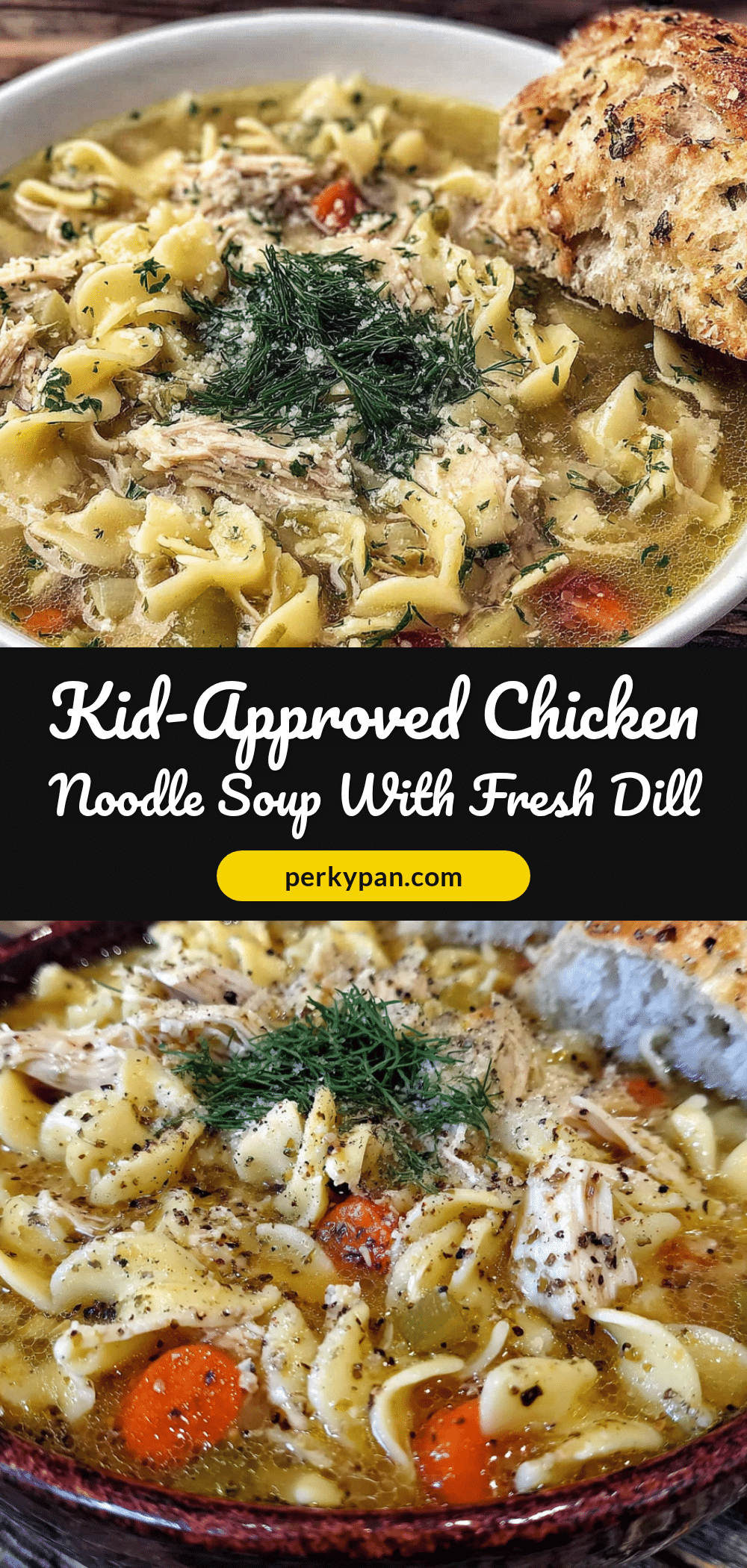
Easy Chicken Noodle Soup with Fresh Dill

This easy chicken noodle soup with fresh dill is a budget-friendly, kid-approved comfort food. Made with a whole chicken and simple ingredients, it’s a one-pot meal that tastes like a hug.
- Prep Time: 15 minutes
- Cook Time: 1 hour 10 minutes
- Total Time: 1 hour 25 minutes
- Yield: 6 servings 1x
- Category: Main Course
- Cuisine: American
Ingredients
- 1 whole chicken (3–4 pounds)
- 2 tablespoons olive oil or butter
- 1 large yellow onion, chopped (about 1.5 cups)
- 3 large carrots, peeled and sliced (about 1.5 cups)
- 3 celery stalks, sliced (about 1 cup)
- 4 cloves garlic, minced
- 8 cups low-sodium chicken broth
- 2 cups water
- 1 bay leaf
- 1 teaspoon salt, plus more to taste
- 1/2 teaspoon black pepper
- 8 ounces wide egg noodles
- 1 large bunch fresh dill, chopped (about 1/2 cup packed)
- Optional: 1 tablespoon lemon juice
Instructions
- Prep the chicken: Take the whole chicken out of the fridge and let it sit on the counter for about 15 minutes to take the chill off. Remove the giblets from the cavity and pat the chicken dry with paper towels.
- Sauté the aromatics: Heat the olive oil or butter in a large stockpot over medium heat. Add the chopped onion, carrots, and celery. Cook, stirring occasionally, until the onions are translucent and the veggies start to soften, about 5-7 minutes. Add the minced garlic and cook for another 30 seconds until fragrant.
- Add the chicken and liquid: Place the whole chicken in the pot, breast-side up. Pour in the chicken broth and water. Add the bay leaf, salt, and black pepper. The liquid should almost cover the chicken; if not, add a little more water.
- Simmer the soup: Bring the pot to a gentle boil over medium-high heat, then reduce the heat to low so it’s at a steady simmer. Cover the pot with the lid slightly ajar. Let it simmer gently for 45-60 minutes, or until the chicken is cooked through and the meat is starting to fall off the bone.
- Remove the chicken: Using tongs or a slotted spoon, carefully lift the whole chicken out of the pot and place it on a large cutting board or in a bowl. Let it rest for about 10-15 minutes, or until cool enough to handle.
- Strain and season the broth (optional): If you want a super-clear broth, pour the liquid through a fine-mesh strainer into a large bowl, then return the strained broth to the pot. If not, leave the veggies in the pot. Taste the broth and adjust the salt and pepper.
- Shred the chicken: Once the chicken is cool enough to handle, use two forks to shred the meat. Discard the skin and bones. You should have about 4-5 cups of shredded chicken.
- Cook the noodles: While shredding the chicken, bring a separate small pot of salted water to a boil. Add the egg noodles and cook according to package directions until al dente. Drain them in a colander and toss with a little olive oil to prevent sticking.
- Finish the soup: Return the shredded chicken to the pot with the broth. Bring the soup back to a gentle simmer over medium heat. Stir in the chopped fresh dill. Let it cook for 2-3 minutes so the flavors meld. If using lemon juice, stir it in now. Taste and adjust seasoning.
- Serve it up: Ladle the soup into bowls. Add a generous handful of the cooked noodles to each bowl. Top with a little extra fresh dill for garnish, if desired.
Notes
Cook the noodles separately and add them to each bowl to prevent them from getting mushy in leftovers. Add the fresh dill at the end to preserve its bright flavor. For a richer broth, use a whole chicken; for a quicker version, use rotisserie chicken. The soup tastes even better the next day.
Nutrition
- Serving Size: 1.5 cups
- Calories: 375
- Sugar: 6
- Sodium: 700
- Fat: 17.5
- Saturated Fat: 4
- Carbohydrates: 27.5
- Fiber: 4
- Protein: 32.5
Keywords: chicken noodle soup, easy chicken noodle soup, fresh dill, budget-friendly, kid-friendly, comfort food, one-pot meal