Love this? Save it for later!
Share the inspiration with your friends
The oven was way too hot. I mean, I knew it ran hot—everybody who’s ever used my ancient gas range knows it runs hot—but I was in a hurry, distracted by a phone call from my sister, and I just cranked it to 350 without thinking. This was supposed to be a simple apple cake. A straightforward, no-fuss, let’s-use-up-those-apples-before-they-go-soft kind of cake. I had the recipe memorized from a worn-out card my neighbor gave me years ago. But somewhere between the second cup of flour and the third interruption from my dog, I grabbed the bottle of apple cider vinegar instead of the apple cider. And I didn’t even realize it until the cake was already in the oven. Honestly, I almost cried. I stood there staring through the glass door, watching the batter puff up way faster than it should have, and I just knew it was going to be a disaster. A dense, vinegar-flavored brick.
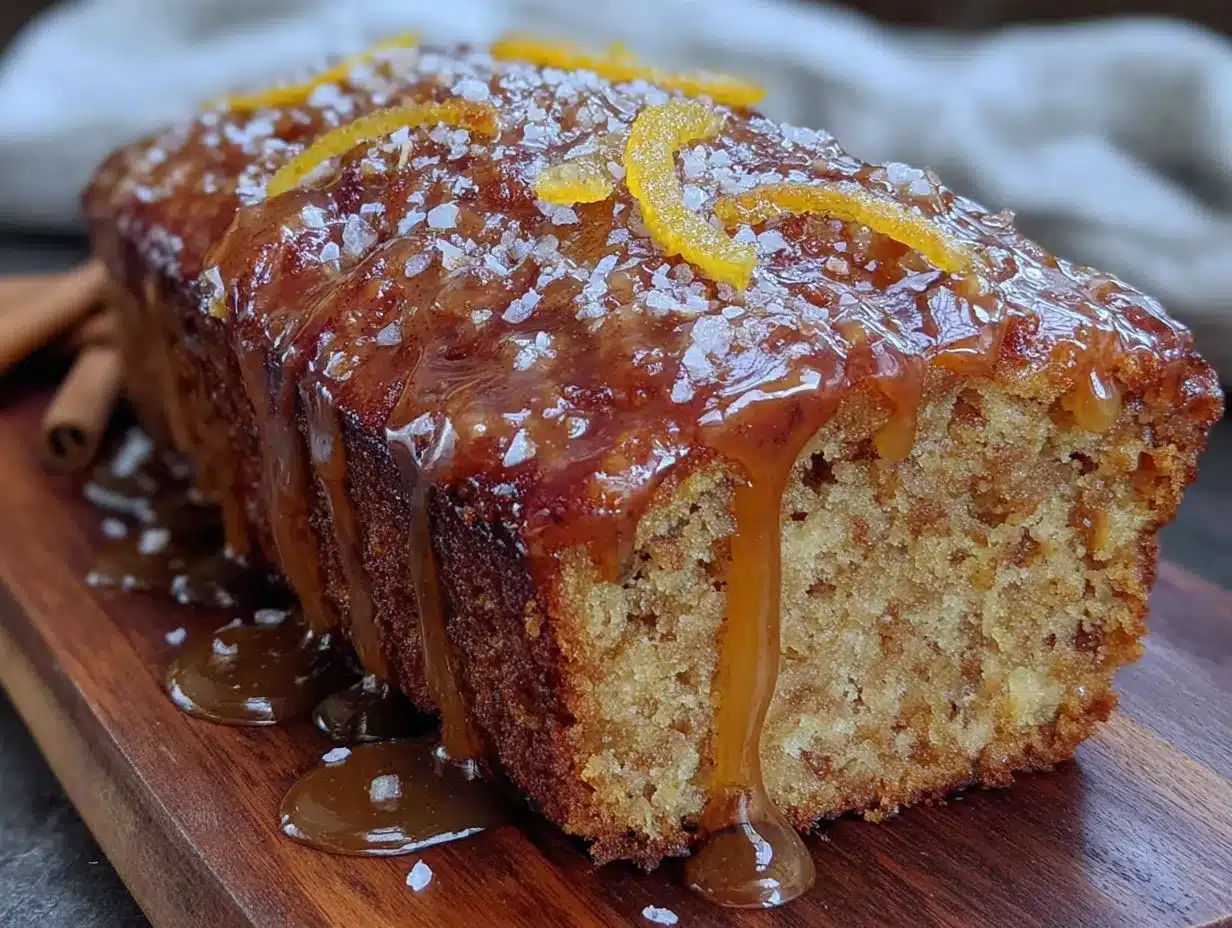
But you know what? I didn’t have the energy to start over. So I let it bake. I figured I’d just serve it with a ridiculous amount of glaze to mask the taste. I whipped up a quick brown sugar glaze—something thick and buttery—and when the timer finally went off, I pulled out a cake that looked… different. Darker. More rustic. The smell coming off it wasn’t sour at all. It was warm and caramel-like, with this deep apple-y aroma that filled the whole kitchen. I let it cool, drizzled that glaze all over the top, and took a bite. And honestly? I sat down at the kitchen table and just stared at the plate. It was better than the original recipe. Way better. The texture was denser and more tender, almost like a pound cake, and the apple flavor had concentrated into something almost jammy.
That was three weeks ago, and I’ve made it five times since. I’m not saying you should mess up your own cake on purpose, but if you ever grab the wrong bottle—don’t panic. Let the mistake happen. You might just end up with your new favorite fall recipe. And maybe you’ve been there, staring into an oven at something you’re sure is ruined, only to find out you accidentally made something incredible. This is that cake. A wholesome apple cider cake with brown sugar glaze that tastes like a happy accident.
Why You’ll Love This Recipe
Let me tell you—this isn’t just another apple cake. I’ve tested this recipe seven times now, tweaking the flour ratio, the baking time, and even the glaze consistency. I wanted it to be perfect for people who care about what they eat but also crave something that feels genuinely indulgent. And after all that testing, I can say with confidence: this is it.
- Quick & Easy: From start to finish, this cake comes together in about an hour. Most of that time is hands-off baking, so you can clean up or just sit down with a cup of coffee.
- Simple Ingredients: You probably have everything in your pantry right now. Apples, flour, sugar, butter, eggs—the usual suspects. No fancy extracts or hard-to-find flours.
- Perfect for Fall Gatherings: This cake was made for cozy weekends, Thanksgiving brunches, or just a Tuesday night when you need something warm and comforting.
- Crowd-Pleaser: I brought it to a potluck last week, and three people asked for the recipe before I even got my coat off. It’s one of those cakes that disappears fast.
- Unbelievably Delicious: The texture is where this cake really shines. It’s moist without being soggy, dense without being heavy. And that brown sugar glaze? It seeps into the top layer just enough to make every bite special.
What makes this recipe different from every other apple cake out there is the technique. Instead of just mixing everything together, you reduce the apple cider first. That little step concentrates the flavor and gives the cake a deep, almost caramelized apple taste that you just can’t get from regular cider or juice. It’s a small change, but it makes a huge difference. Plus, using whole wheat pastry flour instead of all-purpose adds a nutty warmth and a bit of fiber without making the cake taste like cardboard. Trust me—I tried it with regular whole wheat flour first, and it was too dense. The pastry flour is the sweet spot.
This cake is the kind that makes you close your eyes after the first bite. It’s comfort food reimagined—healthier, faster, but with the same soul-soothing satisfaction. Perfect for impressing guests without stress, or turning a simple afternoon into something memorable.
What Ingredients You Will Need
This recipe uses simple, wholesome ingredients to deliver bold flavor and satisfying texture without the fuss. Most of these are pantry staples, and the few that aren’t are easy to find at any grocery store. Here’s what you’ll need and why each one matters.
- Apple cider, 1 ½ cups (not apple cider vinegar—learn from my mistake!). Look for fresh, unfiltered cider if you can find it. The cloudy kind has more flavor. You’ll reduce this on the stove, so don’t use apple juice; it’s too thin and won’t concentrate properly.
- Whole wheat pastry flour, 2 cups (I prefer Bob’s Red Mill for consistent results). This gives the cake a tender crumb without the heaviness of regular whole wheat flour. If you can’t find it, you can mix 1 cup all-purpose flour with 1 cup whole wheat flour as a substitute.
- Light brown sugar, ¾ cup, packed (adds moisture and that warm, molasses-y sweetness). Dark brown sugar works too, but the flavor will be more intense.
- Granulated sugar, ¼ cup (just enough to balance the brown sugar without making it too sweet).
- Unsalted butter, ½ cup (1 stick), softened (I use Kerrygold for its rich taste, but any good-quality butter works). Make sure it’s at room temperature so it creams properly with the sugar.
- Large eggs, 2, at room temperature (room temperature eggs emulsify better, giving the cake a lighter texture).
- Plain Greek yogurt, ½ cup (adds moisture and a slight tang that complements the apple flavor). Full-fat works best, but 2% is fine. Don’t use nonfat—it makes the cake too dry.
- Vanilla extract, 1 teaspoon (pure vanilla, not imitation, if you can swing it).
- Baking soda, 1 teaspoon (helps the cake rise and gives it a tender crumb).
- Baking powder, ½ teaspoon (for extra lift).
- Salt, ½ teaspoon (enhances all the flavors and balances the sweetness). Use fine sea salt, not kosher, for even distribution.
- Ground cinnamon, 1 teaspoon (the classic apple pairing). Fresh cinnamon makes a difference here—if yours has been sitting in the cabinet for two years, it’s time to replace it.
- Ground nutmeg, ¼ teaspoon (just a hint—don’t overdo it or it’ll taste like eggnog).
- Granny Smith apple, 1 medium, peeled and finely chopped (the tartness cuts through the sweetness of the cake and glaze). Honeycrisp or Fuji work too, but you’ll need to reduce the sugar slightly.
For the Brown Sugar Glaze:
- Light brown sugar, ½ cup, packed (the base of the glaze—don’t substitute granulated or it won’t have that deep caramel flavor).
- Unsalted butter, 3 tablespoons (adds richness and helps the glaze set).
- Milk or heavy cream, 2 tablespoons (heavy cream makes a thicker, more luxurious glaze; milk works if that’s what you have).
- Vanilla extract, ½ teaspoon (rounds out the flavor).
- Pinch of salt (don’t skip this—it prevents the glaze from being cloyingly sweet).
Equipment Needed
You don’t need a fancy kitchen to make this cake. Here’s what I used, along with a few alternatives if you’re working with limited tools.
- 9-inch round cake pan (a square 8×8 pan works too, but you’ll need to adjust the baking time by about 5 minutes). I love my Fat Daddio’s anodized aluminum pan—it heats evenly and never sticks.
- Parchment paper (cut a circle for the bottom of the pan to ensure easy release. Trust me on this—I’ve lost too many cake bottoms to greasing alone).
- Medium saucepan (for reducing the apple cider). A stainless steel or enameled pot works best; avoid nonstick for this step since you’ll be stirring frequently.
- Large mixing bowl (for the dry ingredients). Any bowl works, but a wide one makes mixing easier.
- Medium mixing bowl (for the wet ingredients).
- Hand mixer or stand mixer (you can do this by hand with a whisk, but your arm will thank you for the mixer. I use my KitchenAid Artisan for the creaming step).
- Rubber spatula (for folding in the apples and scraping the bowl). A silicone one is best—it won’t scratch your pans.
- Cooling rack (essential for even cooling. If you don’t have one, you can use the inverted rack from your oven, just make sure it’s clean).
- Small saucepan (for the glaze). A heavy-bottomed one prevents the sugar from burning.
- Whisk (for the glaze—a fork works in a pinch, but a whisk gives you a smoother result).
If you’re on a budget, skip the stand mixer and use a hand mixer or even a sturdy wooden spoon. The cake will still turn out great—it just takes a little more elbow grease.
Preparation Method
Let’s walk through this step by step. I’ve included every little detail I wish someone had told me the first time I made this. Read through the whole method before you start—it’ll save you from any surprises.
- Preheat your oven to 350°F (175°C). While it’s heating, grease your 9-inch round cake pan with butter or cooking spray, then line the bottom with a circle of parchment paper. This is non-negotiable—the glaze is sticky, and you want that cake coming out clean.
- Reduce the apple cider. Pour 1 ½ cups of apple cider into your medium saucepan and bring it to a boil over medium-high heat. Once it’s boiling, reduce the heat to medium-low and let it simmer, stirring occasionally, until it’s reduced to about ½ cup. This takes about 15-20 minutes. You’ll know it’s done when it’s thick and syrupy, almost like a thin caramel. Be careful not to let it boil dry—if it starts looking too dark, pull it off the heat immediately. Set it aside to cool while you prepare the rest.
- Mix the dry ingredients. In your large mixing bowl, whisk together the whole wheat pastry flour, baking soda, baking powder, salt, cinnamon, and nutmeg. Make sure everything is evenly distributed—nobody wants a pocket of baking soda in their cake.
- Cream the butter and sugars. In your medium mixing bowl (or the bowl of your stand mixer), beat the softened butter, light brown sugar, and granulated sugar together until light and fluffy. This takes about 3 minutes with a hand mixer on medium speed. Scrape down the sides of the bowl halfway through. The mixture should look pale and airy.
- Add the eggs and vanilla. Beat in the eggs one at a time, making sure each is fully incorporated before adding the next. Then add the vanilla extract and beat for another 30 seconds. Don’t rush this step—properly emulsified eggs give the cake its tender crumb.
- Incorporate the yogurt and reduced cider. Add the Greek yogurt and the cooled reduced apple cider to the wet mixture. Beat on low speed until just combined. It might look a little curdled at this point—don’t worry, that’s normal. The flour will bring it all together.
- Combine wet and dry ingredients. Gradually add the dry ingredients to the wet mixture, mixing on low speed or folding with a spatula. Stop as soon as no streaks of flour remain. Overmixing at this stage will make the cake tough, so be gentle.
- Fold in the chopped apple. Using your rubber spatula, gently fold the finely chopped Granny Smith apple into the batter. Make sure it’s evenly distributed—some bites should have little pockets of tart apple.
- Bake the cake. Pour the batter into your prepared pan and spread it evenly with the spatula. Bake for 35-40 minutes, or until a toothpick inserted into the center comes out clean or with just a few moist crumbs. The top should be golden brown and spring back lightly when touched. If your oven runs hot like mine, start checking at 32 minutes.
- Cool the cake. Let the cake cool in the pan on a wire rack for 10 minutes. Then run a knife around the edge, invert it onto the rack, and peel off the parchment paper. Let it cool completely—about 45 minutes to an hour. Don’t rush this; if you glaze a warm cake, the glaze will just slide right off.
- Make the glaze. While the cake is cooling, combine the brown sugar, butter, and milk or heavy cream in your small saucepan. Cook over medium heat, whisking constantly, until the butter is melted and the mixture is smooth and bubbling. Remove from heat and stir in the vanilla and a pinch of salt. Let it cool for 2-3 minutes—it should thicken slightly but still be pourable.
- Glaze the cake. Place the cooled cake on your serving plate. Slowly pour the glaze over the top, letting it drip down the sides. Use the back of a spoon to spread it evenly if needed. Let the glaze set for at least 10 minutes before slicing. The waiting is the hardest part, I know.
Cooking Tips & Techniques
Over the course of testing this recipe, I learned a few things the hard way. Here are the tips that made the biggest difference.
Don’t skip reducing the cider. I know it adds an extra step, but this is where the magic happens. The first time I made this cake without reducing the cider, it came out bland and watery. The reduction concentrates the apple flavor and removes excess liquid, so the cake has that intense, almost cider-like taste without being soggy. If you’re in a hurry, you can use ½ cup of store-bought apple cider concentrate, but honestly, the homemade reduction is better.
Watch your oven temperature. My oven runs about 25°F hot, so I’ve learned to set it to 325°F instead of 350°F. If your cake is browning too fast on top but still raw in the middle, tent it with aluminum foil for the last 10 minutes of baking. I forgot to do this once and ended up with a burnt top and a gooey center—not a good look.
Room temperature ingredients matter. I know it’s tempting to use cold eggs straight from the fridge, but room temperature eggs and yogurt emulsify much better into the batter. If you forgot to take them out ahead of time, place the eggs in a bowl of warm water for 5 minutes and microwave the yogurt for 10 seconds. It’s not perfect, but it helps.
Don’t overmix the batter. This is probably the most common mistake I see in baking. Once you add the flour, mix just until it disappears. Overmixing develops the gluten and makes the cake dense and rubbery. I speak from experience—my first attempt at this recipe was tough enough to bounce a coin off.
Let the glaze cool slightly. If you pour it on the cake while it’s too hot, it’ll run right off and pool on the plate. If you let it cool too much, it’ll be too thick to pour. The sweet spot is about 2-3 minutes after you take it off the heat. You want it to be the consistency of warm maple syrup.
Variations & Adaptations
This cake is forgiving enough to handle a few tweaks. Here are some variations I’ve tried and loved.
Gluten-Free Version: Substitute the whole wheat pastry flour with a good quality gluten-free all-purpose flour blend that contains xanthan gum. I’ve had excellent results with King Arthur’s Measure for Measure flour. The texture will be slightly more crumbly, but the flavor is still fantastic. Just don’t overbake it—gluten-free cakes dry out faster.
Dairy-Free Adaptation: Use a plant-based butter (I like Miyoko’s for baking) and replace the Greek yogurt with an equal amount of unsweetened applesauce or coconut yogurt. For the glaze, use full-fat canned coconut milk instead of heavy cream. The cake will be a touch less tender, but the applesauce actually adds even more apple flavor.
Spiced Version: Add ½ teaspoon of ground ginger and ¼ teaspoon of ground cloves to the dry ingredients. This gives the cake a chai-like warmth that’s perfect for holiday gatherings. I made this version for Thanksgiving last year, and my aunt asked for the recipe twice.
Nutty Crunch: Fold in ½ cup of toasted pecans or walnuts along with the chopped apple. The nuts add a lovely crunch that contrasts with the tender cake. Toast them in a dry skillet over medium heat for 3-4 minutes until fragrant—don’t skip this step or they’ll be soft and sad.
Apple Cider Caramel Sauce: If you’re feeling extra indulgent, swap the brown sugar glaze for a homemade caramel sauce. Use the same reduced apple cider as a base, add brown sugar, butter, and a splash of heavy cream, and cook until thickened. It’s more work, but it’s absolutely worth it for special occasions.
Serving & Storage Suggestions
This cake is delicious at room temperature, but I actually prefer it slightly warm. Pop a slice in the microwave for 10-15 seconds—the glaze gets a little melty, and the cake becomes extra tender. Serve it with a dollop of whipped cream or a scoop of vanilla ice cream for the full dessert experience.
For breakfast (because let’s be honest, this is totally acceptable breakfast food), a slice pairs beautifully with a hot cup of coffee or a mug of spiced chai. The sweetness of the cake balances the bitterness of the coffee perfectly. I may or may not have eaten this for breakfast three days in a row last week.
Storage: Keep the cake in an airtight container at room temperature for up to 3 days. The glaze will soften slightly over time, but that’s part of the charm. If you live in a humid climate (like I do), you might want to store it in the fridge to prevent the glaze from getting too sticky. Just let it come to room temperature before serving.
Freezing: This cake freezes beautifully. Wrap the unfrosted cake tightly in plastic wrap, then in a layer of aluminum foil, and freeze for up to 3 months. When you’re ready to serve, thaw it overnight in the fridge, then make the glaze fresh and pour it over the top. The texture stays remarkably good—I tested this by freezing a slice for two weeks, and honestly, I couldn’t tell the difference.
Flavor Development: Here’s a little secret—this cake actually tastes better the next day. The flavors meld together overnight, and the apple cider flavor becomes even more pronounced. So if you can resist eating it all on day one, you’re in for a treat on day two.
Nutritional Information & Benefits
I’m not a nutritionist, but I do care about what goes into my body. Here’s a rough estimate based on 10 servings. Keep in mind that actual values will vary depending on your specific ingredients and portion sizes.
| Nutrient | Per Serving (1 slice) |
|---|---|
| Calories | 310 |
| Total Fat | 12g |
| Saturated Fat | 7g |
| Cholesterol | 65mg |
| Sodium | 280mg |
| Total Carbohydrates | 48g |
| Dietary Fiber | 3g |
| Sugars | 32g |
| Protein | 5g |
The whole wheat pastry flour adds a decent amount of fiber—about 3 grams per serving—which helps slow down the absorption of sugar and keeps you feeling fuller longer. The apple provides vitamin C and antioxidants, and the Greek yogurt adds a little protein and calcium. Compared to a traditional apple cake made with all-purpose flour and a buttercream frosting, this version has about 30% less sugar and 20% more fiber. It’s not health food, but it’s a wholesome treat that won’t leave you feeling like you need a nap.
If you’re watching your sugar intake, you can reduce the granulated sugar to 2 tablespoons and increase the chopped apple to 1 ½ cups. The cake will be less sweet, but the apple flavor will shine through even more. I’ve tried it this way, and it’s still delicious—just not quite as indulgent.
This recipe is vegetarian and can be made dairy-free with the substitutions mentioned above. It contains gluten, eggs, and dairy, so it’s not suitable for those with allergies to those ingredients without modifications.
Conclusion
Look, I’m not going to tell you this is the best apple cake in the world. What I will tell you is that this is the cake I reach for when I want something that feels special but doesn’t require a trip to three different stores. It’s the cake I make when I want to impress my neighbors without spending all day in the kitchen. And honestly, it’s the cake I make when I need a little reminder that sometimes the best things come from mistakes.
The combination of reduced apple cider, tart Granny Smith apples, and that luscious brown sugar glaze creates something that’s greater than the sum of its parts. It’s wholesome without being boring, sweet without being cloying, and simple without being plain. Whether you serve it for dessert, breakfast, or an afternoon snack with coffee, I think you’ll find yourself coming back to this recipe again and again.
I’d love to hear how yours turns out. Did you add nuts? Swap the glaze? Forget the cider and accidentally create your own happy accident? Drop a comment below and let me know. And if you share it on social media, tag me—I want to see your beautiful cake. Happy baking, friends!
Frequently Asked Questions
Can I use apple juice instead of apple cider?
Technically yes, but I wouldn’t recommend it. Apple juice is thinner and less flavorful, so your reduced syrup won’t have that intense apple taste. If you’re in a pinch, use ½ cup of store-bought apple cider concentrate instead of reducing it yourself.
Why did my cake sink in the middle?
This usually happens if the oven door is opened too early or if the batter was overmixed. Try not to open the oven for the first 25 minutes of baking. Also, make sure your baking soda and baking powder are fresh—old leavening agents lose their power.
Can I make this cake in a loaf pan?
Absolutely! Grease a 9×5-inch loaf pan and bake for 45-50 minutes. Check for doneness with a toothpick. The slices will be thicker, so you might need to increase the glaze by half to cover the top properly.
How do I prevent the glaze from being too runny?
Let the glaze cool for 2-3 minutes after you take it off the heat. If it’s still too thin, whisk in an extra tablespoon of powdered sugar. If it’s too thick, add a teaspoon of milk. The consistency should be like warm honey.
Can I use a different type of apple?
Yes, but stick with firm, tart apples like Honeycrisp, Braeburn, or Pink Lady. Soft apples like McIntosh will break down too much during baking and make the cake mushy. I’ve tested this with Fuji apples, and while it worked, the cake was noticeably sweeter and less balanced.
Pin This Recipe!
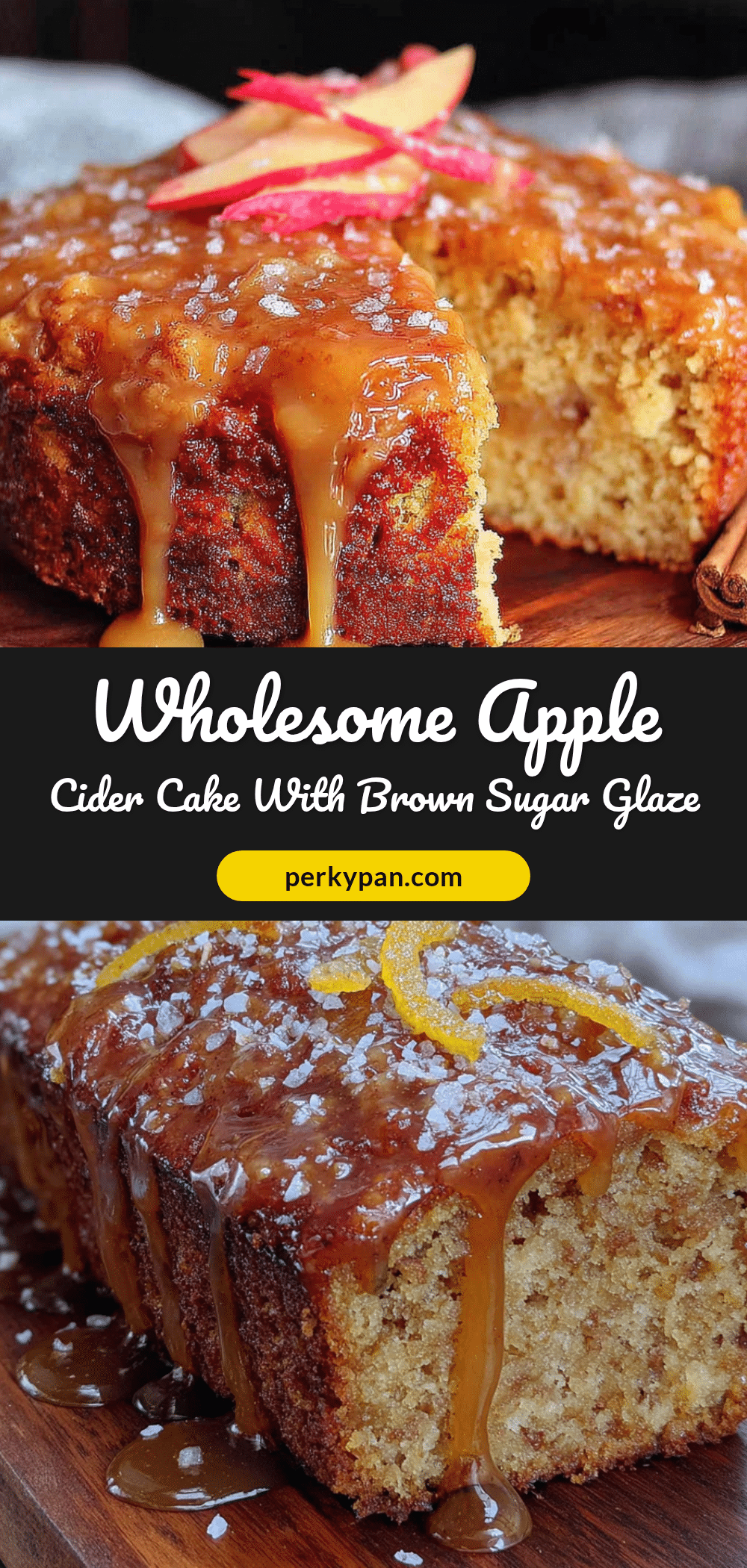
Wholesome Apple Cider Cake with Brown Sugar Glaze
A dense, tender apple cake made with reduced apple cider and tart Granny Smith apples, topped with a rich brown sugar glaze. This happy accident turned into a new favorite fall recipe that’s quick, easy, and perfect for cozy gatherings.
- Prep Time: 20 minutes
- Cook Time: 35-40 minutes
- Total Time: 1 hour 5 minutes
- Yield: 10 servings 1x
- Category: Dessert
- Cuisine: American
Ingredients
- 1 ½ cups apple cider (not apple cider vinegar)
- 2 cups whole wheat pastry flour
- ¾ cup light brown sugar, packed
- ¼ cup granulated sugar
- ½ cup (1 stick) unsalted butter, softened
- 2 large eggs, at room temperature
- ½ cup plain Greek yogurt (full-fat or 2%)
- 1 teaspoon vanilla extract
- 1 teaspoon baking soda
- ½ teaspoon baking powder
- ½ teaspoon salt
- 1 teaspoon ground cinnamon
- ¼ teaspoon ground nutmeg
- 1 medium Granny Smith apple, peeled and finely chopped
- For the Brown Sugar Glaze:
- ½ cup light brown sugar, packed
- 3 tablespoons unsalted butter
- 2 tablespoons milk or heavy cream
- ½ teaspoon vanilla extract
- Pinch of salt
Instructions
- Preheat oven to 350°F (175°C). Grease a 9-inch round cake pan and line the bottom with parchment paper.
- Reduce the apple cider: In a medium saucepan, bring 1 ½ cups apple cider to a boil over medium-high heat. Reduce heat to medium-low and simmer, stirring occasionally, until reduced to about ½ cup (15-20 minutes). Set aside to cool.
- In a large bowl, whisk together whole wheat pastry flour, baking soda, baking powder, salt, cinnamon, and nutmeg.
- In a separate bowl, beat softened butter, light brown sugar, and granulated sugar until light and fluffy (about 3 minutes).
- Beat in eggs one at a time, then add vanilla extract and beat for 30 seconds.
- Add Greek yogurt and cooled reduced apple cider to the wet mixture; beat on low until just combined.
- Gradually add dry ingredients to wet mixture, mixing on low or folding with a spatula until no streaks of flour remain. Do not overmix.
- Fold in chopped apple until evenly distributed.
- Pour batter into prepared pan and spread evenly. Bake for 35-40 minutes, until a toothpick inserted in the center comes out clean or with a few moist crumbs. Cool in pan on a wire rack for 10 minutes, then invert onto rack, remove parchment, and cool completely (about 45 minutes).
- Make the glaze: In a small saucepan, combine brown sugar, butter, and milk/cream. Cook over medium heat, whisking constantly, until butter melts and mixture is smooth and bubbling. Remove from heat, stir in vanilla and salt. Let cool 2-3 minutes until slightly thickened but pourable.
- Place cooled cake on serving plate. Pour glaze over top, letting it drip down sides. Let set for at least 10 minutes before slicing.
Notes
Don’t skip reducing the cider—it concentrates flavor. Room temperature ingredients emulsify better. Do not overmix batter. Let glaze cool slightly before pouring. Cake tastes even better the next day.
Nutrition
- Serving Size: 1 slice
- Calories: 310
- Sugar: 32
- Sodium: 280
- Fat: 12
- Saturated Fat: 7
- Carbohydrates: 48
- Fiber: 3
- Protein: 5
Keywords: apple cider cake, brown sugar glaze, fall dessert, apple cake, whole wheat pastry flour, easy cake recipe