Love this? Save it for later!
Share the inspiration with your friends
It was 11:47 PM on a random Wednesday in October, and I had a very specific craving for cheesecake. Not just any cheesecake — the kind with that velvety, dense, almost-too-rich texture that makes you close your eyes after the first bite. The problem? I didn’t have a full block of cream cheese, and the idea of a standard graham cracker crust felt… boring. But I had a can of pumpkin puree in the back of the pantry, a half-empty bag of gingersnaps from a party I’d hosted weeks ago, and this wild idea that maybe, just maybe, I could make this work without the usual pound of guilt.
Honestly, I wasn’t even sure it would set properly. I mean, swapping out some of the cream cheese for pumpkin and cottage cheese? That sounded like something you’d try at 11 PM when your judgment is slightly fuzzy and you’re too tired to care about failure. The kitchen was a mess — a cracked measuring cup I’d forgotten to throw out, a dusting of gingersnap crumbs on every surface, and me, standing there with a whisk in one hand, questioning my life choices. But something about the late hour loosened the usual rules. I wasn’t trying to impress anyone. I was just trying to satisfy that craving without feeling terrible about it in the morning.
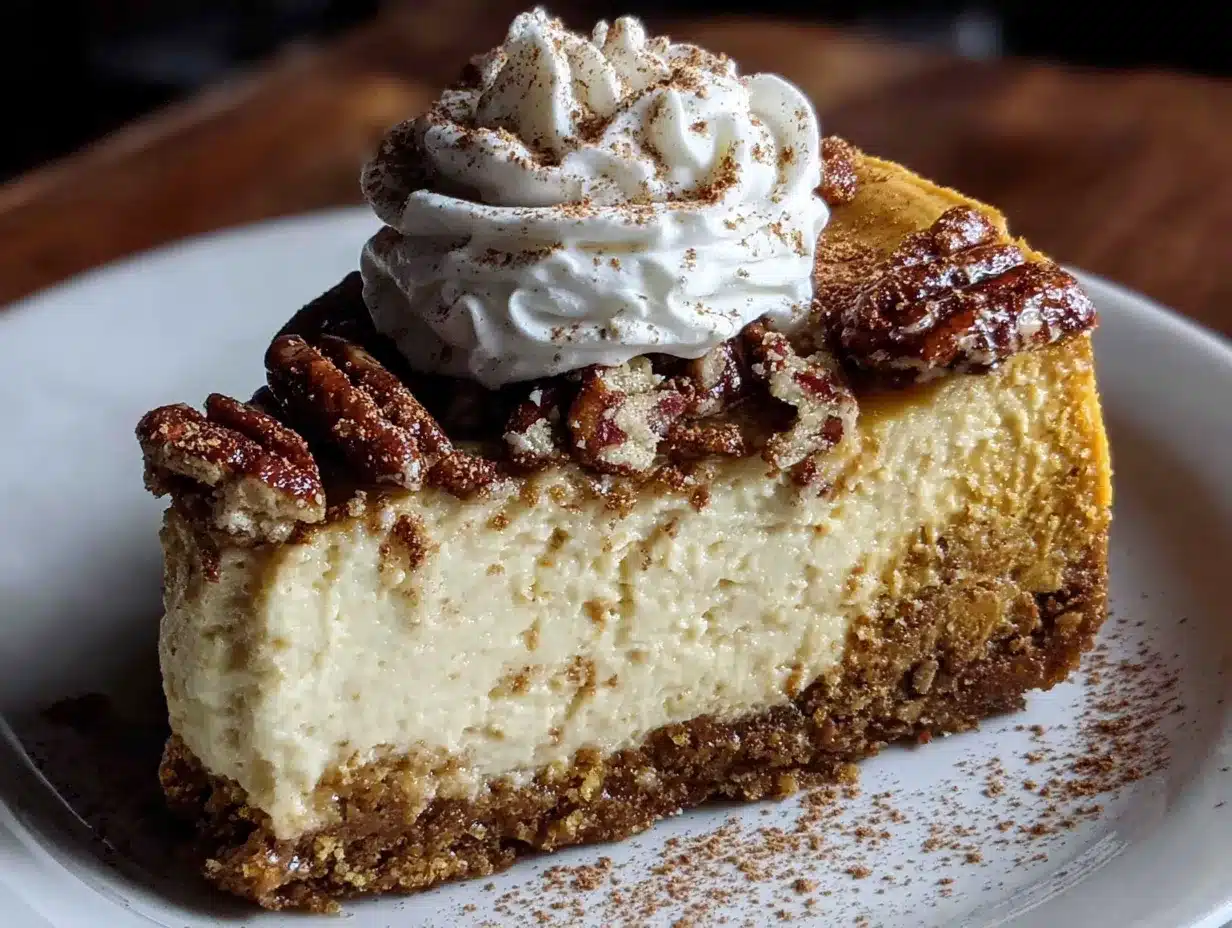
And then it came out of the oven. The smell alone was enough to wake up my roommate, who wandered into the kitchen half-asleep and asked, “Did you just make a pumpkin cheesecake at midnight?” I handed her a slice the next morning, still slightly chilled from the fridge, and she just stared at me. “This is lighter?” she asked, taking another bite. “It tastes like the real thing.” Maybe you’ve been there — that moment when a happy accident in the kitchen turns into something you actually want to write down and share. That’s this lighter pumpkin cheesecake with gingersnap crust. It’s the recipe that made me stop apologizing for wanting dessert on a Tuesday night.
Why You’ll Love This Recipe
Let’s be real for a second. Most “light” cheesecakes taste like a compromise. You know the ones — they’re either rubbery, or they crumble apart, or they leave you staring at the plate wondering why you didn’t just eat the full-fat version. This lighter pumpkin cheesecake with gingersnap crust is not that. I’ve tested this recipe six times (yes, six — my coworkers were very happy taste testers), and each time, it came out creamy, spiced perfectly, and satisfying in a way that makes you forget it’s lighter.
- Quick & Easy: The active prep time is only about 20 minutes. The hardest part is waiting for it to chill in the fridge overnight.
- Simple Ingredients: No weird health-food store finds here. You probably have most of these in your kitchen right now.
- Perfect for Fall Gatherings: This is the dessert that shows up at Friendsgiving and disappears before the pie even gets touched.
- Crowd-Pleaser: I’ve served it to kids, to my health-nut sister, and to my uncle who “doesn’t do light desserts.” All of them asked for seconds.
- Unbelievably Delicious: The secret is blending cottage cheese until it’s silky smooth. It adds protein and creaminess without the heavy fat content of extra cream cheese.
What makes this different from every other pumpkin cheesecake recipe out there? It’s the texture. By using a combination of reduced-fat cream cheese, blended cottage cheese, and pumpkin puree, you get that signature dense-but-creamy mouthfeel without the greasy aftertaste. The gingersnap crust isn’t just a supporting player — it adds a spicy, crunchy contrast that makes every bite interesting. This isn’t just another version of pumpkin cheesecake. It’s the version that makes you wonder why you ever bothered with the full-fat original.
What Ingredients You Will Need
This recipe uses simple, wholesome ingredients to deliver that indulgent cheesecake experience without the heavy calories. Most of these are pantry staples, especially if you do any fall baking.
For the Gingersnap Crust
- 1 ½ cups gingersnap cookie crumbs (about 25-30 cookies, crushed — I recommend Anna’s or Mi-Del for the best spice blend)
- 3 tablespoons unsalted butter, melted (use vegan butter if needed)
- 1 tablespoon brown sugar (adds a little extra molasses depth)
- ¼ teaspoon salt (balances the sweetness of the cookies)
For the Pumpkin Cheesecake Filling
- 8 ounces reduced-fat cream cheese, softened (Neufchâtel works perfectly)
- ½ cup cottage cheese (small-curd, full-fat or low-fat — but don’t use fat-free, it gets grainy)
- 1 cup pumpkin puree (not pumpkin pie filling — Libby’s is my go-to for consistent texture)
- ¾ cup granulated sugar (you can reduce to ⅔ cup if you prefer less sweet)
- 2 large eggs, room temperature (cold eggs can make the filling seize up)
- 1 teaspoon vanilla extract
- 1 ½ teaspoons pumpkin pie spice (or make your own: ½ tsp cinnamon, ½ tsp ginger, ¼ tsp nutmeg, ¼ tsp cloves)
- ¼ teaspoon salt
Ingredient Selection Tips: Look for a cottage cheese with a short ingredient list — just milk, cream, salt, and cultures. The fewer additives, the smoother it blends. For the gingersnaps, I’ve tested this with both store-brand and premium cookies, and honestly, the spicier the cookie, the better the crust. If your gingersnaps are on the sweeter side, skip the brown sugar in the crust.
Substitution Guidance: If you’re dairy-sensitive, use a dairy-free cream cheese alternative (Kite Hill works well) and a vegan butter for the crust. The texture will be slightly less firm, but the flavor is still fantastic. For a gluten-free option, use gluten-free gingersnaps — they’re widely available at most grocery stores now.
Equipment Needed
You don’t need a fancy kitchen to pull off this lighter pumpkin cheesecake with gingersnap crust. Here’s what you’ll actually use:
- 9-inch springform pan — This is non-negotiable for easy release. I’ve used a regular cake pan lined with parchment in a pinch, but the springform makes life so much easier.
- Food processor or blender — You need this to blend the cottage cheese until it’s completely smooth. A high-speed blender works best, but a food processor will do the job.
- Electric hand mixer or stand mixer — For beating the cream cheese until fluffy. You can do it by hand with a whisk, but your arm will hate you.
- Mixing bowls — One medium, one large.
- Measuring cups and spoons
- Rubber spatula — For scraping every last bit of filling into the pan.
- Parchment paper — To line the bottom of the pan for easy removal.
- Heavy-duty aluminum foil — For the water bath (yes, you need a water bath for a crack-free top).
- Roasting pan or large baking dish — Big enough to hold your springform pan for the water bath.
Budget-Friendly Tip: Don’t own a springform pan? Check your local thrift store — I found mine for $3, and it’s still going strong five years later. If you’re using a regular cake pan, line it with two layers of parchment paper that extend above the rim so you can lift the cheesecake out after it’s chilled.
Preparation Method
Take your time with this one. The actual hands-on work is quick, but the chilling is where the magic happens. Here’s exactly how to make this lighter pumpkin cheesecake with gingersnap crust.
- Preheat your oven to 350°F (175°C). While it’s heating, wrap the outside of your springform pan with a double layer of heavy-duty aluminum foil. Make sure it goes all the way up the sides — this keeps water from seeping in during the water bath.
- Make the crust. In a medium bowl, combine the gingersnap crumbs, melted butter, brown sugar, and salt. Stir with a fork until every crumb is moistened and the mixture looks like wet sand. Press this firmly into the bottom of your prepared springform pan. Use the bottom of a measuring cup to really pack it down. Bake for 8-10 minutes until it’s fragrant and slightly darker around the edges. Set aside to cool while you make the filling. (Pro tip: don’t skip the salt in the crust — it makes the gingerbread flavor pop.)
- Blend the cottage cheese. In your food processor or blender, blitz the cottage cheese for a full 60 seconds until it’s completely smooth. There should be no lumps whatsoever. This is the step that makes or breaks the texture, so don’t rush it. Scrape down the sides and blend again if needed.
- Beat the cream cheese. In a large bowl, beat the softened cream cheese with an electric mixer on medium speed until it’s fluffy and smooth — about 2 minutes. Scrape the bowl well. Add the sugar and beat for another minute until fully combined.
- Add the pumpkin and cottage cheese. Add the pumpkin puree and the blended cottage cheese to the cream cheese mixture. Beat on low speed until just combined. Don’t overmix at this stage — you don’t want to incorporate too much air, which can cause cracks later.
- Add eggs and flavorings. Add the eggs one at a time, beating on low speed after each addition just until the yolk disappears. Then add the vanilla, pumpkin pie spice, and salt. Mix on low until everything is smooth and uniform. Give the bowl one final scrape with your spatula to make sure nothing is hiding at the bottom.
- Pour and prepare for baking. Pour the filling over the cooled crust. Gently tap the pan on the counter a few times to release any air bubbles. Place the foil-wrapped springform pan into your larger roasting pan. Carefully pour hot water into the roasting pan until it reaches about halfway up the sides of the springform pan. This water bath is your insurance policy against cracks.
- Bake low and slow. Bake at 350°F (175°C) for 50-60 minutes. The cheesecake is done when the edges are set and slightly puffed, but the center still jiggles like Jell-O when you gently shake the pan. Don’t be tempted to leave it in longer — it will continue to set as it cools.
- Cool gradually. Turn off the oven, crack the door open, and let the cheesecake sit in the warm oven for 1 hour. This gentle cooling prevents the dreaded crack. After an hour, remove the pan from the water bath, take off the foil, and let it cool completely on a wire rack (about another hour).
- Chill overnight. Cover the pan with plastic wrap and refrigerate for at least 6 hours, but preferably overnight. I know it’s hard to wait, but this is where the texture goes from good to incredible. The flavors meld, the texture firms up perfectly, and that first slice will be worth every minute of waiting.
Sensory Cues: When you pull the cheesecake out of the oven, you should see a faint golden ring around the edge. The center will still look slightly wet and wobbly — that’s exactly what you want. If the whole thing feels firm to the touch, it’s overbaked. The smell should be warm and spicy, like fall in a pan.
Cooking Tips & Techniques
I’ve made this lighter pumpkin cheesecake with gingersnap crust more times than I care to count, and I’ve learned some things the hard way. Here’s what I wish someone had told me before my first attempt.
Don’t skip the water bath. I know it’s annoying. I know it adds steps. But skipping the water bath is the number one reason cheesecakes crack. The steam creates a humid environment that prevents the top from drying out and cracking. If you’re worried about water leaking in, use heavy-duty foil and wrap it twice. I’ve never had a leak with this method.
Room temperature ingredients matter. Cold cream cheese creates lumps that no amount of beating can fix. Cold eggs can cause the batter to curdle. Take everything out of the fridge at least 30 minutes before you start. Set a timer — I’ve forgotten and ended up microwaving cream cheese in 10-second bursts, which works but isn’t ideal.
Blend the cottage cheese until you think it’s done, then blend it for another 30 seconds. The first time I made this, I thought I’d blended it enough. I was wrong. There were tiny curds throughout the cheesecake. They weren’t terrible, but they weren’t smooth. Now I set a timer for a full minute and scrape the sides halfway through.
Use a sharp knife for slicing. Run it under hot water, wipe it dry, and slice. Repeat between each cut. This gives you those clean, bakery-style slices that make people think you bought it from a fancy shop. If you’re serving it the next day, let it sit at room temperature for about 15 minutes before slicing — cold cheesecake can be crumbly.
My biggest failure: I once tried to rush the cooling process by putting the cheesecake directly in the fridge after it came out of the oven. Big mistake. The sudden temperature change caused a massive crack right down the middle. It still tasted fine, but it looked like a map of the Mississippi River. Learn from my impatience — let it cool gradually.
Variations & Adaptations
One of the best things about this lighter pumpkin cheesecake with gingersnap crust is how adaptable it is. Here are some variations I’ve tried and loved.
Dairy-Free Version: Use dairy-free cream cheese (Kite Hill or Violife work best) and a vegan butter for the crust. For the cottage cheese, swap in a silken tofu — blend it the same way you would the cottage cheese. The texture is slightly less firm, but the flavor is still incredible. I made this for a friend with a dairy allergy, and she asked for the recipe before she finished her first slice.
Gluten-Free Option: This one’s easy — just use gluten-free gingersnaps. Most brands make a gluten-free version now, and the crust works exactly the same way. I’ve also made this with a pecan-almond crust (1 ½ cups nuts, 3 tablespoons melted butter, 2 tablespoons sugar) for a paleo-friendly version that’s honestly amazing.
Spice It Up: If you want a warmer, more complex flavor, add ¼ teaspoon of black pepper and a pinch of cayenne to the filling. It sounds weird, but the heat brings out the sweetness of the pumpkin and the ginger in the crust. I tried this on a whim after reading about Mexican hot chocolate, and now I can’t go back to plain pumpkin spice.
Mini Cheesecakes: Use a muffin tin with liners instead of a springform pan. Press about 1 tablespoon of crust into each liner, add the filling, and bake for 18-22 minutes at 350°F. These are perfect for parties or portion control. Just reduce the water bath — place a pan of hot water on the rack below the muffin tin instead.
No-Bake Version: For a truly no-fuss option, fold the filling (minus the eggs) into 1 ½ cups of whipped coconut cream or stabilized whipped cream. Pour into the crust and chill for 6 hours. It’s lighter in texture — almost mousse-like — but the flavor is spot-on. I do this in the summer when I don’t want to turn on the oven.
Serving & Storage Suggestions
This lighter pumpkin cheesecake with gingersnap crust is a showstopper no matter how you serve it, but here are my favorite ways to make it extra special.
Serving Temperature: I prefer this cheesecake straight from the fridge — cold and firm. But if you want a softer, more decadent texture, let it sit at room temperature for 20 minutes before slicing. The flavors are more pronounced at room temperature, but the texture is less firm. Both are delicious, so it’s really about your preference.
Presentation Ideas: A dollop of lightly sweetened whipped cream on top is classic. For something fancier, drizzle a little caramel sauce over each slice and sprinkle with toasted pecans. In the fall, I like to add a few candied ginger pieces on top — the spicy-sweet crunch is perfection against the creamy cheesecake.
Complementary Dishes: This cheesecake pairs beautifully with a cup of hot apple cider or a spiced chai latte. For a full fall dessert table, serve it alongside my simple apple crisp and a warm pumpkin latte. The contrast between the creamy cheesecake and the crunchy crisp topping is everything.
Storage Instructions: Store leftover cheesecake in the refrigerator, covered, for up to 5 days. The flavor actually improves after the first day as the spices meld. To freeze, wrap individual slices tightly in plastic wrap, then in foil, and place in a freezer bag. They’ll keep for up to 3 months. Thaw in the refrigerator overnight before serving.
Reheating Tips: I don’t recommend reheating this cheesecake — it’s meant to be served cold or at room temperature. If you have leftovers that have been in the fridge for a few days and the texture has firmed up too much, let them sit out for 30 minutes before eating. The texture will soften beautifully.
How Flavors Develop: The first day, the pumpkin and spice flavors are bright and distinct. By day three, everything has mellowed and blended together into a more cohesive, deeper flavor. If you can wait that long, day three is when this cheesecake is at its absolute peak.
Nutritional Information & Benefits
I’m not a nutritionist, but I do care about what goes into my body. Here’s the breakdown for one slice (based on 12 servings) of this lighter pumpkin cheesecake with gingersnap crust.
| Nutrient | Amount per Serving |
|---|---|
| Calories | 245 |
| Total Fat | 12g |
| Saturated Fat | 6g |
| Cholesterol | 55mg |
| Sodium | 280mg |
| Total Carbohydrates | 28g |
| Dietary Fiber | 2g |
| Sugars | 18g |
| Protein | 7g |
Health Benefits: Pumpkin is packed with vitamin A (over 200% of your daily needs per cup), which is great for eye health and immune function. The cottage cheese adds a solid 7g of protein per serving, which helps keep you full and satisfied. Compared to a traditional pumpkin cheesecake, this version saves you about 150 calories and 10g of fat per slice — without sacrificing any of the flavor.
Dietary Considerations: This recipe is vegetarian. For gluten-free and dairy-free options, see the variations section above. It’s not suitable for vegans in its current form, but the no-bake variation with coconut cream comes close.
Potential Allergens: Contains dairy (cream cheese, cottage cheese, butter) and gluten (gingersnaps). May contain traces of nuts depending on your gingersnap brand.
My Wellness Perspective: I believe in eating dessert without guilt. This cheesecake fits into a balanced lifestyle because it uses real, recognizable ingredients and sensible portions. It’s not “diet food” — it’s just a smarter version of something we all love. One slice satisfies that craving without sending your blood sugar on a roller coaster. That’s a win in my book.
Conclusion
This lighter pumpkin cheesecake with gingersnap crust has become my go-to fall dessert for a reason. It’s the recipe I bring to Friendsgiving, the one I make when I’m craving something cozy but don’t want to feel heavy afterward, and the one that always, always gets asked for. The combination of the spicy, crunchy gingersnap crust and the silky, spiced pumpkin filling is just… right.
I love that this recipe doesn’t ask you to compromise. You don’t have to choose between delicious and lighter. You don’t have to settle for a sad, dry cheesecake that tastes like cardboard. This one delivers on every level — creamy, flavorful, satisfying, and honestly, better than most full-fat versions I’ve tried.
I hope you make this your own. Add extra spice, swap the crust, top it with whatever makes you happy. That’s the beauty of cooking — you get to decide what “perfect” means. If you make this lighter pumpkin cheesecake with gingersnap crust, I’d love to hear about it. Leave a comment below, tag me in your photos, or tell me about your own late-night kitchen adventures. Because honestly, some of the best recipes come from those moments when we just go for it.
Happy baking, friends. You’ve got this.
Frequently Asked Questions
Can I use canned pumpkin pie filling instead of pumpkin puree?
I wouldn’t recommend it. Pumpkin pie filling is pre-sweetened and spiced, which will throw off the sugar and spice balance in this recipe. Stick with 100% pure pumpkin puree — it gives you control over the sweetness and flavor. If you only have pumpkin pie filling on hand, reduce the sugar by half and skip the added spices, but the texture might be slightly different.
Why did my cheesecake crack on top?
Cracks happen for a few reasons. The most common is overbaking — if the center is completely firm when you take it out, it’s already overdone. Another culprit is skipping the water bath or cooling the cheesecake too quickly. Make sure you’re using a water bath, baking until the center is still slightly jiggly, and cooling it gradually in the oven with the door cracked open. If it does crack, don’t stress — a dollop of whipped cream covers a multitude of sins.
Can I make this cheesecake ahead of time?
Absolutely. In fact, I recommend it. This cheesecake needs at least 6 hours to chill, but 24 hours is even better. The flavors develop and deepen overnight, and the texture firms up perfectly. You can make it up to 2 days in advance and keep it covered in the refrigerator. Just don’t add any toppings until right before serving.
How do I crush gingersnaps without a food processor?
No food processor? No problem. Place the cookies in a zip-top bag and crush them with a rolling pin or the bottom of a heavy skillet. You can also use a meat mallet if you have one. Just make sure the crumbs are fairly uniform — you don’t want big chunks in the crust. A few larger pieces are fine, though — they add nice texture.
Can I use a different crust?
Yes! While the gingersnap crust is a classic pairing with pumpkin, you can absolutely swap it out. Graham cracker crust works well (use 1 ½ cups crumbs, 3 tablespoons butter, 2 tablespoons sugar). A shortbread cookie crust is also delicious and less spicy. For a nut-based crust, try 1 ½ cups pecans or almonds blended with 3 tablespoons melted butter and 2 tablespoons sugar. Just pre-bake any crust for 8-10 minutes at 350°F before adding the filling.
Pin This Recipe!
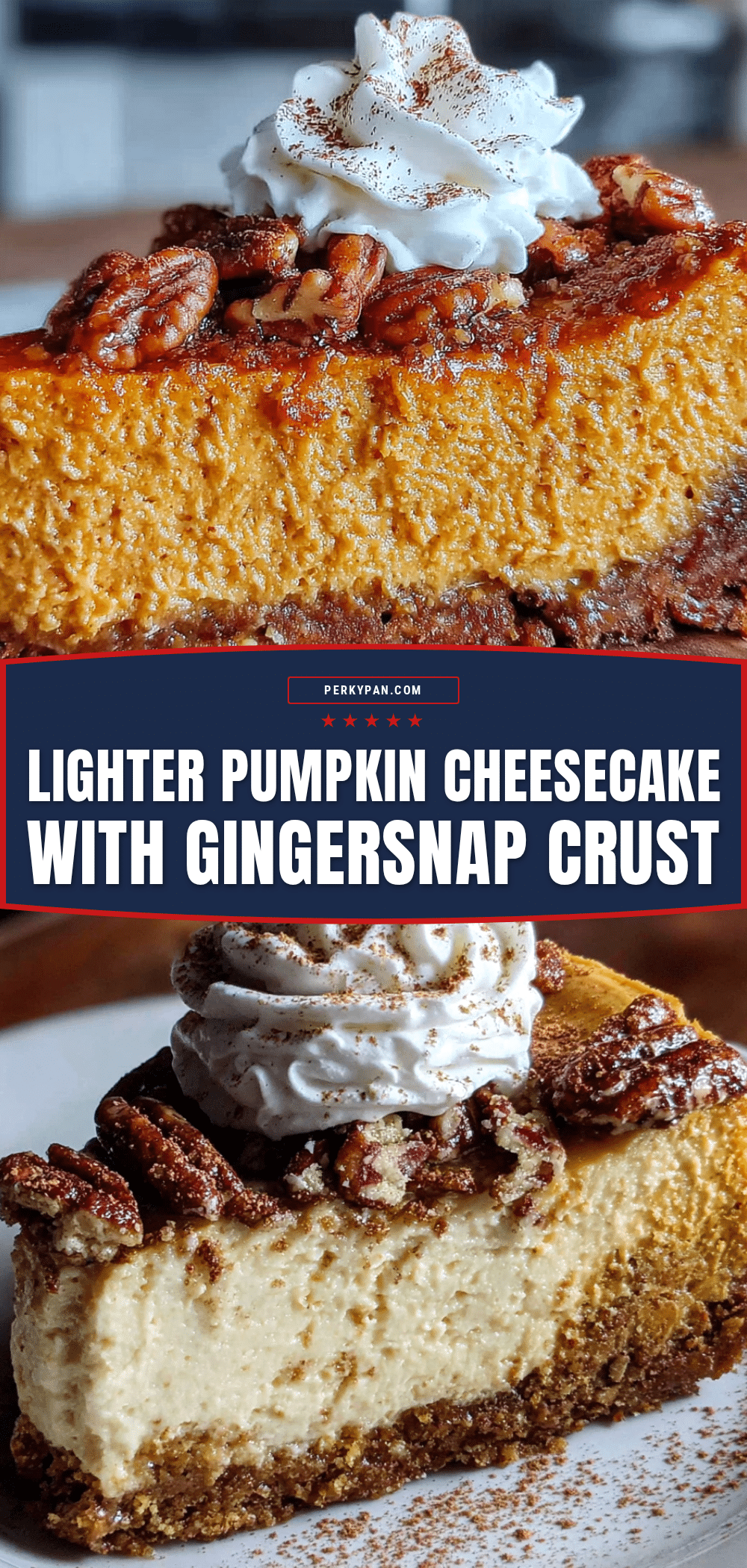
Lighter Pumpkin Cheesecake with Gingersnap Crust
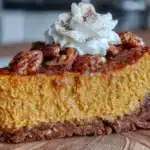
A creamy, spiced pumpkin cheesecake with a crunchy gingersnap crust that’s lighter than traditional versions but just as indulgent. Perfect for fall gatherings and late-night cravings.
- Prep Time: 20 minutes
- Cook Time: 50-60 minutes
- Total Time: 8 hours (including chilling)
- Yield: 12 servings 1x
- Category: Dessert
- Cuisine: American
Ingredients
- 1 ½ cups gingersnap cookie crumbs (about 25–30 cookies)
- 3 tablespoons unsalted butter, melted
- 1 tablespoon brown sugar
- ¼ teaspoon salt
- 8 ounces reduced-fat cream cheese, softened
- ½ cup cottage cheese
- 1 cup pumpkin puree
- ¾ cup granulated sugar
- 2 large eggs, room temperature
- 1 teaspoon vanilla extract
- 1 ½ teaspoons pumpkin pie spice
- ¼ teaspoon salt
Instructions
- Preheat your oven to 350°F (175°C). Wrap the outside of a 9-inch springform pan with a double layer of heavy-duty aluminum foil.
- Make the crust: In a medium bowl, combine gingersnap crumbs, melted butter, brown sugar, and salt. Stir until moistened. Press firmly into the bottom of the prepared pan. Bake for 8-10 minutes until fragrant. Set aside to cool.
- Blend the cottage cheese in a food processor or blender for 60 seconds until completely smooth. Scrape sides and blend again if needed.
- In a large bowl, beat the softened cream cheese with an electric mixer on medium speed until fluffy, about 2 minutes. Add sugar and beat for another minute.
- Add pumpkin puree and blended cottage cheese to the cream cheese mixture. Beat on low speed until just combined.
- Add eggs one at a time, beating on low after each addition. Add vanilla, pumpkin pie spice, and salt. Mix on low until smooth.
- Pour filling over cooled crust. Tap pan on counter to release air bubbles. Place foil-wrapped pan in a larger roasting pan. Pour hot water into the roasting pan until it reaches halfway up the sides of the springform pan.
- Bake at 350°F (175°C) for 50-60 minutes. The edges should be set, but the center should still jiggle.
- Turn off the oven, crack the door open, and let the cheesecake sit in the warm oven for 1 hour. Remove from water bath, take off foil, and cool completely on a wire rack.
- Cover with plastic wrap and refrigerate for at least 6 hours, preferably overnight.
Notes
Don’t skip the water bath to prevent cracks. Use room temperature ingredients for best texture. Blend cottage cheese for a full minute to ensure smoothness. Cool gradually to avoid cracking. For best flavor, chill overnight.
Nutrition
- Serving Size: 1 slice
- Calories: 245
- Sugar: 18
- Sodium: 280
- Fat: 12
- Saturated Fat: 6
- Carbohydrates: 28
- Fiber: 2
- Protein: 7
Keywords: pumpkin cheesecake, lighter cheesecake, gingersnap crust, fall dessert, pumpkin dessert, reduced-fat cheesecake