Love this? Save it for later!
Share the inspiration with your friends
There used to be a tiny farm-to-table restaurant tucked in the back of an old bookshop in Hudson, New York, that served the most incredible Thanksgiving plate. When the bookshop closed its doors three years ago, I thought I’d lost that cranberry sauce forever. After eight tries—some so tart they made my eyes water, others so sweet they felt like jam—I finally cracked the code. This Best Homemade Cranberry Sauce with Orange and Rosemary is that exact memory, spooned back into existence.
Honestly, I still remember the first time I tasted it. I was sitting at a wobbly wooden table, balancing a plate on my lap because the place was that crowded, and this sauce just… stopped me. It wasn’t just sweet. It wasn’t just tart. It had this warm, almost piney aroma from the rosemary that wrapped around the bright citrus punch of orange zest. I mean, I actually asked the waitress if I could buy a jar to take home. She laughed and said no, but that didn’t stop me from trying to figure it out myself.
Let me tell you, the first batch was a disaster. I used dried rosemary because that’s all I had, and it tasted like I’d boiled a Christmas tree. The second batch? I forgot the orange zest entirely. But somewhere around attempt number five, with a kitchen counter covered in sticky splatters and my husband asking if we could please just eat something else, it clicked. The trick is fresh rosemary, added at just the right moment, and letting the orange zest sit with the sugar before you even turn on the stove. Maybe you’ve been there—chasing a flavor from a meal that felt special, determined to bring it back into your own kitchen. This is that recipe.
Why You’ll Love This Recipe
This isn’t just another cranberry sauce that sits on the table looking pretty. This is the one people will ask you for the recipe, the one that turns a simple side dish into the star of the spread. As someone who has tested this on skeptical dinner guests and picky relatives, I can tell you—it works every single time.
- Incredibly Simple : It comes together in under 20 minutes with just five main ingredients. You don’t need to be a chef to nail this.
- Pantry-Friendly : Fresh cranberries, an orange, a sprig of rosemary, sugar, and water. That’s it. No weird specialty items.
- Perfect for Hosting : This sauce was made for gatherings. It scales up beautifully for a crowd, and it actually tastes better when you make it a day or two ahead.
- Crowd-Pleaser : Even people who swear they hate cranberry sauce have been converted. The orange and rosemary add layers that plain canned sauce just can’t touch.
- Unbelievably Delicious : The texture is perfect—not too runny, not too thick. The flavors are balanced so that every bite has a little sweetness, a little tang, and that surprising herbal finish.
What makes this recipe different from the rest is the timing. Most recipes just dump everything in a pot and boil it. But letting the orange zest macerate with the sugar first releases those essential oils and deepens the citrus flavor without any bitterness. And adding the rosemary near the end keeps its flavor fresh and aromatic, not overpowering. This is the kind of dish that makes you close your eyes after the first bite. It’s comfort food for the holiday table—familiar, but somehow more memorable.
What Ingredients You Will Need
This recipe uses simple, wholesome ingredients to deliver bold flavor and satisfying texture without the fuss. Most of these are probably already in your kitchen, especially if you’re planning a holiday meal.
- 12 ounces fresh or frozen cranberries (one standard bag) — Look for cranberries that are firm and bright red. If they’re soft or shriveled, they’re past their prime. Frozen cranberries work perfectly here, so don’t stress if fresh aren’t available.
- 3/4 cup granulated sugar — This balances the natural tartness of the cranberries. You can adjust this up or down depending on your sweetness preference, but I find 3/4 cup hits the sweet spot without being cloying.
- 1/2 cup water — Just tap water is fine. This helps the cranberries release their natural pectin and creates that perfect sauce-like consistency.
- Zest of 1 large orange (about 1 tablespoon) — This is where the magic happens. Make sure to only zest the orange part, not the white pith underneath, which is bitter. I recommend using a microplane for the finest zest.
- Juice of 1 large orange (about 1/4 cup) — Fresh squeezed is non-negotiable here. Bottled orange juice has a flat, cooked flavor that won’t give you the same brightness.
- 1 large sprig fresh rosemary (about 4-5 inches long) — Fresh rosemary is crucial. Dried rosemary will give you a woody, overpowering flavor. If you grow rosemary at home, even better.
- Pinch of salt — Just a tiny pinch. Salt enhances the fruit flavors and balances the sweetness without making the sauce taste salty.
I personally recommend using organic oranges if you can find them, since you’re using the zest. The flavor is noticeably brighter. For the rosemary, I’ve had great results with the standard supermarket bunches, but if you have a farmers market nearby, the flavor is even more intense. And here’s a little substitution guidance: if you want a less sweet sauce, you can reduce the sugar to 1/2 cup and add a tablespoon of maple syrup at the end for complexity. It works beautifully.
Equipment Needed
You don’t need any fancy gadgets for this recipe, which is one of the reasons I love it. Here’s what you’ll need:
- Medium saucepan (2 to 3 quarts) — A heavy-bottomed saucepan is ideal because it distributes heat evenly and prevents scorching. I use my trusty stainless steel one, but nonstick works fine too.
- Microplane or fine grater — This is the best tool for zesting citrus. A box grater can work, but it’s harder to get just the zest without the pith.
- Wooden spoon or silicone spatula — For stirring. A metal spoon can react with the acid in the cranberries and leave a metallic taste, so stick with wood or silicone.
- Citrus juicer or reamer — A simple handheld reamer is all you need. If you don’t have one, just squeeze the orange firmly with your hand and pick out any seeds.
- Fine-mesh strainer — Optional, but useful if you want to remove the rosemary sprig and any stray bits of zest for a smoother sauce.
- Glass jar or airtight container — For storing the sauce. I like using a wide-mouth mason jar because it’s easy to spoon out of.
If you don’t have a microplane, you can use the small holes on a box grater. Just be careful not to grate your knuckles—I’ve done that more times than I’d like to admit. As for budget-friendly options, a basic saucepan from any kitchen store will do the job perfectly. You don’t need to spend a lot.
Preparation Method
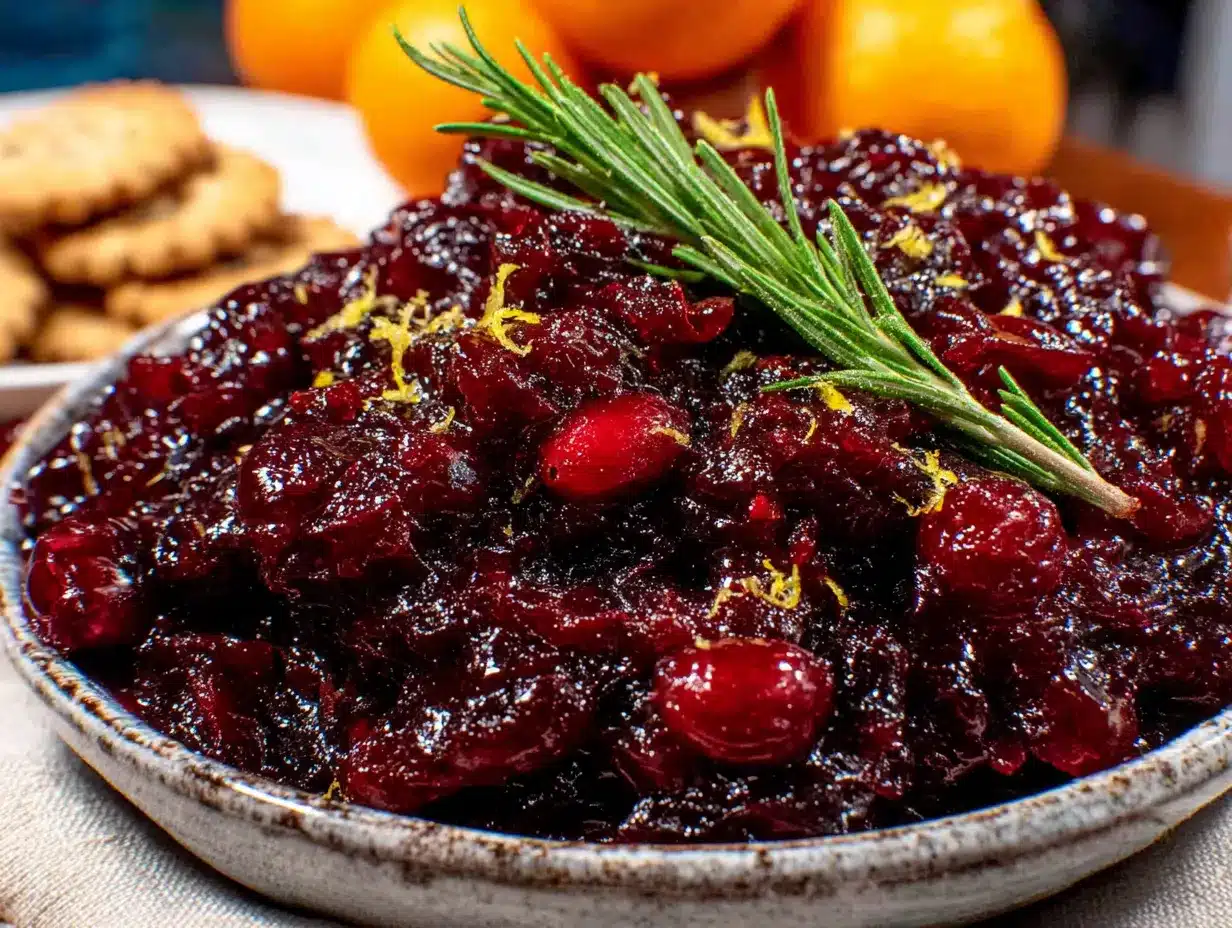
This comes together faster than you think. Here’s how to make the best cranberry sauce of your life.
- Zest and juice the orange first. Before you do anything else, wash your orange thoroughly. Using your microplane, zest the entire orange, being careful to avoid the white pith. Then cut the orange in half and juice it into a small bowl. Set both aside. This step takes about 3 minutes and sets you up for success.
- Macerate the zest with the sugar. In your medium saucepan, combine the orange zest and the granulated sugar. Use your fingers to rub them together for about 30 seconds. You’ll notice the sugar turning slightly orange and becoming fragrant. This releases the essential oils from the zest and infuses the sugar with intense citrus flavor. Let it sit for 5 minutes while you gather the rest of your ingredients.
- Add the water and orange juice. Pour the water and freshly squeezed orange juice into the saucepan with the sugar mixture. Stir with your wooden spoon until the sugar is mostly dissolved. It doesn’t need to be perfect—the heat will take care of the rest.
- Add the cranberries and rosemary. Dump in the cranberries and lay the fresh rosemary sprig right on top. Don’t chop the rosemary—keeping it whole makes it easy to remove later. Give everything a gentle stir.
- Bring to a boil, then simmer. Place the saucepan over medium-high heat and bring the mixture to a boil. You’ll hear the cranberries start to pop—that’s the sound of success. Once it’s boiling, reduce the heat to medium-low and let it simmer gently. Cook for about 10 to 12 minutes, stirring occasionally. The sauce will thicken as it cools, so don’t worry if it looks a bit loose at this stage.
- Check for doneness. After about 10 minutes, most of the cranberries should have burst. You can help any stubborn ones along by gently pressing them against the side of the pan with your spoon. The sauce should coat the back of your spoon. If it’s still too thin, let it simmer for another 2 to 3 minutes.
- Remove the rosemary sprig. Fish out the rosemary sprig with your tongs or a fork. Taste the sauce at this point. If you want a stronger rosemary flavor, you can let it steep for another minute before removing. I usually pull it out right at the 10-minute mark for a subtle background note.
- Cool and serve. Pour the sauce into your serving bowl or storage container. Let it cool to room temperature—it will continue to thicken as it cools. If you’re serving it immediately, that’s fine. But honestly, it’s even better the next day after the flavors have had time to meld.
One thing I learned the hard way: don’t walk away from the pot. Cranberry sauce can bubble over in seconds, and cleaning burnt sugar off your stovetop is not how you want to spend your evening. Stay close, stir occasionally, and you’ll be golden.
Cooking Tips & Techniques
Over the years, I’ve made this sauce more times than I can count, and I’ve picked up a few tricks that make a real difference. Let me share them with you.
Don’t rush the maceration step. Rubbing the orange zest into the sugar isn’t just for show. That simple action releases the citrus oils and creates a flavor base that infuses the entire sauce. I once skipped this step when I was in a hurry, and the sauce was noticeably less fragrant. It’s worth the extra 30 seconds.
Watch your heat. Cranberries are packed with natural pectin, which is what thickens the sauce. But if you boil them too aggressively, the pectin can break down and you’ll end up with a runny sauce. Keep it at a gentle simmer after the initial boil. You should see small bubbles, not a raging torrent.
Use the freezer test. If you’re not sure whether your sauce is thick enough, place a small spoonful on a chilled plate and let it sit for 30 seconds. Run your finger through it—if it holds its shape and doesn’t immediately run back together, it’s ready. This trick has saved me more than once.
Season with salt. I know it sounds weird, but that tiny pinch of salt makes all the difference. It doesn’t make the sauce salty; it just makes the fruit flavors pop. I learned this after making a batch that tasted flat despite having plenty of sugar and citrus. A pinch of salt fixed it instantly.
Make it ahead. This sauce actually improves with time. The flavors meld and deepen overnight, and the texture sets up perfectly. I always make mine at least one day before I plan to serve it. It also means one less thing to worry about on the day of your gathering.
I once forgot to add the sugar until after the cranberries had already burst. The sauce was so tart it made my whole face pucker. I quickly dissolved the sugar in a little warm water and stirred it in, and it turned out fine. So if you make a mistake, don’t panic—there’s usually a fix.
Variations & Adaptations
One of the best things about this recipe is how easy it is to adapt. Here are some variations I’ve tried and loved.
Spiced Cranberry Sauce : Add a cinnamon stick and two star anise along with the rosemary. The warm spices pair beautifully with the orange and give the sauce a more complex, holiday-inspired flavor. Just remember to remove them before serving. I made this for Christmas last year and it was a hit.
Maple-Orange Cranberry Sauce : Replace half the granulated sugar with pure maple syrup. The maple adds a deeper, almost woodsy sweetness that complements the rosemary perfectly. Reduce the water by 2 tablespoons since the syrup adds liquid. This version is my personal favorite for Thanksgiving.
Spicy Cranberry Sauce : Add a small, thinly sliced jalapeño (seeds removed for less heat) along with the cranberries. The heat cuts through the sweetness and creates a sauce that’s incredible on turkey sandwiches the next day. I tried this on a whim and was shocked at how good it was.
Dietary Adaptations : This recipe is naturally gluten-free and dairy-free. For a lower-sugar version, use a sugar substitute like monk fruit sweetener or erythritol. Keep in mind that the texture may be slightly different since sugar contributes to the thickness. You can also reduce the sugar to 1/2 cup and add a mashed banana for natural sweetness—though that will change the flavor profile significantly.
If you’re serving a crowd, this recipe doubles beautifully. Just use a larger pot and increase the simmering time by a few minutes. I’ve made a quadruple batch for a big family gathering, and it worked like a charm.
Serving & Storage Suggestions
This cranberry sauce is incredibly versatile, and how you serve it can really elevate your meal.
Serving Temperature : I prefer this sauce at room temperature. The flavors are brightest, and the texture is perfect—not too stiff, not too runny. If you’ve refrigerated it, let it sit out for about 30 minutes before serving. You can also serve it warm if you like, but it will be slightly looser.
Presentation Tips for Hosting : Transfer the sauce to a beautiful serving bowl and garnish with a fresh rosemary sprig and a few thin orange slices. It adds a touch of elegance that your guests will notice. For a casual gathering, a simple glass bowl works perfectly.
What to Serve Alongside : This sauce is a natural partner for roasted turkey, but don’t stop there. It’s incredible on roasted pork loin, grilled chicken, or even a sharp cheddar cheese board. I’ve also used it as a topping for brie baked in puff pastry—absolute heaven.
Storage Instructions : Store the sauce in an airtight container in the refrigerator for up to two weeks. The flavors will continue to develop, so it actually gets better over the first few days. You can also freeze it for up to three months. Just thaw it in the refrigerator overnight and give it a good stir before serving.
Reheating Methods : To reheat, simply warm it gently in a saucepan over low heat, stirring occasionally. If it’s too thick after refrigeration, add a tablespoon of water or orange juice to loosen it up. You can also microwave it in 30-second bursts, stirring between each. Just be careful not to overheat it, or the texture can become gummy.
One of my favorite things about this sauce is how it transforms leftovers. Spread it on a turkey sandwich with some brie and arugula, and you’ve got a meal that rivals the original feast.
Nutritional Information & Benefits
While this is a special-occasion recipe, it’s actually not as indulgent as you might think. Here’s a quick look at the nutritional profile per serving (about 1/4 cup).
- Calories : Approximately 110
- Carbohydrates : 28 grams
- Sugar : 24 grams
- Fiber : 2 grams
- Vitamin C : 15% of the Daily Value
Health Benefits : Cranberries are packed with antioxidants and are known for their anti-inflammatory properties. They’re also a good source of vitamin C and fiber. Oranges add another boost of vitamin C, while rosemary contains compounds that may support digestion and memory. Of course, this is still a sweet sauce, so enjoy it in moderation as part of a balanced meal.
Dietary Considerations : This recipe is naturally gluten-free, dairy-free, and vegan. It contains no common allergens like nuts, eggs, or soy. If you’re watching your sugar intake, you can reduce the sugar or use a alternative sweetener as mentioned in the variations section.
From my perspective, this sauce is a wonderful way to add flavor and nutrition to your holiday table without a lot of fuss. It’s real food, made from real ingredients, and that’s something to feel good about.
Conclusion
This Best Homemade Cranberry Sauce with Orange and Rosemary is more than just a side dish—it’s the recipe that brings back that memory of a tiny restaurant in a bookshop, of a flavor I couldn’t forget, and of the satisfaction of finally getting it right. It’s simple enough for a weeknight dinner, but impressive enough for your holiday table.
I hope you’ll make this your own. Adjust the sweetness, play with the spices, or try it with different citrus fruits. That’s the beauty of cooking—you can take a recipe and make it yours. And if you do try it, I’d love to hear how it turns out. Drop a comment below and let me know if your guests asked for the recipe too. Or share your own twist—I’m always looking for new ideas!
Thank you for stopping by, and happy cooking. Your holiday table is about to get a whole lot more delicious.
Frequently Asked Questions
Can I use frozen cranberries instead of fresh?
Absolutely. Frozen cranberries work perfectly in this recipe. You don’t even need to thaw them first—just add them directly to the pot. They may take an extra minute or two to come to a boil, but the result is identical. I actually keep a bag in my freezer year-round so I can make this sauce whenever the craving hits.
How do I prevent my cranberry sauce from being too tart?
The sweetness level depends on your sugar and the natural tartness of the cranberries. If your sauce tastes too tart after cooking, you can stir in an additional tablespoon of sugar or a drizzle of maple syrup while it’s still warm. Taste as you go and adjust gradually. Remember that the sauce will taste slightly less sweet once it’s chilled, so aim for a balance that’s just a touch sweeter than you want at room temperature.
Can I make this cranberry sauce ahead of time?
Yes, and I actually recommend it. This sauce tastes even better after a day or two in the refrigerator because the flavors have time to meld and deepen. Make it up to three days in advance, store it in an airtight container, and simply bring it to room temperature before serving. It’s one less thing to worry about on the day of your gathering.
Why did my cranberry sauce turn out too runny?
This usually happens if the sauce wasn’t simmered long enough or if it was boiled too aggressively. Cranberries contain natural pectin that thickens the sauce, but it needs gentle, steady heat to activate. If your sauce is runny, return it to the pot and simmer it for another 5 to 10 minutes, stirring frequently. It will also thicken as it cools, so don’t judge the final texture while it’s still hot.
Can I use dried rosemary instead of fresh?
I strongly recommend against it. Dried rosemary has a much more concentrated, almost pine-like flavor that can easily overpower the delicate cranberries and orange. It also has a tough, woody texture that doesn’t soften during cooking. If fresh rosemary isn’t available, you can omit it entirely and the sauce will still be delicious with just the orange. Or try a pinch of dried thyme as an alternative.
PrintBest Homemade Cranberry Sauce with Orange and Rosemary

This cranberry sauce is a perfect balance of sweet, tart, and aromatic flavors, featuring fresh orange zest and rosemary. It comes together in under 20 minutes and is a crowd-pleasing side dish for any holiday table.
- Prep Time: 5 minutes
- Cook Time: 12 minutes
- Total Time: 17 minutes
- Yield: 8 servings 1x
- Category: Side Dish
- Cuisine: American
Ingredients
- 12 ounces fresh or frozen cranberries (one standard bag)
- 3/4 cup granulated sugar
- 1/2 cup water
- Zest of 1 large orange (about 1 tablespoon)
- Juice of 1 large orange (about 1/4 cup)
- 1 large sprig fresh rosemary (about 4–5 inches long)
- Pinch of salt
Instructions
- Zest and juice the orange first. Wash the orange thoroughly, zest the entire orange avoiding the white pith, then cut in half and juice into a small bowl. Set aside.
- Macerate the zest with the sugar. In a medium saucepan, combine the orange zest and granulated sugar. Rub together with your fingers for about 30 seconds until fragrant. Let sit for 5 minutes.
- Add the water and orange juice. Pour water and freshly squeezed orange juice into the saucepan with the sugar mixture. Stir until sugar is mostly dissolved.
- Add the cranberries and rosemary. Add the cranberries and lay the fresh rosemary sprig on top. Stir gently.
- Bring to a boil, then simmer. Place over medium-high heat and bring to a boil. Reduce heat to medium-low and simmer gently for 10 to 12 minutes, stirring occasionally.
- Check for doneness. After about 10 minutes, most cranberries should have burst. Press any stubborn ones against the side of the pan. Sauce should coat the back of a spoon.
- Remove the rosemary sprig. Fish out the rosemary sprig with tongs or a fork. Taste and adjust if desired.
- Cool and serve. Pour sauce into a serving bowl or storage container. Let cool to room temperature. Sauce will thicken as it cools.
Notes
Let the orange zest macerate with the sugar to release essential oils. Add rosemary near the end to keep its flavor fresh. The sauce improves after a day in the refrigerator. For a less sweet version, reduce sugar to 1/2 cup and add a tablespoon of maple syrup at the end.
Nutrition
- Serving Size: 1/4 cup
- Calories: 110
- Sugar: 24
- Sodium: 1
- Carbohydrates: 28
- Fiber: 2
Keywords: cranberry sauce, homemade cranberry sauce, orange rosemary cranberry sauce, Thanksgiving side dish, holiday recipe